

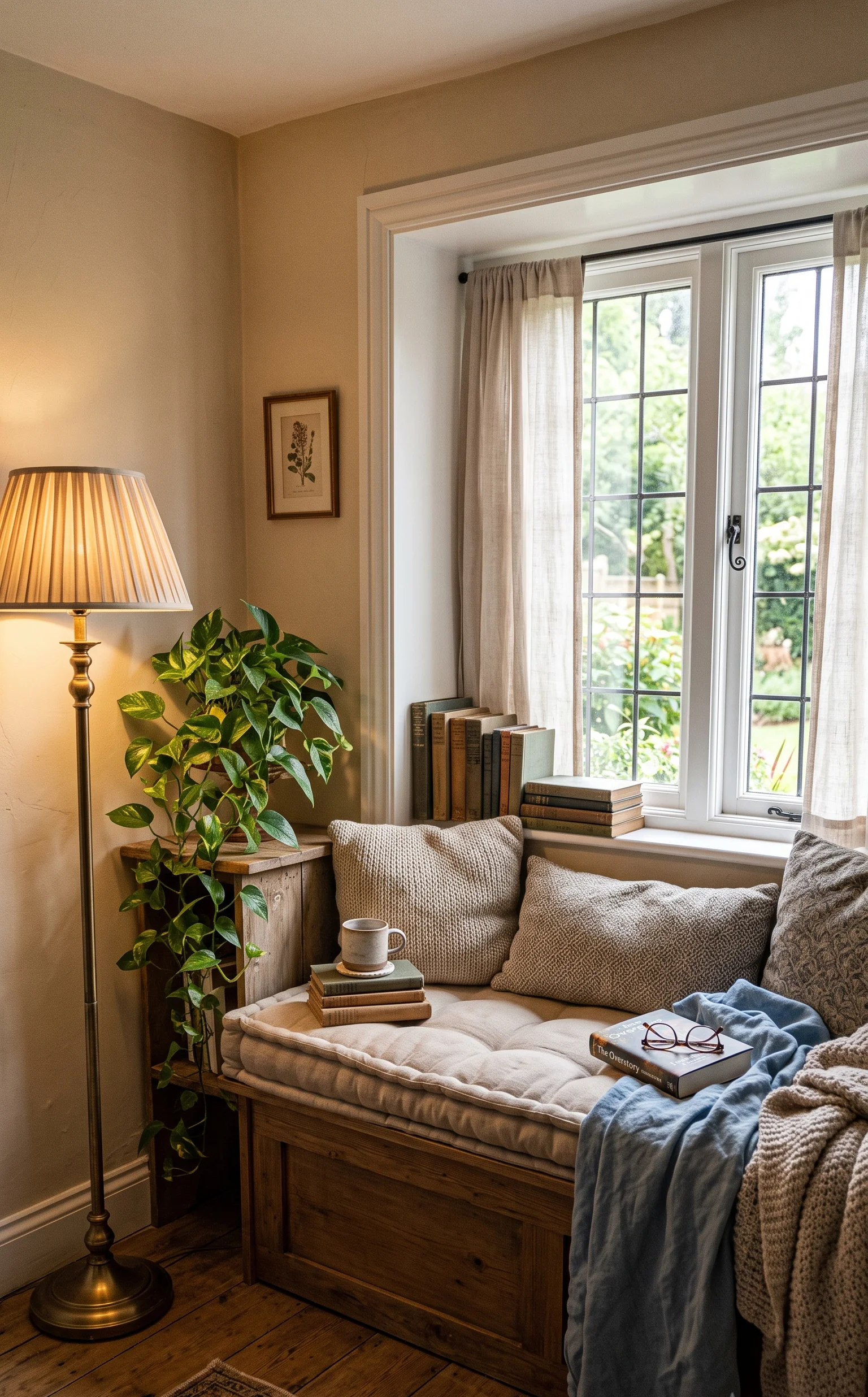
Some corners of a house are just furniture. A window reading nook is a promise: afternoon light, a cushion that fits exactly right, and a legitimate excuse to ignore your phone for an hour. The best window reading nooks aren’t reserved for houses with bay windows and carpenters on call, either. Half the ideas below need no building at all.
The short version: a great window nook needs four things: a seat at least 50cm deep natural light you can soften, one warm lamp for after dark, and enough cushioning to stay put for a full chapter. Everything else is styling. Grab the idea that fits your window, your budget, and your lease.
The Classic: Built-In Bench Between Bookshelf Towers
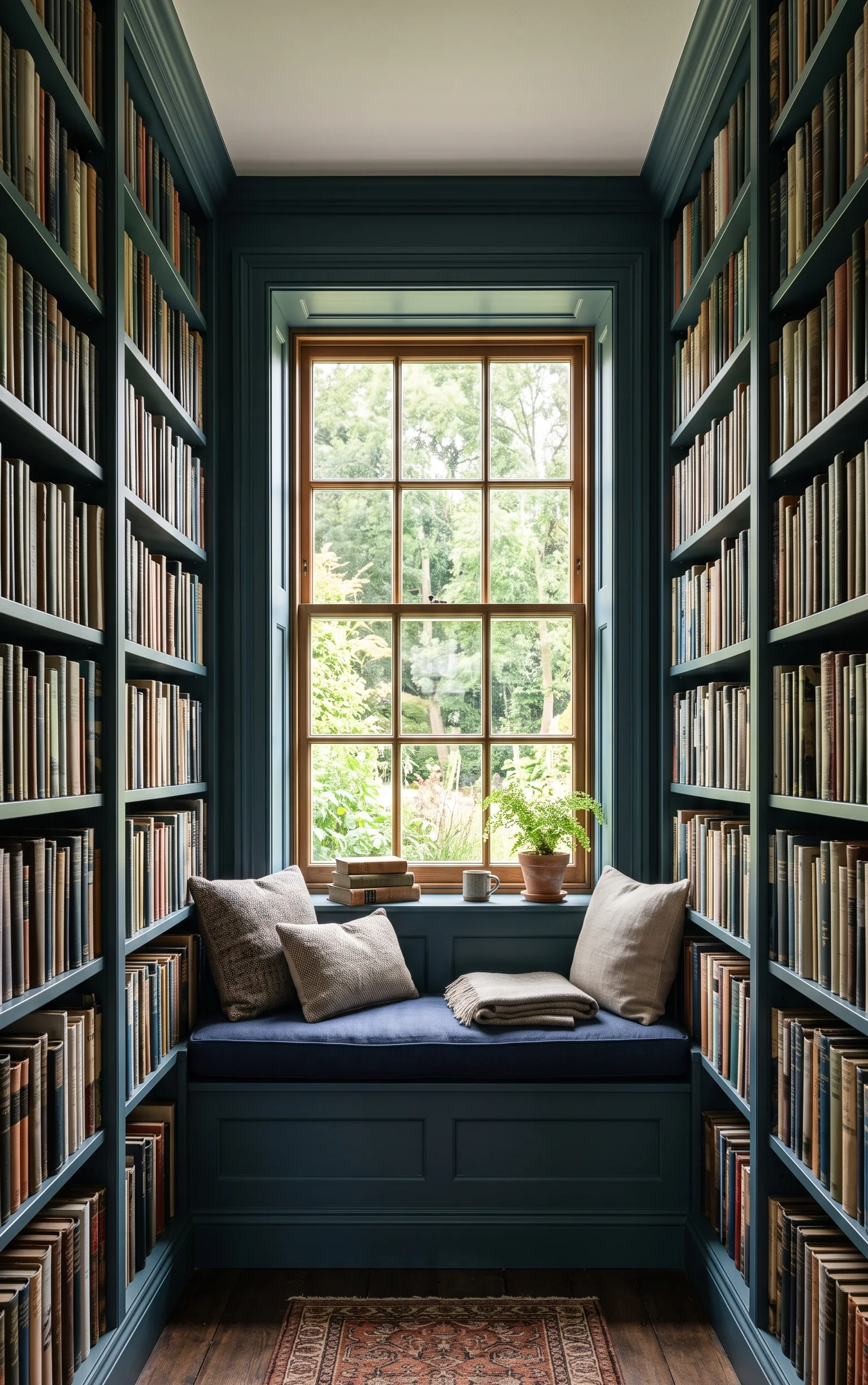
The archetype exists because it works. A bench built into the window recess, flanked by floor-to-ceiling shelves, turns one wall into a private library with the best-lit seat in the house.
Symmetry does the heavy lifting here matching towers, centred cushion, and suddenly a normal wall reads as architecture. Painting shelves and bench the same colour as the wall makes even flat-pack versions look custom.
The Bay Window Daybed
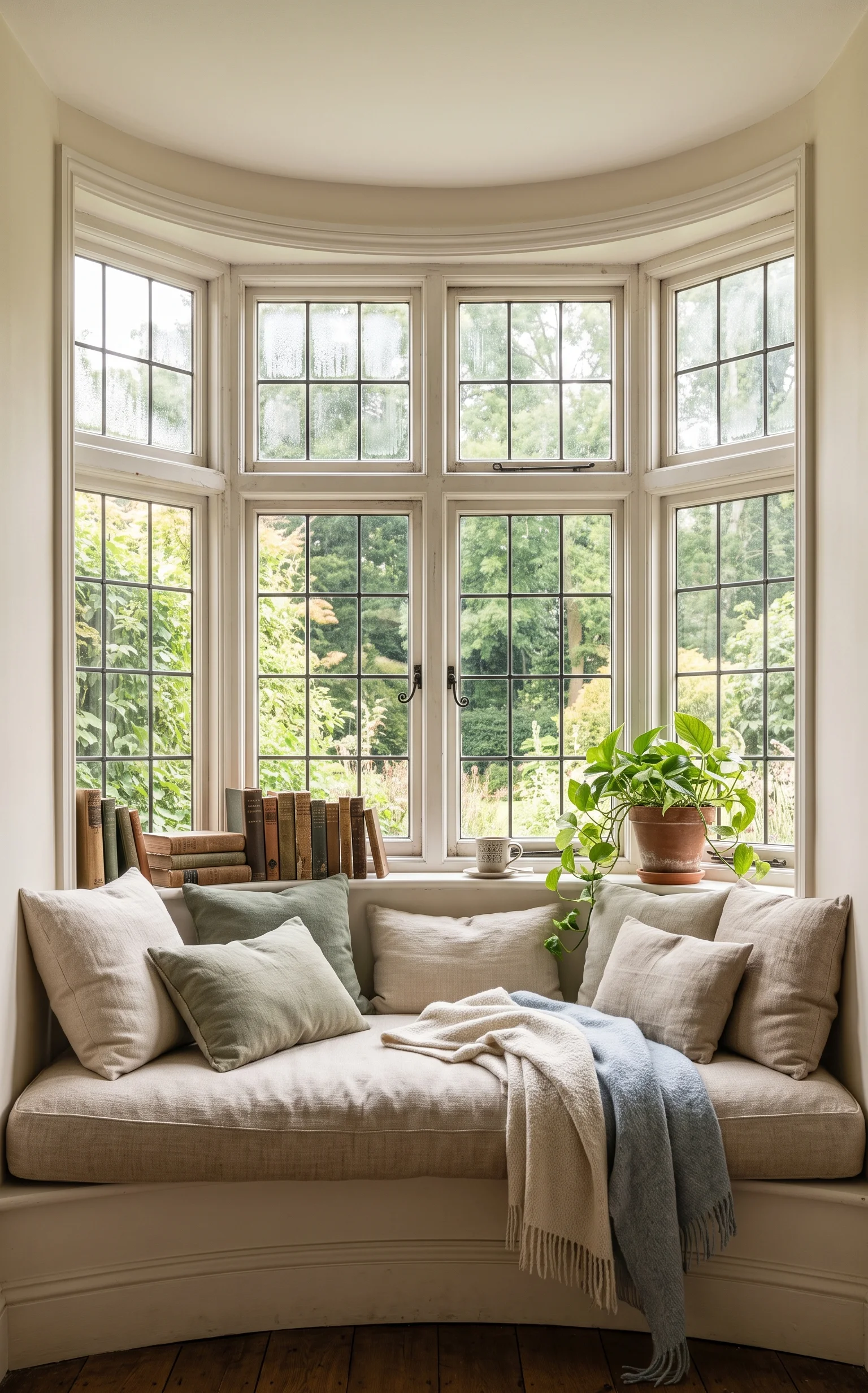
If you’re lucky enough to have a bay, don’t waste it on a plant stand. A custom cushion spanning the full curve creates a daybed big enough to actually lie down in: the difference between reading a chapter and finishing the book. Angled bays need a template: tape paper across the seat area, trace the shape, and hand it to any cushion maker.
The Storage Bench That Hides Your Book Problem
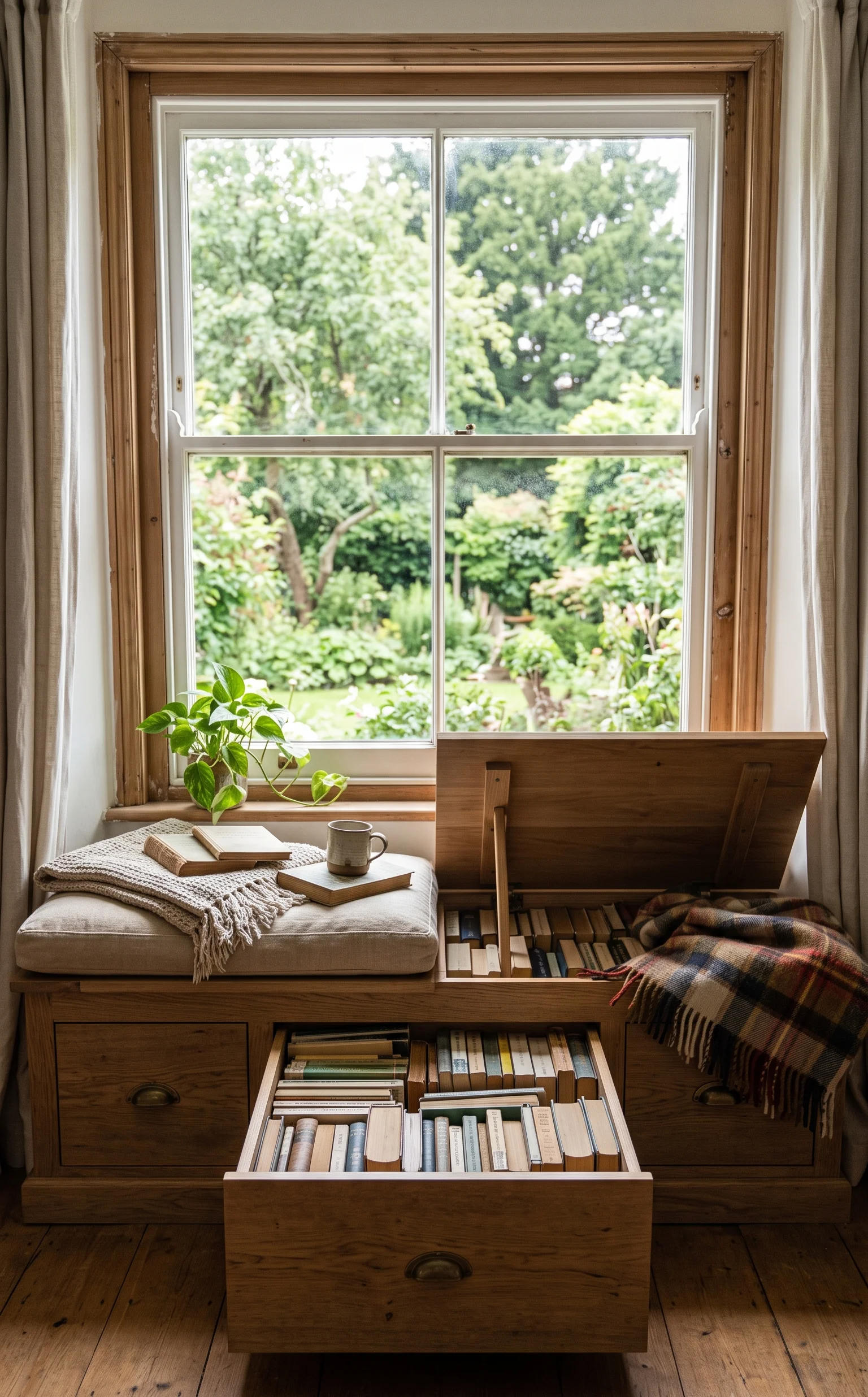
Every reader has overflow. A window bench with deep drawers underneath or a lift-top lid swallows the to-be-read pile, spare blankets, and the winter duvet, all while being the nook itself. In small homes this might be the hardest-working meter of furniture you own.
Also Read: 15 Plum Noir Living Room Ideas 2026 (Pinterest Trend)
The Radiator Cover Seat
The most common obstacle nobody writes about: the radiator sitting exactly where your nook should go. The fix is a purpose-built cover bench with a slatted or grilled front so heat still circulates, topped with a cushion.
Winter bonus that built-in owners know: it’s a heated seat. Genuinely the coziest spot in the entire house from November to March.
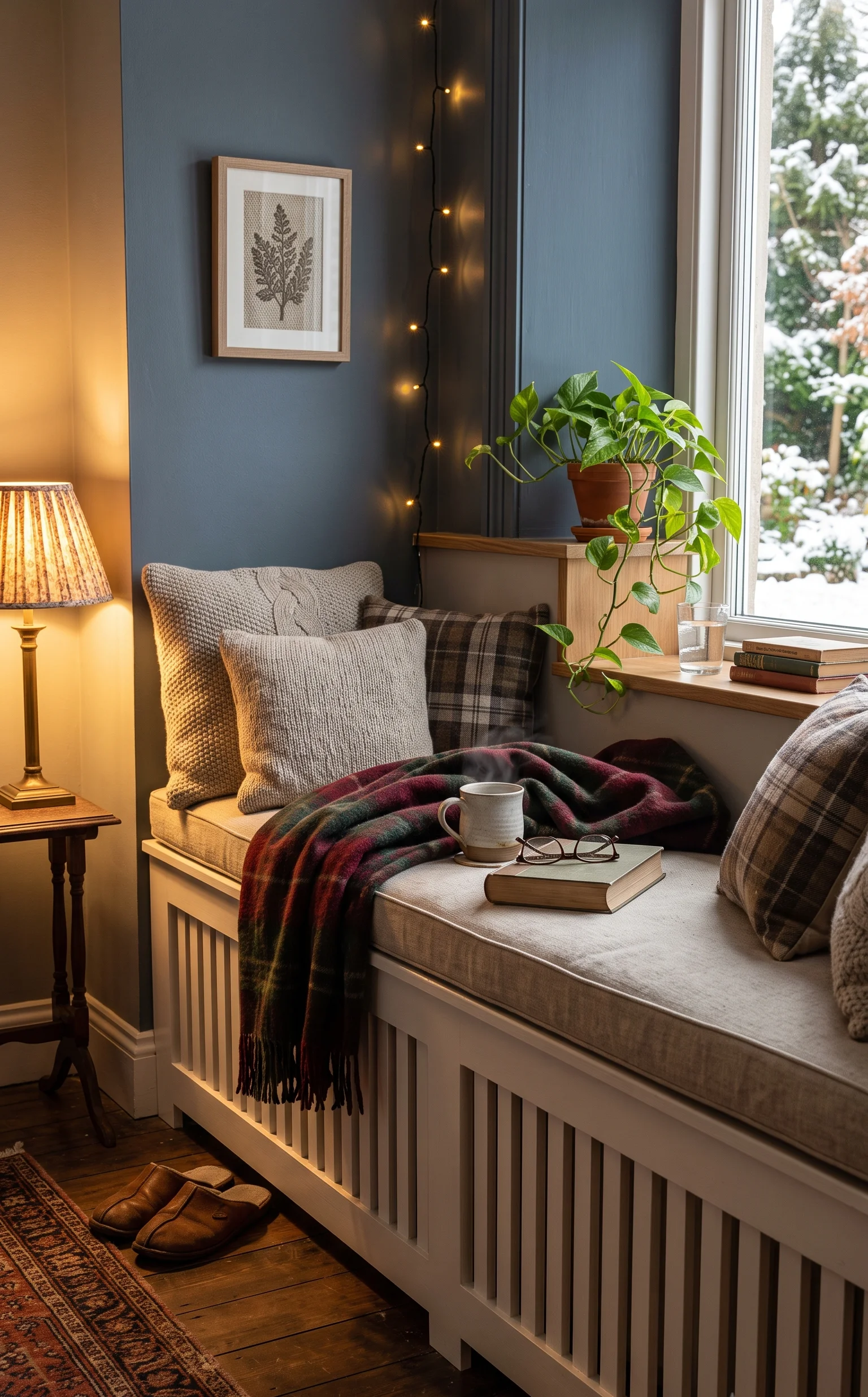
The Deep Sill Perch
Older homes with thick walls often have windowsills 40cm deep or more. That’s already a seat, it just doesn’t know it yet. A firm cushion cut to size, two pillows against the reveal, and done.
Check the sill can take weight (concrete and stone can; a thin MDF board cannot) and this becomes the cheapest real nook on the list.
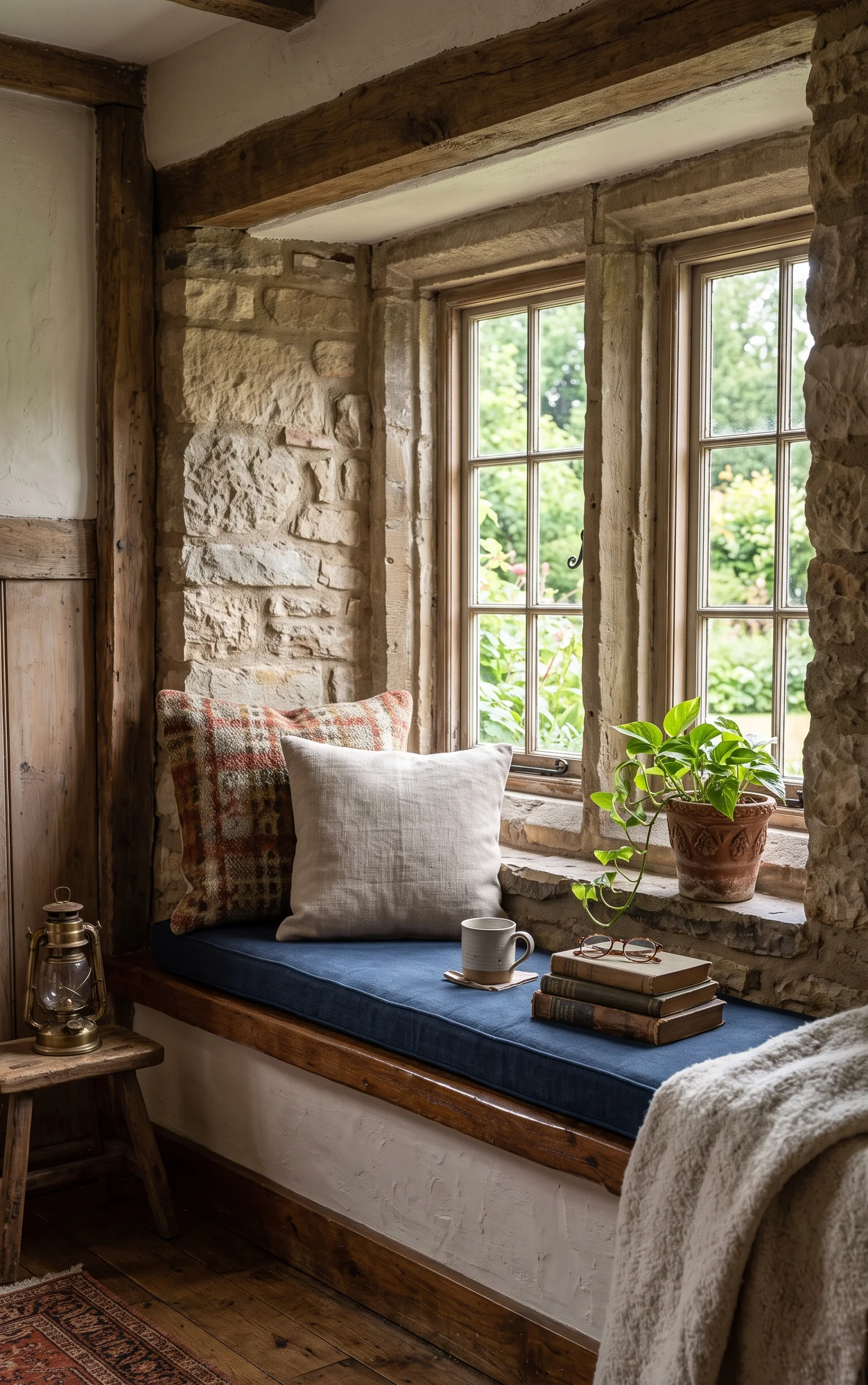
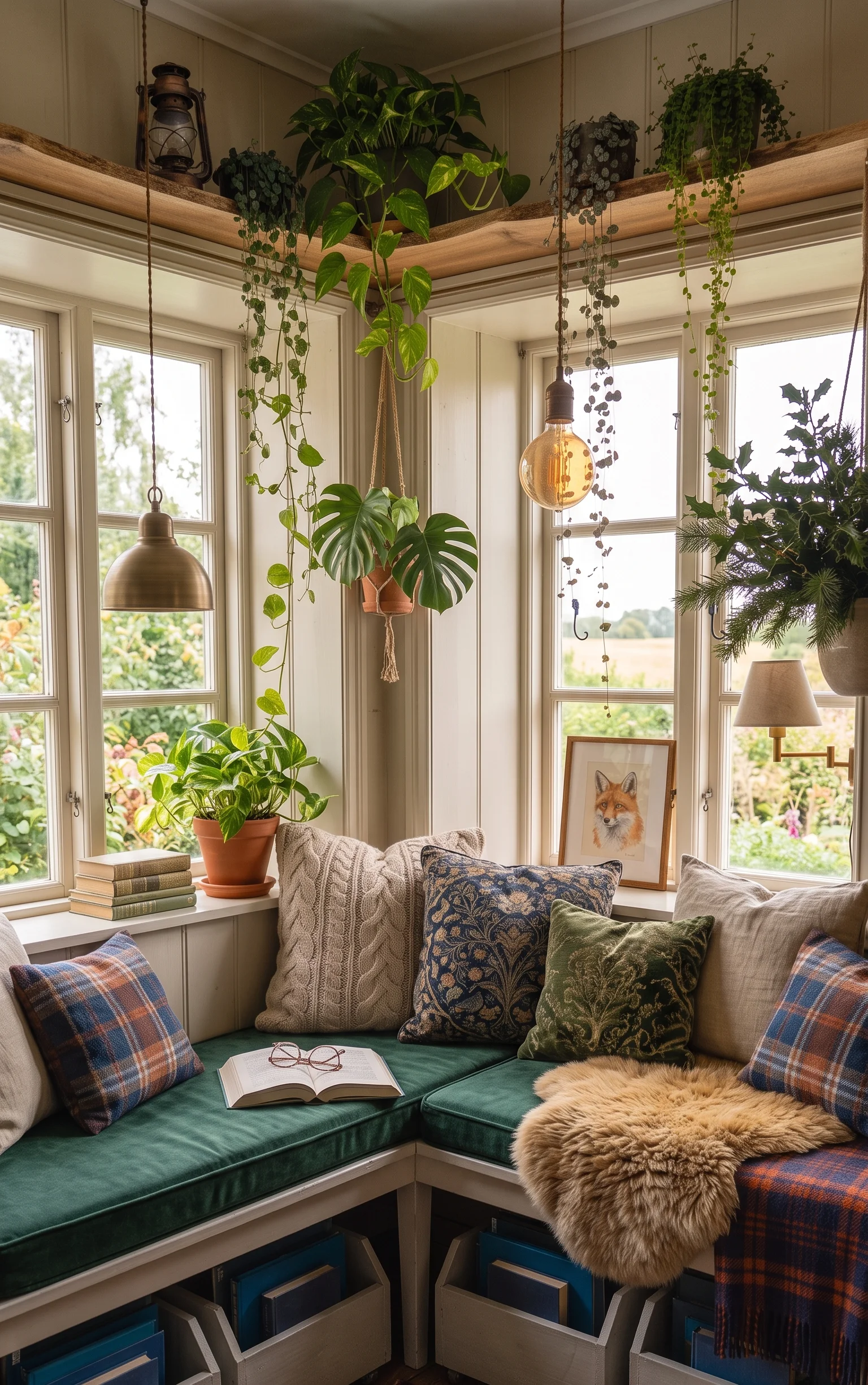
The Corner Wraparound
Where two windows meet in a corner, an L-shaped bench catches light from two directions: morning on one side, afternoon on the other. It seats two readers who don’t want to talk to each other, which every household needs.
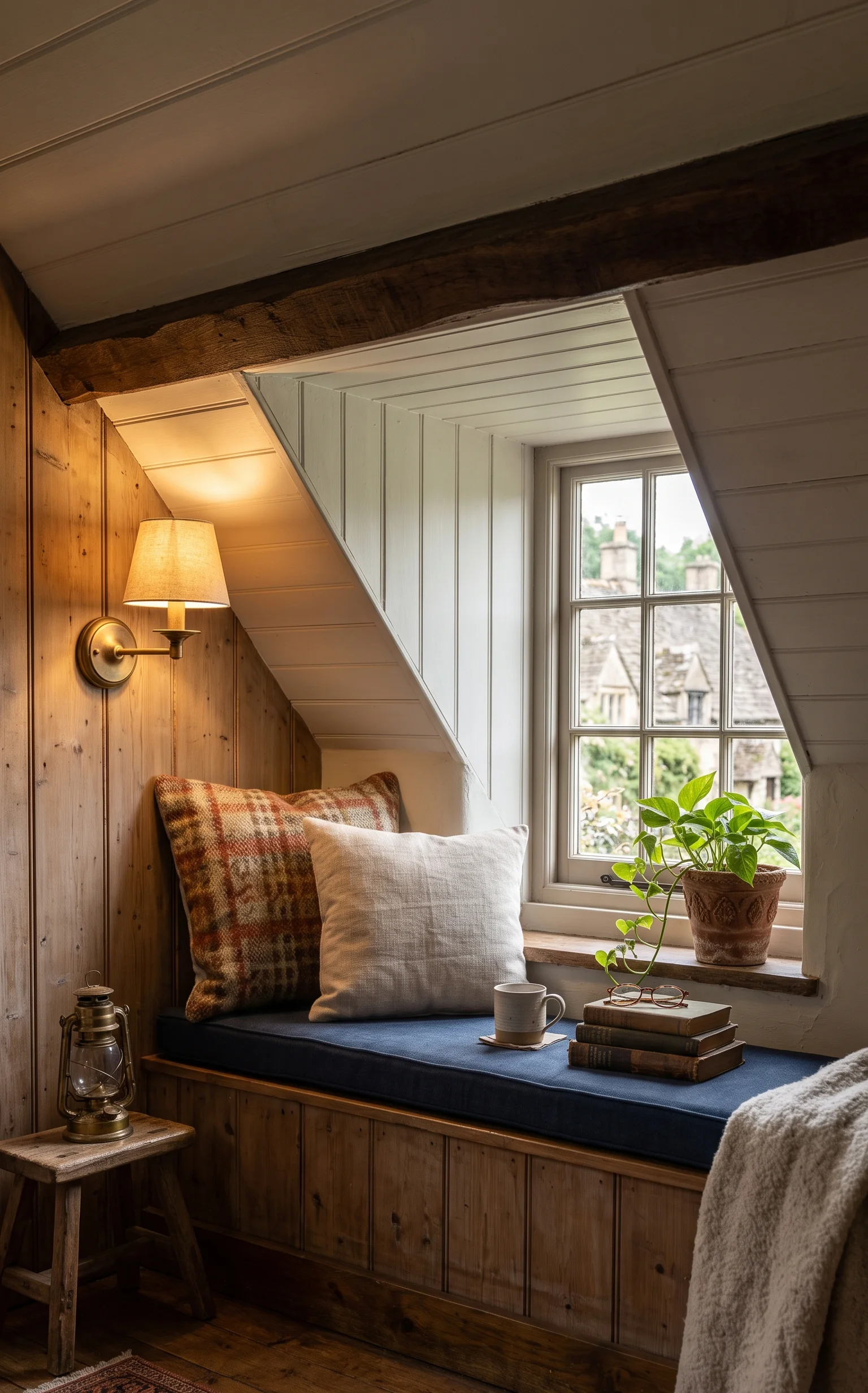
The Dormer Nook
Attic dormers are nook-shaped by birth. The sloped ceiling that makes the space useless for furniture makes it perfect for a low bench and cushions: cocooned, quiet, and away from the household noise. Add a sconce; dormers go dark fast in the evening.
The No-Build Nook (Renters, This Is Yours)
Here’s the secret the built-in photos don’t tell you: a freestanding bench or narrow daybed pushed against the window achieves ninety percent of the effect with zero percent of the carpentry. When you move, the nook moves with you.
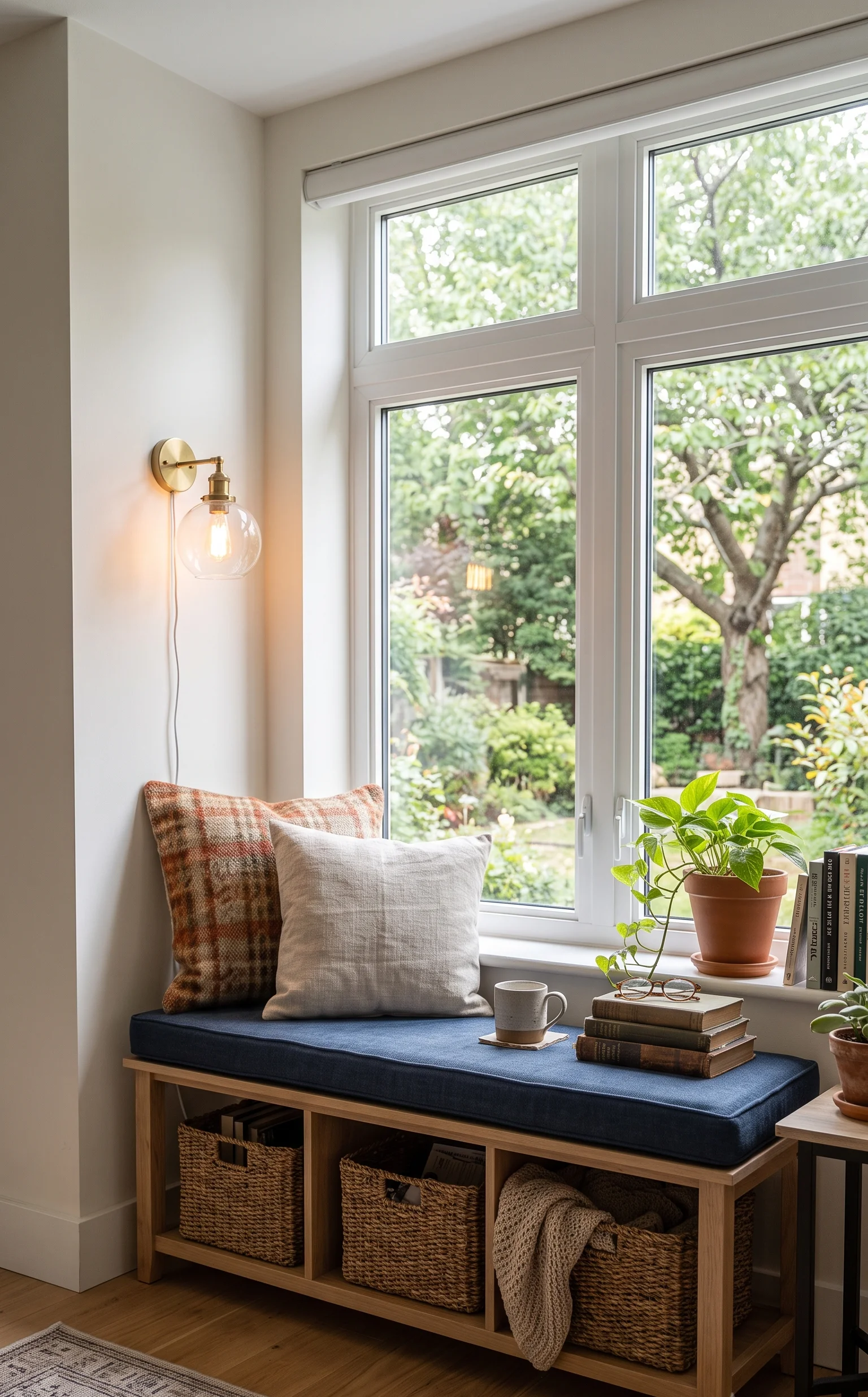
The Armchair Version
No bench, no problem. An armchair angled toward the window, not squarely facing the room, plus a side table and a floor lamp is a complete reading nook. The angle is the trick: it signals “retreat” instead of “seating.”
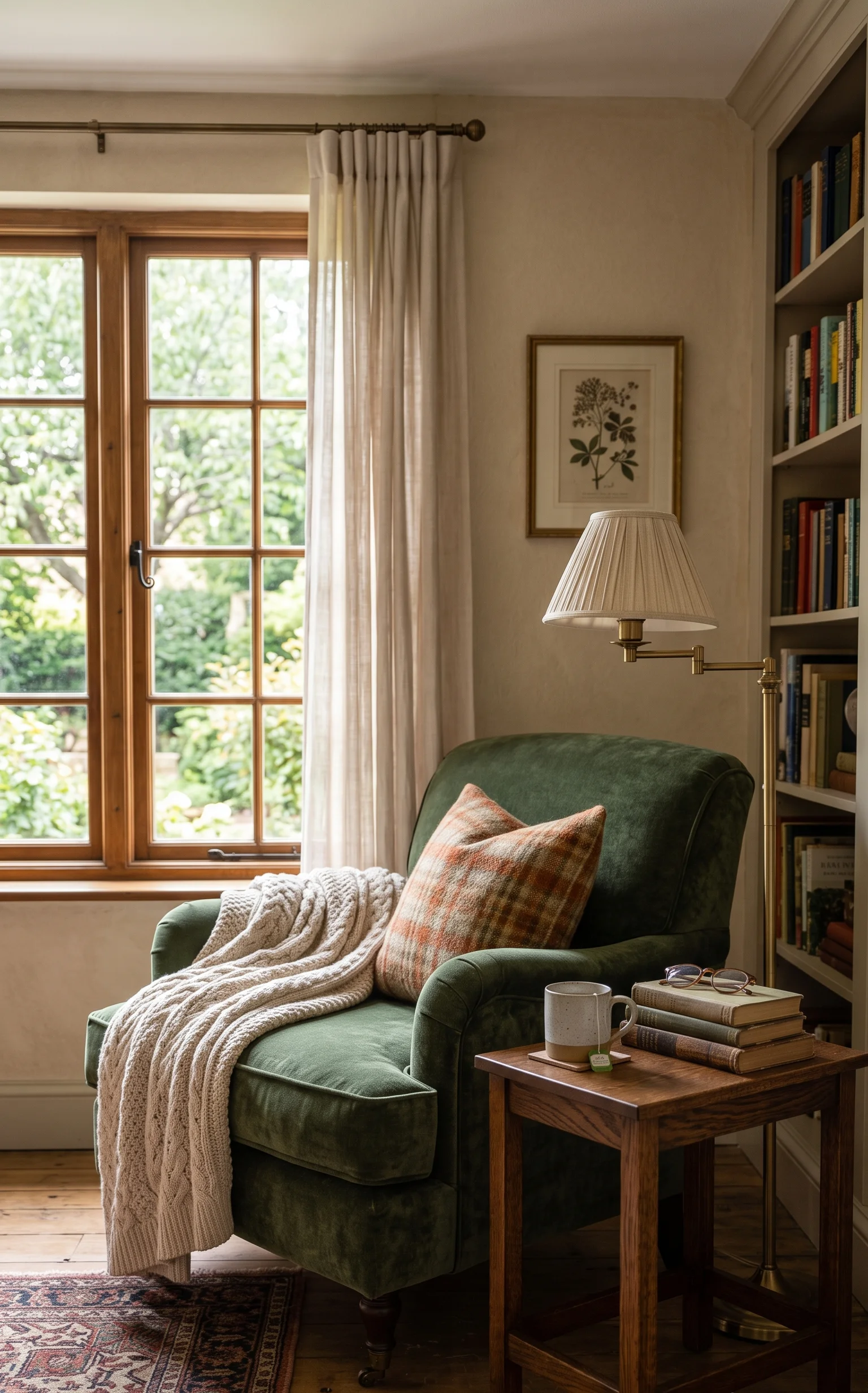
The Floor Cushion Nook
Lowest cost, lowest commitment, weirdly the most loved by kids and teenagers. A large floor cushion or folded futon below the window, a stack of pillows against the wall, a sheepskin or chunky rug underneath. It photographs like a boho dream and packs away in thirty seconds.
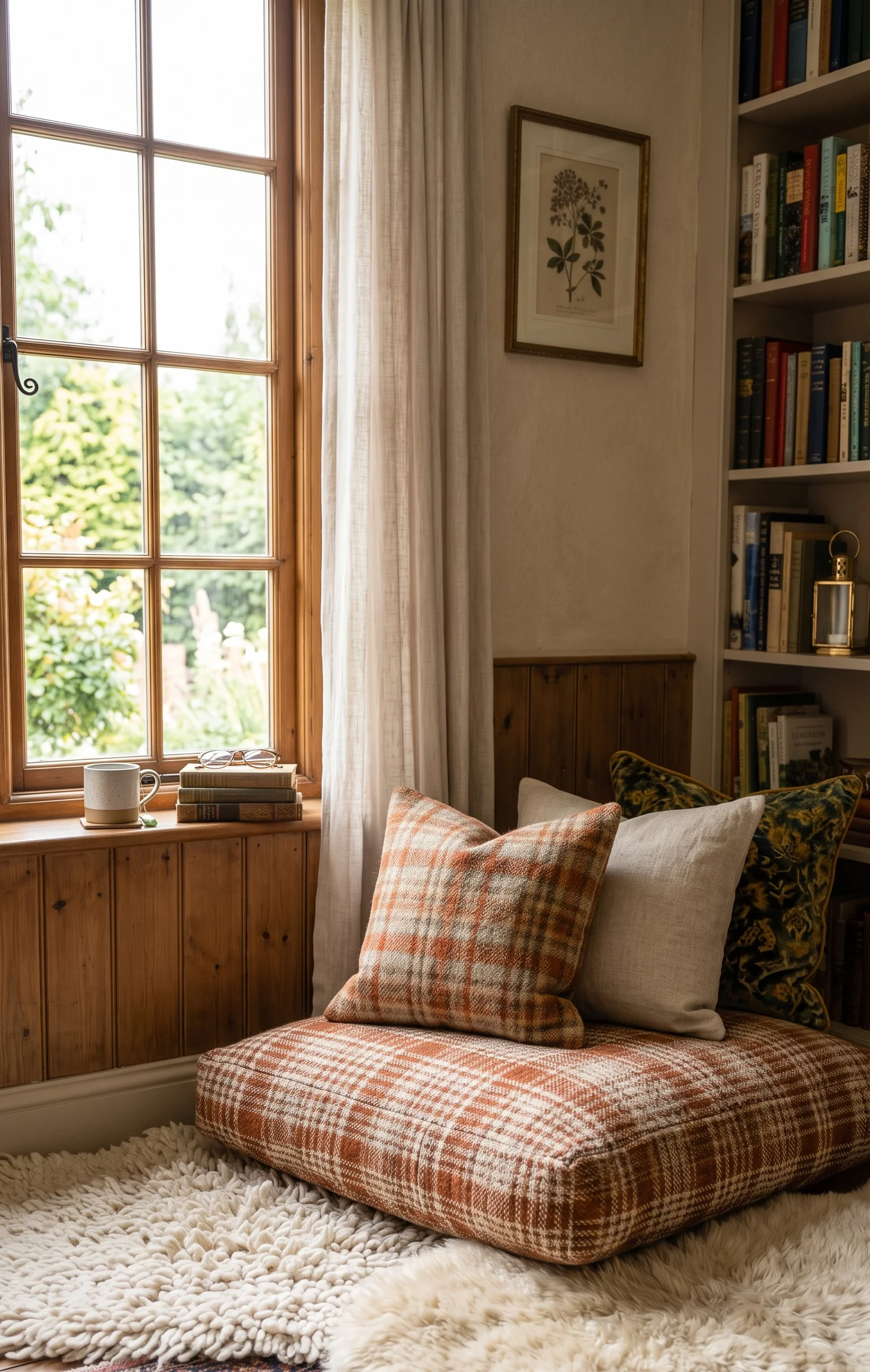
The Curtained Hideaway
Hang a curtain rail across the front of the window recess and the nook becomes a room. Drawn shut, it’s a private capsule with daylight inside, the closest adults get to the blanket forts we’ve never really stopped missing. Linen or sheer fabric keeps it dreamy rather than dark.
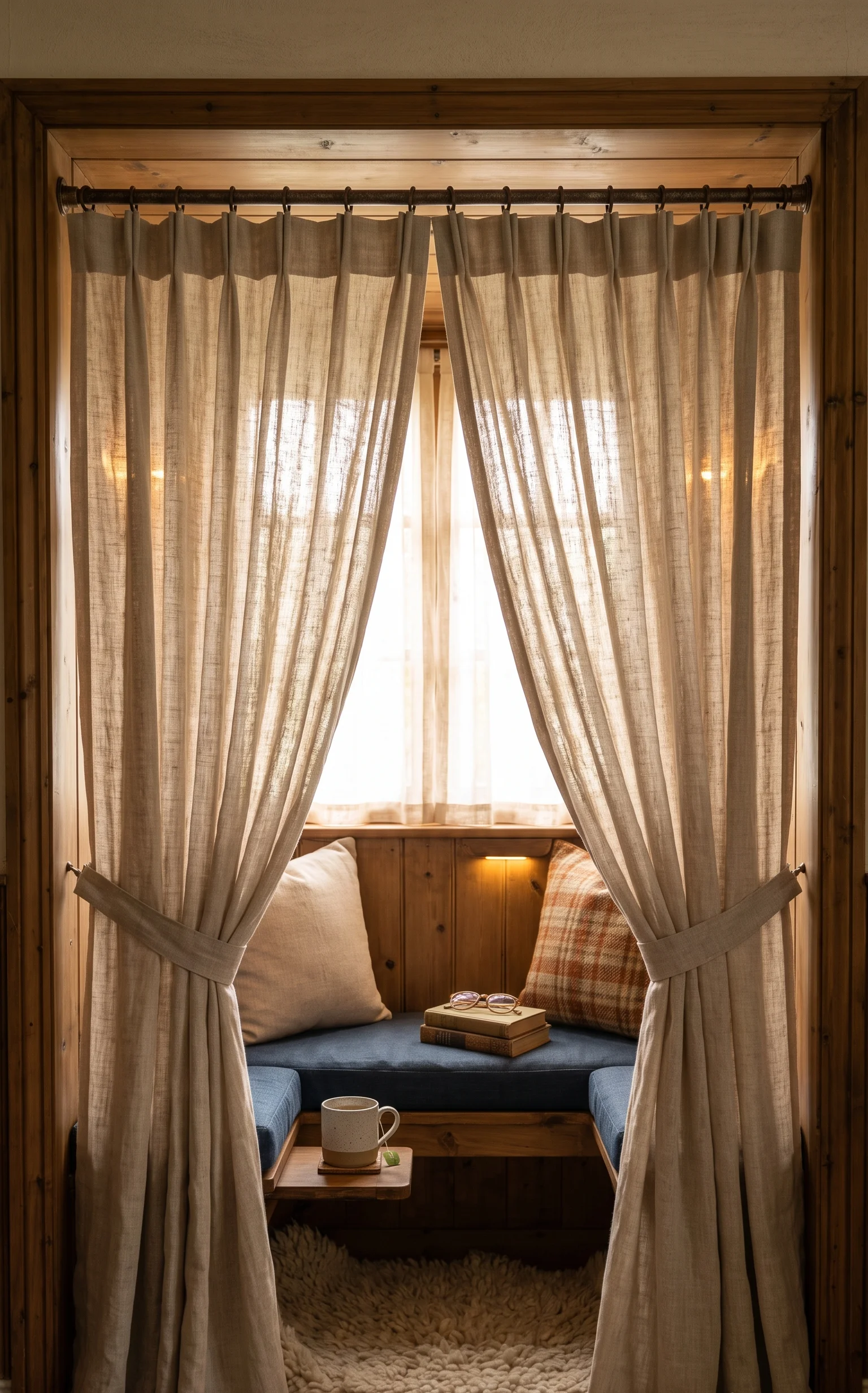
The Five-Minute Nook Formula
For the impatient: chair or bench by the window + throw blanket + one warm lamp + something to put a cup on + view angled outward. That’s it. That’s the nook. Every elaborate idea on this list is this formula wearing better clothes.
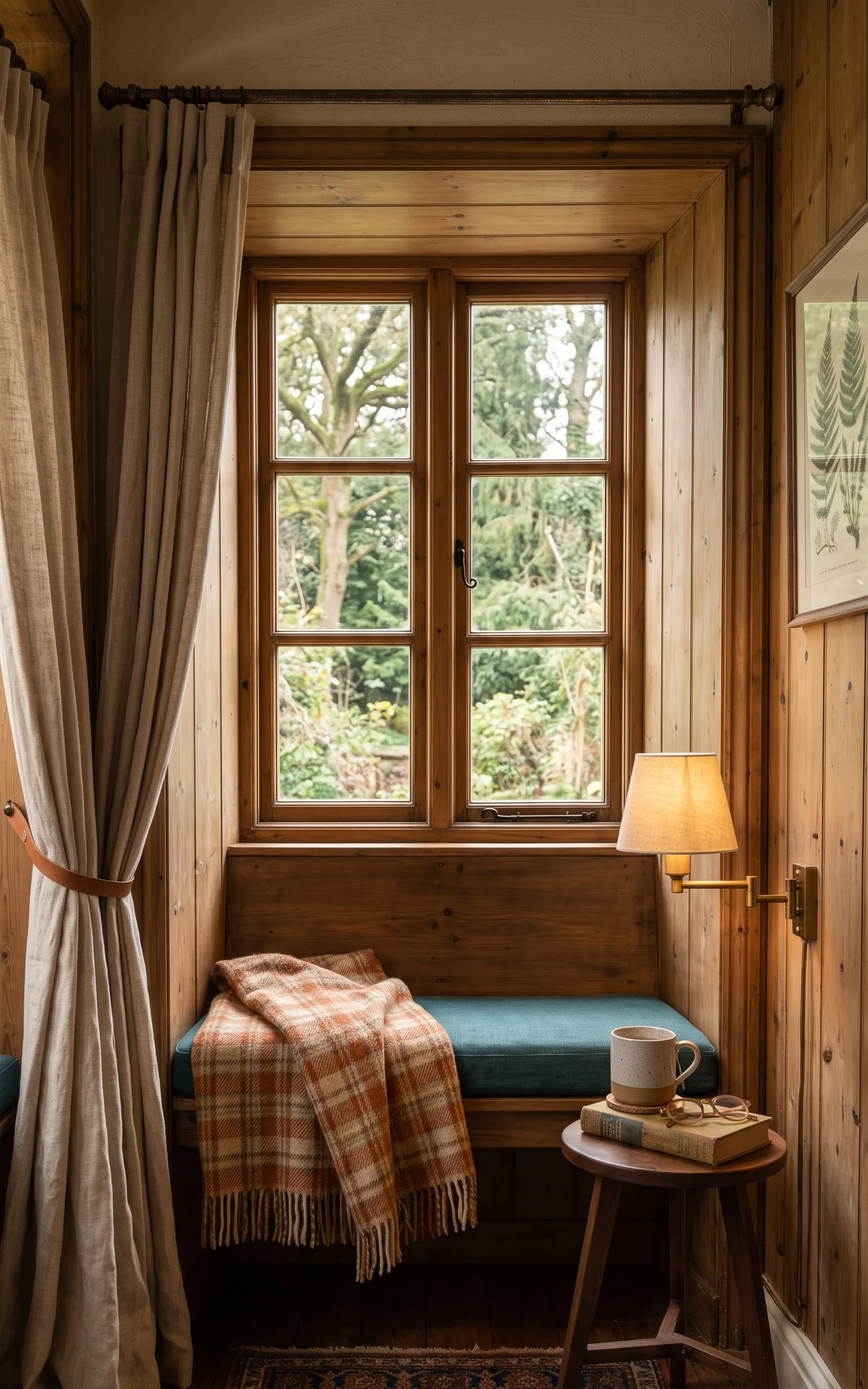
The Reading-Desk Hybrid
A window bench at one end, slim desk surface continuing at the other: one built-in run serving morning emails and evening chapters. For home offices in small spaces, it means the room earns its keep twice. The seat cushion should stop where the desk begins; a visual break keeps the two zones honest.
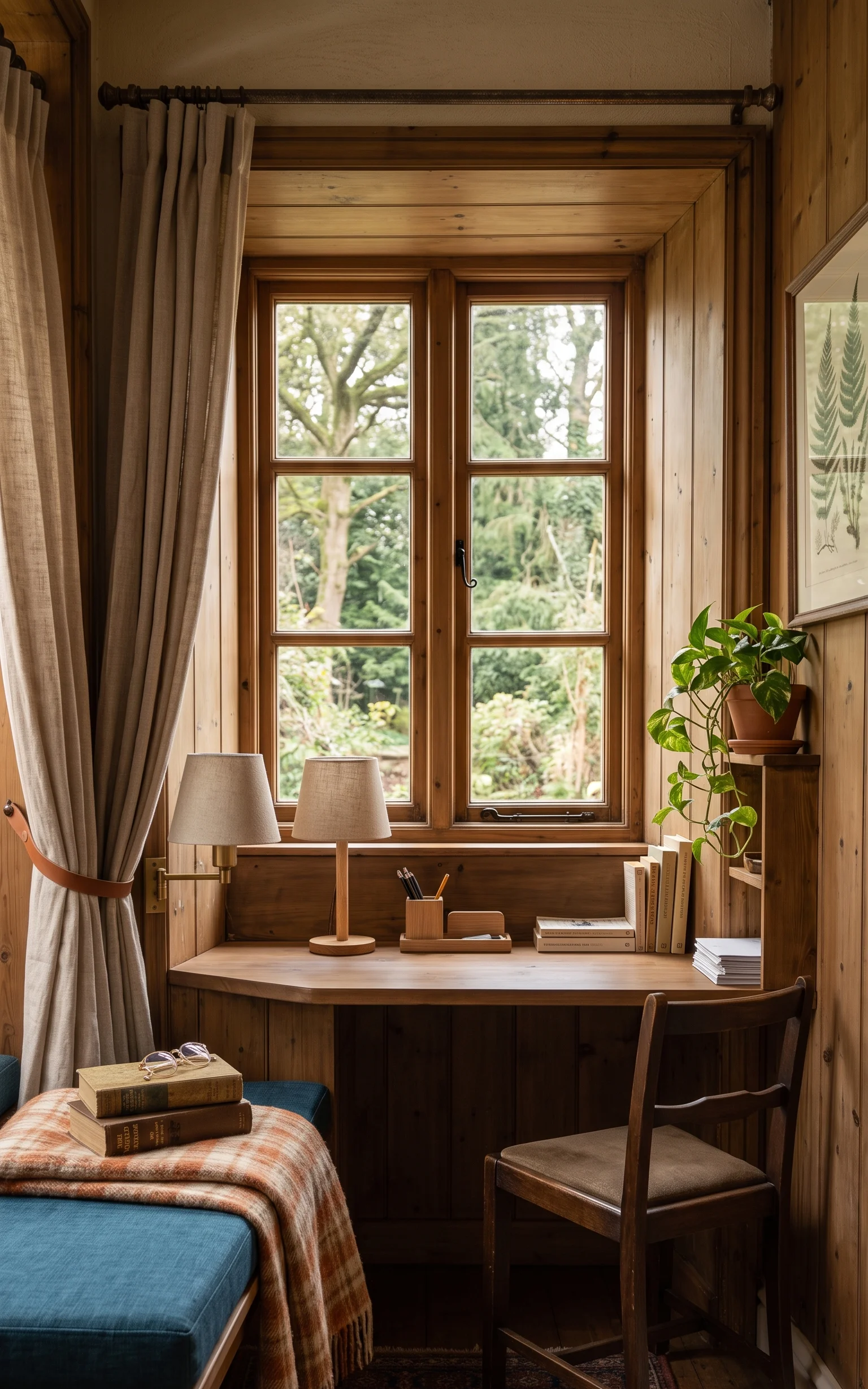
The Kids’ Window Nook
Low bench, washable cushion covers, book bins they can reach, and their own little sconce switch: children guard a spot that’s theirs more fiercely than any toy. One non-negotiable: window locks or restrictors, and never position climbable seating under an openable window unsecured. Cozy comes second to safe.
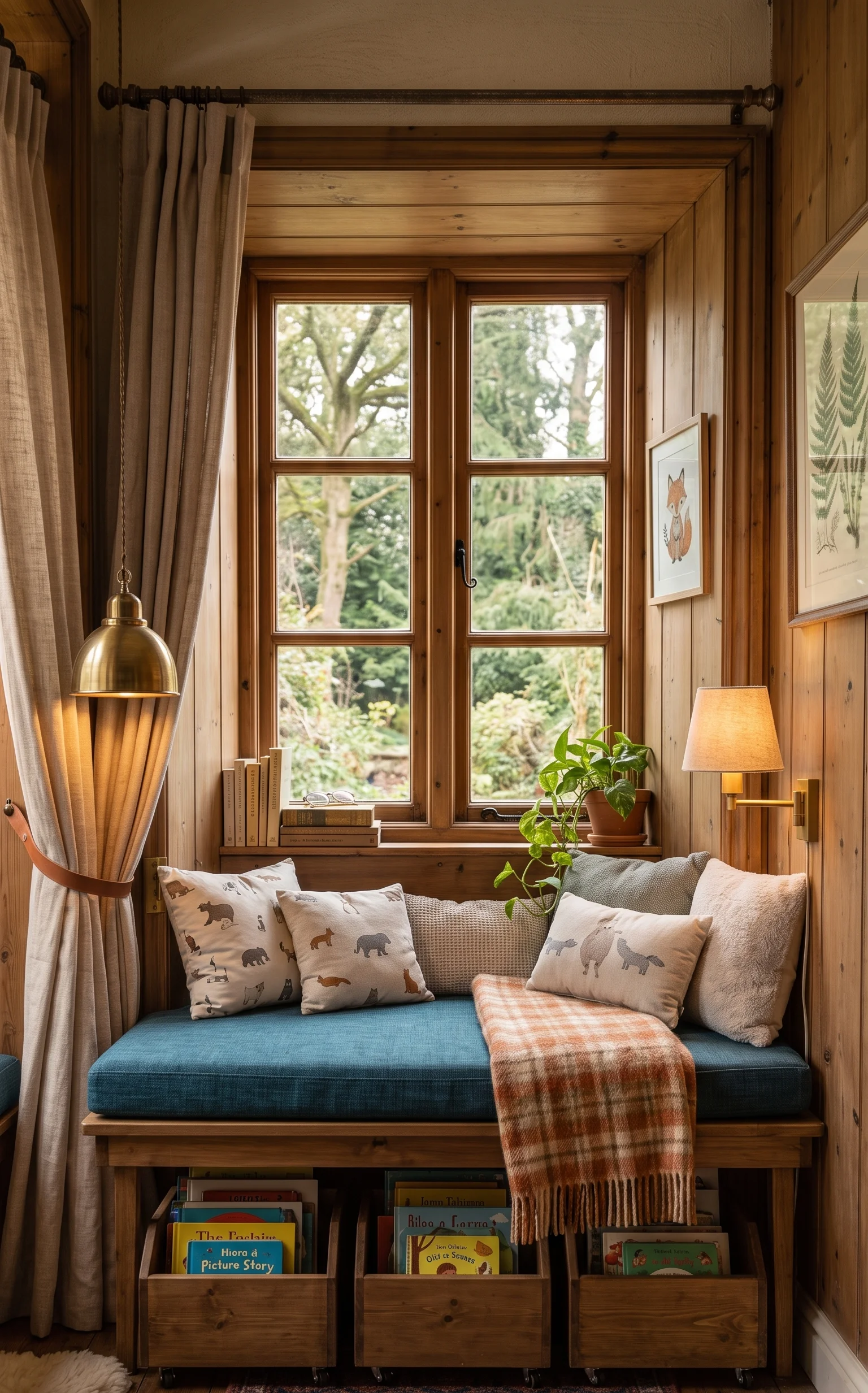
The Dark Cocoon
Paint the entire window recess, walls, trim, bench, shelves, one deep shade. Ink blue, forest, aubergine. Against a lighter room, the dark alcove reads as a destination, and the window light glowing inside it turns downright cinematic. This is the single most dramatic paint trick available for the money.
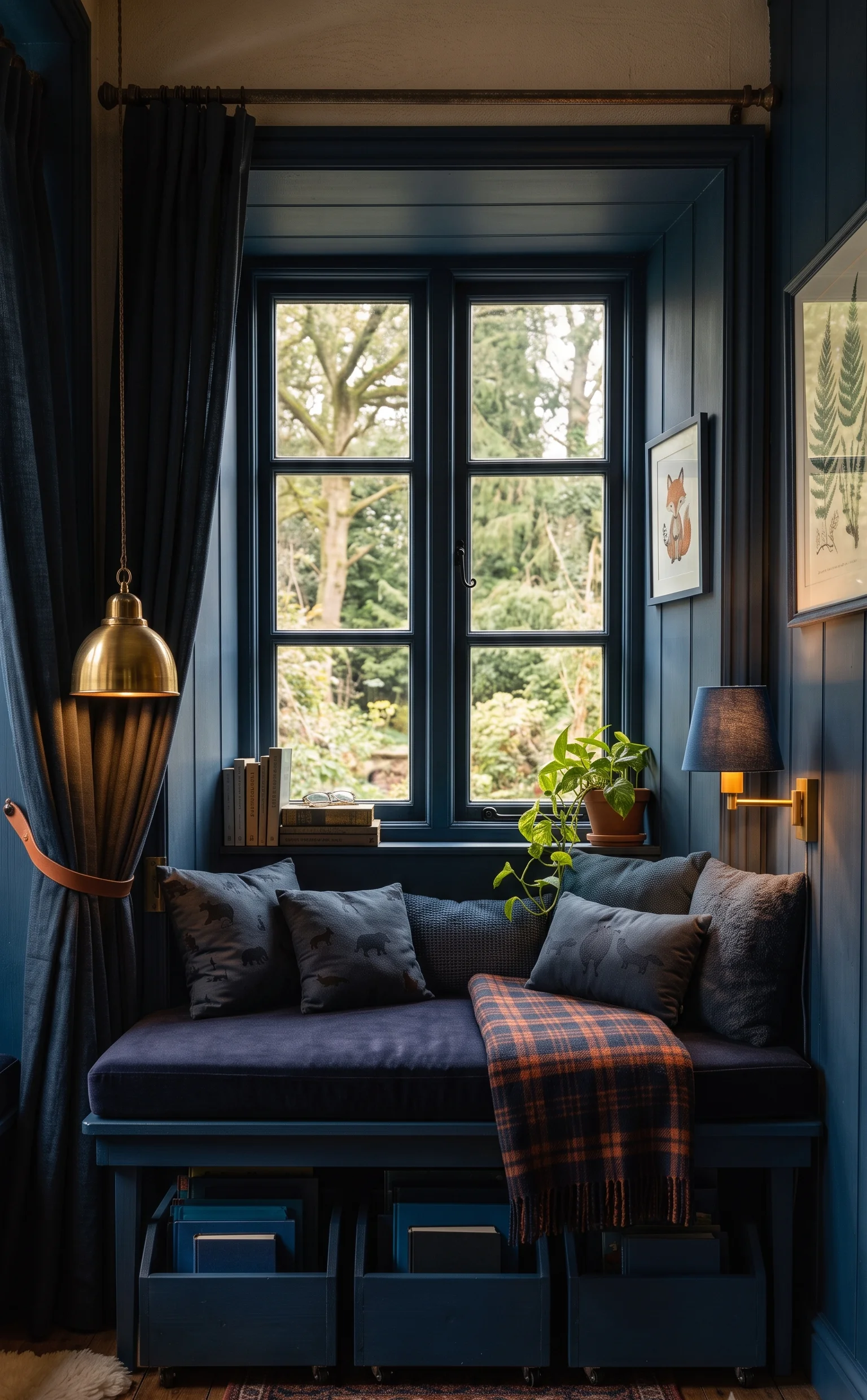
The Board-and-Batten Backdrop
Panelling on the wall around and below the window frames the nook like a picture. Painted a soft heritage tone, it adds the “was this always here?” quality that separates designed nooks from benches near glass.
Light It Like You Mean It
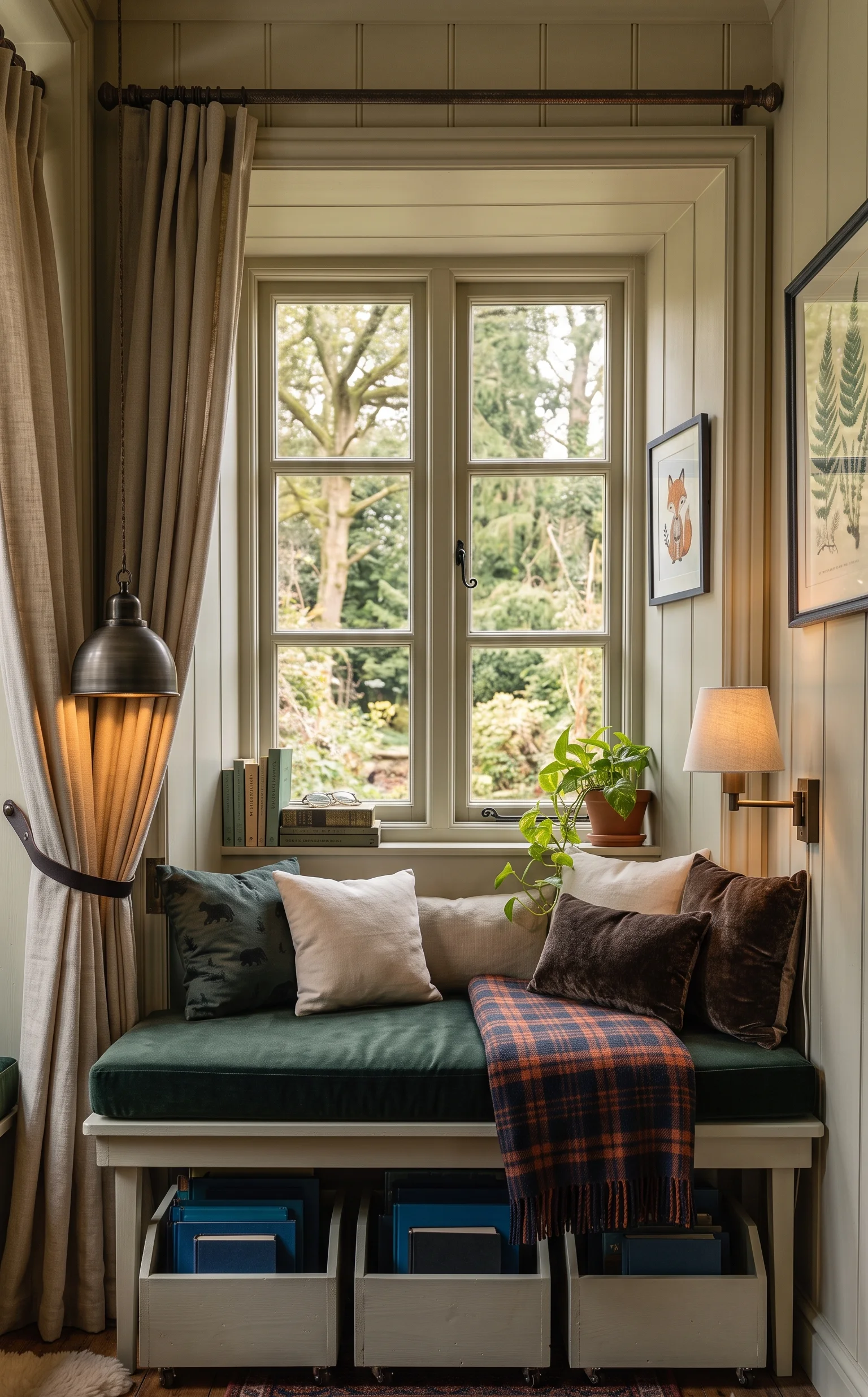
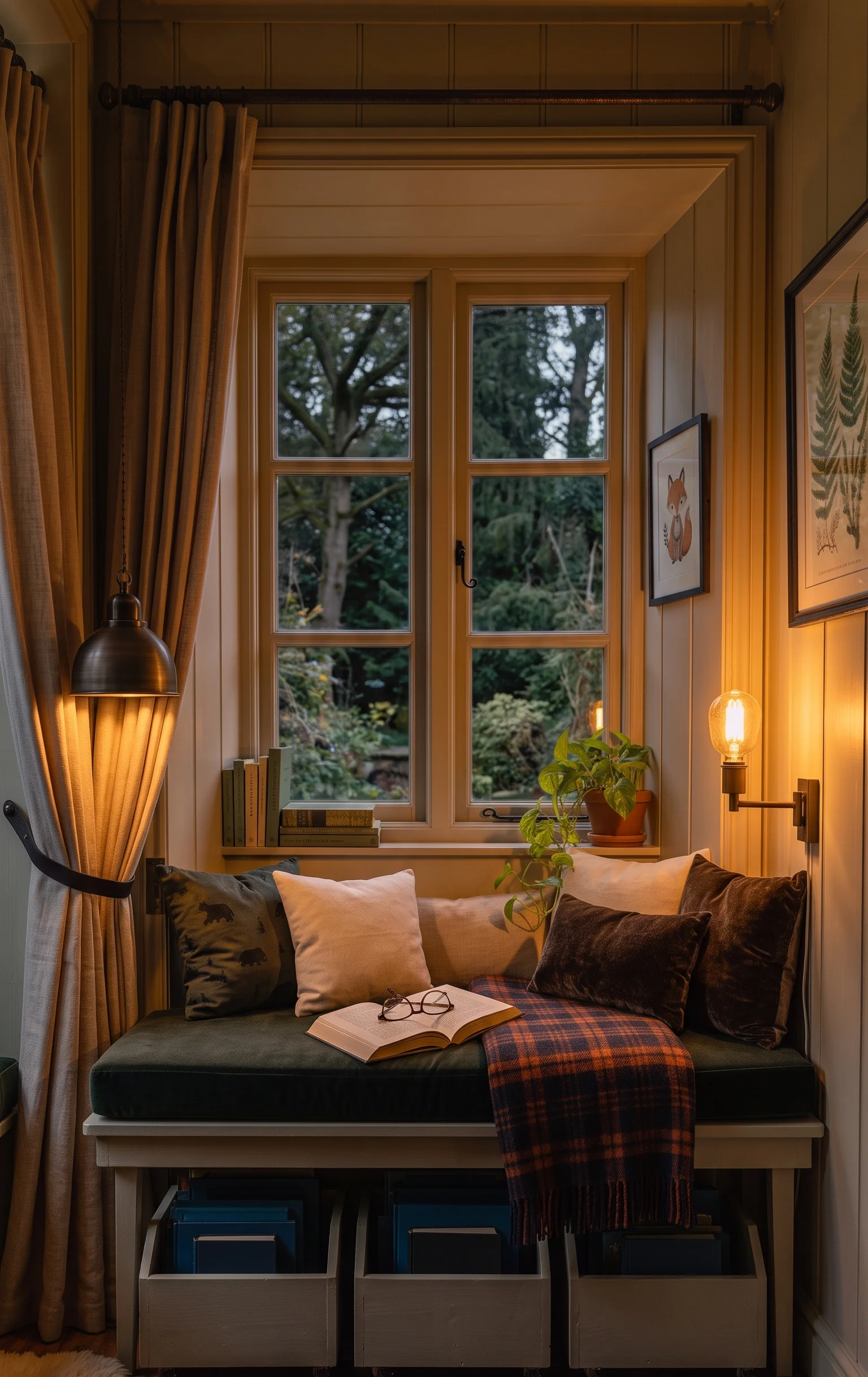
Daylight runs out mid-chapter. The nook needs its own evening plan: a wall sconce mounted at shoulder height (plug-in versions exist for renters), warm bulb, positioned to light the page not glare off it over your shoulder. A tiny picture light over the shelf above is the luxury touch nobody regrets.
Tame the Glare With Sheers
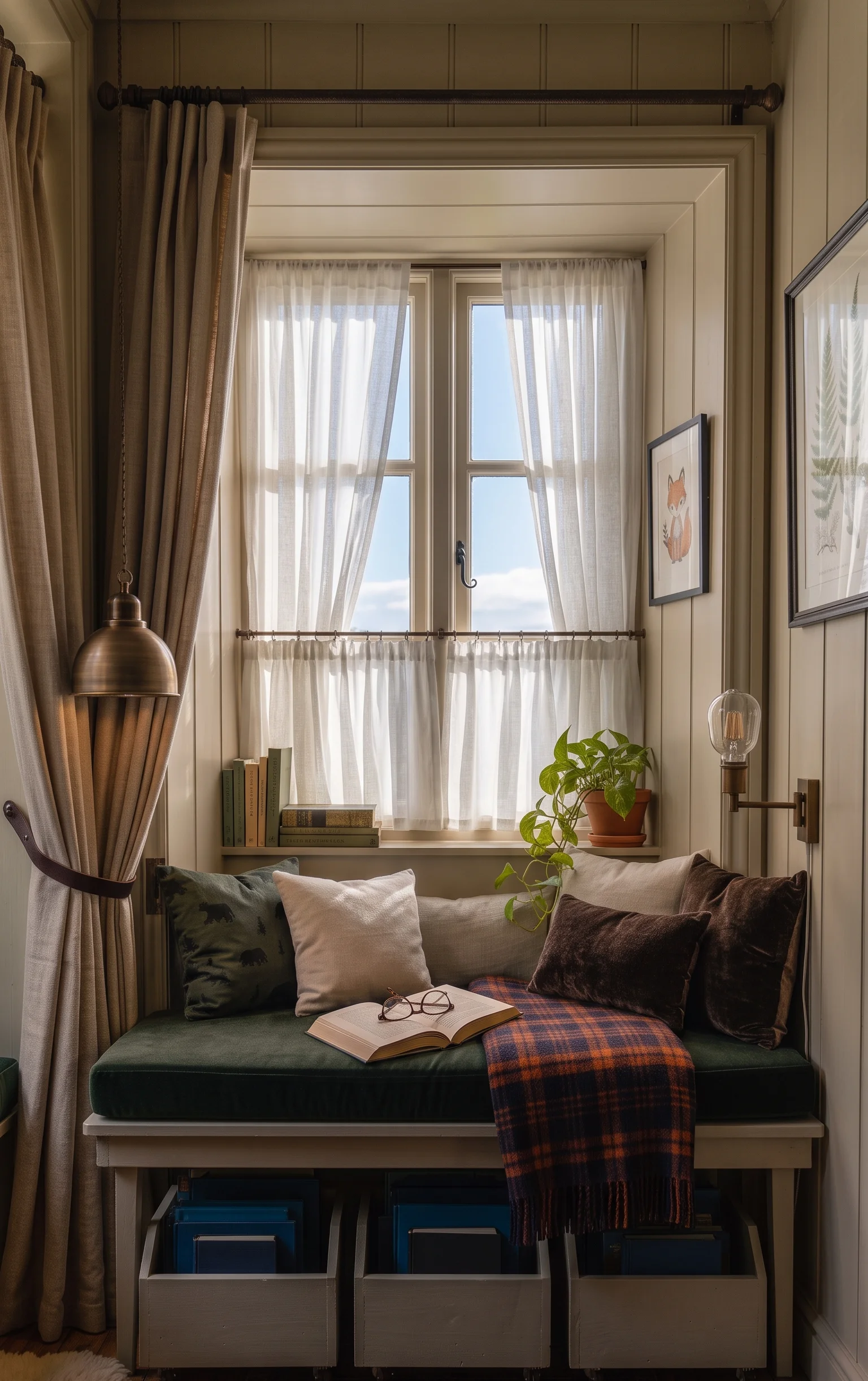
Full sun on white pages is squint city. A double rail sheer curtain for daytime diffusion, heavier drape for evening coziness lets you tune the light instead of fighting it. Café curtains covering just the lower half work beautifully for street-facing nooks: privacy below, sky above.
Get the Cushion Math Right
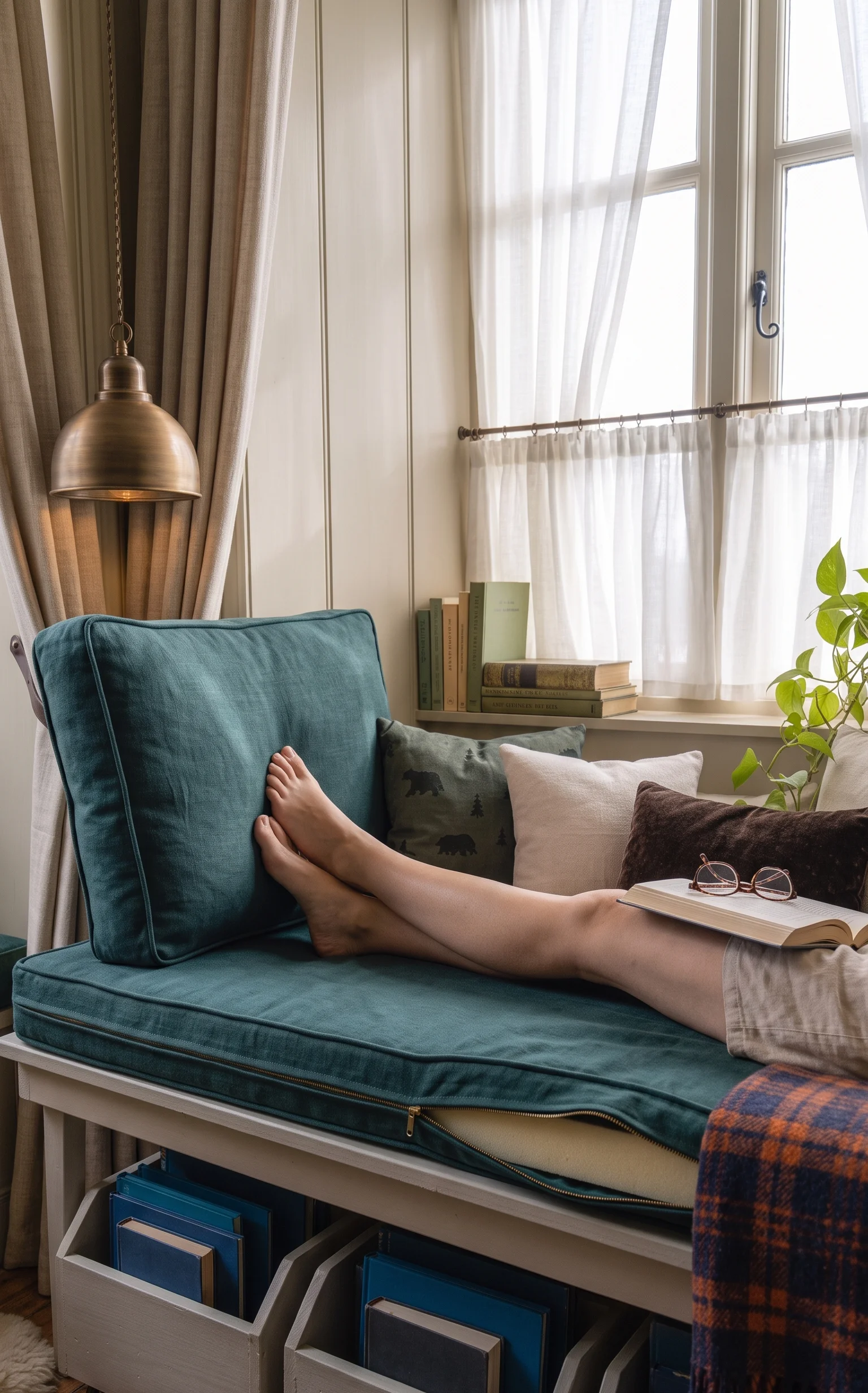
The detail that separates nooks people photograph from nooks people use: seat height around 45cm like a chair, depth minimum 50cm (60+ if you want legs up), and firm foam 8–10cm thick softer than that and you sink to the board in twenty minutes. Piped edges and a removable washable cover future-proof the whole investment.
Frame It With Green
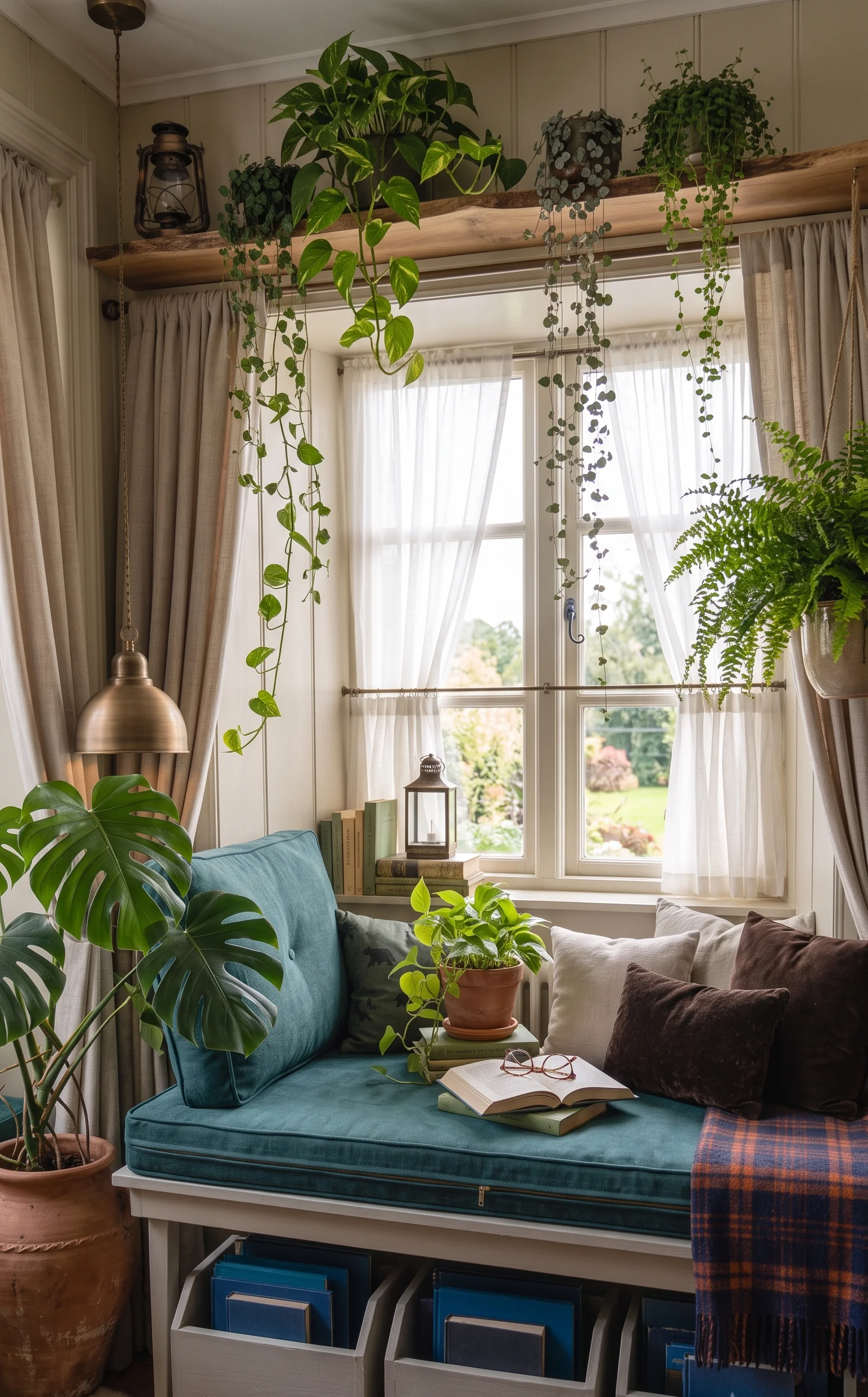
A trailing plant descending from a shelf above, one leafy pot at the bench’s end plants soften the window’s hard lines and make the nook feel like a garden seat indoors. Choose bright-light lovers here; this is the sunniest real estate in the house, so use it.
Re-Dress It by Season
The nook is the smallest room you own, and the cheapest to redecorate. Linen and cotton covers for summer; wool, velvet, and a sheepskin layer for winter; one seasonal cushion swap in between.
Twenty euros of textiles twice a year keeps the spot feeling new and keeps you coming back to it.
3 Mistakes That Make Window Nooks Unusable
A seat too shallow to sit in. Under 45cm deep is a shelf pretending to be a bench. If you can’t settle in with a cup of tea, the nook decorates instead of functions.
Ignoring the sun’s schedule. A west-facing nook without sheers is a greenhouse at 5pm. Sort the light control before the cushions.
Pillow hoarding. Twelve cushions look inviting until every single one has to move before you sit. Three good pillows beat a display you have to excavate.
FAQs
How deep should a window seat be for reading?
At least 50cm to sit comfortably, and 60–75cm if you want to pull your legs up or lounge sideways. Seat height should land around 45cm like a standard chair, with firm foam 8–10cm thick on top.
How do I make a window reading nook without a built-in seat?
Push a freestanding bench, narrow daybed, or low storage unit against the window and top it with a firm cushion. An armchair angled toward the glass with a lamp and side table works just as well — no tools, no landlord conversation.
What should I put in a reading nook?
A comfortable seat, one warm reading light, a surface for a drink, a throw blanket, and books within arm’s reach. Everything beyond those five things is styling rather than function.
Are window seats outdated?
No they’ve moved from formal built-ins to cozier, more textured versions: colour-drenched alcoves, curtained hideaways, and casual floor-cushion setups. The desire for a light-filled retreat spot has only grown.
How much does a built-in window seat cost?
A carpenter-built bench with storage typically runs from several hundred to a few thousand euros depending on size and finish. DIY versions using stock cabinets or a sturdy bookcase base come in far cheaper, and no-build versions cost only the cushion.
Final Thoughts
A window reading nook is rare among home projects: small budget, high daily payoff, and no square footage required just a window you’ve been walking past. Pick the version that matches your lease and your patience, sort the cushion depth and the lamp, and let the light do the rest.
