

Every parent painting a boy’s room faces the same quiet math: he’s seven now, he’ll be ten before you repaint. The best boys’ bedroom paint ideas solve exactly that problem colors and wall treatments with enough personality for a kid and enough maturity to survive three birthdays.
Quick answer first: boys’ rooms in 2026 are moving past default blue into earthy greens, terracotta, charcoal, and warm neutrals, paired with paint techniques arches, color blocking, half-walls that add character without a themed repaint every two years.
Each idea below carries an age tag so you can skim straight to what fits your kid. And yes, blue made the list twice but it had to earn it.
Navy on One Wall, Calm Everywhere Else
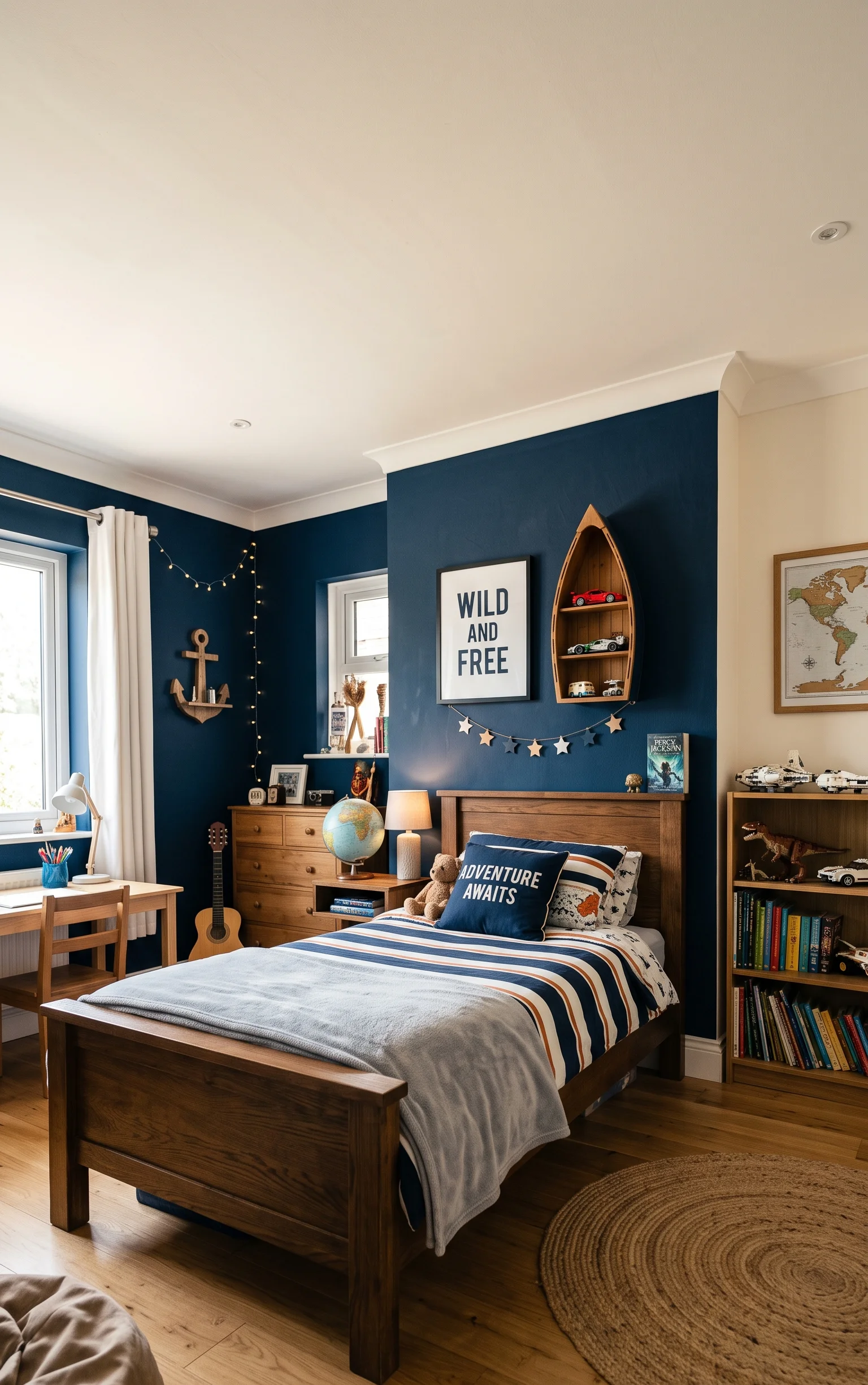
Navy is the little black dress of boys’ rooms. One feature wall behind the bed in deep navy, the rest in warm white, gives drama without darkness and it works whether the bedding is dinosaurs or a teenager’s band posters. That flexibility is the whole point. The room around it changes; the navy just keeps working.
Cloudy Mid-Tone Blue That Refuses to Look Childish
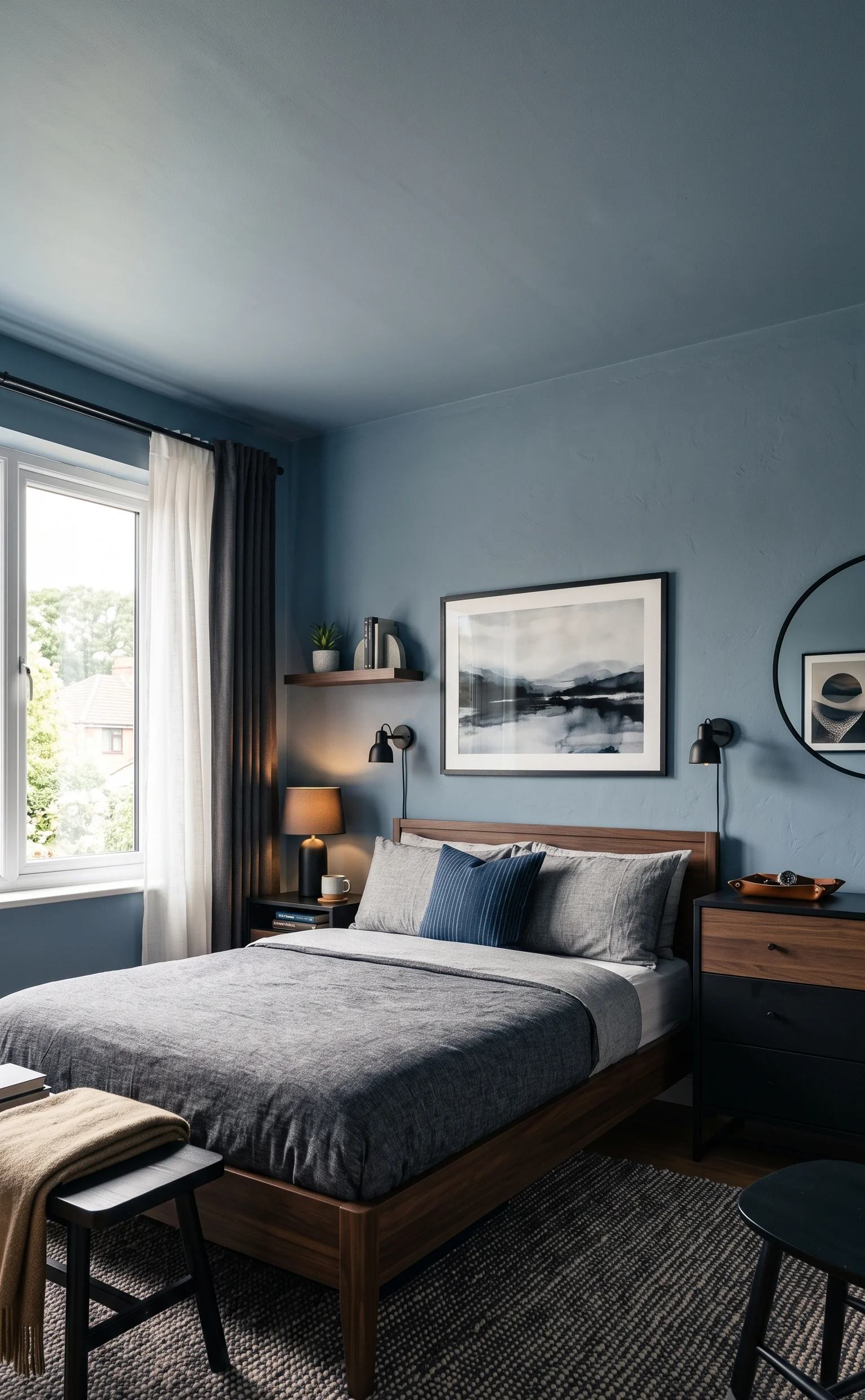
If you want blue on all four walls, skip the bright primary versions. A gray-undertoned, cloudy mid-blue reads calm rather than “kids’ section” and it flatters wood, white, and black furniture equally. This is the shade for parents who genuinely never want to repaint.
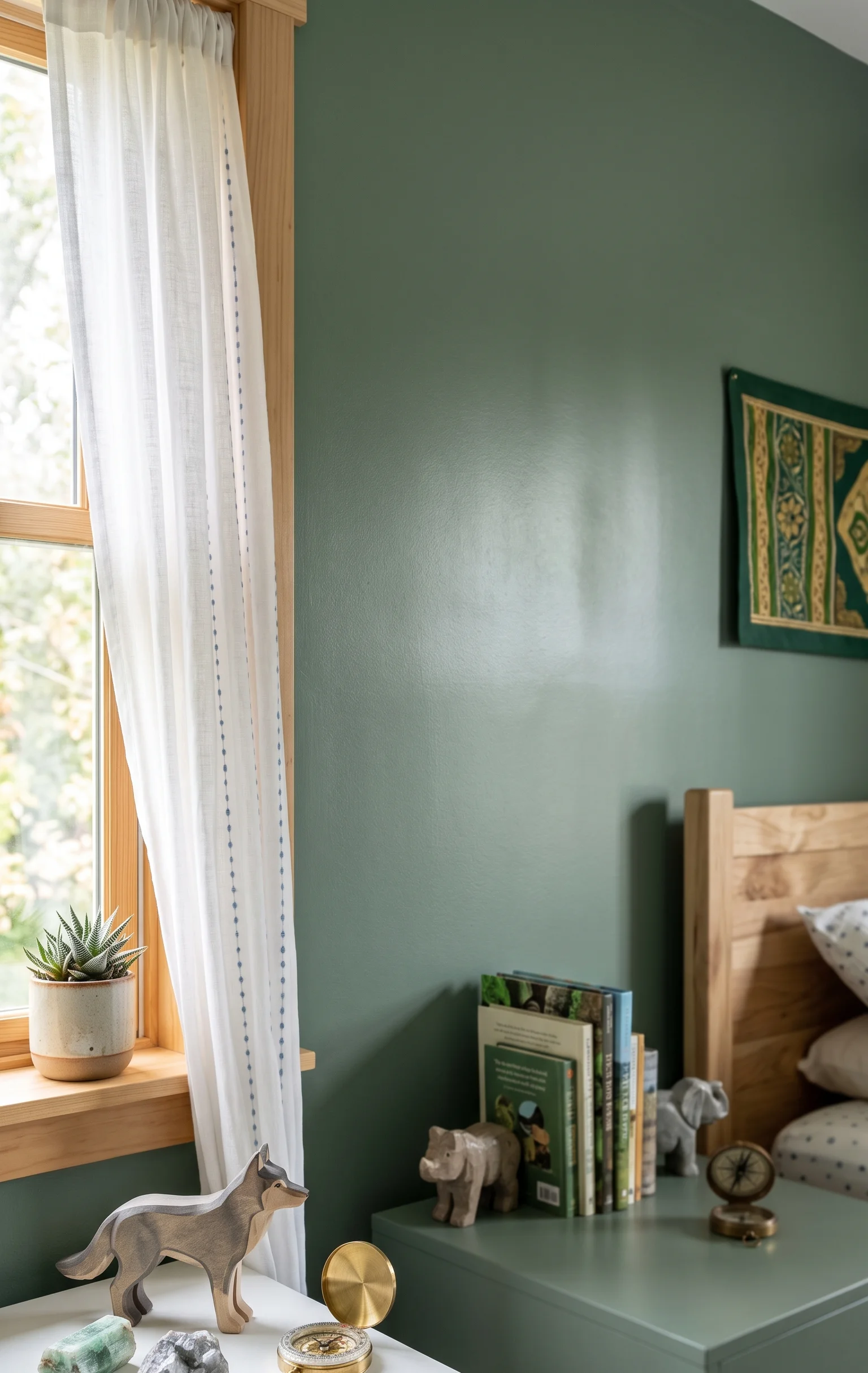
Sage Green for the Gentle Years
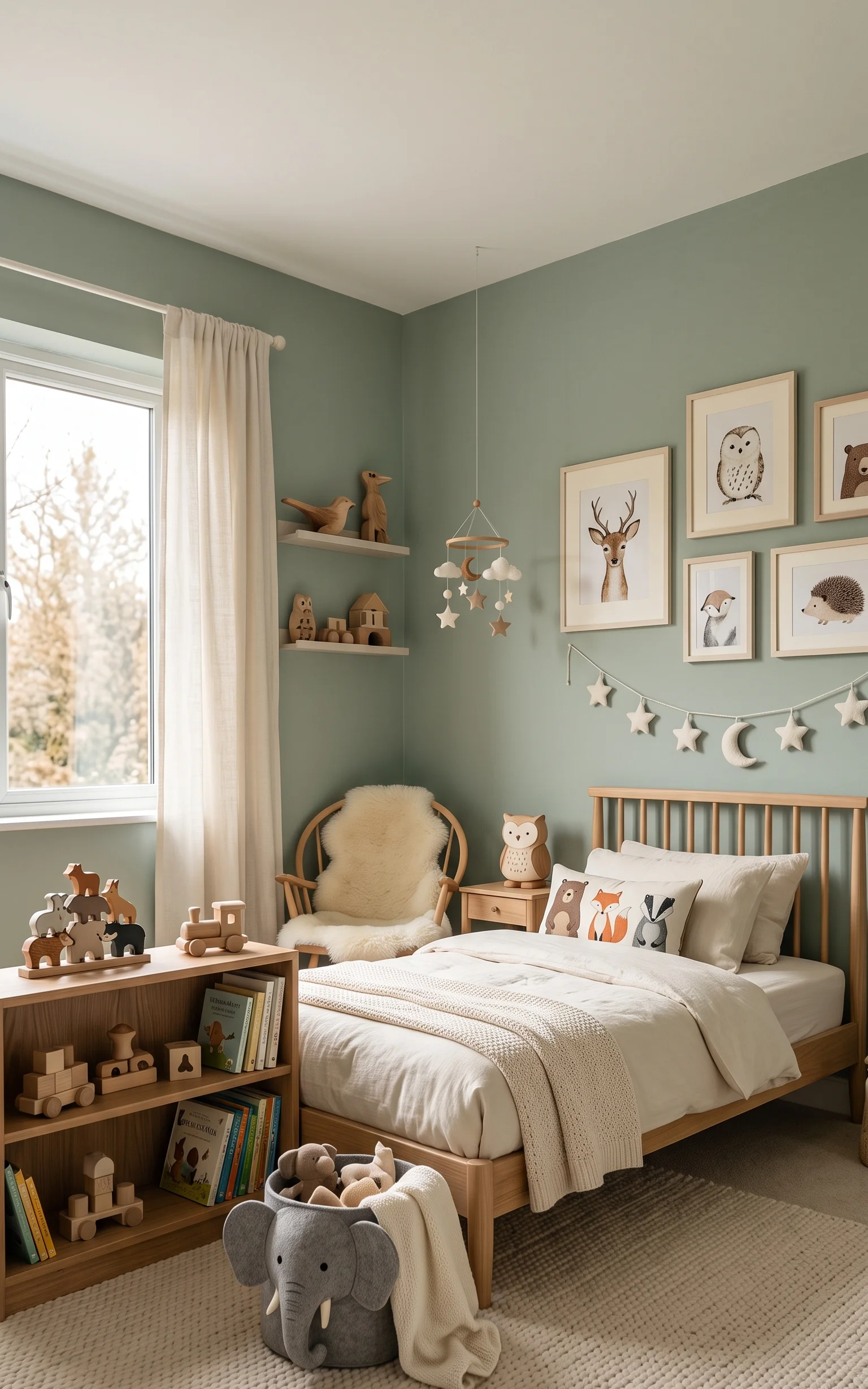
Sage is what happens when a color learns manners. Soft, nature-connected, and calming at bedtime, it pairs beautifully with animal prints, wooden toys, and cream textiles then transitions into a surprisingly grown-up backdrop later.
Olive and Forest for the Outdoor Kid
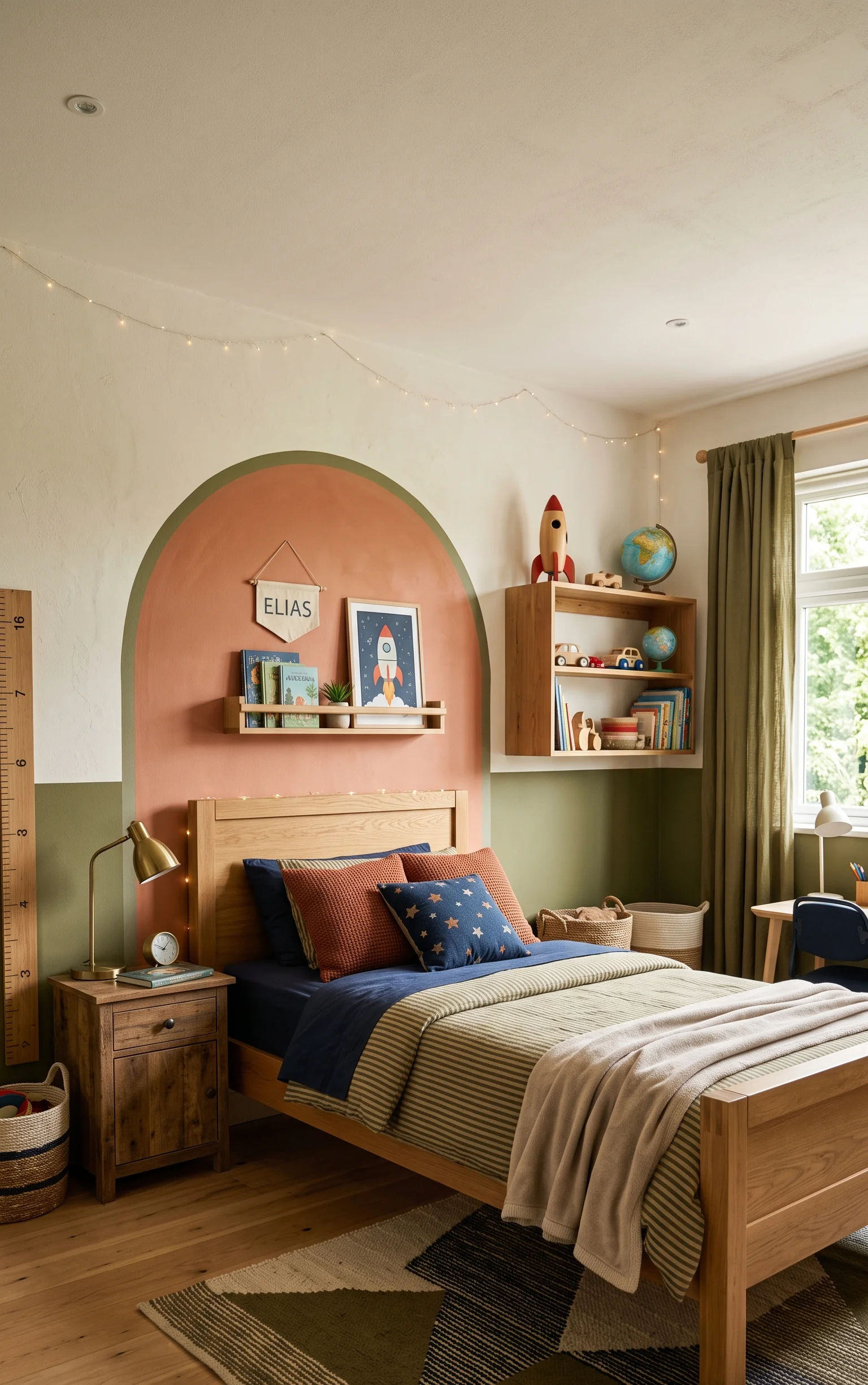
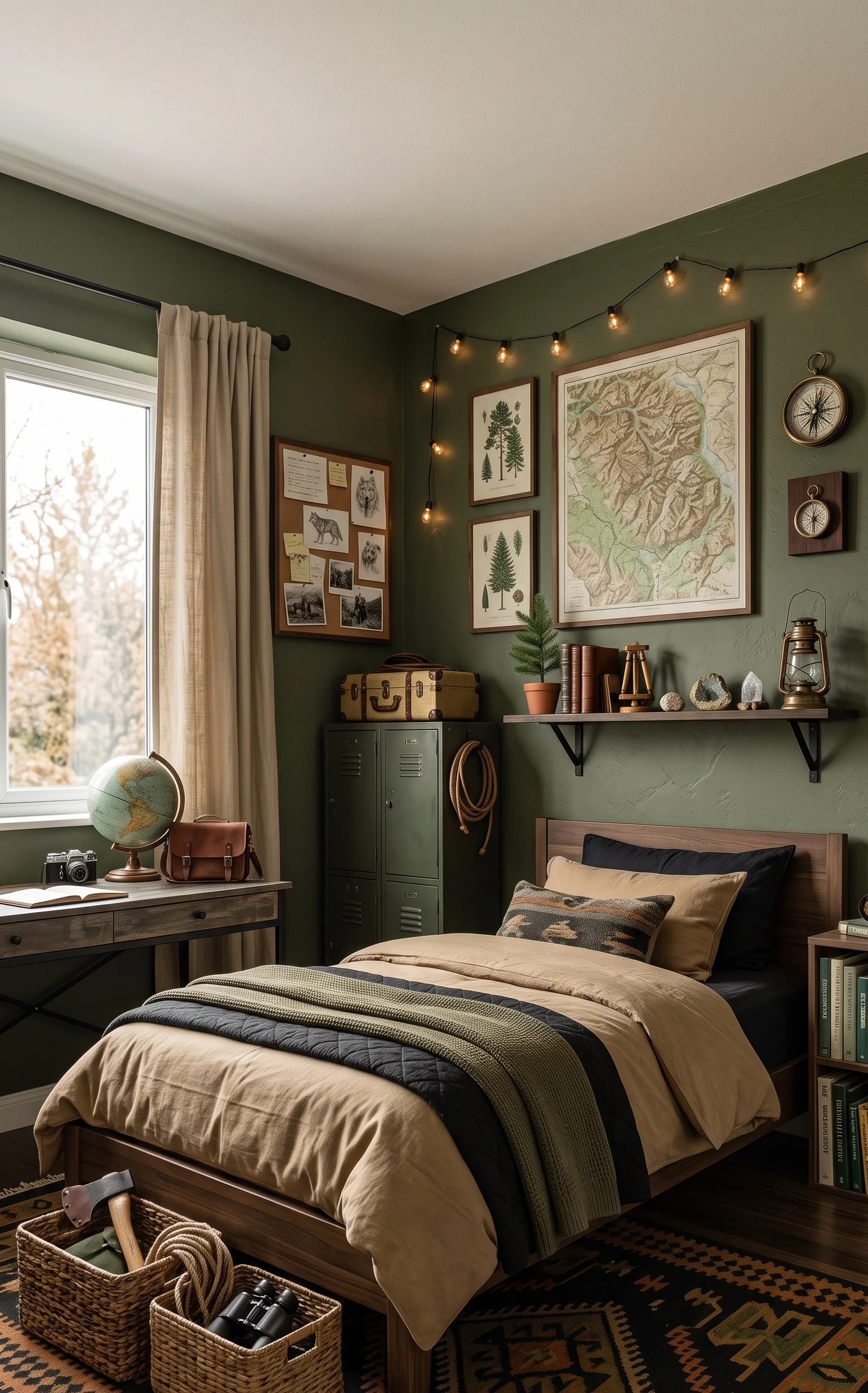
Deeper greens are 2026’s biggest riser in boys’ rooms. Olive walls with tan and black accents give explorer energy without a single tree decal the color does the theming, so the theme never has to be scraped off.
Terracotta: the Unexpected Winner
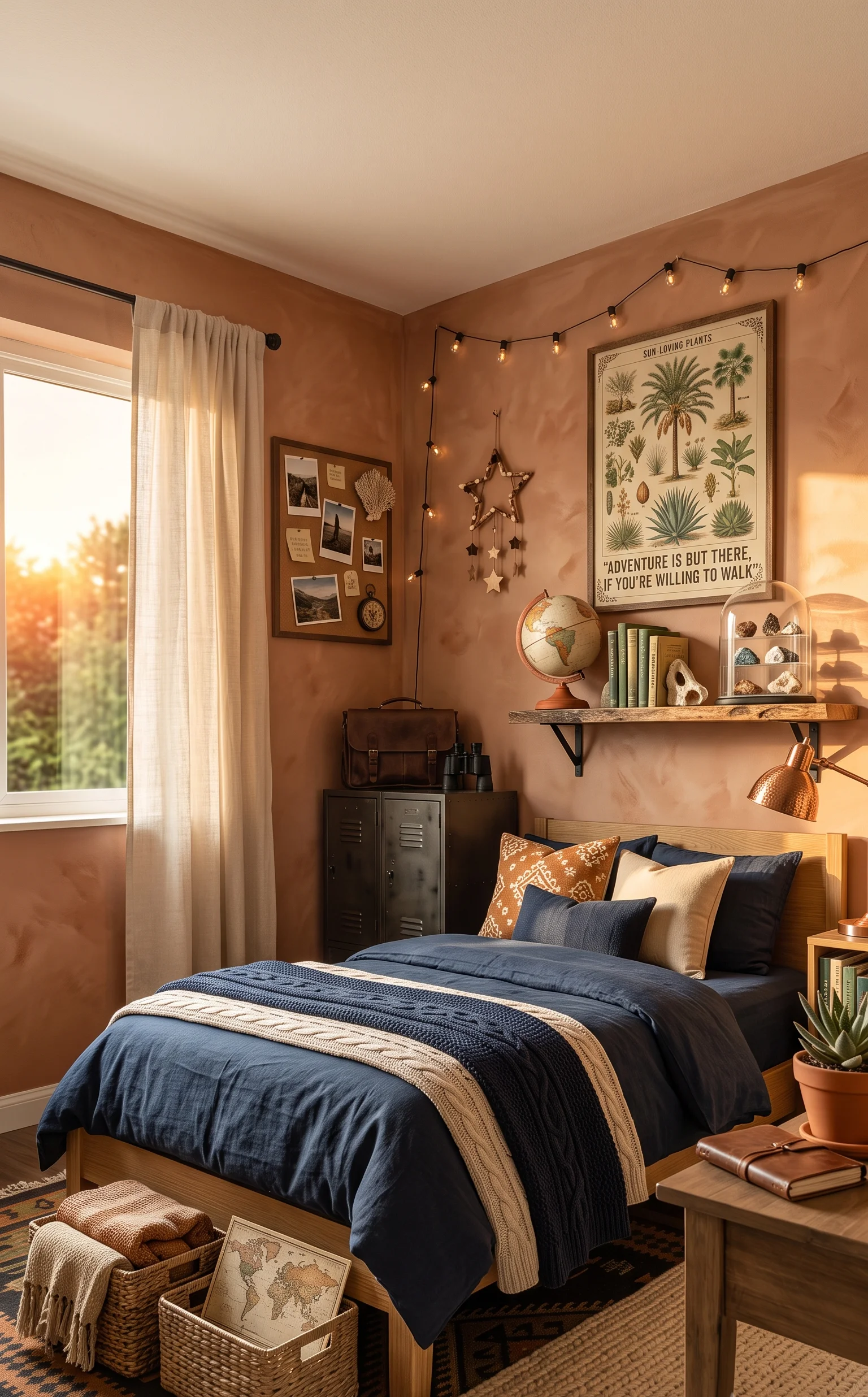
Nobody puts terracotta on a boys’ room shortlist, and that’s precisely why it works. Warm, earthy, and gender-neutral, a soft clay tone makes small rooms feel sunlit and pairs with navy, cream, and wood like they were born together.
Charcoal, the Friendly Dark
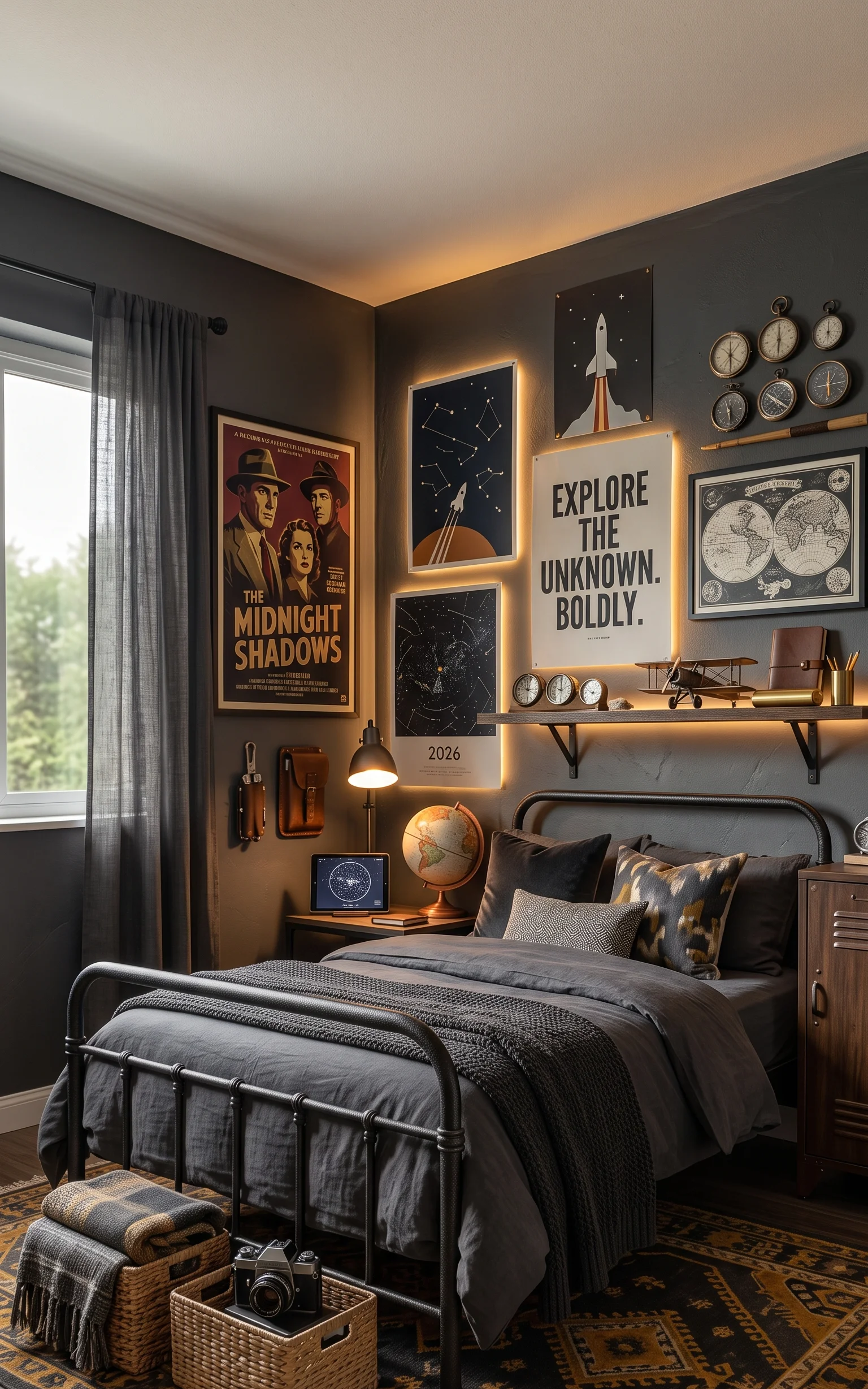
Parents afraid of black but bored of gray land here. Charcoal has warmth that flat gray lacks, makes posters and LED lights pop, and hides scuffs better than any pale wall ever will a detail anyone raising boys will appreciate.
A Black Accent Wall for the Almost-Teen
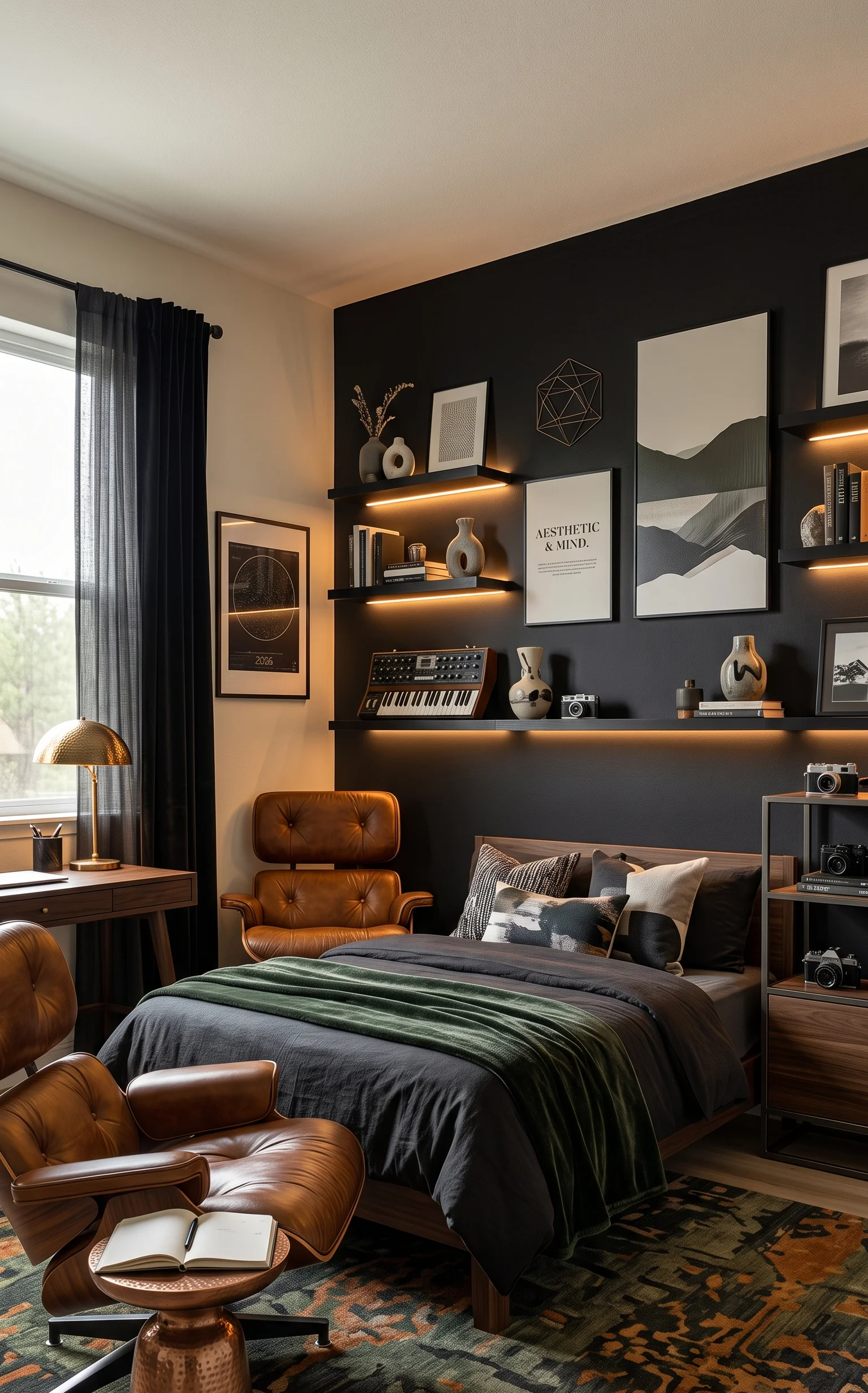
Bold? Yes. Timeless? Also yes, when balanced right. One black wall against ivory neighbours, warmed with caramel, tan, or gray textiles, gives an older boy the grown-up room he’s asking for at the cost of one tin of paint instead of new everything. Good light is the prerequisite. A dim room and a black wall is a cave.
Warm Greige as the Forever Base
The strategic choice: walls in warm greige, personality in swappable things bedding, art, one painted bookshelf. When his obsession moves from dinosaurs to football to gaming, you swap a duvet cover, not a room. Boring? Only until the third repaint you never had to do.
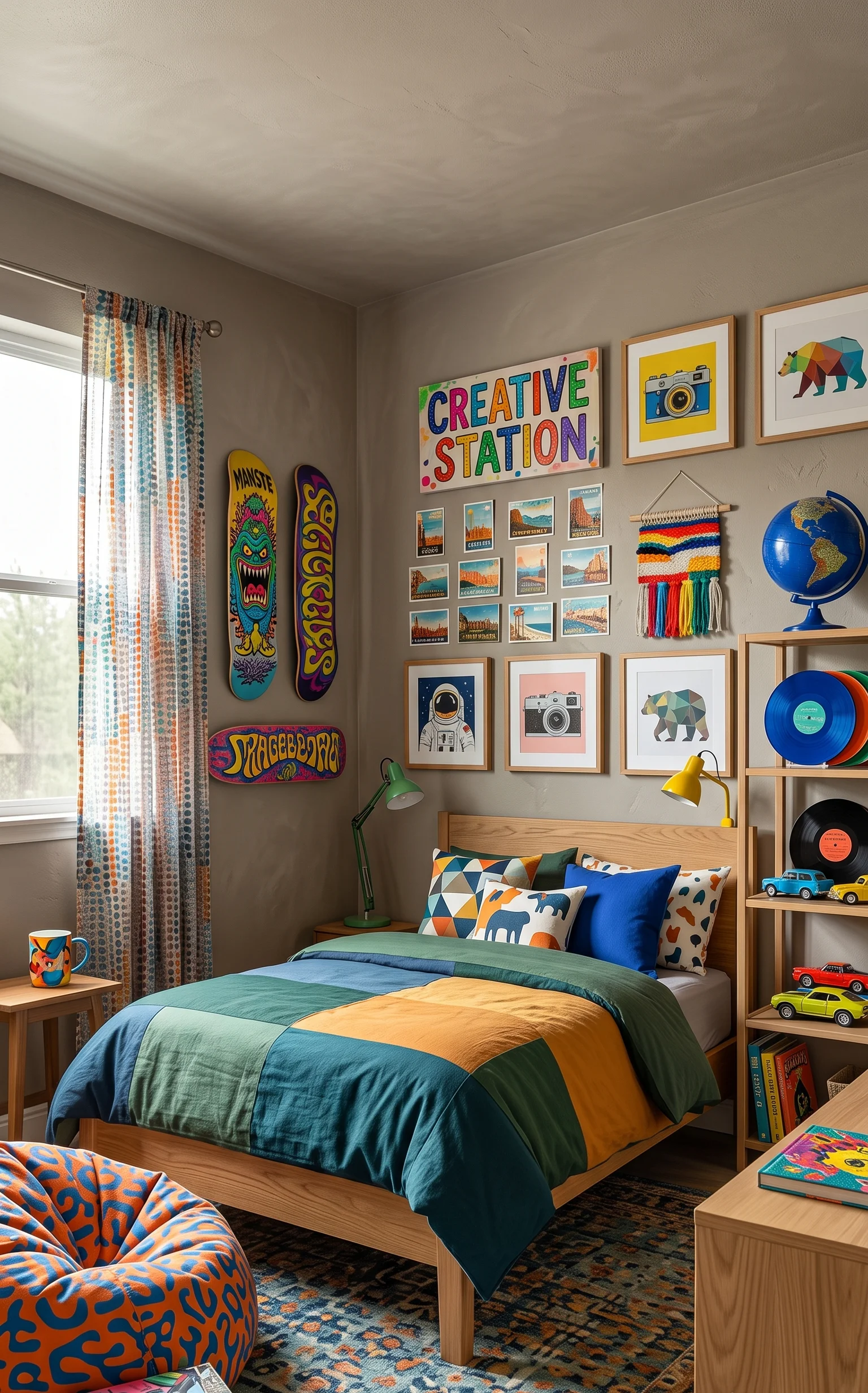
Mustard for Energy Without Chaos
Full yellow walls exhaust everyone. Mustard on the lower half of the wall or one alcove brings the energy down to a simmer: cheerful, warm, and unusual enough that his room won’t look like anyone else’s.
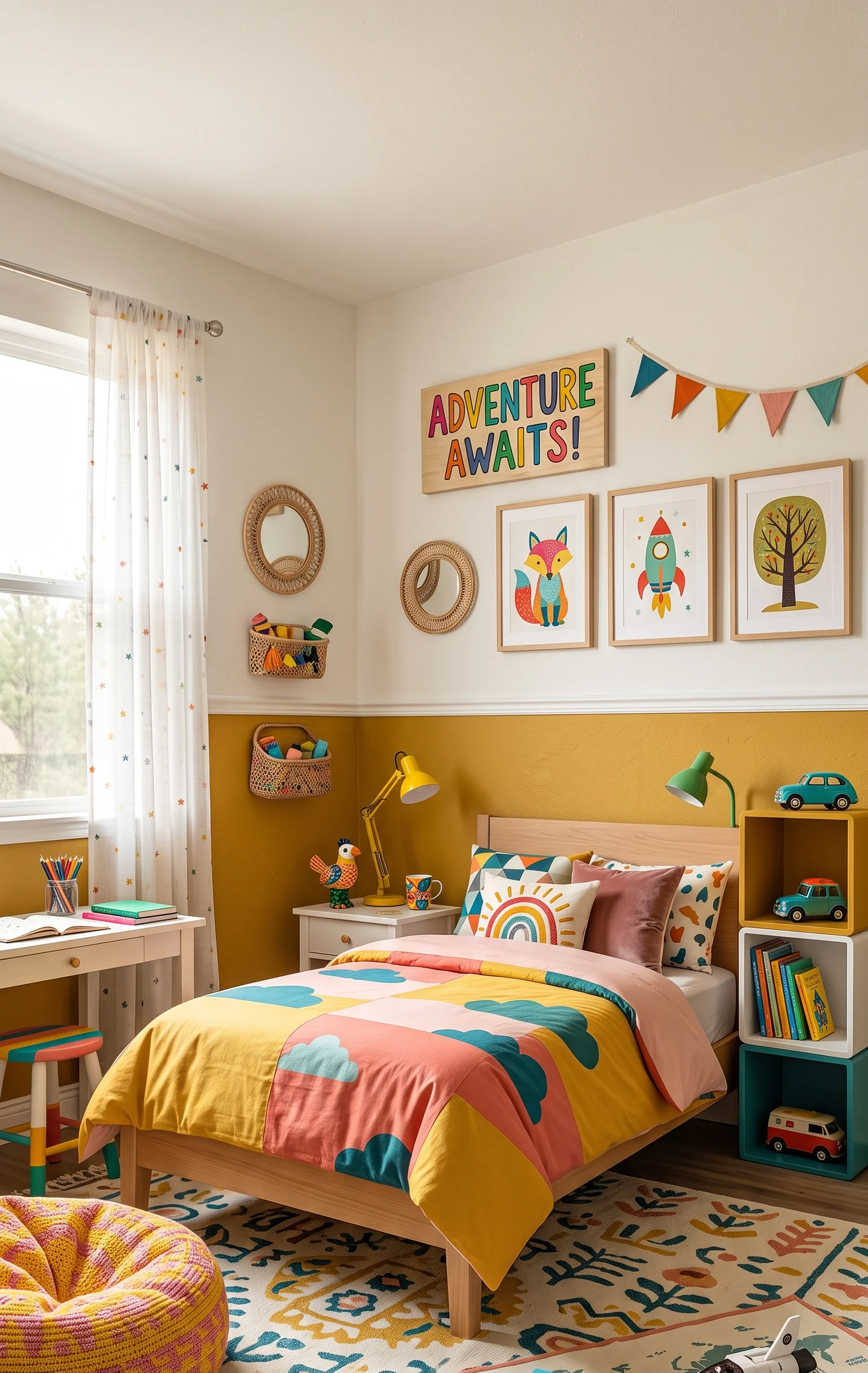
Teal Plus Wood, the Underrated Combo
Teal sits exactly between the blue he wants and the green you want. Against mid-tone wood furniture it turns rich and a little sophisticated one of those combinations that photographs far more expensive than it costs.
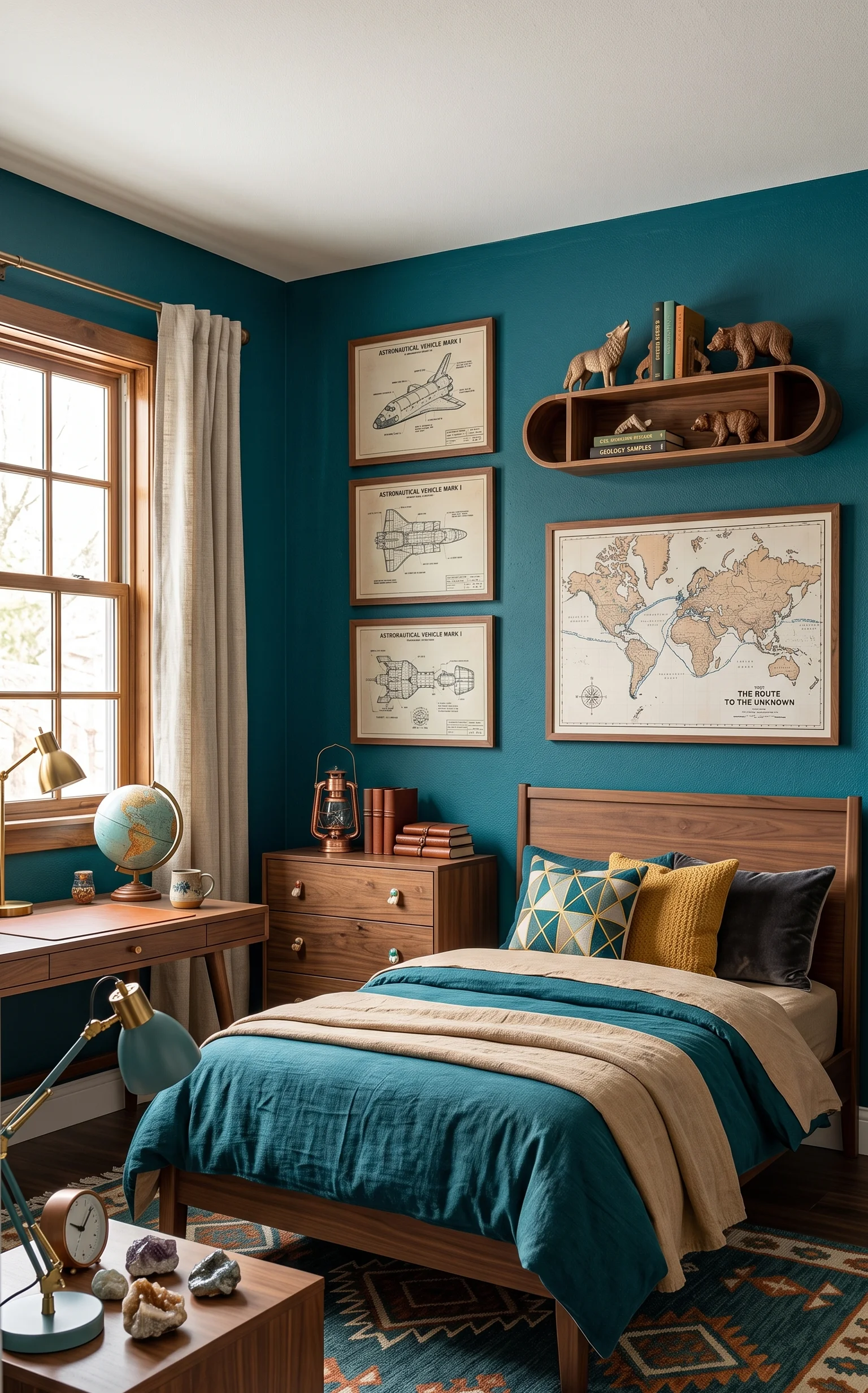
The Two-Tone Half Wall
Colour on the bottom two-thirds, white above, a crisp tape line between. The room gets real color while staying bright, scuffs live on the darker half where they don’t show, and repainting later means repainting half a wall. Practical disguised as stylish the best kind of idea.
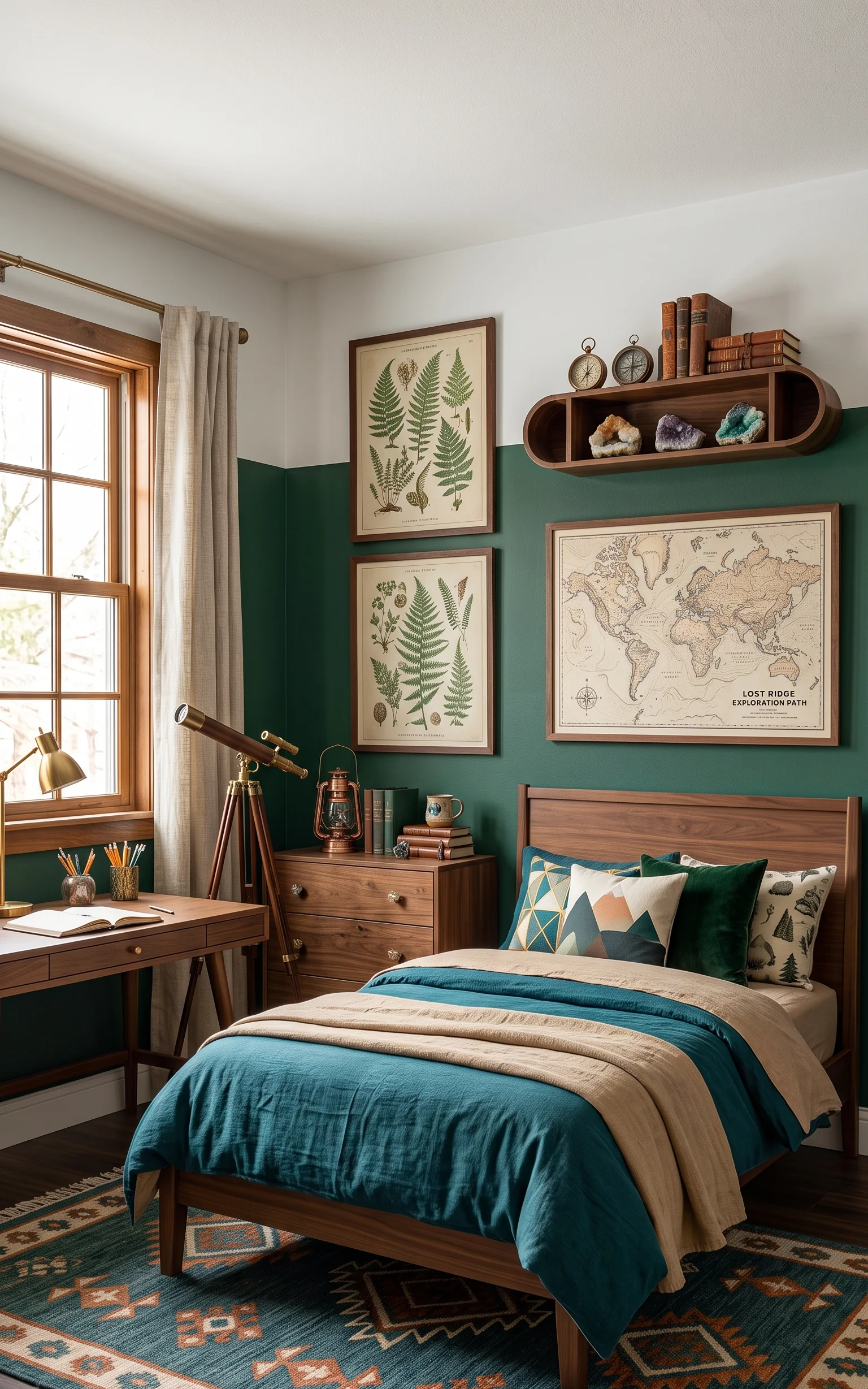
Colour-Blocked Shapes
A giant circle behind the bed. An off-center rectangle framing the desk. Painted shapes are the fastest way to make a room feel designed, and they need nothing but tape, a pencil-and-string compass, and one afternoon.
When he outgrows it, one coat covers it. Zero-commitment personality.
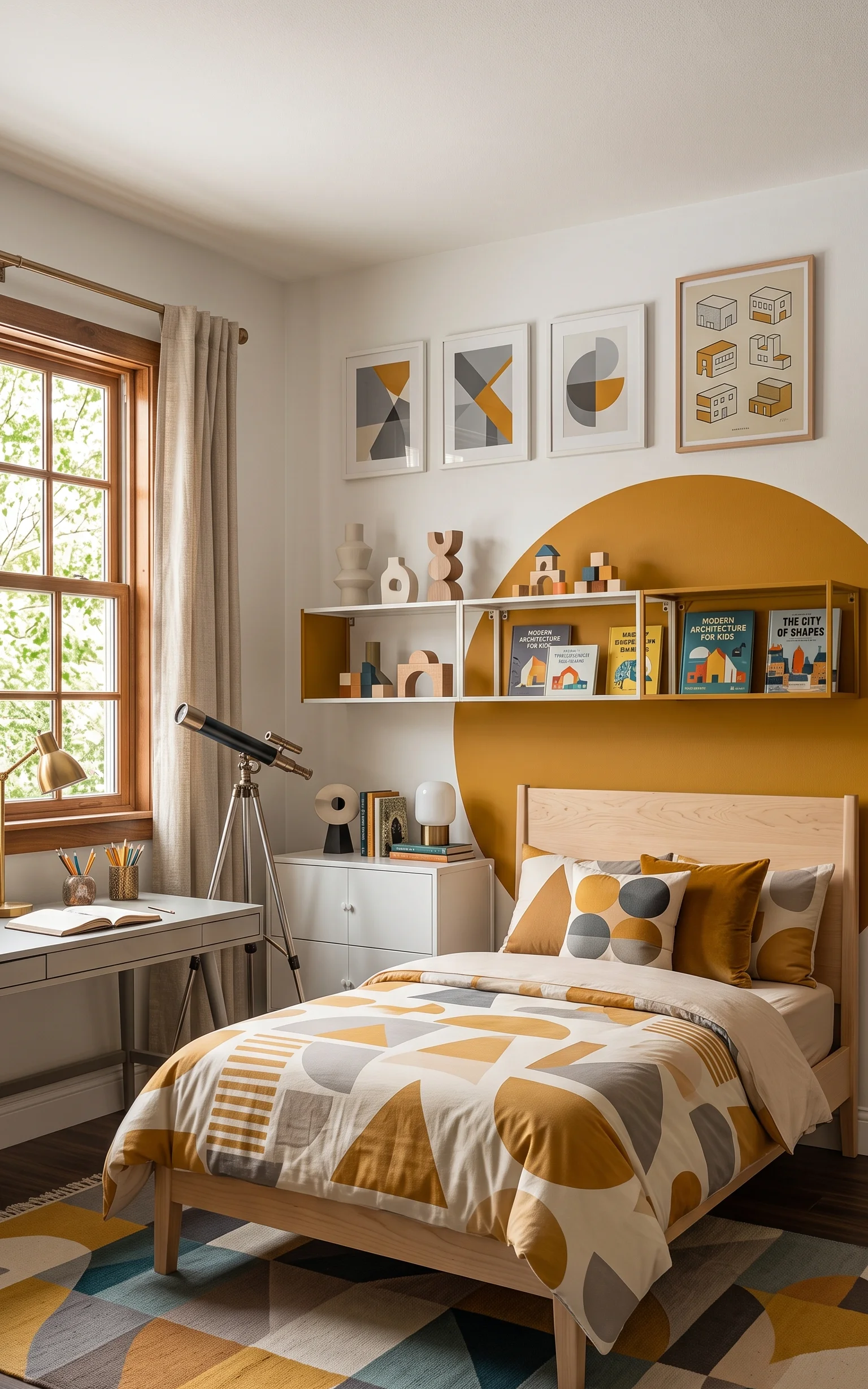
Paint an Arch Behind the Bed
The painted arch is Pinterest’s favorite trick for a reason: it fakes a headboard, anchors the bed wall, and adds softness to rooms full of hard edges and Lego. Terracotta, olive, or navy arches on warm white walls all work.
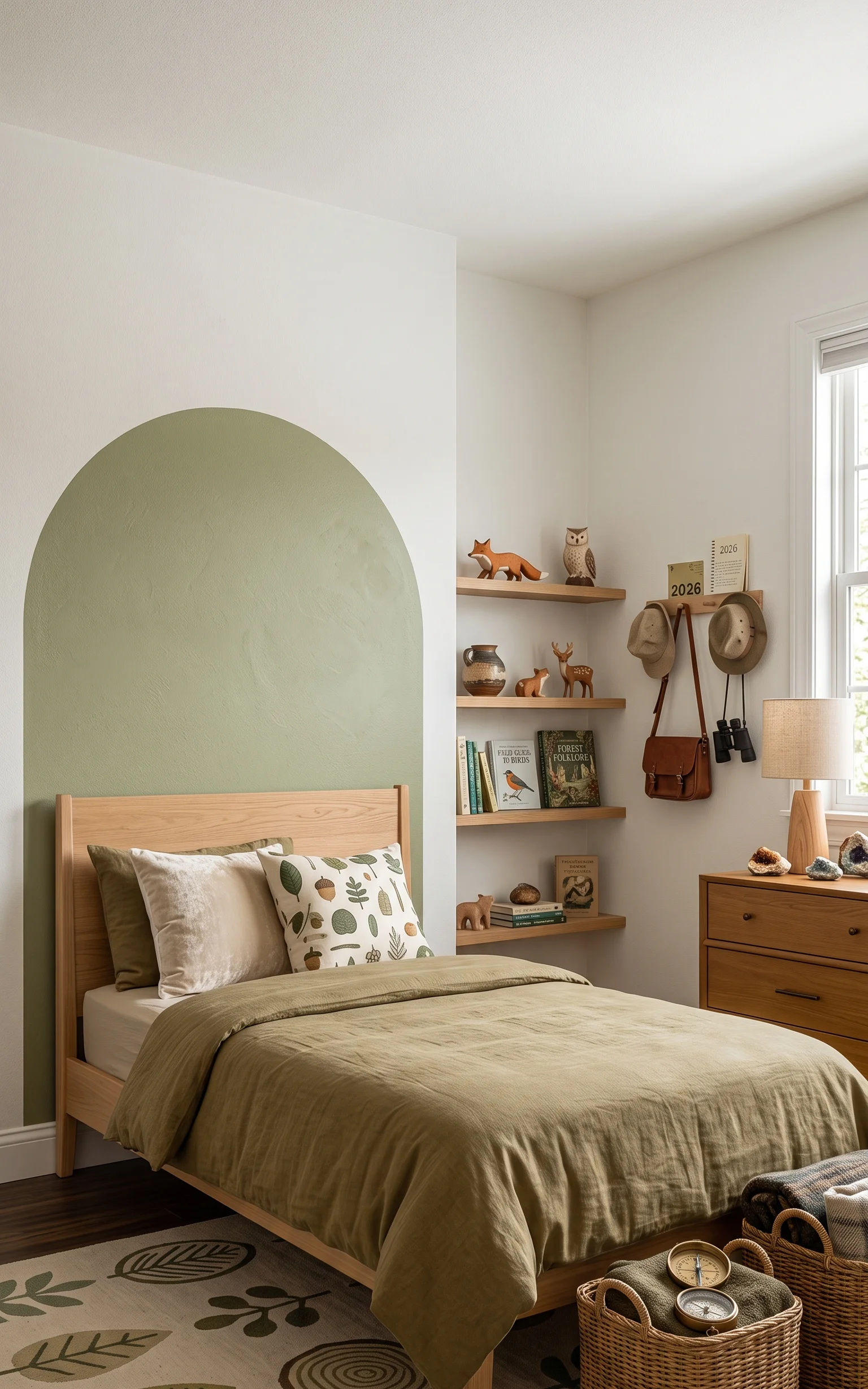
One Bold Horizontal Stripe
A single thick stripe running around the room at picture-rail height or a sporty double line adds motion and a varsity feel without theming the room to one sport he might quit next season.
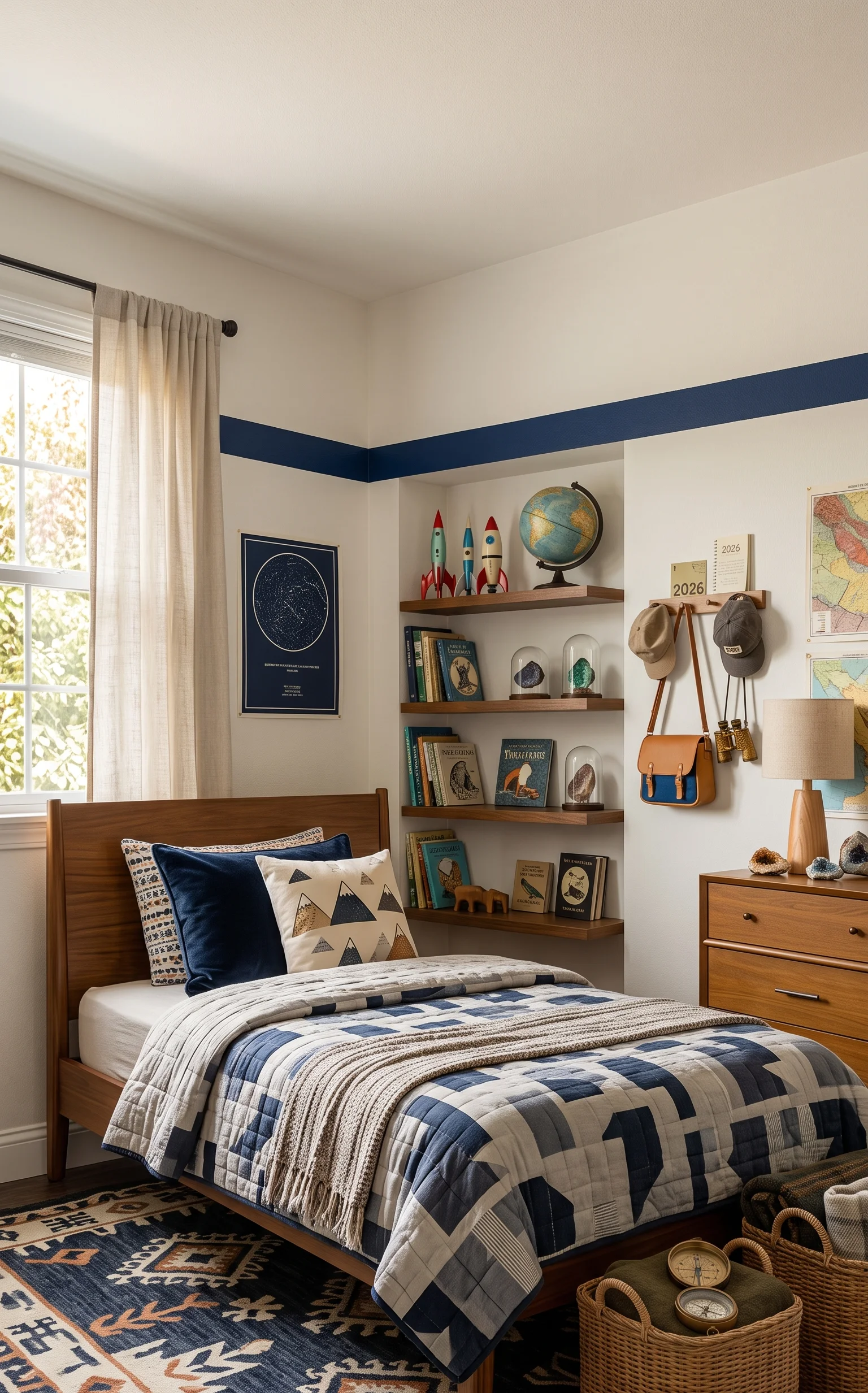
The Chalkboard Wall That Earns Its Keep
Chalkboard paint gives him the one wall he’s allowed to draw on which, ask any parent, beats the walls he isn’t. It doubles as a homework board later, and modern chalkboard paints come in navy and green, not just black.
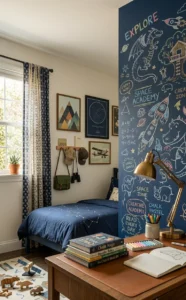
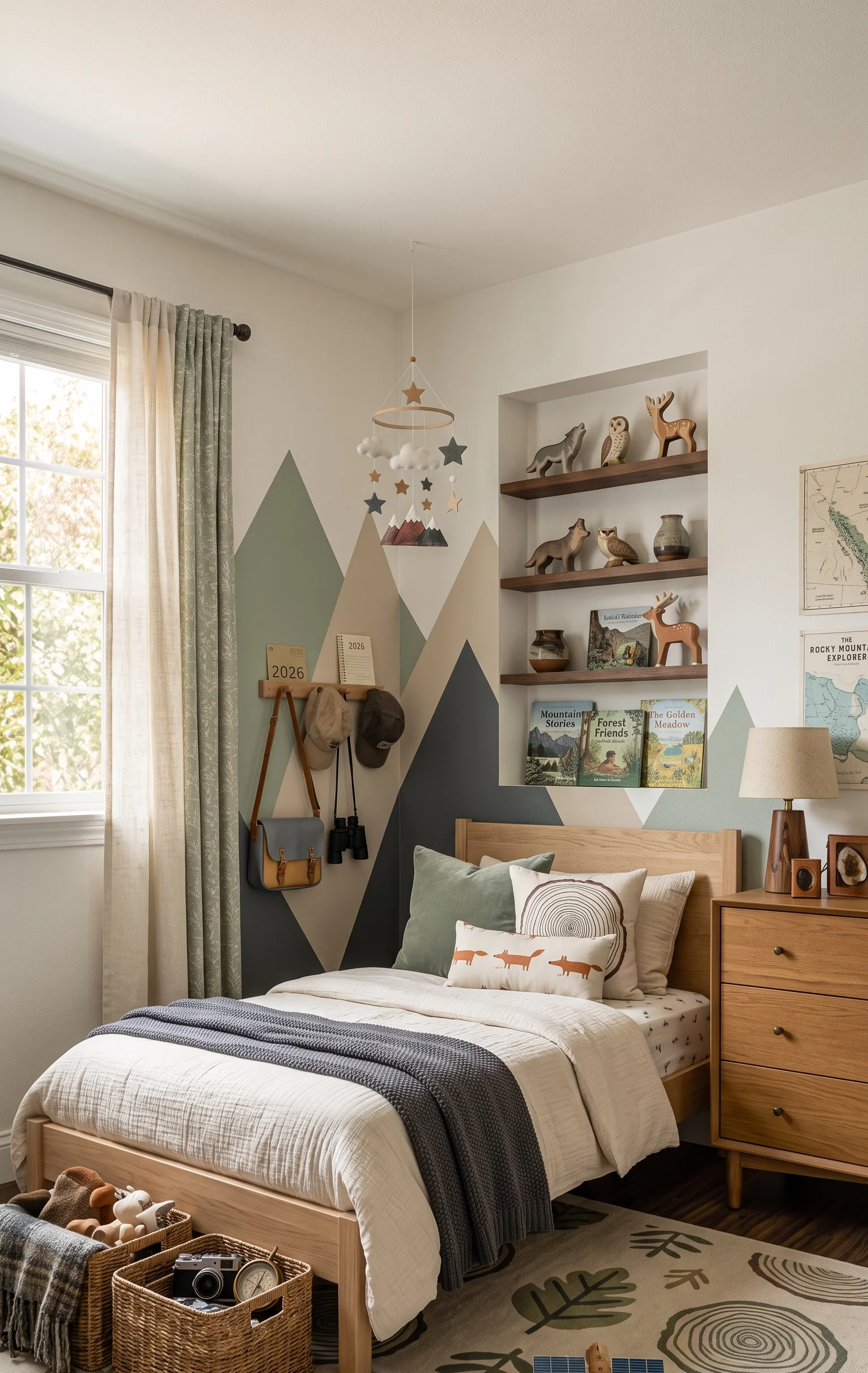
A Mountain Mural Anyone Can Paint
Three overlapping triangle ranges in muted tones sage, sand, slate need painter’s tape and no artistic talent whatsoever. It’s the most beginner-friendly mural that exists and turns a plain wall into the room’s whole story.
Don’t Forget the Ceiling
The fifth wall is prime real estate in a kid’s room he stares at it every night. A soft navy ceiling over pale walls feels like dusk; a warm white keeps things airy. Even leaving walls neutral and coloring only the ceiling makes a room memorable.
Board-and-Batten, All One Colour
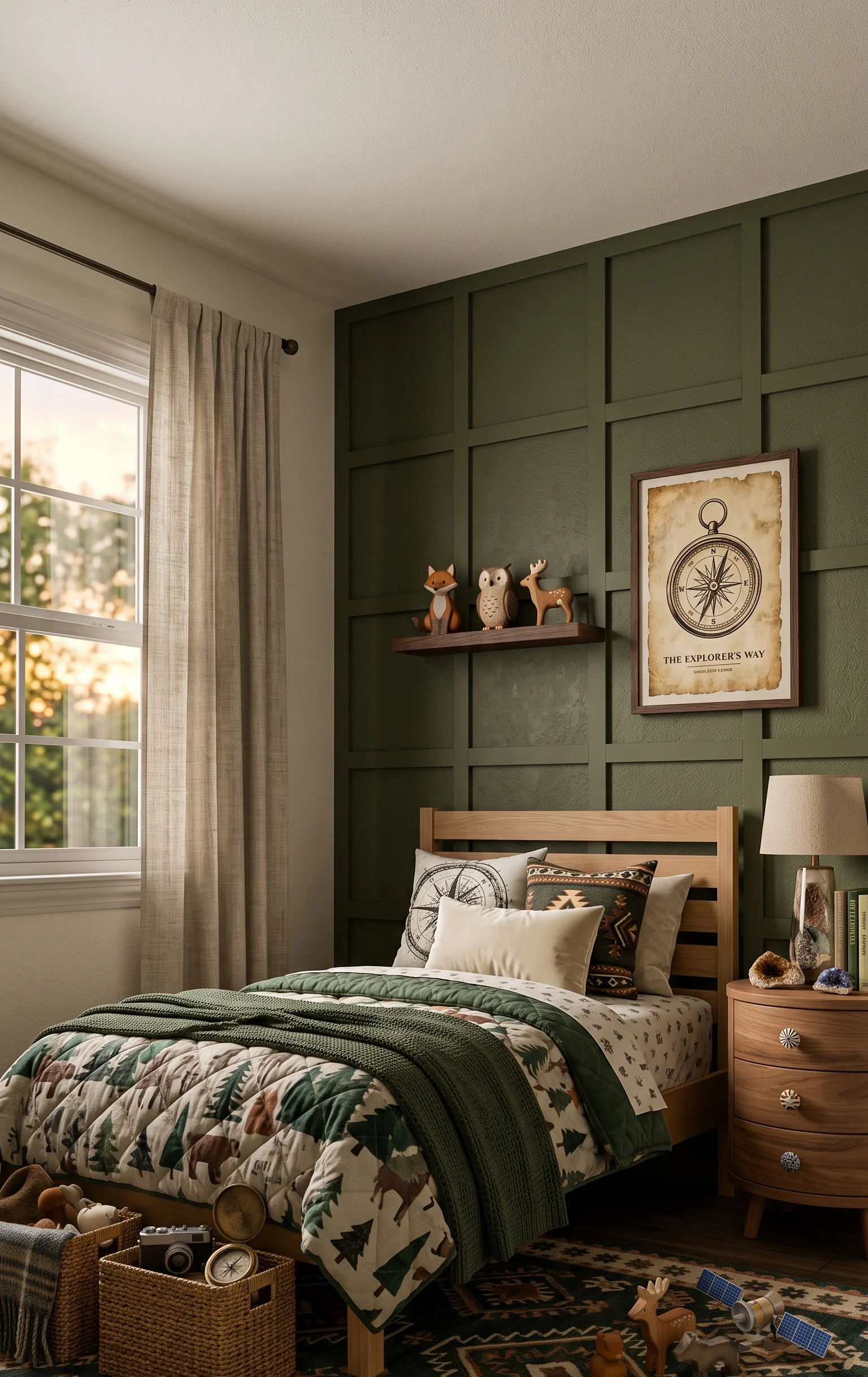
Simple wood battens on the lower wall, painted the same deep tone as the wall behind them olive, charcoal, or navy. The texture reads custom and grown-up, protects the wall at scuff height, and costs a weekend. This is the idea that survives longest into the teen years untouched.
Color-Drench the Whole Room
Walls, trim, door, even the radiator one deep colour everywhere. Drenching a small bedroom in forest green or ink blue sounds risky and looks stunning: cocoon-like, confident, and very 2026. Teens love it because it feels nothing like a child’s room. That’s the point.
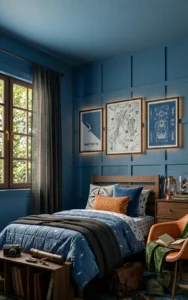
Blue and Orange, the Energy Scheme
Opposite colours, maximum life. Mid-blue walls with orange in reachable doses a lamp, a chair, one shelf interior deliver sports-jersey energy while keeping the walls themselves easy to live with. Paint the accents, not the obsession: team colors without the team mural.
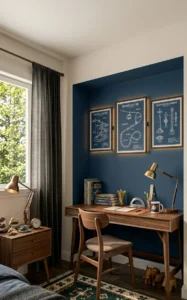
Zone the Study Corner With Paint
Paint just the desk nook the alcove or one meter of wall around it a focused, deeper tone than the rest of the room. The visual boundary genuinely helps kids switch modes: this corner is for homework, the rest is for everything else. Cheapest room divider ever invented.
Choose the Sheen Like a Parent, Not a Painter
The colour gets all the attention; the finish decides how the wall survives. Flat paint marks if you look at it wrong. For boys’ rooms, eggshell or satin is the sweet spot enough sheen to scrub fingerprints, scooter marks, and mystery smudges without shining like plastic. Whatever colour you’ve picked from this list: order it scrubbable.
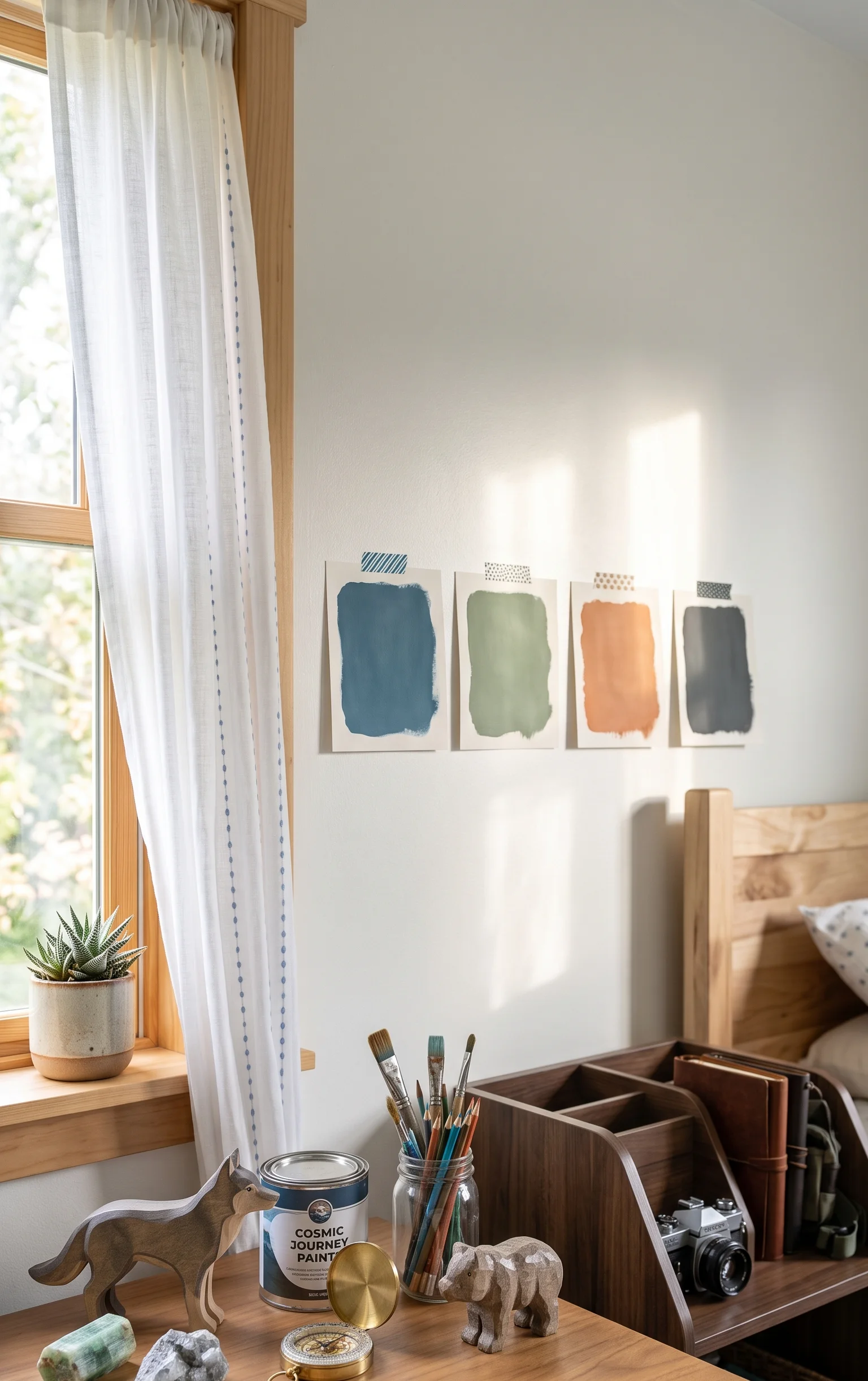
Let Him Pick From Your Shortlist
The secret to a room he’ll actually keep tidy(ish): ownership. Pick three or four shades you can live with, tape swatches to his wall for a week, and let him make the final call. He gets the win. You get veto power built in before the vote. Everyone repaints less.
3 Mistakes Parents Make With Boys’ Room Paint
Painting for the age he is now. A fire-engine red room thrills a five-year-old and embarrasses a nine-year-old. Pick colors with a five-year runway and put the “young” energy into swappable decor.
Primary color overload. Bright red, blue, and yellow together read as daycare, and overstimulating walls don’t help bedtime. Muted versions of the same colors keep the fun and lose the frenzy.
Ignoring the finish. The perfect shade in flat paint becomes a scuff museum in six months. In a boy’s room, washable isn’t optional.
FAQs
What is the best paint color for a boys’ bedroom?
There’s no single winner, but navy, sage, olive, and warm greige are the most reliable each has personality yet survives the transition from little kid to teen. The safest strategy is a color with gray or earthy undertones rather than bright primary shades.
What colors are trending for boys’ rooms in 2026?
Earthy tones lead: olive, forest green, terracotta, and charcoal, with warm neutrals as bases. The shift moves away from default bright blue toward colours borrowed from adult interiors, applied in kid-friendly ways like arches, half-walls, and colour blocking.
What paint finish is best for a kid’s bedroom?
Eggshell or satin. Both are scrubbable enough for fingerprints and scuffs while avoiding the shine of semi-gloss on walls. Save flat paint for ceilings and semi-gloss for trim and doors.
What paint colours help kids sleep?
Muted, cooler-leaning tones soft blues, sage, gentle greens, and warm neutrals are the most calming. Highly saturated reds, oranges, and bright yellows are stimulating and better used as small accents than on bedroom walls.
Should I let my child choose his bedroom colour?
Yes, from a pre-approved shortlist. Offer three or four shades you’re happy with and give him the final decision. Kids take noticeably better care of rooms they helped create, and the shortlist keeps neon green off the table.
Final Thoughts
The best boys’ bedroom paint ideas for 2026 share one trait: they leave room to grow. Earthy colors, clever wall techniques, and personality in the changeable layers mean the room evolves with him — and your weekends stay repaint-free.
