

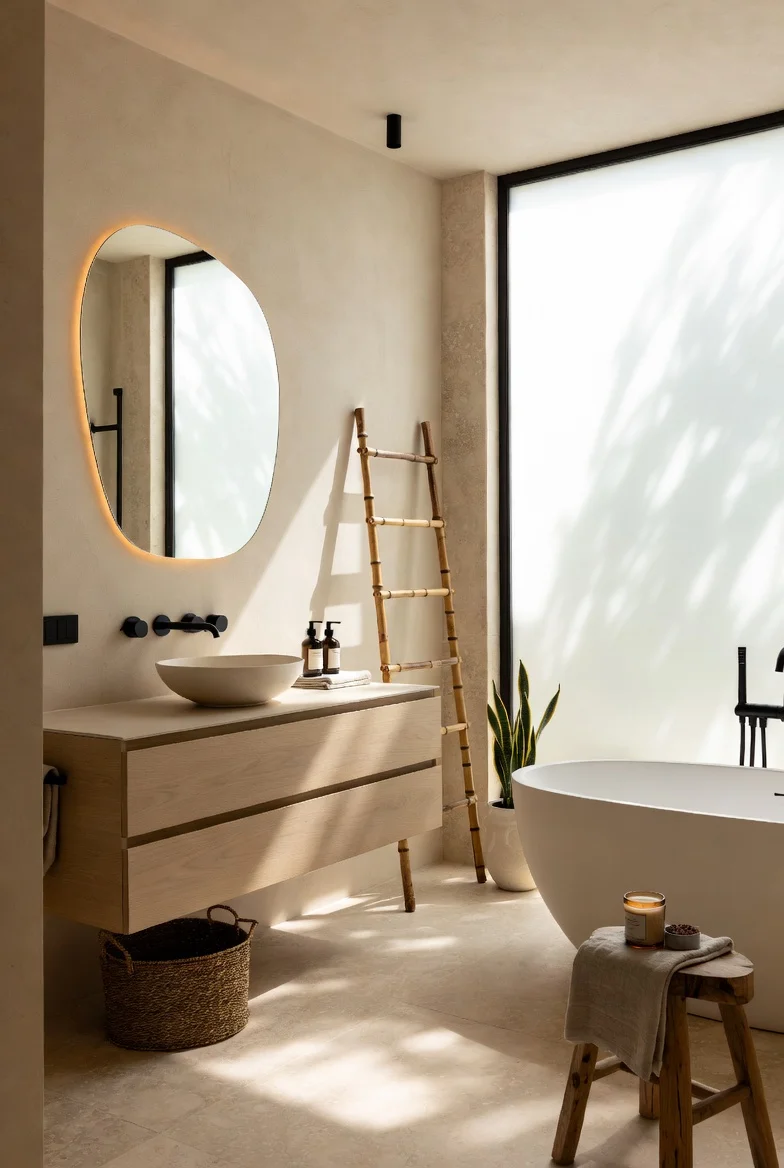
Two bathing cultures on opposite sides of the planet reached the same conclusion: the bathroom should heal you, not just clean you. Japan brought ritual and restraint; Scandinavia brought warmth and honest materials. Japandi bathroom ideas sit exactly at that meeting point, and 2026, the year interiors went warm and quiet, is their moment.
The style in one paragraph: warm neutrals with one deep contrast, light wood against stone, rounded shapes, handle-free storage, everything unnecessary removed, and a bath treated as the room’s soul rather than its furniture. Japandi is less a shopping list than an editing discipline.
Nineteen ideas below, ending with the two nobody else covers: the renter version and the subtraction rule.
Set the 80/20 Palette
Eighty percent of the room in warm quiet tones: sand, oat, off-white, soft greige. Twenty percent in one grounding contrast, usually charcoal, ink, or a deep wood brown. That ratio is the entire Japandi color theory.
The warmth matters more than the exact shades. Cool gray minimalism reads clinical; this style runs on the same warm current as the year’s earth tone bathrooms, just quieter about it.
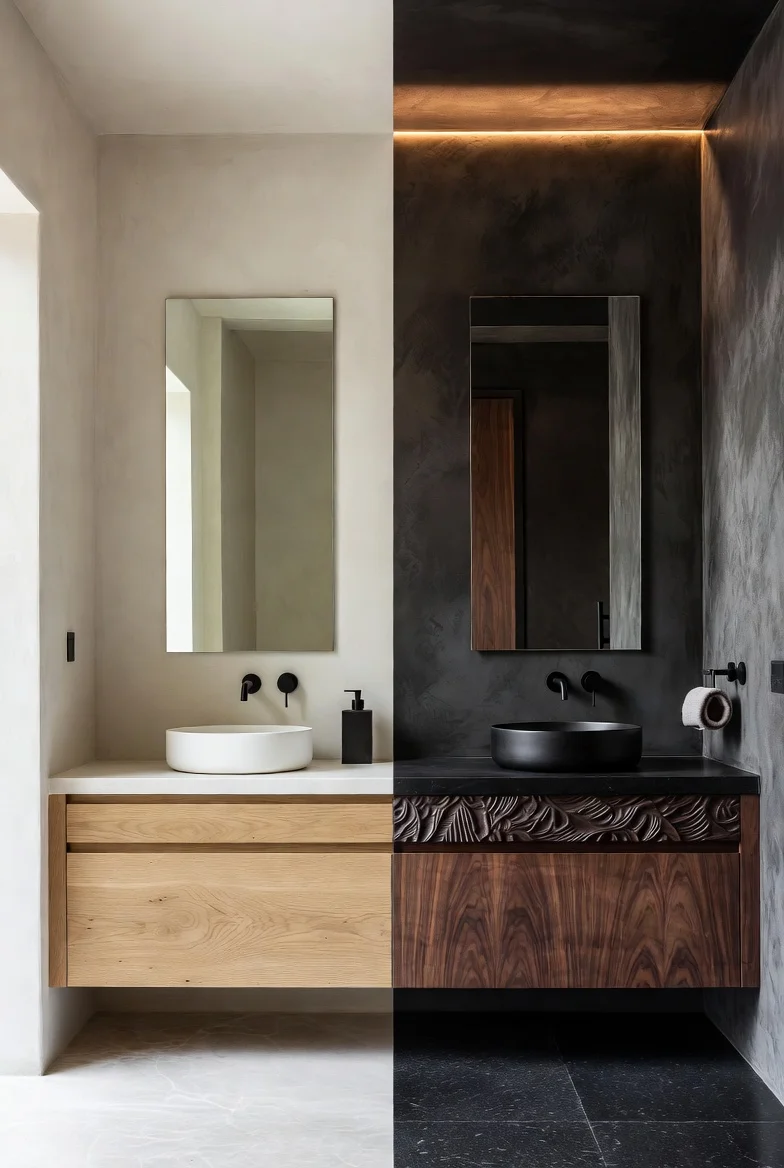
Choose Your Lane: Light or Dark
Before buying a single tile, decide which Japandi you’re building. Light Japandi leans Scandinavian: pale oak, off-white walls, morning-bright and airy. Dark Japandi leans Japanese: walnut or smoked timber, charcoal walls, an intimate evening mood.
Both are correct. Mixing them halfway is how rooms end up neither calm nor cozy, so pick the lane that matches your bathroom’s natural light and commit.
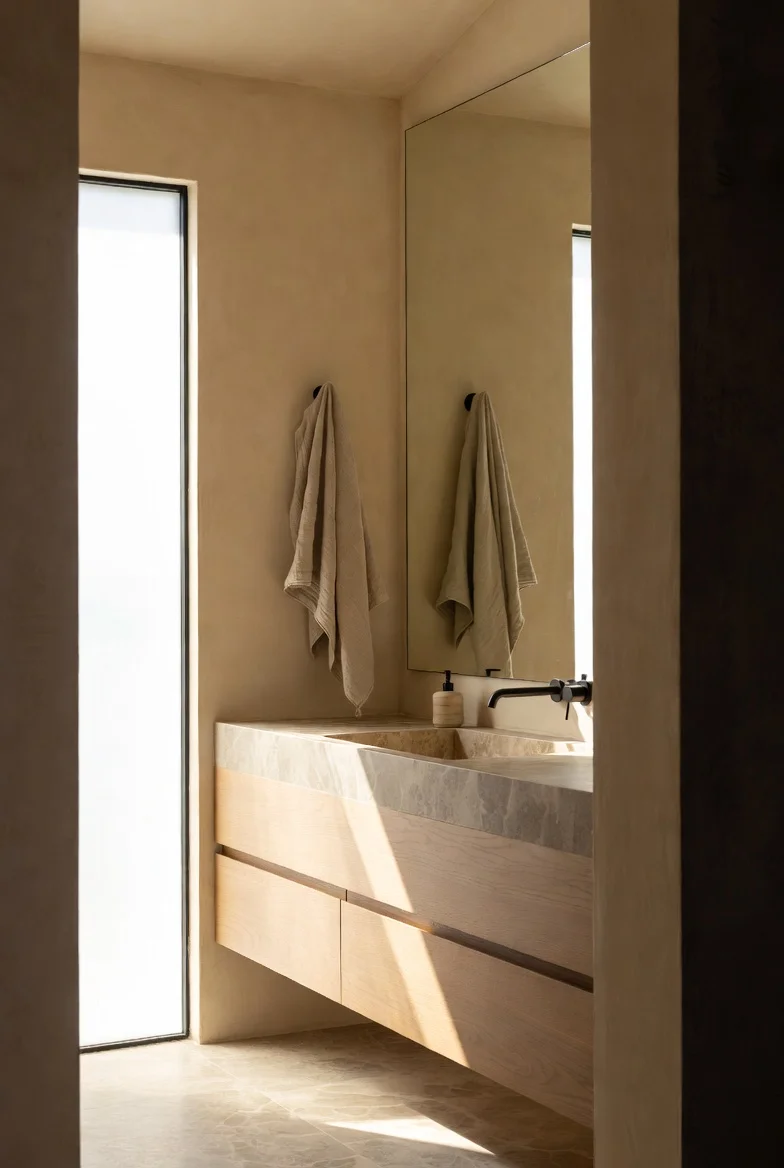
Anchor With a Light Wood Vanity
One floating vanity in oak or ash does the heaviest stylistic lifting in the room. Wall-mounted so the floor runs beneath it, drawers deep enough to hide everything, top in stone or matte ceramic.
Wood in a wet room worries people. Modern sealed veneers and wood-look laminates have essentially solved it, and the visual warmth is non-negotiable to the style.
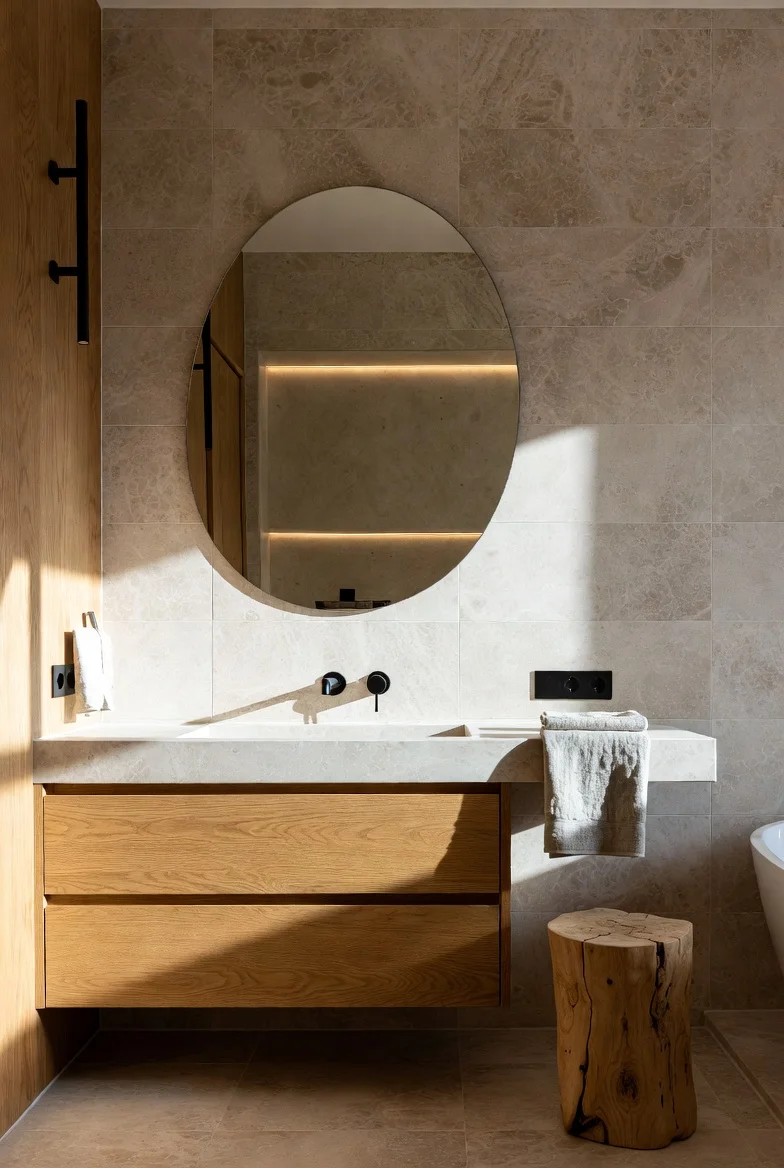
Pair Stone With Timber
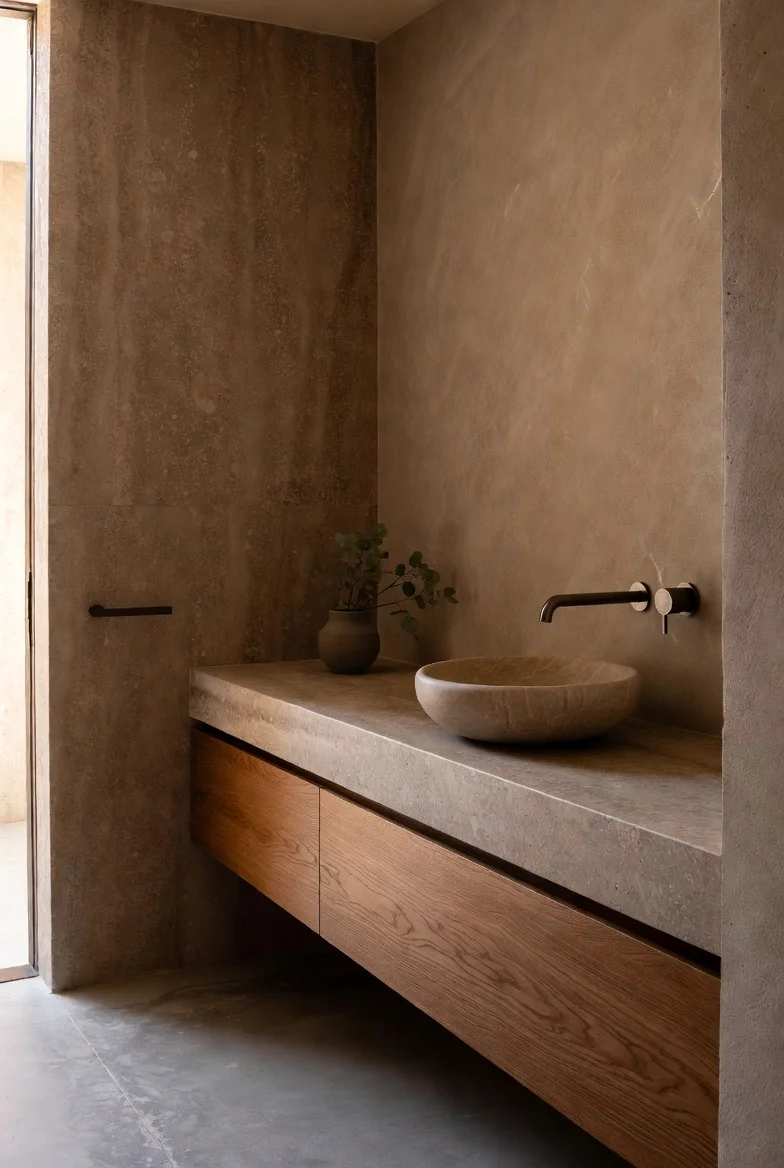
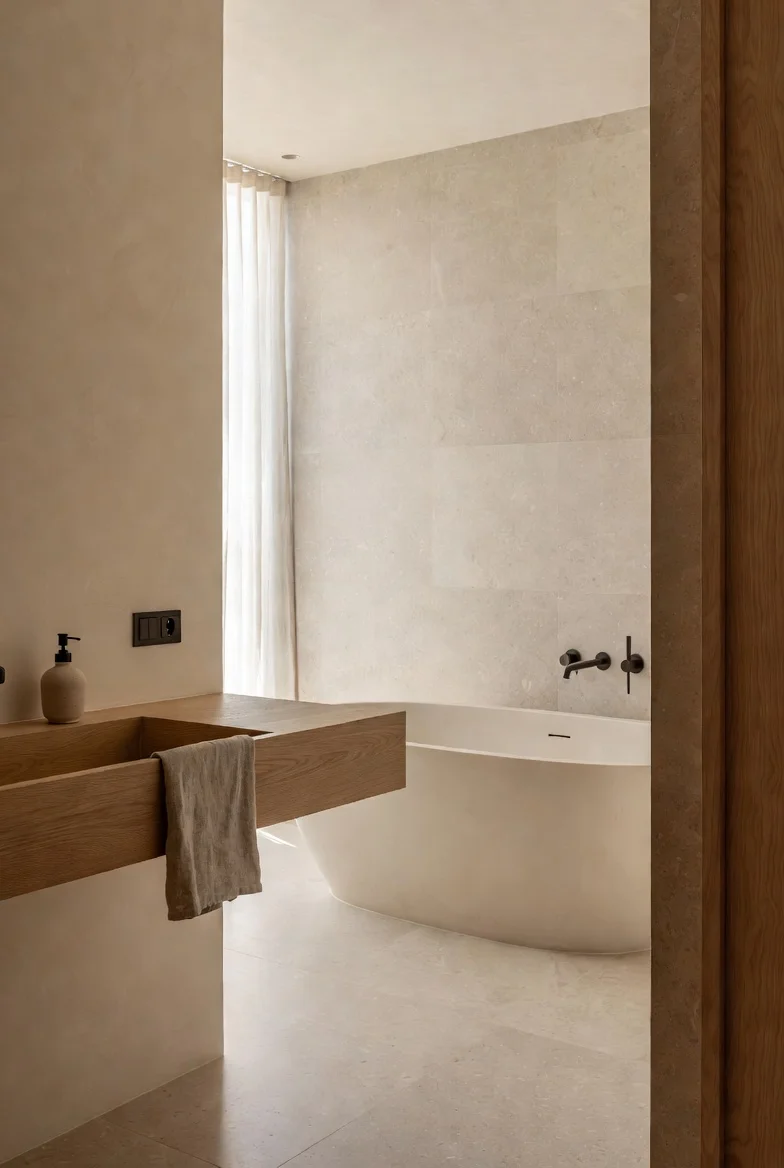
Cool against warm is Japandi’s signature texture move: travertine or concrete-look walls with a timber vanity, a stone basin on a wooden counter, slate floor under an oak stool.
Neither material dominates. The conversation between them is the design.
Make the Bath the Soul of the Room
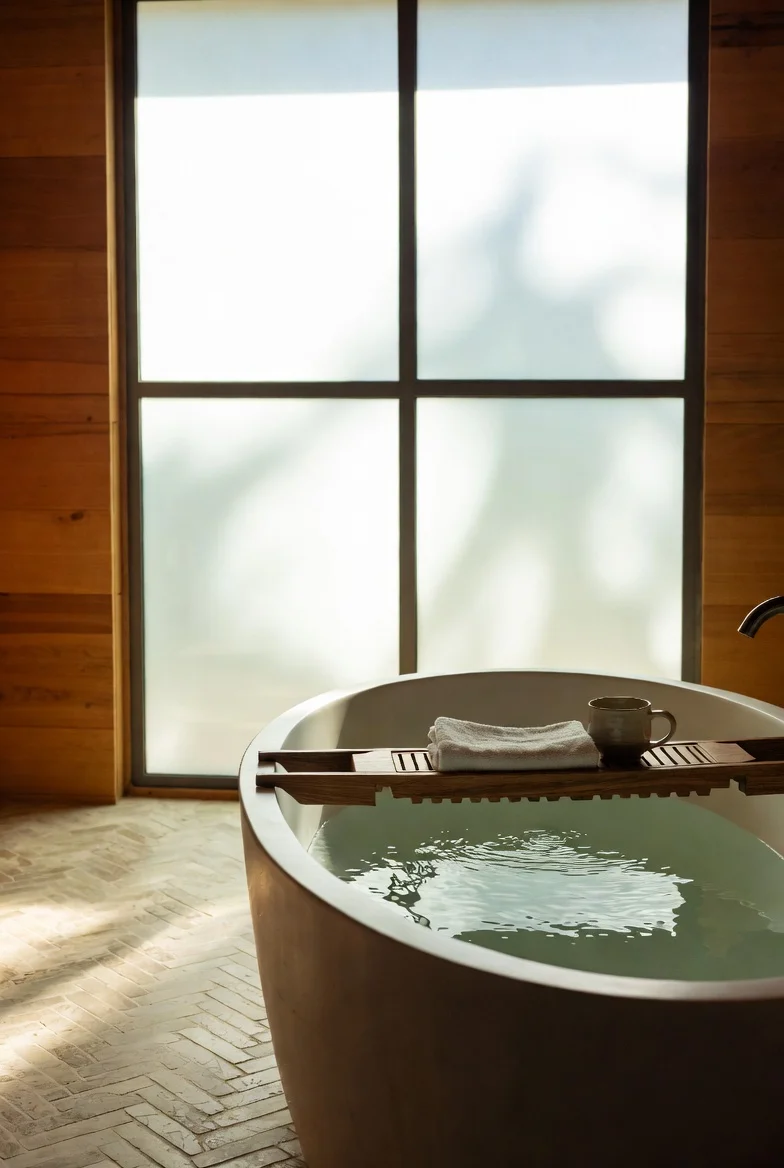
In Japan, bathing is a ritual older than most countries, and the tub is where Japandi refuses to compromise. A deep freestanding soaker, ideally positioned as the first thing seen from the door. Round, oval, or the boxy ofuro style for the committed.
No space for freestanding? A built-in tub with a wide wooden ledge for the tray, the candle, and the book gets meaningfully close to the same feeling.
Frame Nothing: the Walk-In Shower
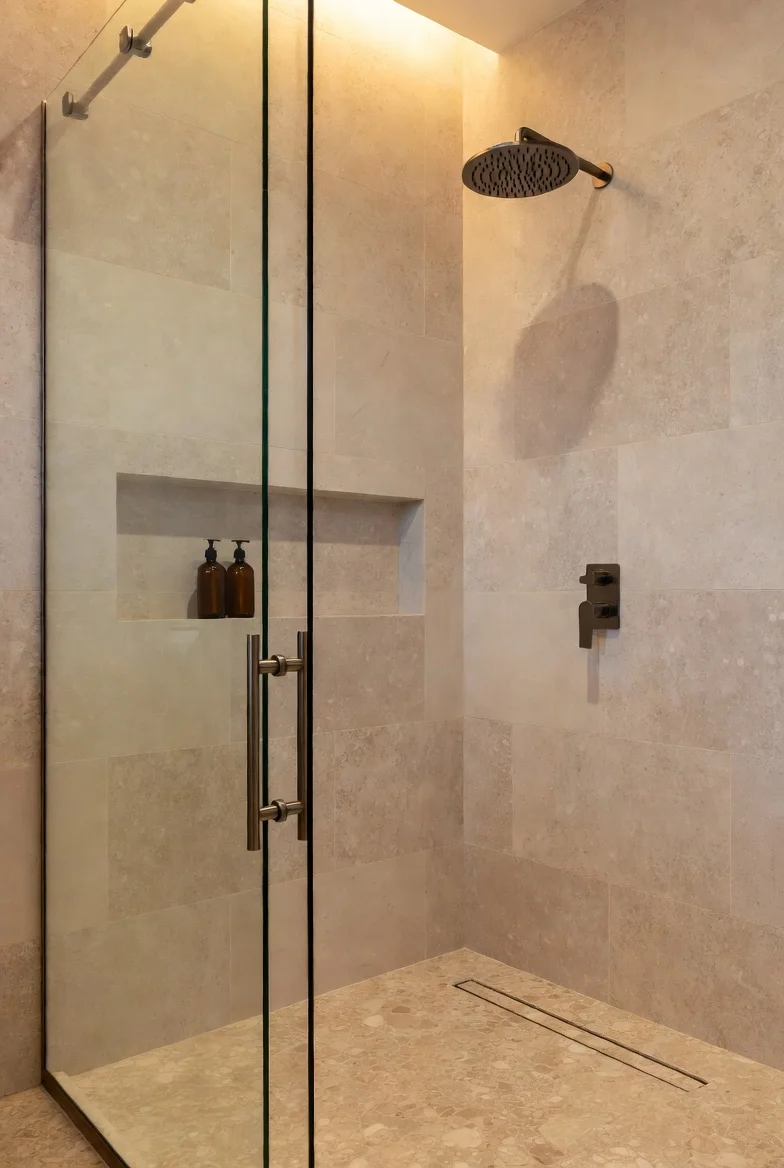
Frameless glass, a linear drain, floor tile running continuously into the shower zone. The less the shower announces itself, the more Japandi the room becomes.
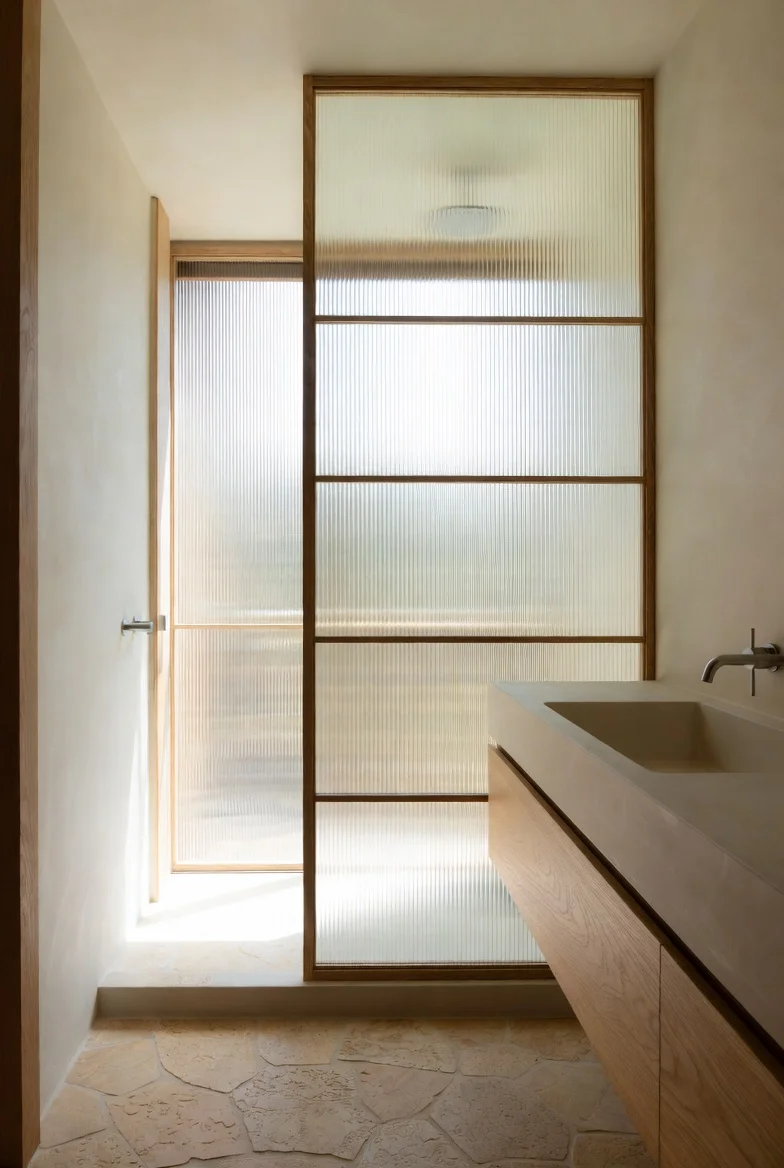
If a screen is needed for privacy or steam, ribbed or frosted glass keeps the light while softening the view, a quiet nod to shoji screens that arrives again in idea seventeen.
One Metal, Muted, Everywhere
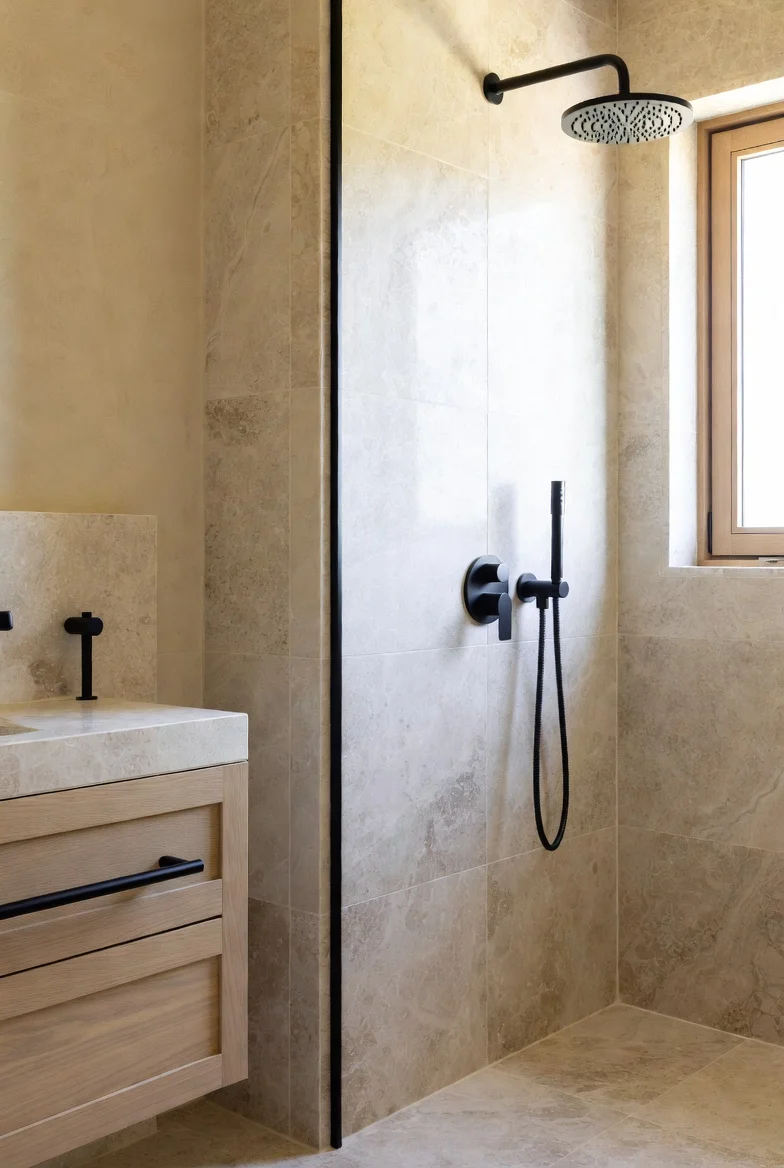
Matte black for contrast, brushed gunmetal for subtlety, or soft brushed brass for warmth. Pick once. The tap, shower head, towel rail, and door hardware all speak the same finish.
Polished chrome is the one metal that fights this style; its mirror shine belongs to a glossier design language entirely.
Round the Edges
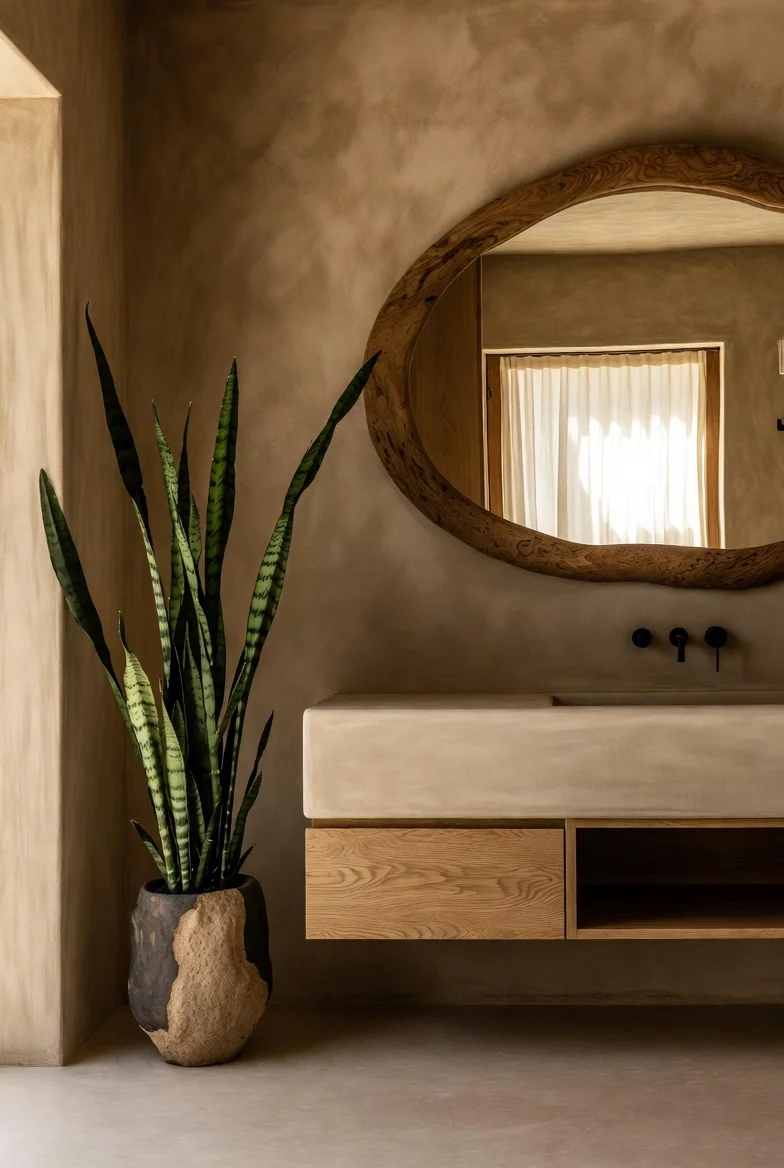
Why do Japandi rooms feel gentle? Look at the silhouettes. Curved vanity fronts, pill-shaped and organic mirrors, cylindrical basins, stools with softened corners. Hard right angles get used sparingly, mostly in the architecture, so the objects inside can stay soft.
Swapping one rectangular mirror for an organic-shaped one is the fastest single move toward the look.
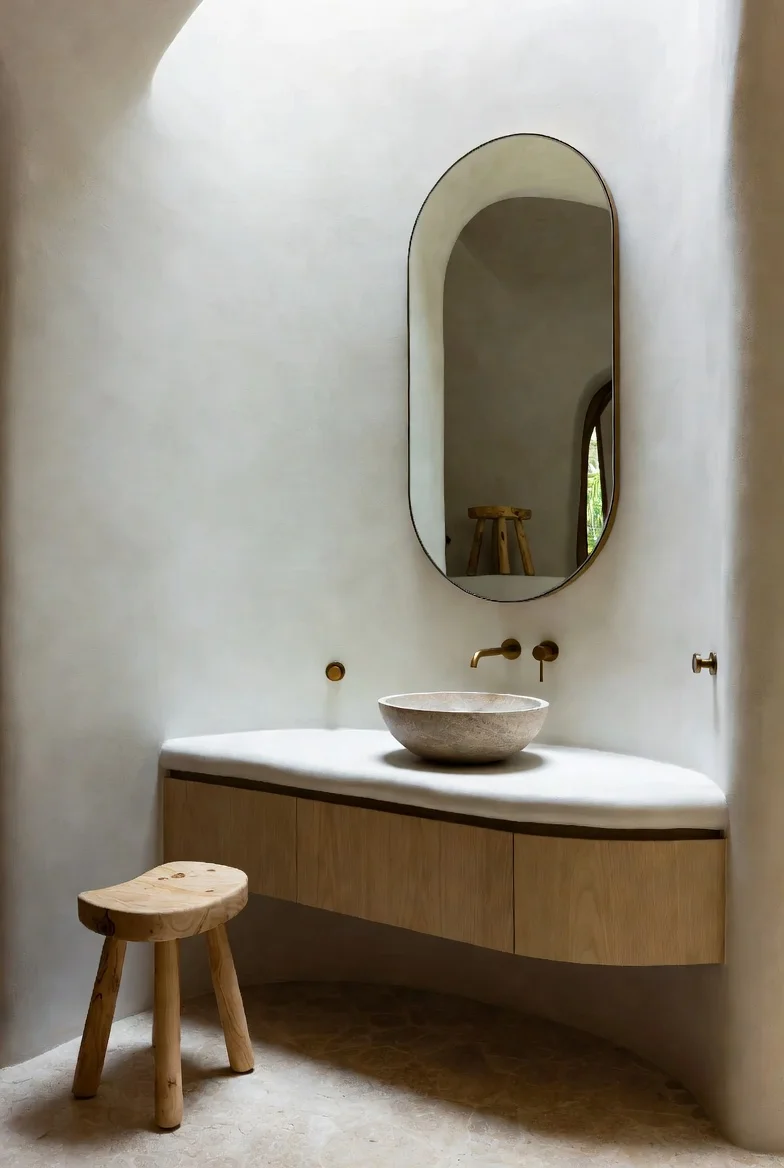
Practice Wabi-Sabi, Don’t Just Quote It
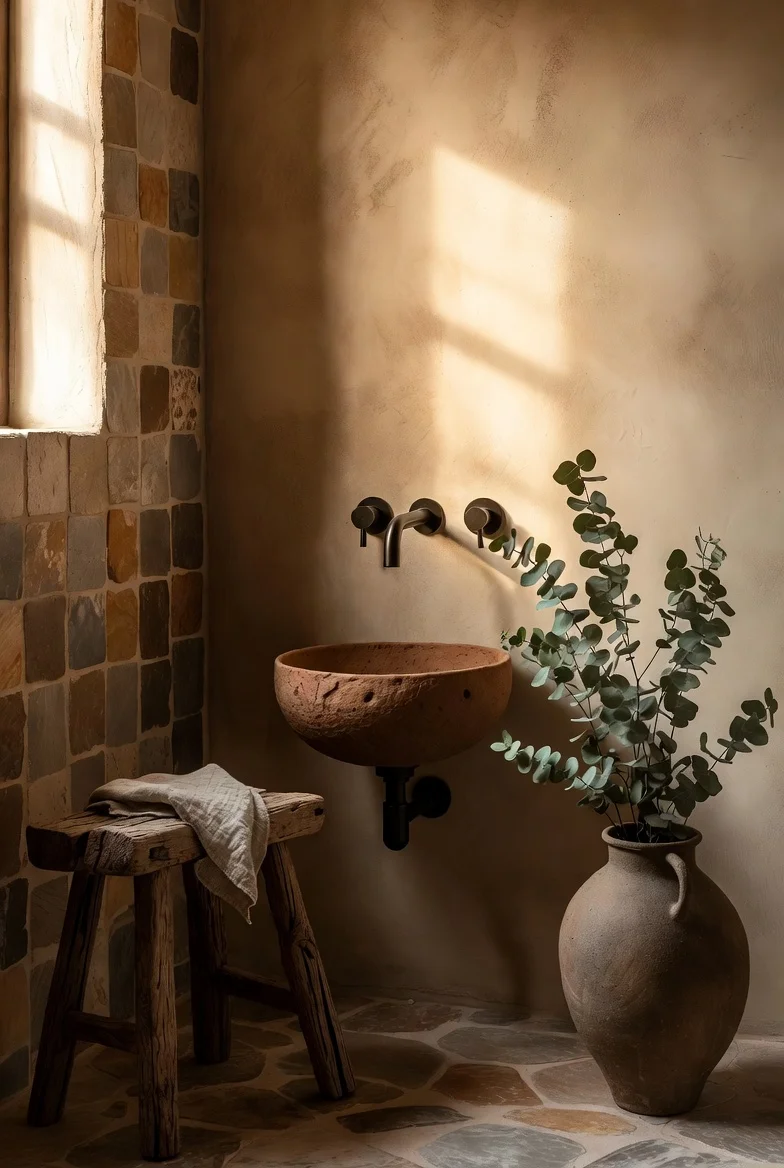
Every Japandi article mentions wabi-sabi, the beauty of imperfection. Here’s what it actually means in a bathroom: handmade tiles that vary slightly in tone, a ceramic basin with visible throwing rings, a wooden stool developing water marks, a linen towel that wrinkles.
In practice: choose one or two objects that show the hand that made them, and let them age without panic. Perfection is the enemy being edited out.
Remove the Handles
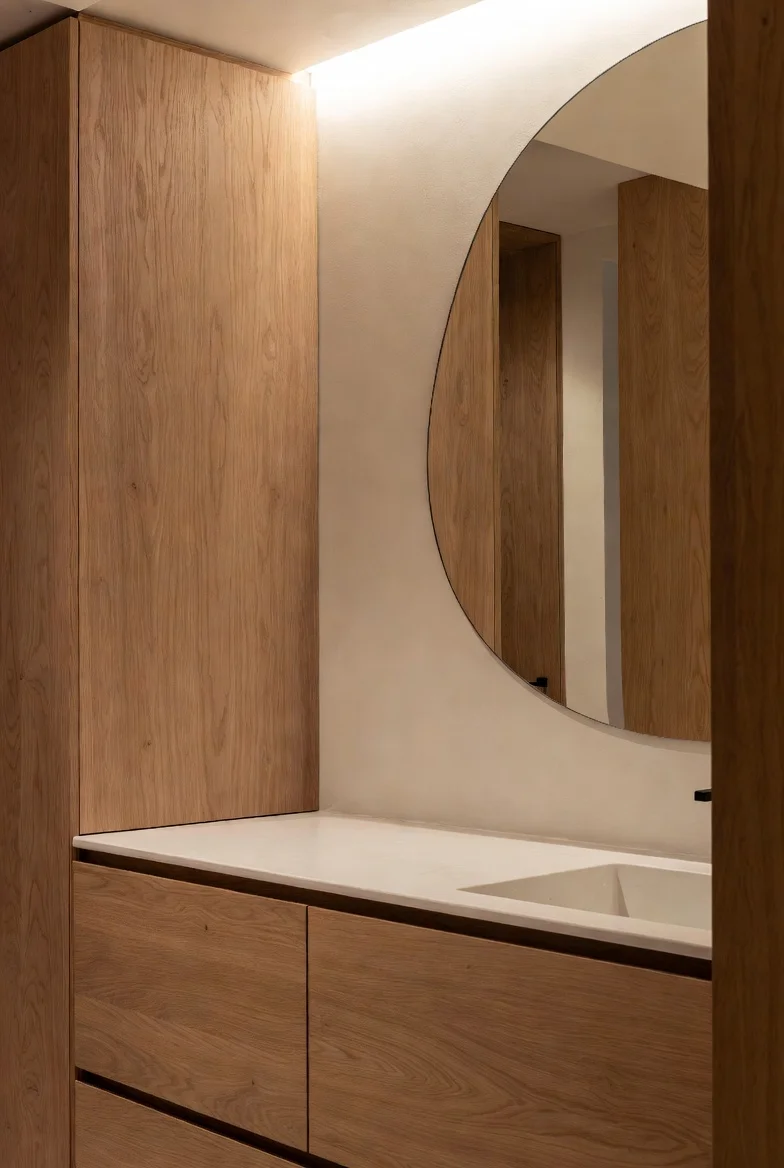
Push-to-open drawers and cabinets erase the visual noise of hardware. The vanity becomes one calm plane of wood, and small hands can’t dangle towels off knobs that no longer exist.
A detail, yes. But Japandi is made of exactly such details, subtracted.
Hide the Daily Clutter Completely
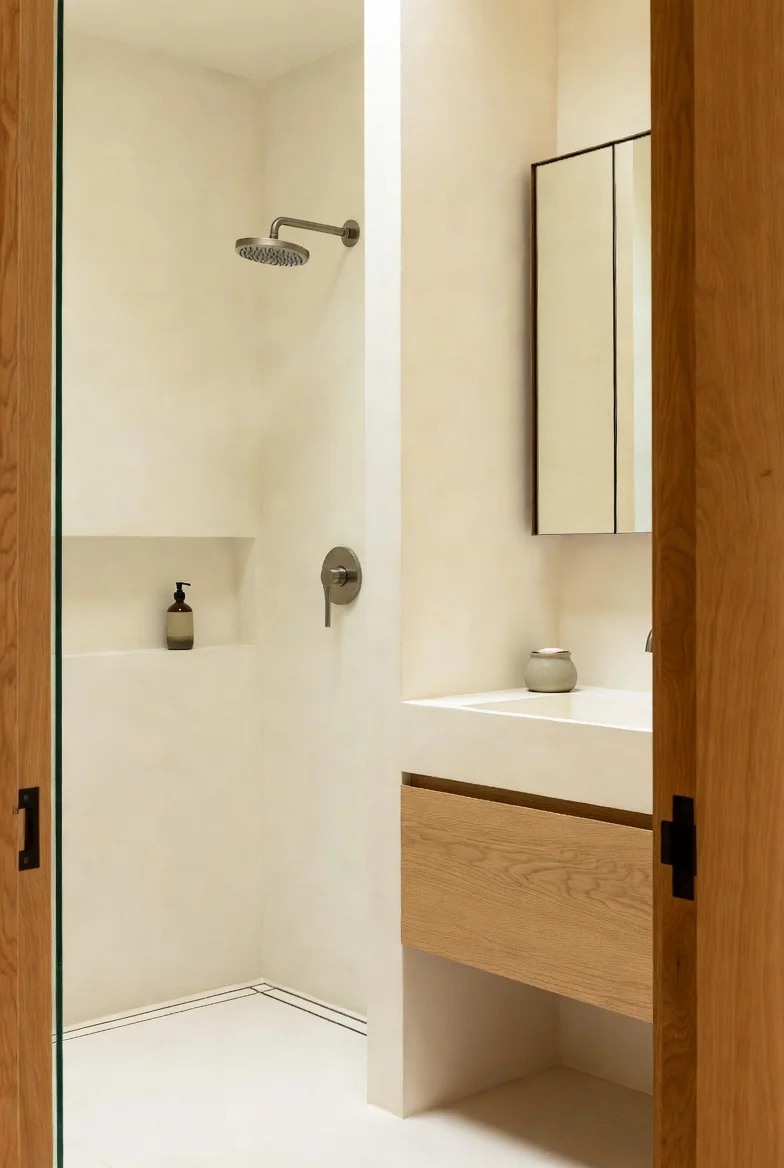
Visual silence needs infrastructure: a mirror cabinet swallowing the skincare shelf, a recessed shower niche for the bottles, drawer organizers underneath so the calm survives opening things.
The rule of the visible surface is strict here. What lives on the counter: a soap dispenser, maybe a plant. What doesn’t: everything else.
Layer In Bamboo and Rattan
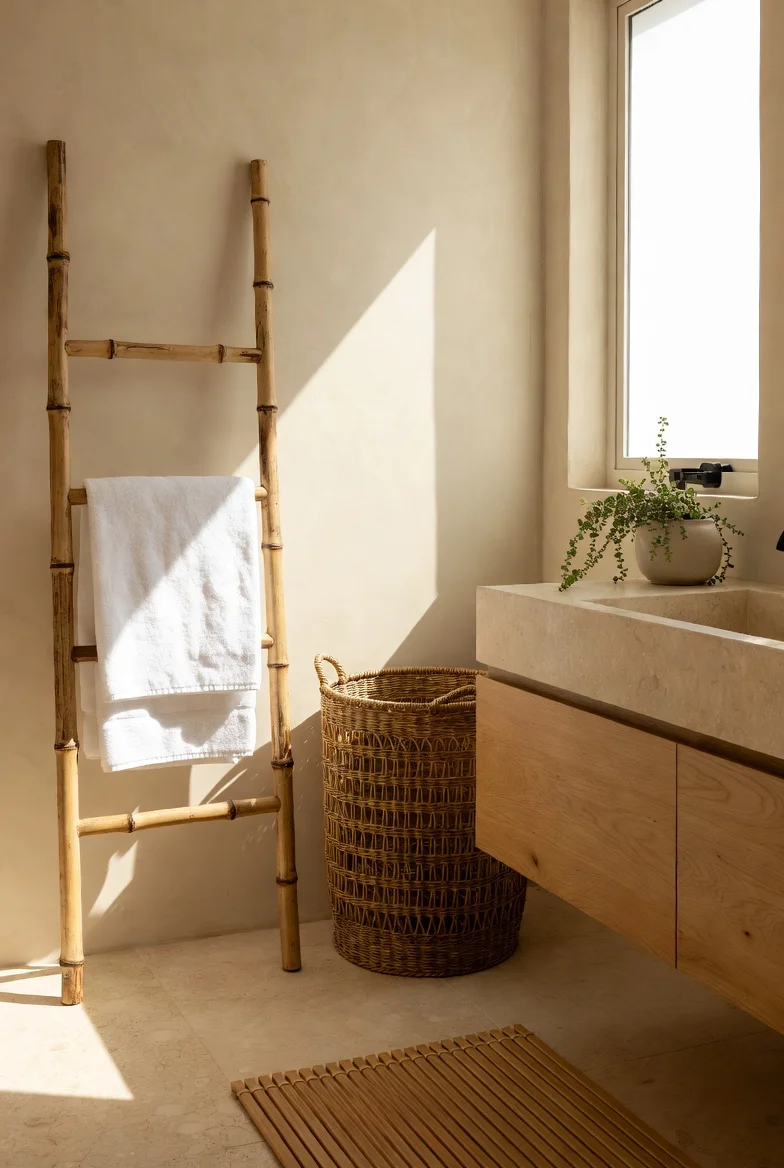
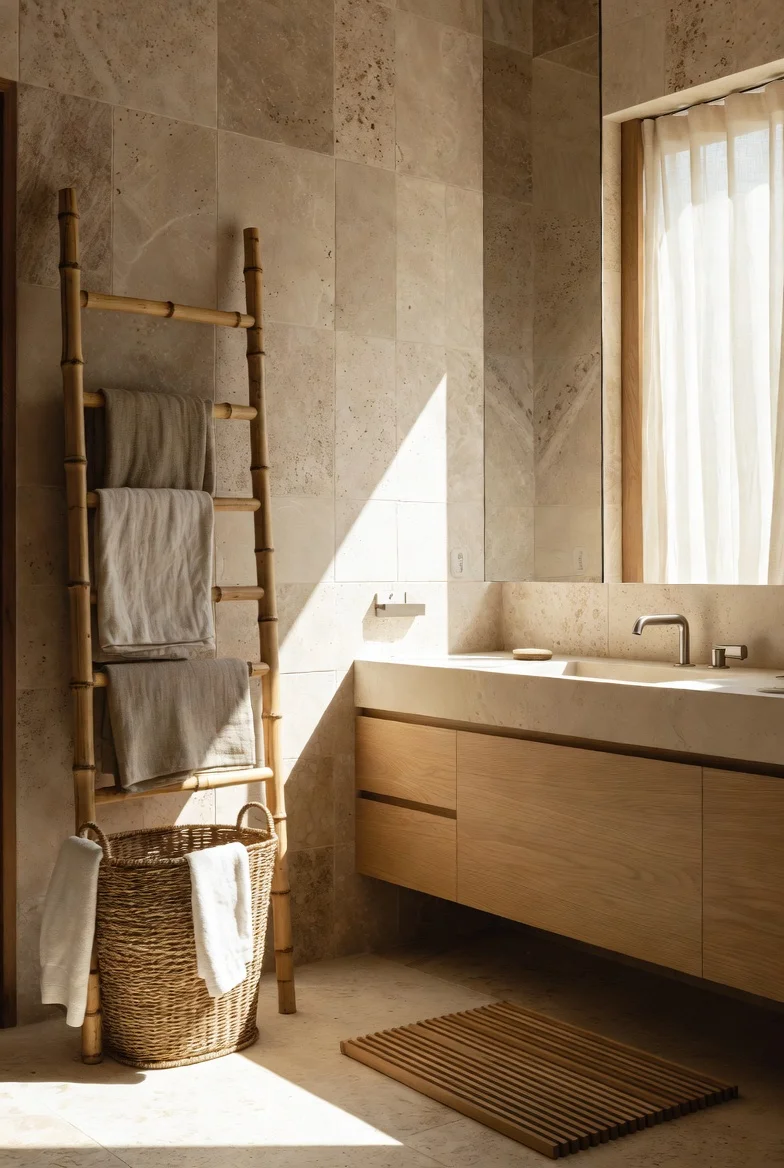
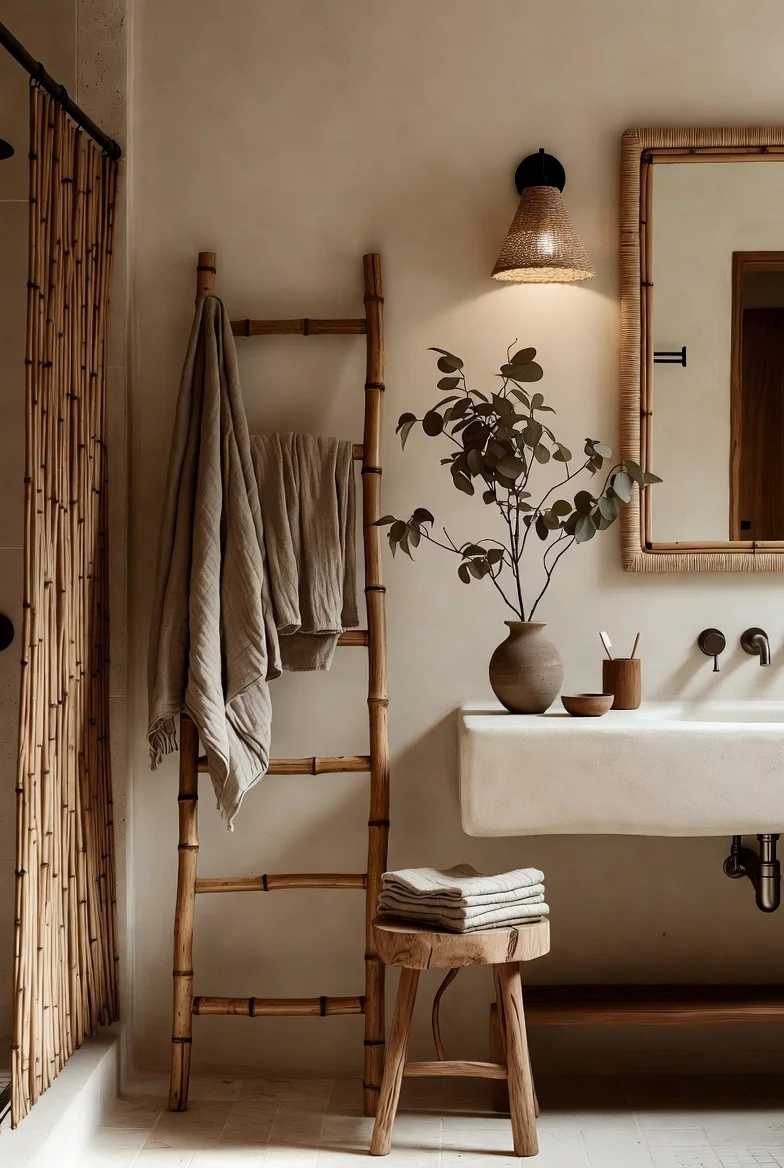
The breathable, woven counterweight to all that stone and wood: a bamboo ladder for towels, a rattan basket for the laundry, a slatted bath mat that dries in minutes. These pieces add texture without adding visual weight, and they cost the least of anything in this list.
One or two woven pieces per bathroom. Three is a beach house.
Light It Warm and Low
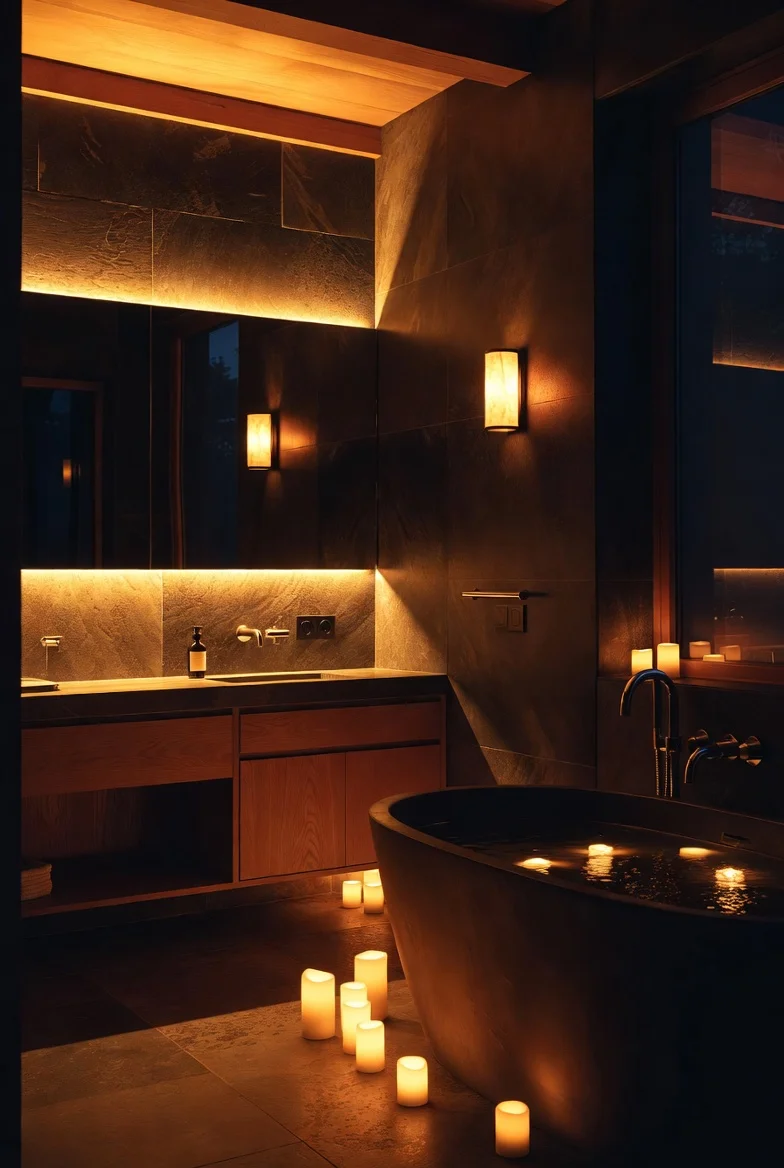
Cool white bulbs can undo every material choice in this article in one flick. Japandi lighting is warm (2700K), layered, and partially indirect: an LED strip washing down behind the mirror, a small wall light, candles doing the evening shift.
Put the main light on a dimmer if nothing else. Calm is mostly a lighting temperature.
Build the Ritual Corner
A small wooden stool beside the tub. On it, a tray: bath salts in a lidded jar, a folded linen cloth, one candle. This tiny vignette is Japandi’s whole philosophy in half a square meter, borrowed straight from the Japanese bathhouse tradition of treating washing as ceremony.
It costs almost nothing and changes how the room gets used, which is the point.
Choose Textiles Like They Matter
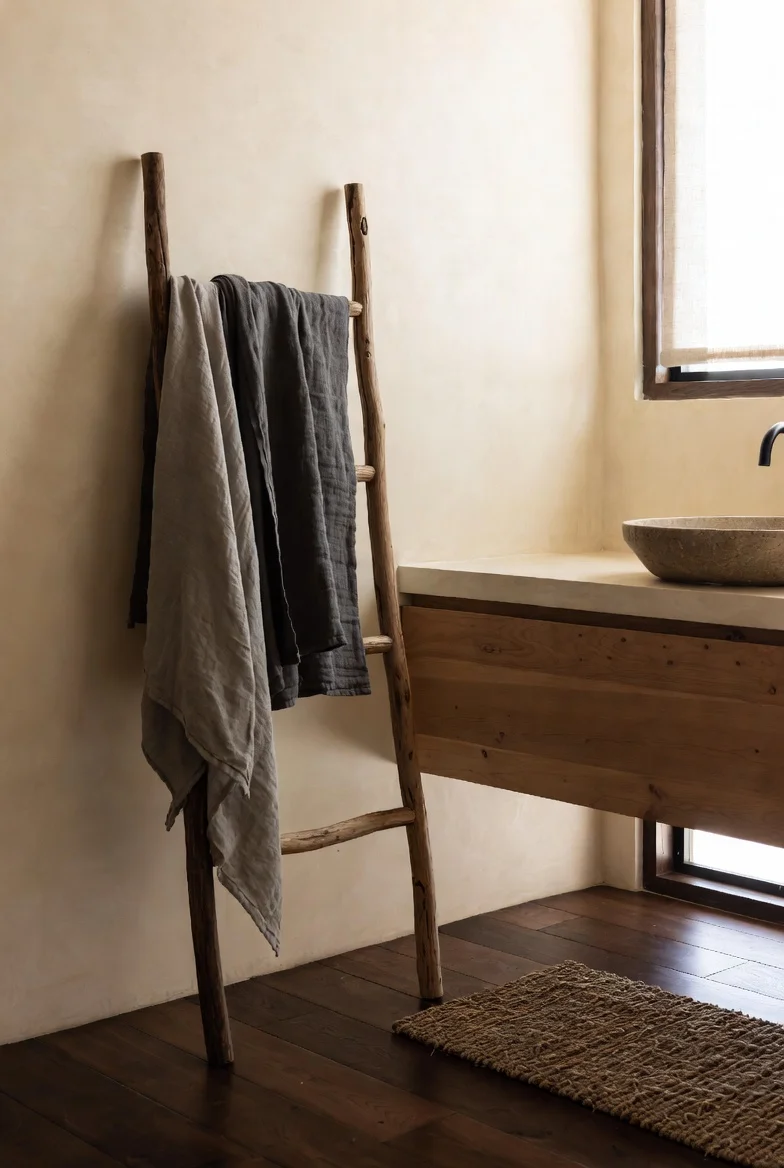
Because here, they do. Towels in oat, sand, clay, or charcoal, cotton or linen, hung in calm pairs or rolled in a basket. A washable woven-texture bath mat instead of the neon microfiber rectangle.
Two textile colors maximum across the room. The towels are part of the palette, not an afterthought.
One Plant, or Just One Branch
Japandi greenery is singular by design: a single sculptural plant (a snake plant, a small fiddle fig) or, more Japanese still, one branch in a heavy ceramic vase. Eucalyptus, magnolia, even a bare twig with good posture.
The restraint is what makes it read intentional. A windowsill crowded with small pots belongs to a different, equally lovely style, just not this one.
Borrow the Shoji Effect
Japanese interiors filter light through paper screens; a bathroom can echo that softness without the paper. Ribbed glass on the shower screen, a frosted window film, a slatted timber screen sectioning the tub, sheer linen at the window.
Light arrives diffused, shadows go soft, and the room gains that glow Japandi photographs are famous for.
The Renter’s Japandi (No Renovation Required)
No permission to touch tiles or plumbing? Build the style in layers you can take with you: warm 2700K bulbs, a bamboo ladder and slatted mat, oat and charcoal towels, an organic-shaped mirror leaned or hung over the existing one, a wooden stool with the ritual tray, one branch in a vase, and a ruthless decluttering of every visible surface.
Seven moves, one weekend, deposit intact. The same small-space logic as apartment bedroom decor: materials and editing beat construction.
Apply the Subtraction Rule
The final idea is the one that makes the other eighteen work. Walk into your bathroom and remove five things: the extra bottles, the novelty decor, the third bath mat, the crowded hooks. Japandi is not achieved by adding Japandi objects; it’s revealed by removing everything else.
Scandinavian design asks “is it functional?” Japanese design asks “is it necessary?” Anything that fails both questions leaves the room. What remains is the style.
3 Mistakes That Break a Japandi Bathroom
Cool white lighting. 4000K+ bulbs turn warm oak gray and make stone look like a hospital corridor. The entire palette depends on warm light; this mistake is invisible in daylight and ruinous at night.
Minimalism via many small minimal things. Ten tiny “aesthetic” objects are still clutter. Japandi wants few, larger, quieter pieces with room to breathe between them.
Full gloss and chrome. High-shine tiles, mirror-finish taps, and lacquered surfaces speak a glamour language this style doesn’t. Matte, honed, and brushed finishes only.
FAQs
What is a Japandi bathroom?
A bathroom blending Japanese minimalism and bathing ritual with Scandinavian warmth and function: warm neutral palettes, wood and stone textures, rounded shapes, hidden storage, and a soaking tub or serene shower as the centerpiece. The guiding philosophies are wabi-sabi (beauty in imperfection) and hygge (cozy contentment).
What colors work in a Japandi bathroom?
Warm neutrals form the base: sand, oat, off-white, and soft greige, grounded by one deep contrast such as charcoal, ink, or dark walnut. Muted sage or clay can appear as a whisper of color; bright shades and cool grays fall outside the style.
What’s the difference between Japandi and Scandinavian bathrooms?
Scandinavian bathrooms lean bright, white, and casual; Japandi adds Japanese depth: darker contrast tones, ritual around bathing, more restraint in decor, and wabi-sabi’s affection for imperfect, handmade objects. Japandi is essentially Scandi warmth with Japanese discipline.
How do I create a Japandi bathroom on a budget?
Work in removable layers: warm bulbs, bamboo and rattan accessories, earth-tone linen towels, a wooden stool with a bath tray, an organic-shaped mirror, one branch in a ceramic vase, and aggressive decluttering. The style rewards editing more than spending, which makes it unusually budget-friendly.
Is Japandi still in style for 2026?
More than ever. The year’s broader shift toward warm minimalism, natural texture, and calm interiors is essentially the Japandi thesis going mainstream; the style has moved from trend to established design language.
Final Thoughts
A Japandi bathroom asks very little: warm light, honest materials, one beautiful ritual, and the discipline to leave space empty. Start tonight with the free version. Remove five things, dim the light, and stand in the doorway.
