

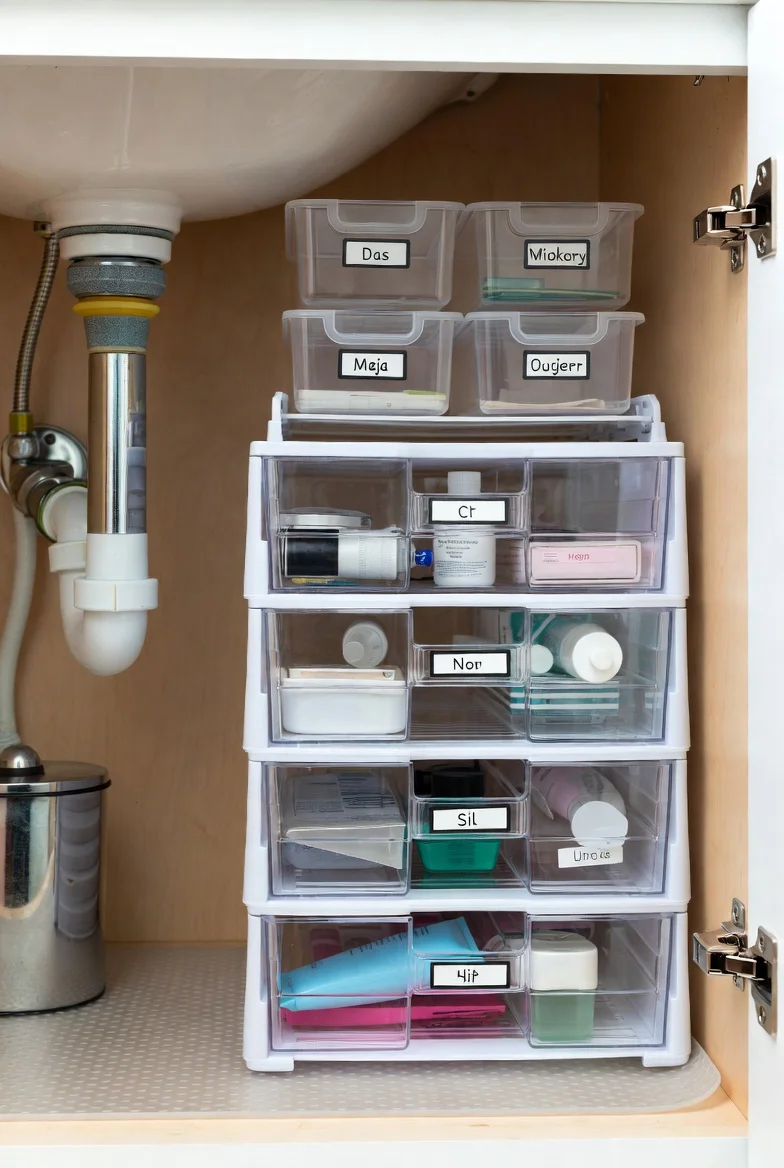
Every bathroom has one: the cabinet under the sink where products go to be forgotten. Reach in and you’ll perform archaeology: three half-empty conditioners, a mystery ointment, cleaning sprays from two apartments ago, all huddled around a pipe. These under bathroom sink organization ideas end the dig for good, working with the plumbing instead of pretending it isn’t there.
The system in short: empty and purge first, measure everything including the door opening, build vertical storage around the pipes, protect the base against leaks, and give every category a labeled container. The cabinet is awkward by design. The organizers just have to be smarter than the awkwardness.
Twenty ideas, from the first purge to the ten-minute ritual that keeps it all working.
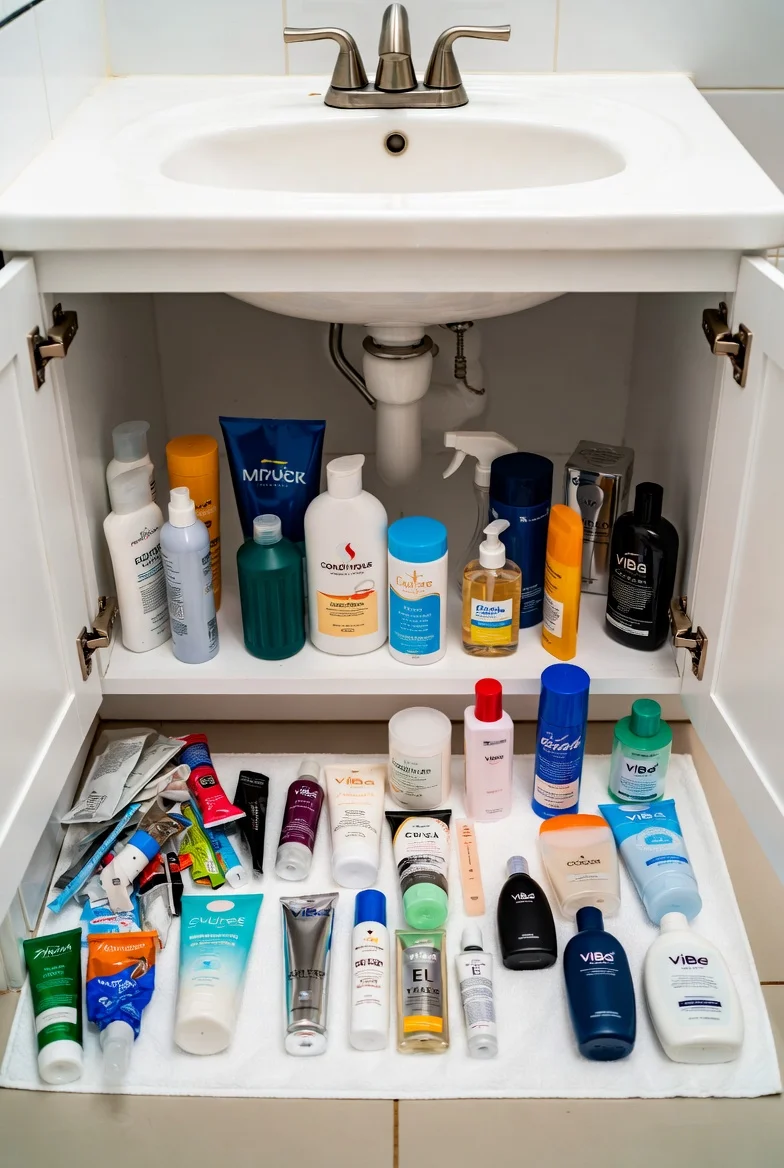
Empty It Completely Yes, Completely
Half-organizing an under-sink cabinet means organizing around the problem. Pull every item out onto a towel, and sort ruthlessly: expired products out, duplicates merged, the “someday” items honestly judged.
Most under-sink cabinets shed a third of their contents in this pass and what’s left finally fits the space that always seemed too small.
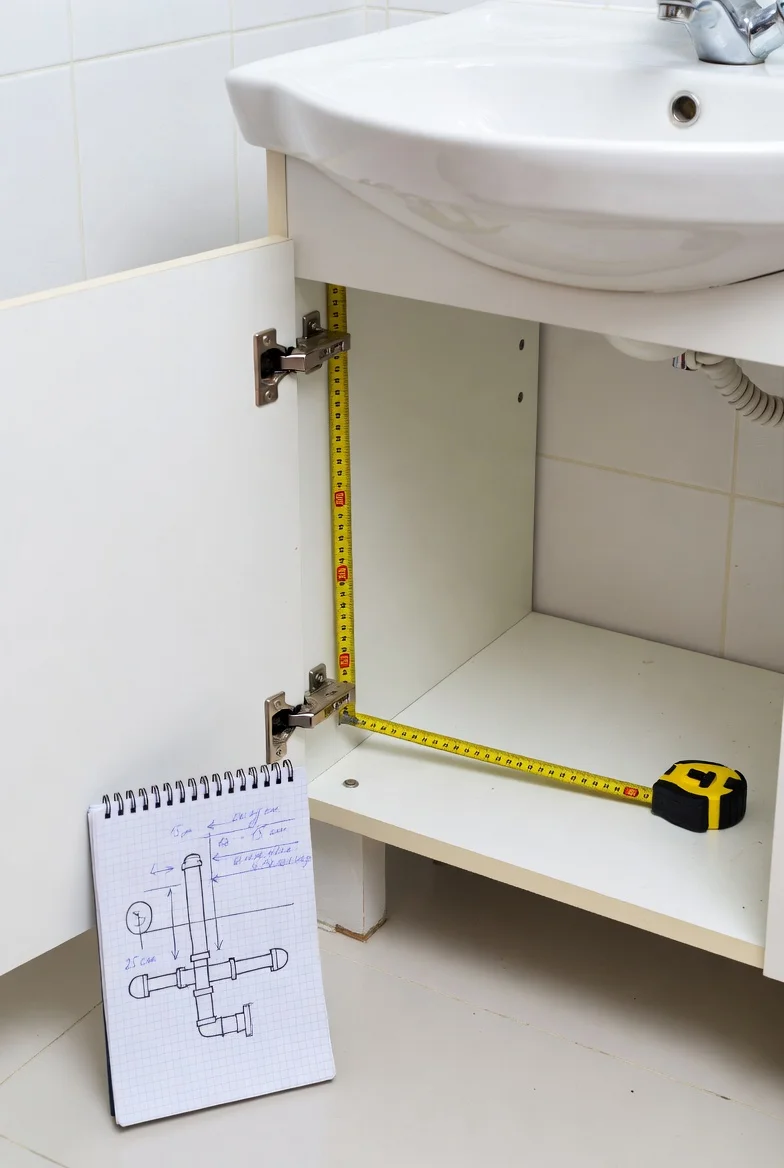
Measure Five Things, Not Three
Width, depth, height: everyone measures those. The two that ambush people: the door opening (often narrower than the cabinet, and the reason organizers get returned) and the pipe positions, sketched roughly on paper.
Shop with those five numbers and every organizer fits on the first try. Skip them and the cabinet collects failed purchases alongside the clutter.
Map Around the Pipe, Not Against It
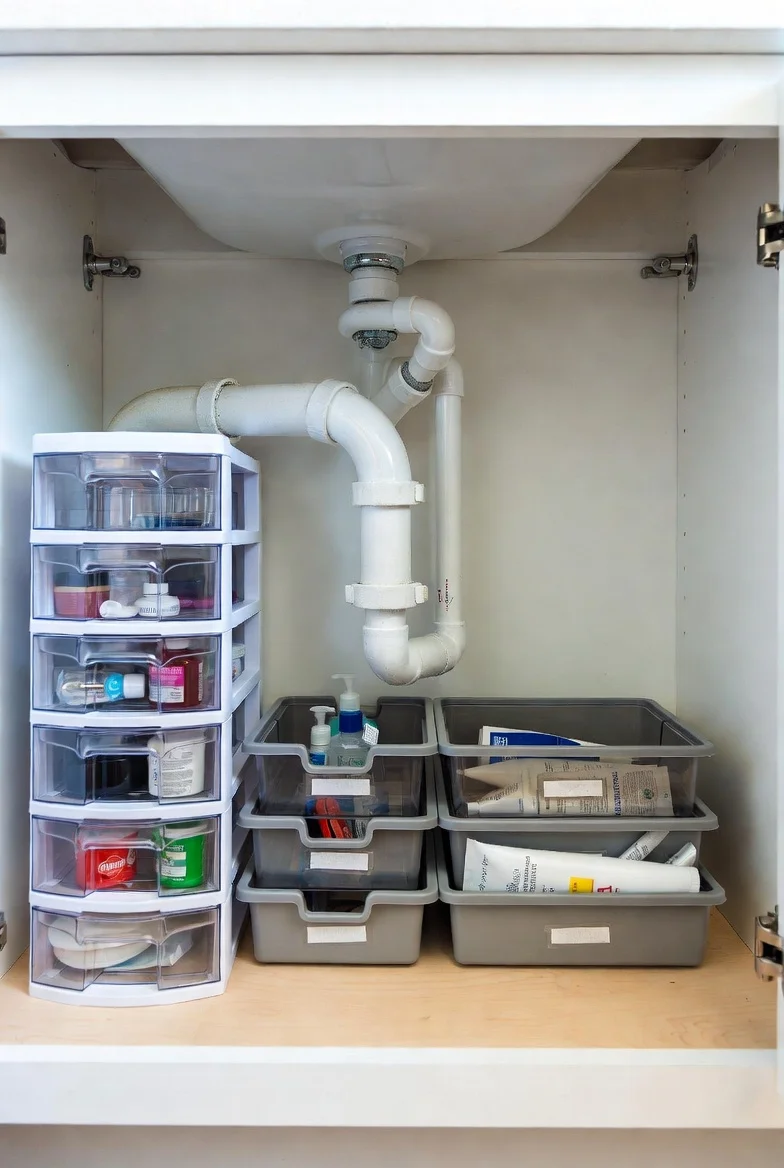
The S-bend is the landlord of this cabinet; everything else negotiates. The winning layout: tall storage in the clear zones beside the plumbing, low bins in front of it, and the dead space directly around the trap left breathable for access when, not if, a plumber visits.
Fighting the pipe with oversized organizers is how cabinets end up half-empty and fully frustrating.
Also Read 12 Powder Room Ideas for Stylish Homes (The Smallest Room, the Biggest Impression)
Waterproof the Base First
The step every tutorial skips: this cabinet lives under active plumbing, and slow leaks ruin quietly. A waterproof mat or shallow rubber tray across the cabinet floor protects everything above it, catches drips before they spread, and wipes clean in seconds.
If a leak ever does arrive, the mat is the difference between a five-minute wipe and replacing the cabinet floor. Cheapest insurance in the entire bathroom.
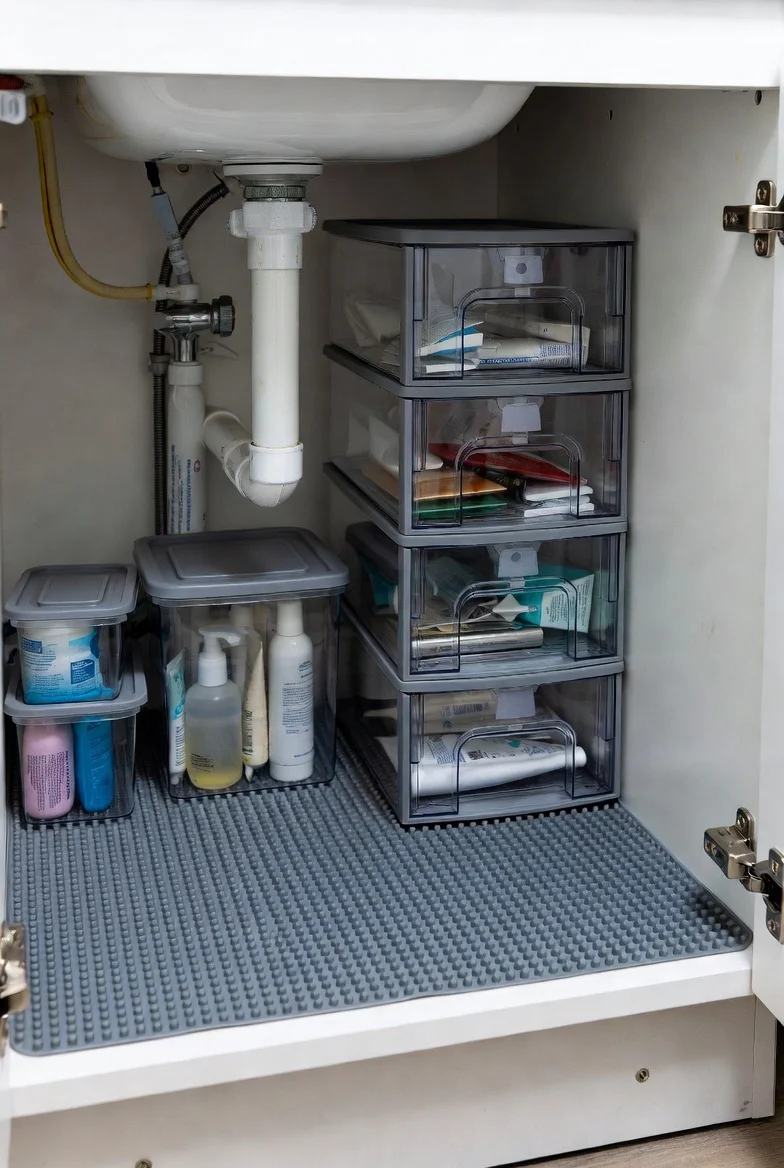
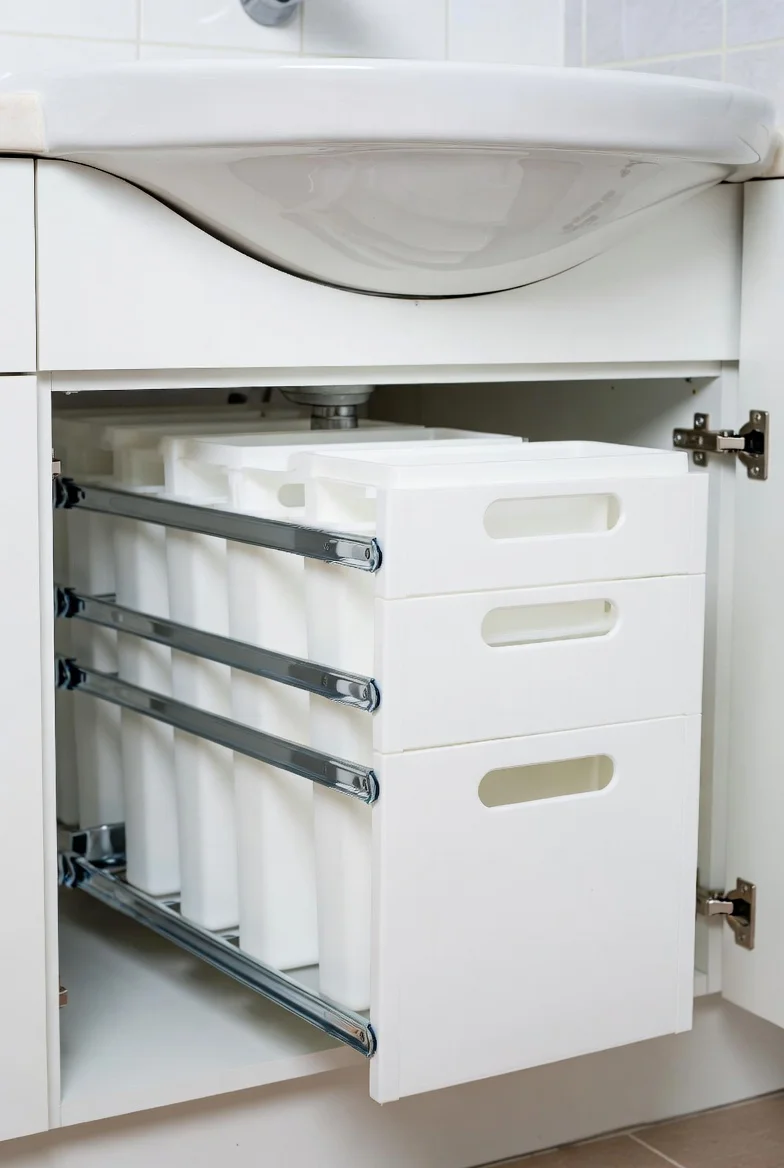
Stack Clear Drawers Beside the Plumbing
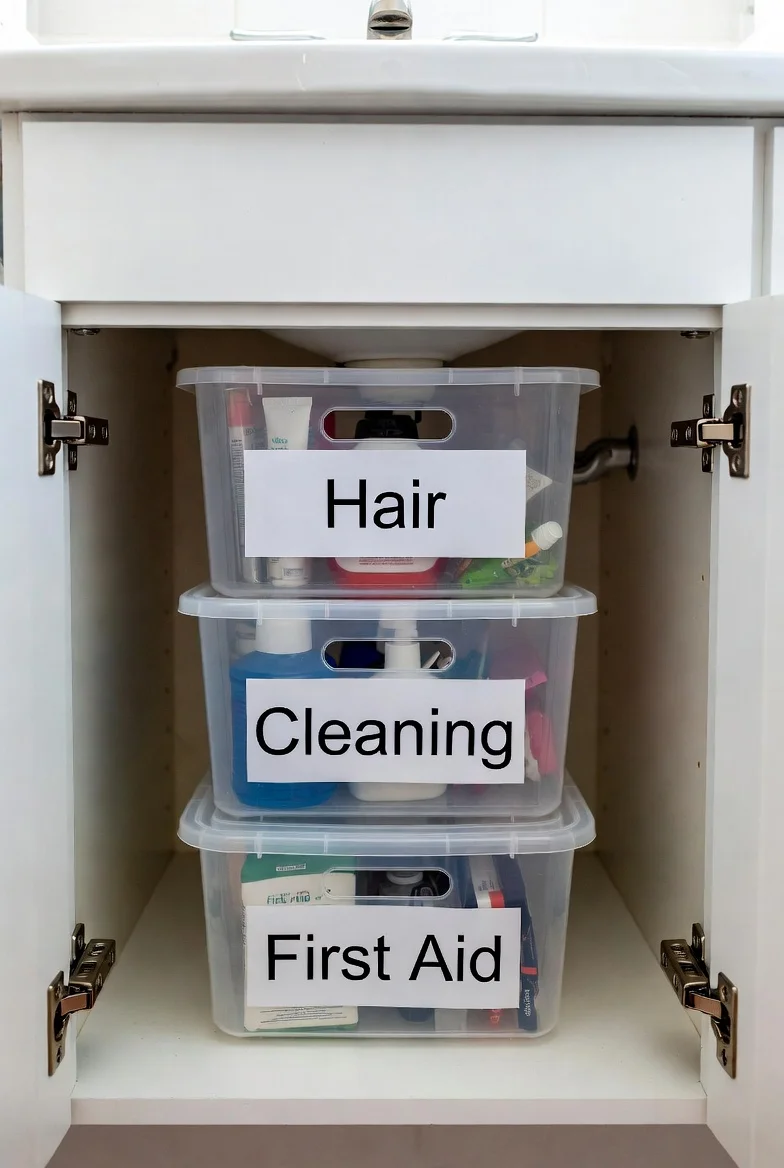
The vertical columns flanking the pipe are prime real estate. Clear stacking drawers turn each column into three accessible layers: skincare in one level, hair products in another, first-aid in the third. Clear is non-negotiable: opaque drawers are where the duplicate shampoos breed. If you can see it, you won’t rebuy it.
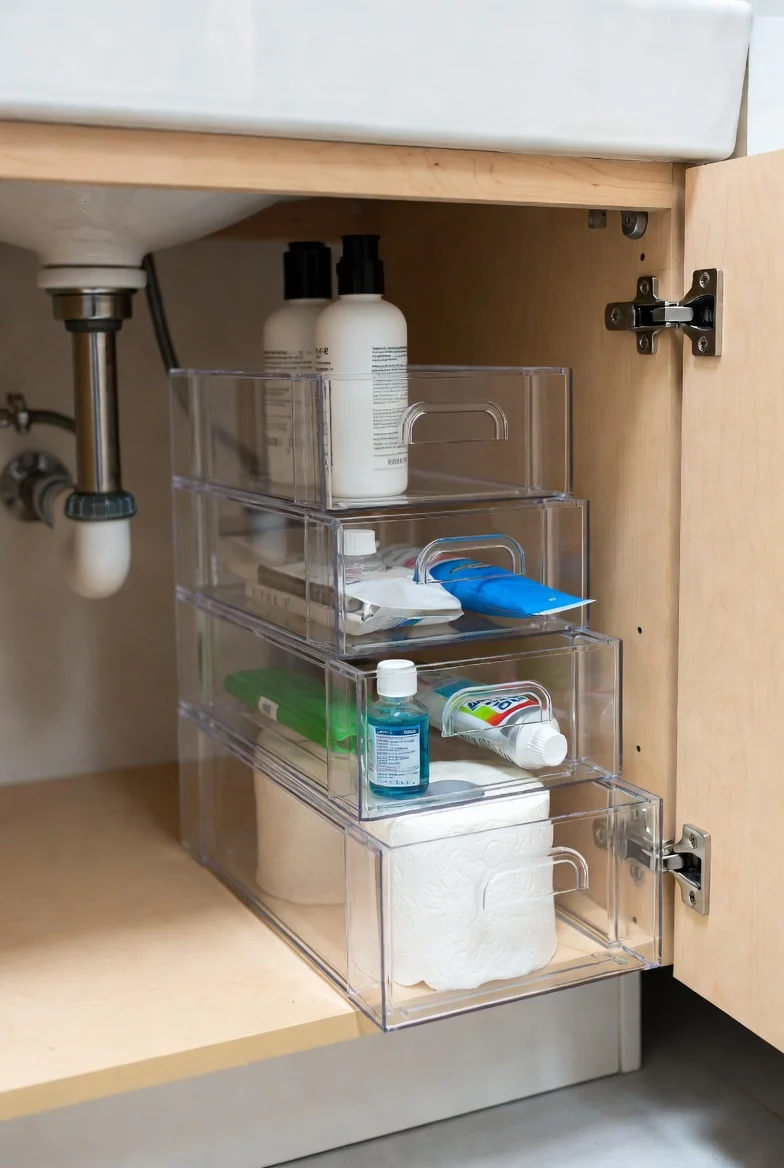
Add an Expandable Under-Sink Shelf
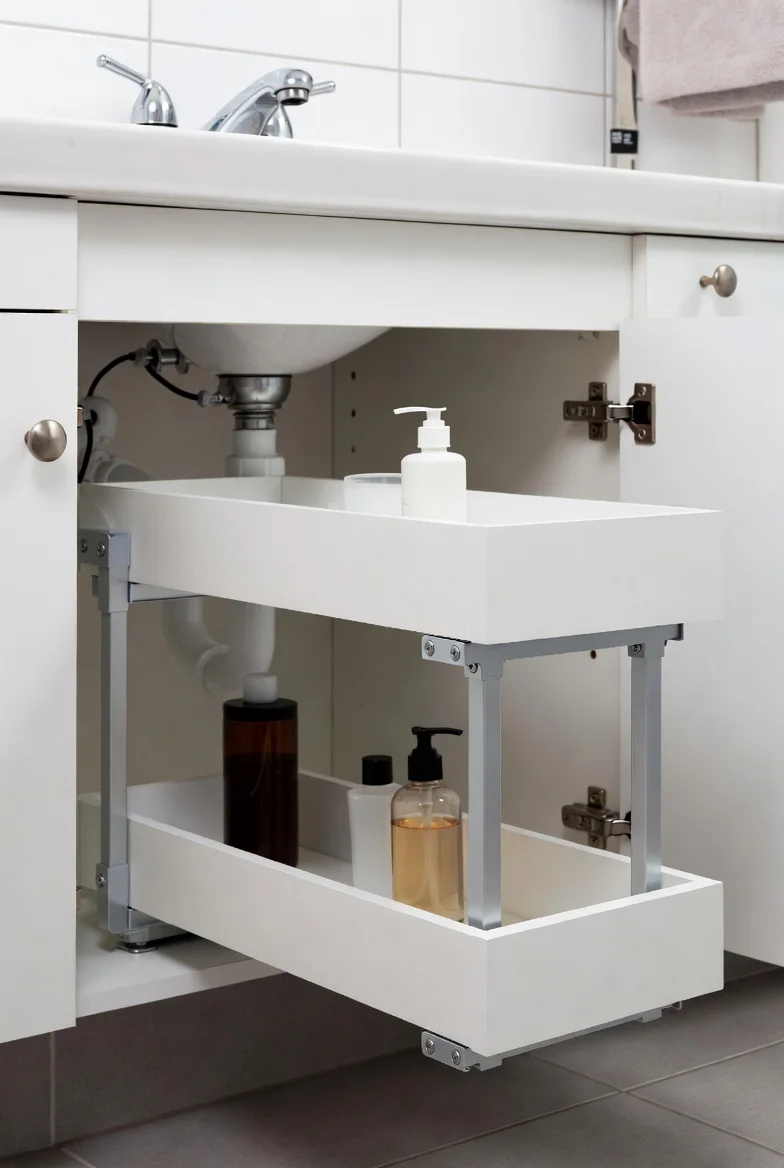
Purpose-built expandable shelves are the transformers of this cabinet: width adjusts to your space shelf panels slot around the pipe, and suddenly one chaotic floor becomes two tidy levels.
It’s the single highest-impact organizer for the money here, and it moves out with you: renters, this one’s yours.
Also Read 12 Powder Room Ideas for Stylish Homes (The Smallest Room, the Biggest Impression)
Choose U-Shaped Organizers for the Front Row
Several brands now make U-shaped and cut out organizers designed to hug plumbing. They reclaim the awkward middle zone that regular rectangular bins can’t touch.
The under-sink category has quietly gotten clever in the last few years. Measure first then let the purpose-built pieces do the geometry.
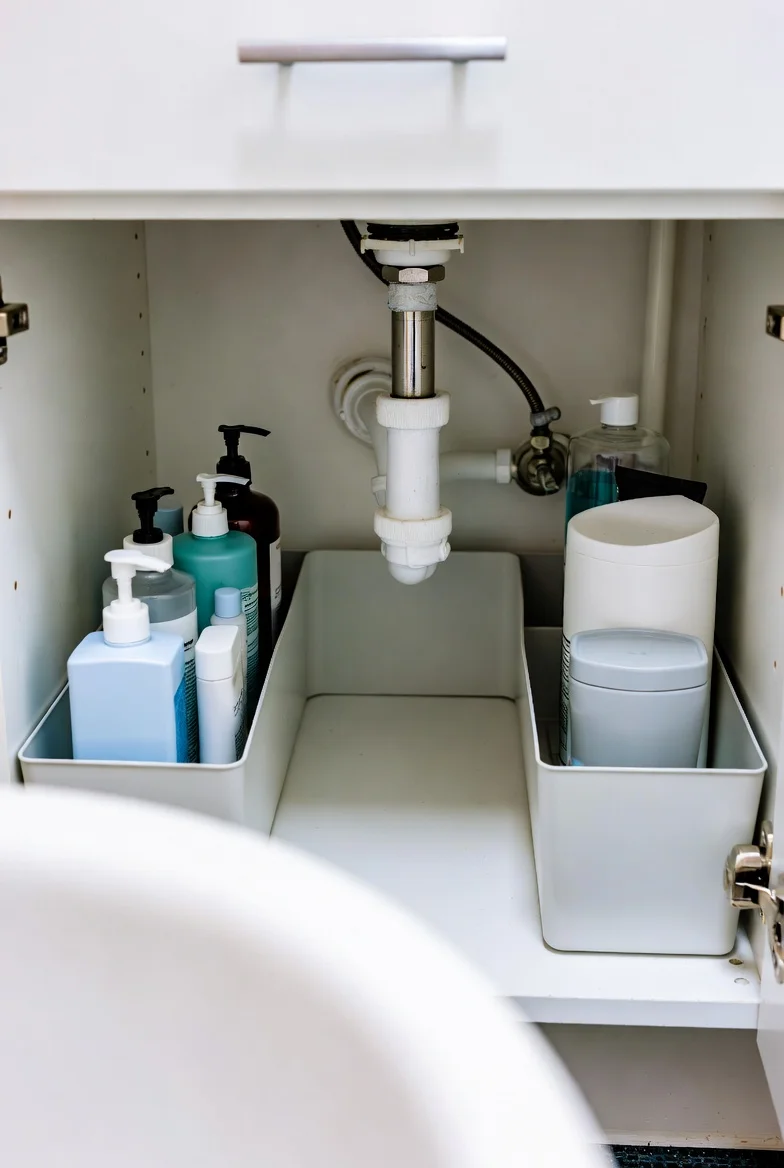
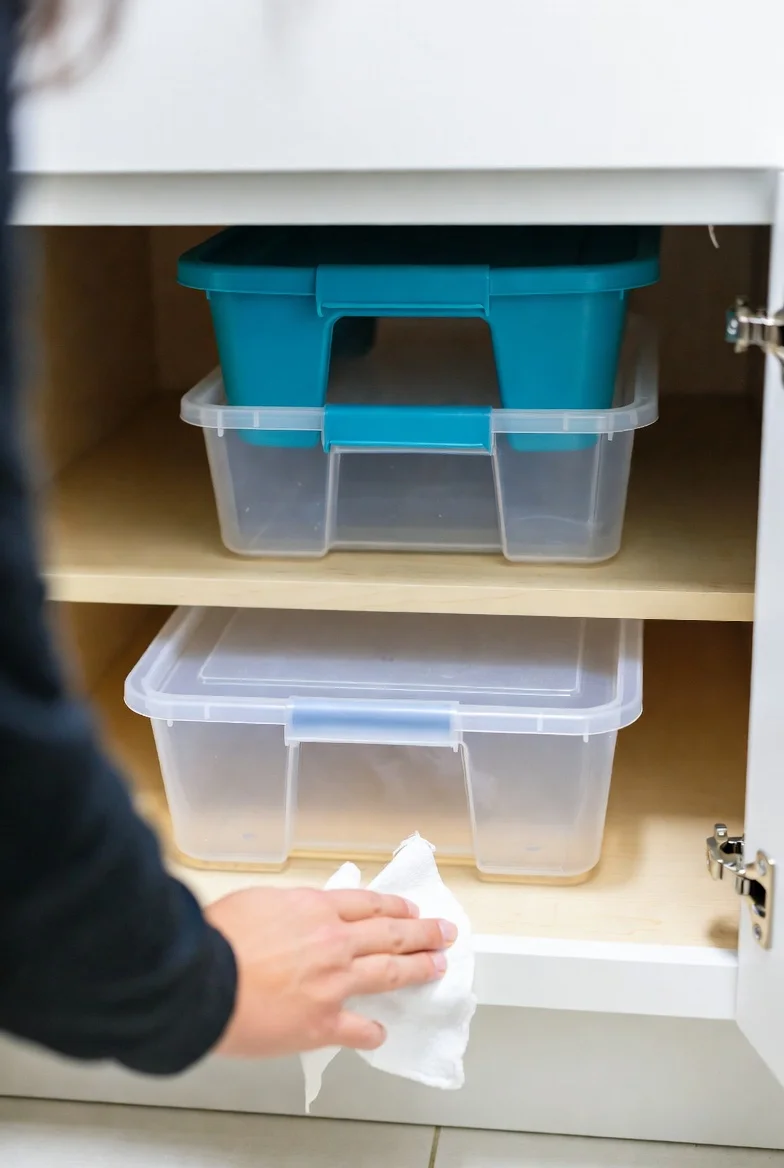
Give Every Bin a Handle
Deep cabinet, low position, dark corners: everything here should slide out like a drawer. Bins with cutout handles or front pulls turn the back row from a lost world into one smooth pull.
The test: can you reach any item in the cabinet in one motion, crouching once? Handles are usually the missing piece.
Go Deep and Open for the Tall Bottles
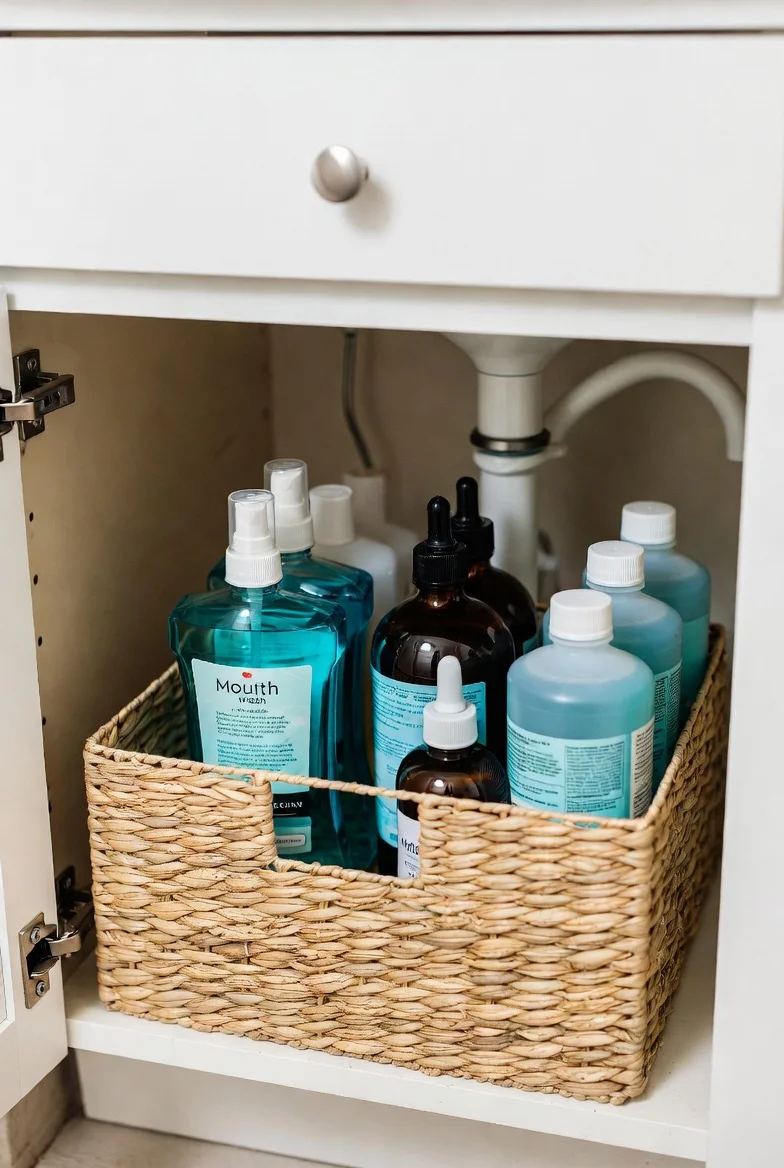
Tall bottles, mouthwash, refill jugs, the salon-size conditioner, tip over in shallow bins and vanish in closed ones. One deep, open-top basket corrals them upright and visible, sized to slide out when needed.
Professional organizers swear by this single-basket approach for the tall category, and they’re right: it’s the only shape that fits the contents.
Spin the Back Corner
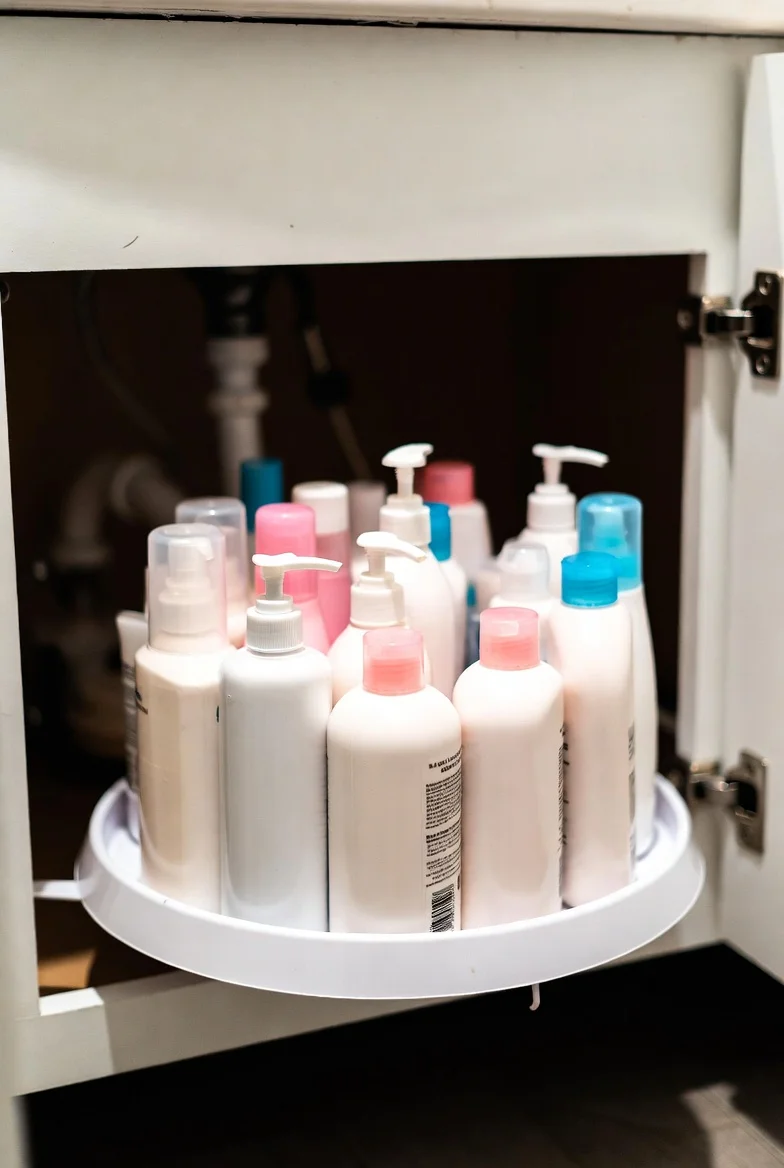
The rear corners are the Bermuda Triangle of under-sink storage. A small turntable back there rotates lotions, sprays, and back stock into reach. No more full-arm excavations for the thing that slid behind the pipe.
Choose one with a raised lip. Turntables and round bottles have a physics relationship you don’t want unsupervised.
Also Read 12 Powder Room Ideas for Stylish Homes (The Smallest Room, the Biggest Impression)
Mount the Hair Tools on the Door
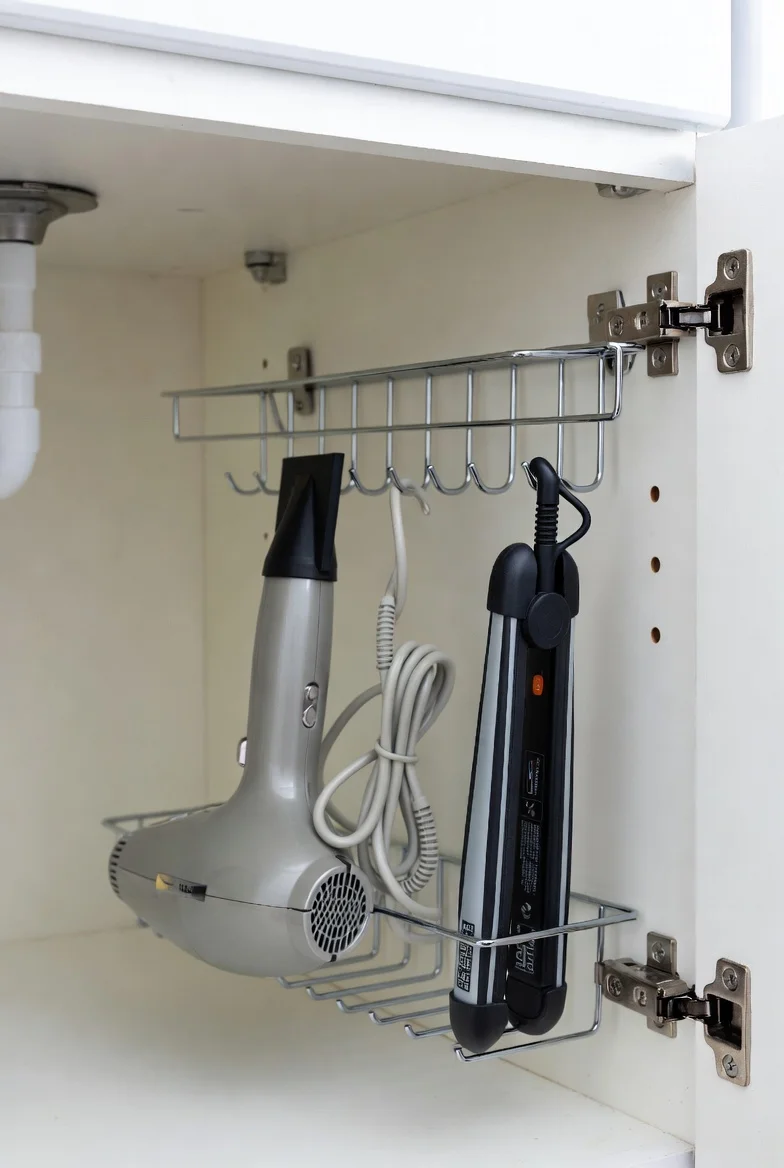
The inside of the cabinet door is a storage wall in disguise. Adhesive or over-door organizers hold the hair dryer, straightener, and brushes, tools that tangle in drawers but hang beautifully cords wrapped, at grabbing height.
Bonus: heat-styling tools cool safely in a wire door rack instead of lying on the counter melting things.
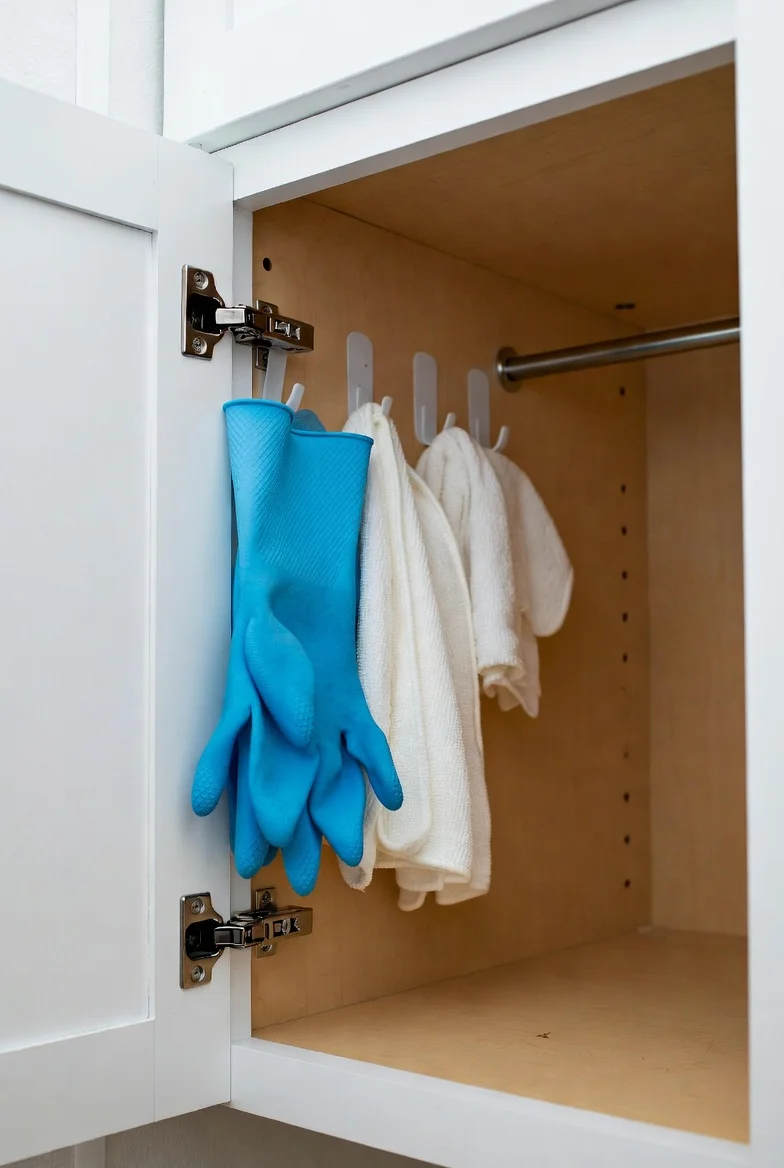
Hook the Small Stuff Beside Them
Below or beside the tool rack, a few small adhesive hooks catch the accessories: cleaning gloves, the scrub brush, a microfiber cloth, the drain snake nobody wants to see but everyone needs.
Hooks cost cents and retire an entire junk-layer from the cabinet floor.
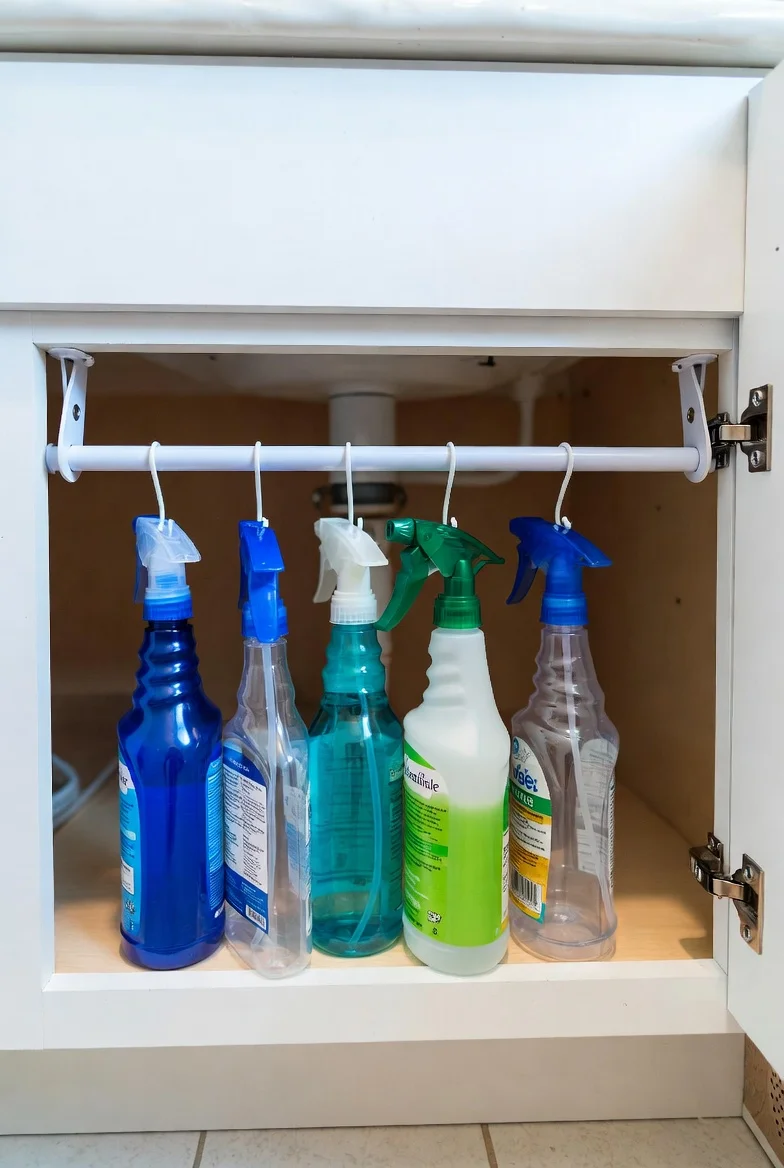
Hang a Tension Rod for Spray Bottles
The trick that went viral for good reason: a short tension rod across the cabinet’s upper front, spray bottles hanging by their trigger heads. The bottles float above everything else, and the floor space below stays free for bins.
Ten seconds to install, zero tools, and weirdly satisfying every time the cabinet opens.
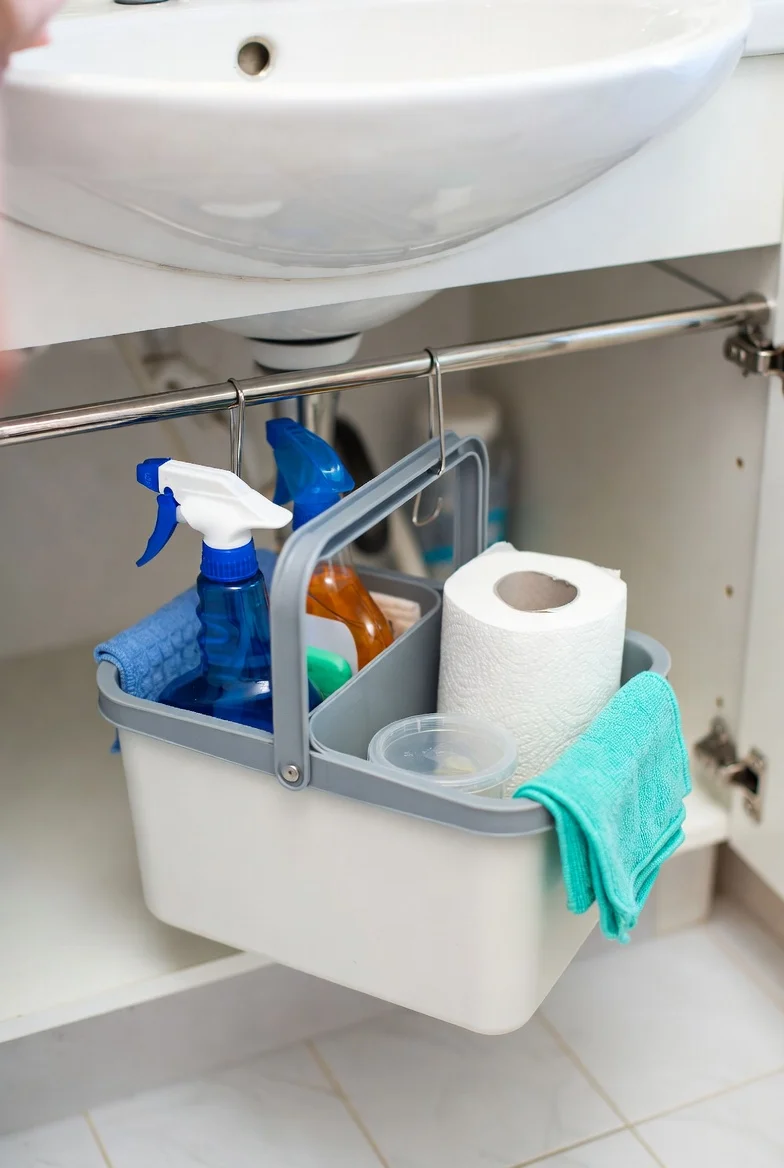
Build a Grab-and-Go Cleaning Caddy
Bathroom cleaning happens in one sweep. The supplies should travel that way. One handled caddy holding the glass spray, scrub, cloths, and gloves lifts out, tours the bathroom, and returns to its spot.
The caddy also enforces a limit: if it doesn’t fit in the caddy, the cleaning arsenal has quietly become a collection.
Zone by Category, Not by Chaos
Four zones cover almost every under-sink cabinet: daily skincare, hair, cleaning, and backstock. Each gets its own container, and the part that makes it stick: items return to zones not to “wherever fits.”
When categories have addresses, tidying takes seconds. When they don’t, every cleanup is a fresh negotiation.
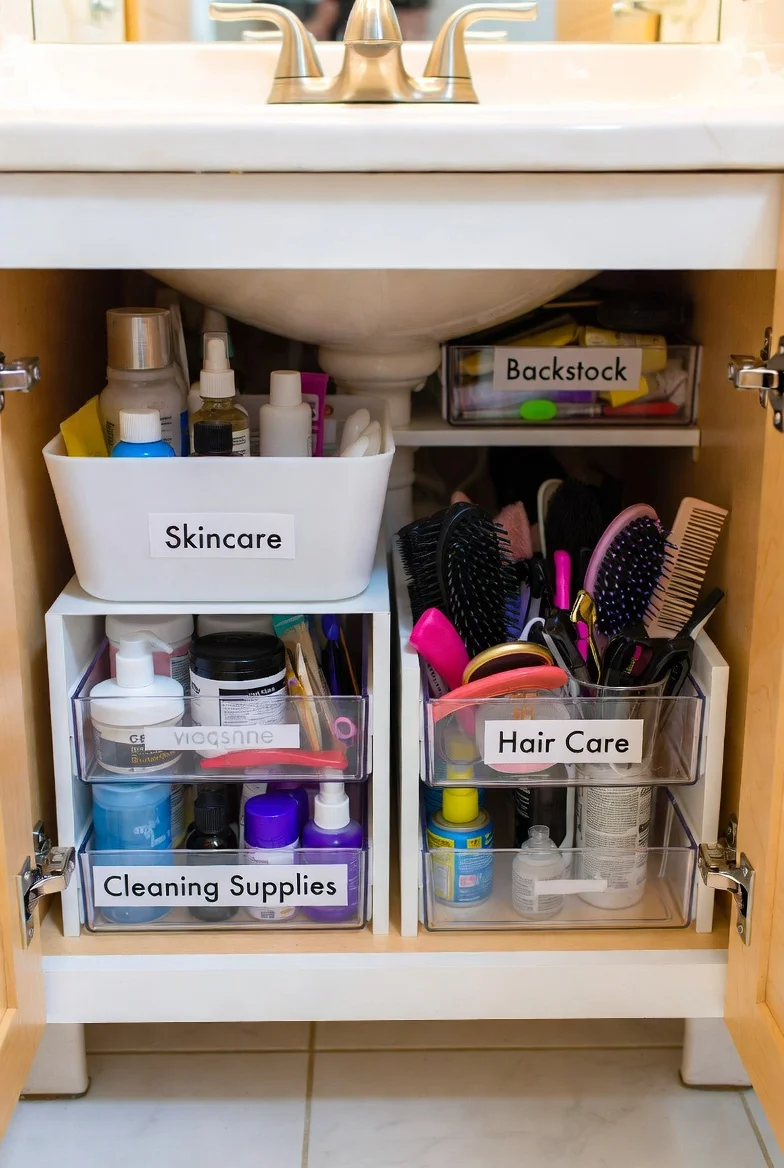
Label the Fronts, Face Them Out
Labels on the front edge of every bin and drawer, short category words, uniform style, turn your system into everyone’s system. The household can’t unknow where “Hair” lives.
Under a sink, labels do double duty: they’re also how you spot at a glance that the first-aid bin has wandered to the wrong side.
Lock Down the Chemicals
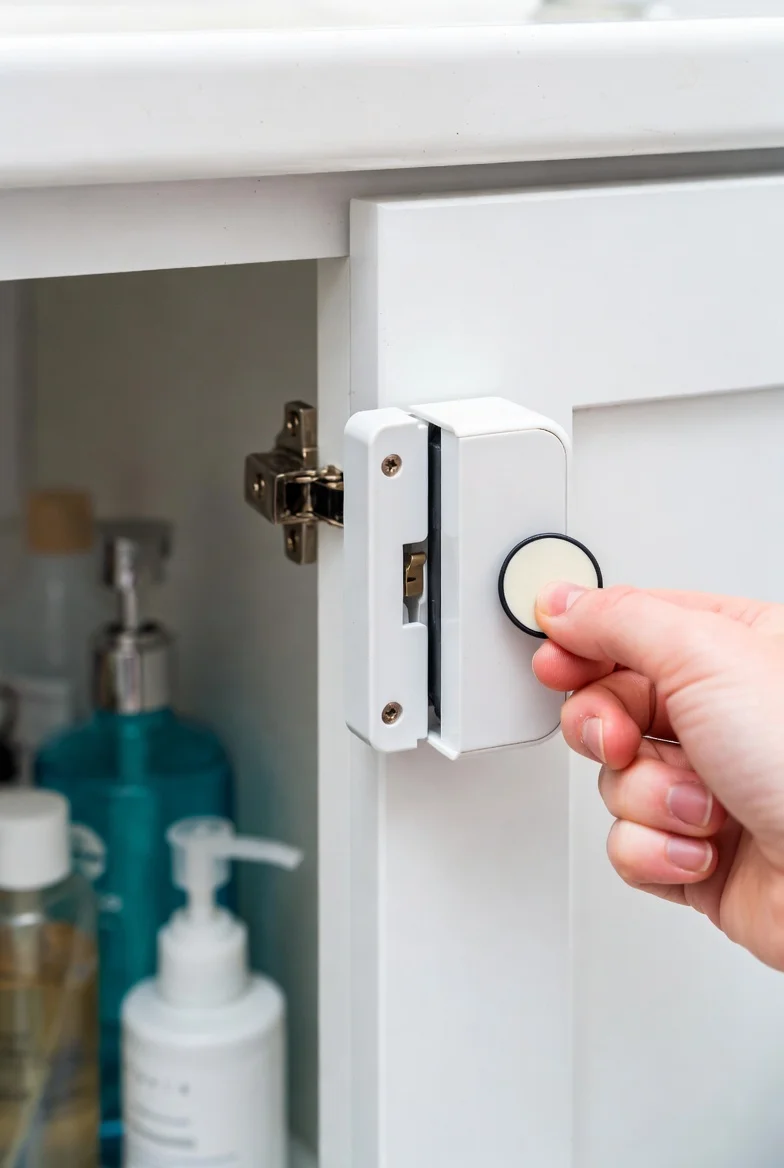
If small children live in or visit this home: the under-sink cabinet is the most dangerous cupboard in the house, at exactly crawling height. Magnetic child locks (invisible outside, adults open with a magnet key) or adjustable strap locks secure it in minutes.
At minimum, move the harshest chemicals to a high shelf elsewhere. This is the one idea on the list that outranks pretty.
Park a Daily Basket at the Front Edge
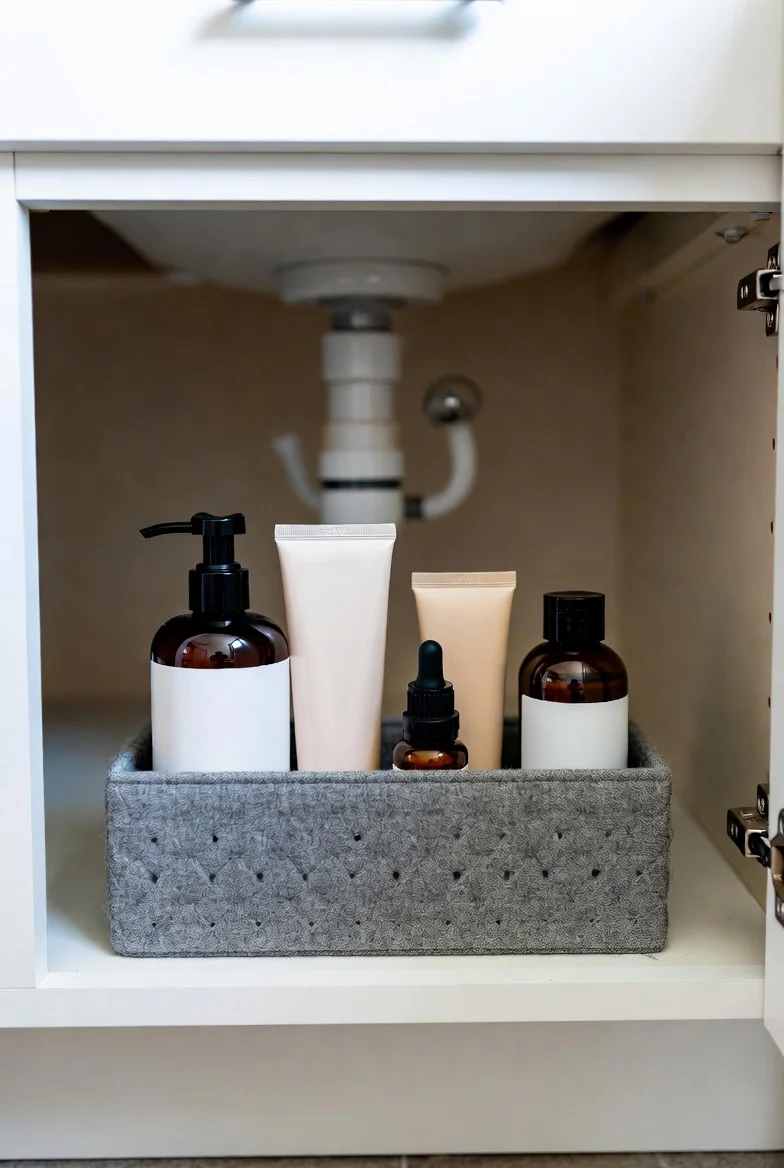
The five items you use every single morning, face wash, moisturizer, the toothpaste backup, earn the cabinet’s front row in one shallow basket. Open door, one grab, done.
Prime position for daily items is the quiet rule underneath every organized space; here, the front fifteen centimetres are prime.
No Cabinet? Solve the Pedestal Sink
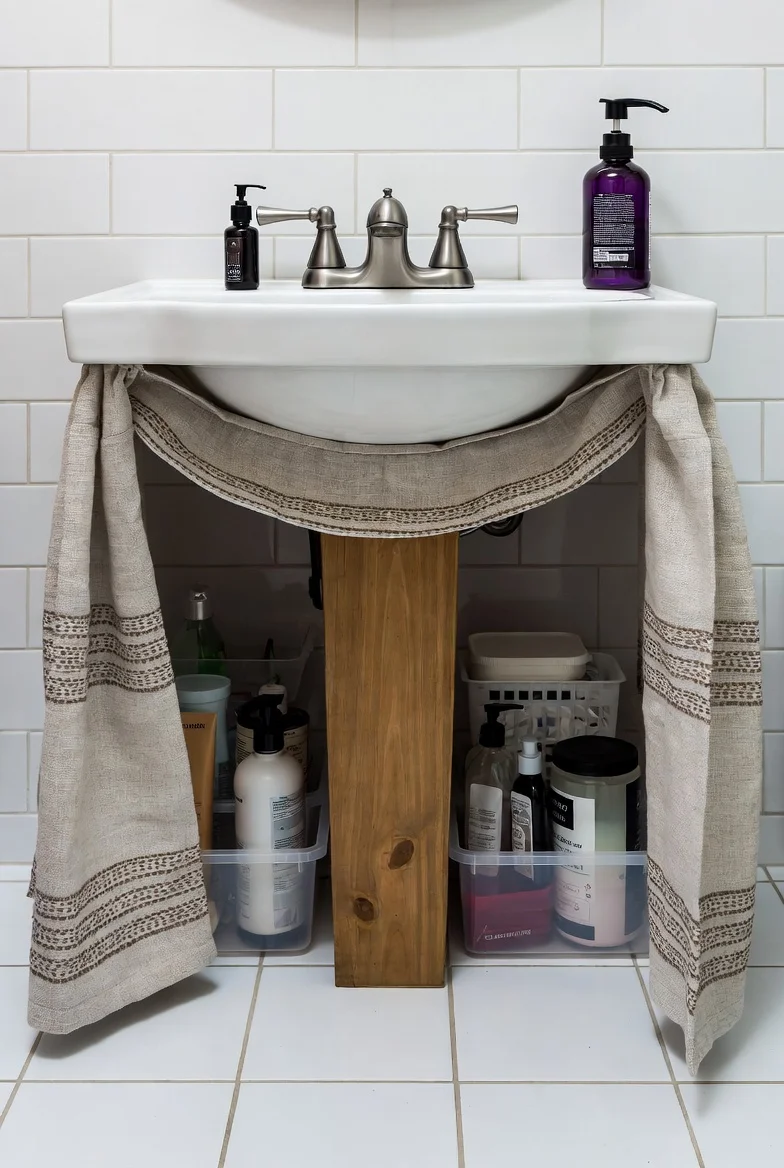
Pedestal and wall-mounted sinks skip the cabinet entirely, but not the storage need. A fitted sink skirt hides a hidden shelf of bins behind fabric charm; slim under-pedestal shelves wrap the column; and a narrow three-tier cart parks beside the sink doing everything a cabinet would.
The skirt route costs nearly nothing and adds softness that hard bathrooms usually lack.
Run the Ten-Minute Quarterly Reset
Every system drifts. Four times a year: pull the bins forward, toss the expired and the empty, wipe the mat, return the wanderers to their zones. Ten minutes, calendar reminder, done.
The reset is what separates cabinets that stayed organized from cabinets that were organized once, in an optimistic spring long ago.
3 Mistakes That Sabotage Under-Sink Storage
Organizing without containers. Neat piles directly on the cabinet floor are one grab away from entropy. This cabinet’s shape demands bins the way books demand shelves.
Forgetting the door opening. The cabinet is 60cm wide; the door opening is 48. The organizer that fits the first number and not the second becomes the most annoying object you own. Measure the opening.
Storing paper products under plumbing. Toilet paper and tissues under a sink is a bet against every joint in that pipe. One slow drip converts a month’s supply into papier-mâché. Paper lives high and dry, always.
FAQs
How do I organize under a bathroom sink with pipes in the way?
Work around the plumbing instead of fighting it: tall stacking drawers in the clear zones beside the pipe, U-shaped or expandable organizers that slot around it, and low bins with handles in front. Leave the area directly under the trap accessible for maintenance.
What should you not store under a bathroom sink?
Paper products (leak risk), medications (humidity degrades them), electronics, and if children are around unsecured chemicals. Backup linens also do better elsewhere; this cabinet suits waterproof, frequently used items.
How do you add storage to a pedestal sink with no cabinet?
A fitted sink skirt conceals a shelf or bins behind fabric, under-pedestal shelves wrap around the column, and a slim rolling cart beside the sink adds three tiers in a fifteen-centimeter footprint. All three are drill-free and renter-safe.
What’s the best organizer for under a bathroom sink?
For most cabinets: one expandable two-tier shelf sized around the pipes, plus clear stacking drawers in the side columns and a handled deep basket for tall bottles. Measure width, depth, height, pipe positions, and the door opening before buying anything.
How do I childproof the under-sink cabinet?
Magnetic cabinet locks are the tidiest option, invisible from outside, opened with a magnetic key kept out of reach, while adjustable strap locks work on any door style without tools. Relocating the most toxic products to a high cabinet adds a second layer of safety.
Final Thoughts
The cabinet under the bathroom sink will never be glamorous, but it can be the most quietly competent forty litters in your home: leak-protected, pipe-smart, labelled, and reachable in one crouch. Purge it this weekend, measure before you shop, and let the mystery bottles become someone else’s archaeology.
