


Bad reading chairs don’t announce themselves immediately. They feel fine for the first twenty minutes. Then something starts bothering your lower back. Then your neck. Then you’re shifting positions every few minutes instead of actually reading. By the time you admit the chair isn’t working, you’ve already invested in it.
A genuinely cozy reading chair solves a problem most furniture doesn’t: it has to feel good at minute sixty, not just when you first sit down.
Whether you’re building a reading room from scratch or carving out a small reading nook cozy corner in your bedroom, the chair is the decision that matters most. Everything else the lamp, the side table, the throw blanket is secondary.
Here are 21 ideas covering the styles, the ergonomics, the fabrics, and the setups that actually work.
The Cocooning Comfort Shift
Reading chairs in 2026 are being designed around a different priority than they were five years ago. Marissa Burrett, lead designer at Dream Sofa, described it as a move toward chairs that “feel like they are holding you”: higher backs, softer edges, and shapes that envelop rather than just support.
The visual effect is clear on Pinterest and in home tours: the boxy, low-slung accent chair is giving way to something more deeply cushioned, more enclosed, more intentional. People want a comfy chair that works for a thirty-minute session and a two-hour one without needing to move.
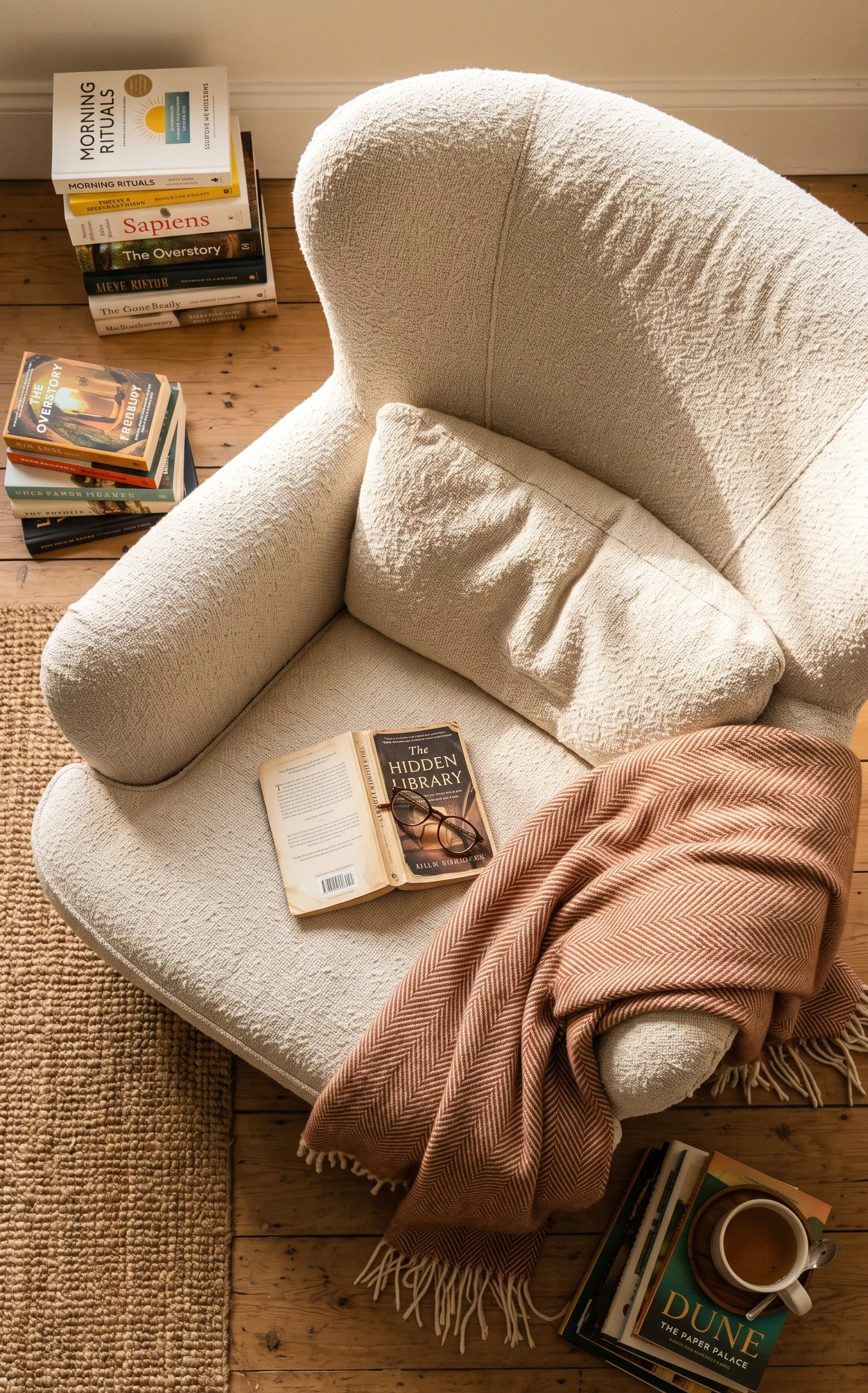
Recliner-Lounge Hybrids Are Taking Over
The recliner used to mean one thing: a bulky, theater-style chair that dominated the room it was in. That version is being replaced by something slimmer and design-forward a chair that reclines gently without looking like it belongs in a home cinema.
These hybrid chairs sit lower to the ground than a traditional lounge chair, have cleaner lines, and often pair with a matching ottoman. In a reading room or bedroom corner, they deliver the ergonomic benefit of a partial recline which genuinely reduces spinal pressure without the visual bulk.

Chair Styles Worth Knowing
The Wingback Reading Chair
Three centuries old and still working. The wingback’s tall side panels were originally designed to block drafts near fireplaces. Today they create a natural sense of enclosure that helps block visual distraction while reading. Seat height matters here more than most people check. Anything above 19 inches risks leaving shorter readers with their feet dangling, which creates hip tension within thirty minutes.
Compact wingback styles exist specifically for smaller frames and tighter spaces, and they sacrifice none of the enclosed, sheltered feeling that makes this the most classic reading nook chair of all.

The Chaise Lounge Reading Nook Setup
Nothing else supports a reader who wants to fully extend their legs. The chaise lounge reading nook is built around the ergonomic principle that elevating your legs while seated reduces compressive load on the lumbar spine, the same reason doctors recommend it for back pain recovery.
Modern chaise lounges for reading nooks have moved away from the ornate French Country versions and toward cleaner shapes in boucle, linen, and performance velvet. A curved backrest, a single supportive armrest, and enough length to stretch out fully are the three things worth prioritizing over aesthetics.

The Barrel Chair and Swivel Tub
Round barrel chairs and swivel tub chairs solve a problem straight-backed chairs don’t: they wrap around you from shoulders to lower back in a continuous curve, which distributes weight more evenly than a flat backrest.
The swivel base is the practical bonus. Being able to rotate toward a lamp, a side table, or a window without standing up sounds minor until you actually use it daily. In a reading room with multiple light sources, it becomes one of those details you wonder how you managed without.
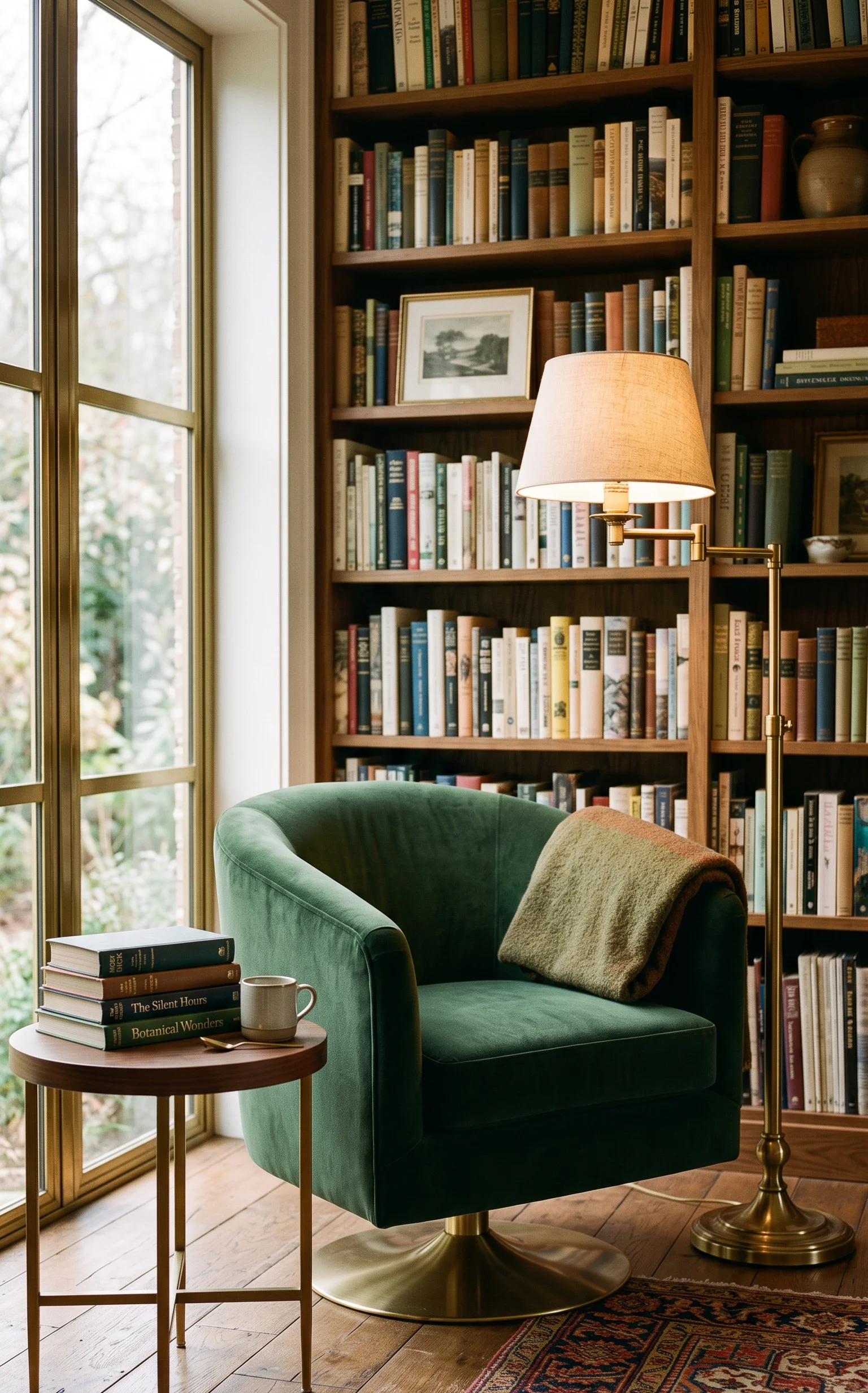
The Chaise Lounge as a Standalone Statement
A chaise lounge placed against a bare wall without any surrounding furniture reads as architectural rather than decorative. It defines a reading area in an open-plan space without needing a rug or a bookshelf to anchor it.
White boucle and ivory linen versions are the ones showing up most in 2026 reading rooms, partly because they photograph well and partly because the light fabric keeps the shape from reading as heavy or imposing. Add a single arc floor lamp and you have a complete reading corner that takes up less than six square feet.
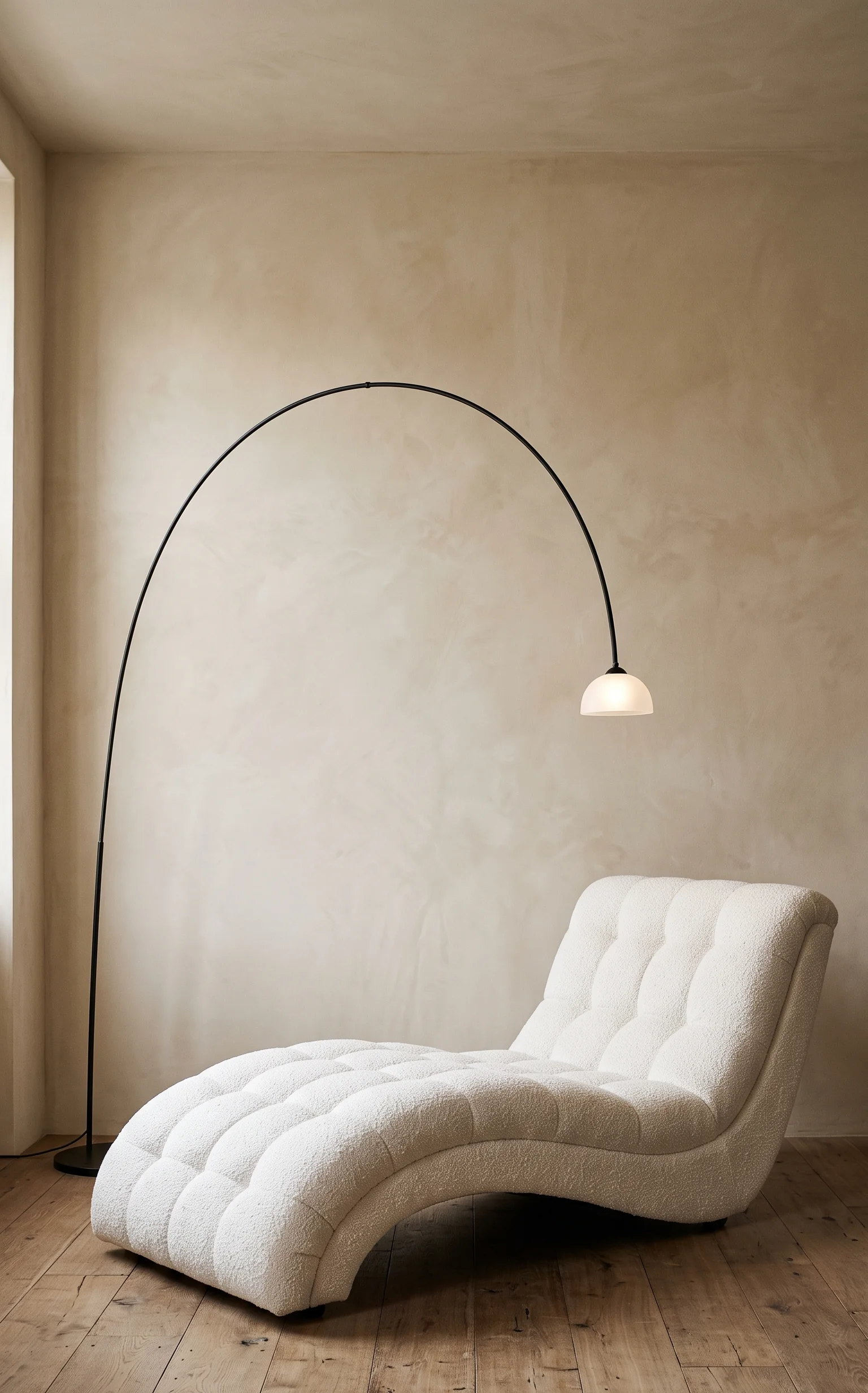
The Papasan and Saucer Chair
The papasan’s bowl-shaped seat cradles the body in a cross-legged position which is how most casual readers actually prefer to sit, regardless of what ergonomics guides say. It doesn’t pretend to be formal. It works specifically for the kind of reading that happens on weekends, on floors with cushions around you, with no particular schedule.
Saucer chairs are the compact version of the same idea: shallower bowl, smaller footprint, foldable frames. Both are genuinely suited to a small reading nook cozy corner where a full-sized chair would dominate the space and a floor cushion wouldn’t provide enough support.

The Scandinavian Lounge Chair
Clean lines, responsibly sourced wood frames, and natural linen upholstery that breathes rather than traps heat. The Scandinavian lounge chair is the reading chair in bedroom version for people who want their space to feel like it was designed rather than assembled.
Deep seat proportions are the functional detail worth checking. The best versions let you tuck your feet up underneath you which, again, is how most people end up sitting after the first twenty minutes of a long reading session. An integrated neck pillow or removable headrest converts a standard sit into something that supports a full evening of reading.
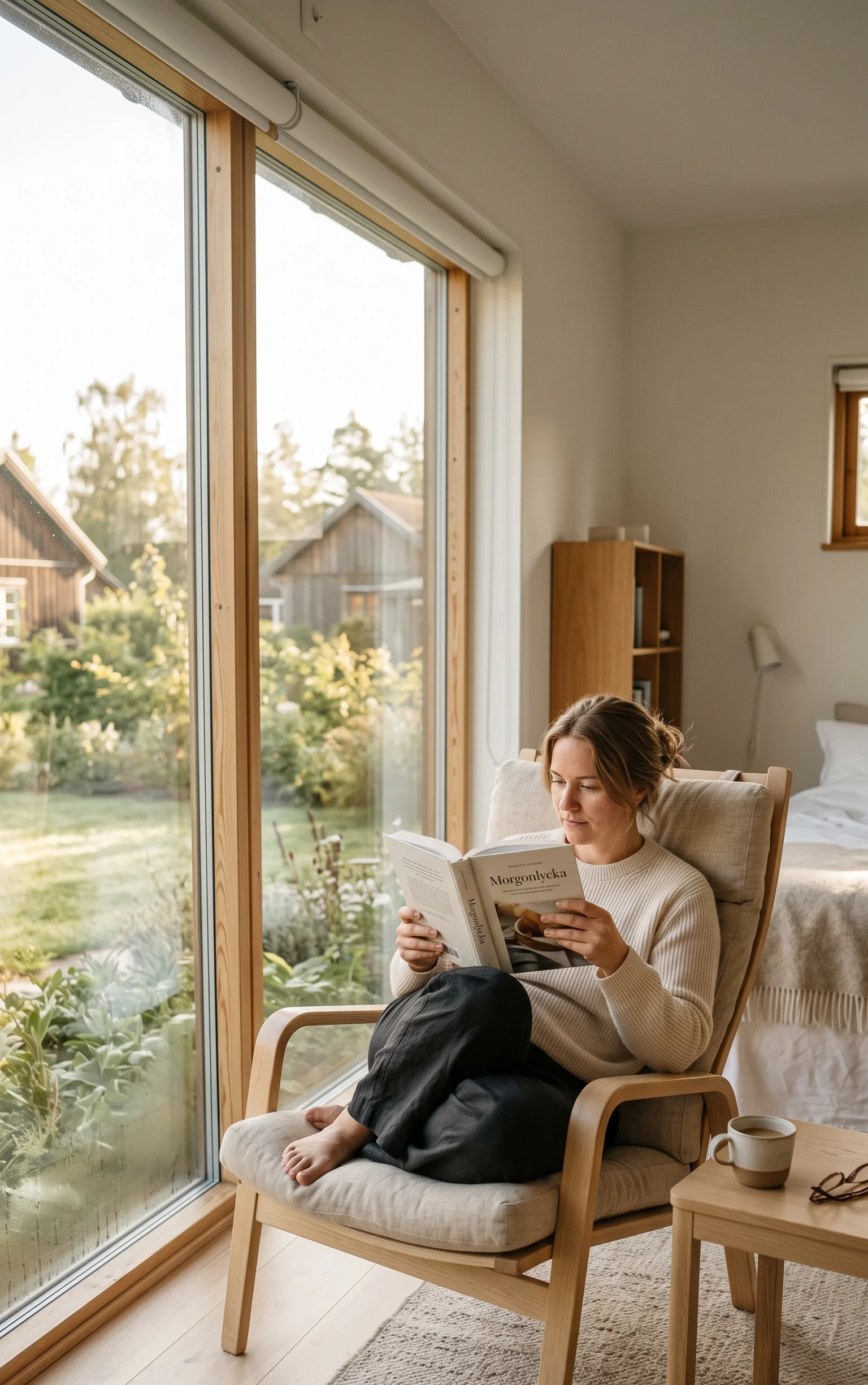
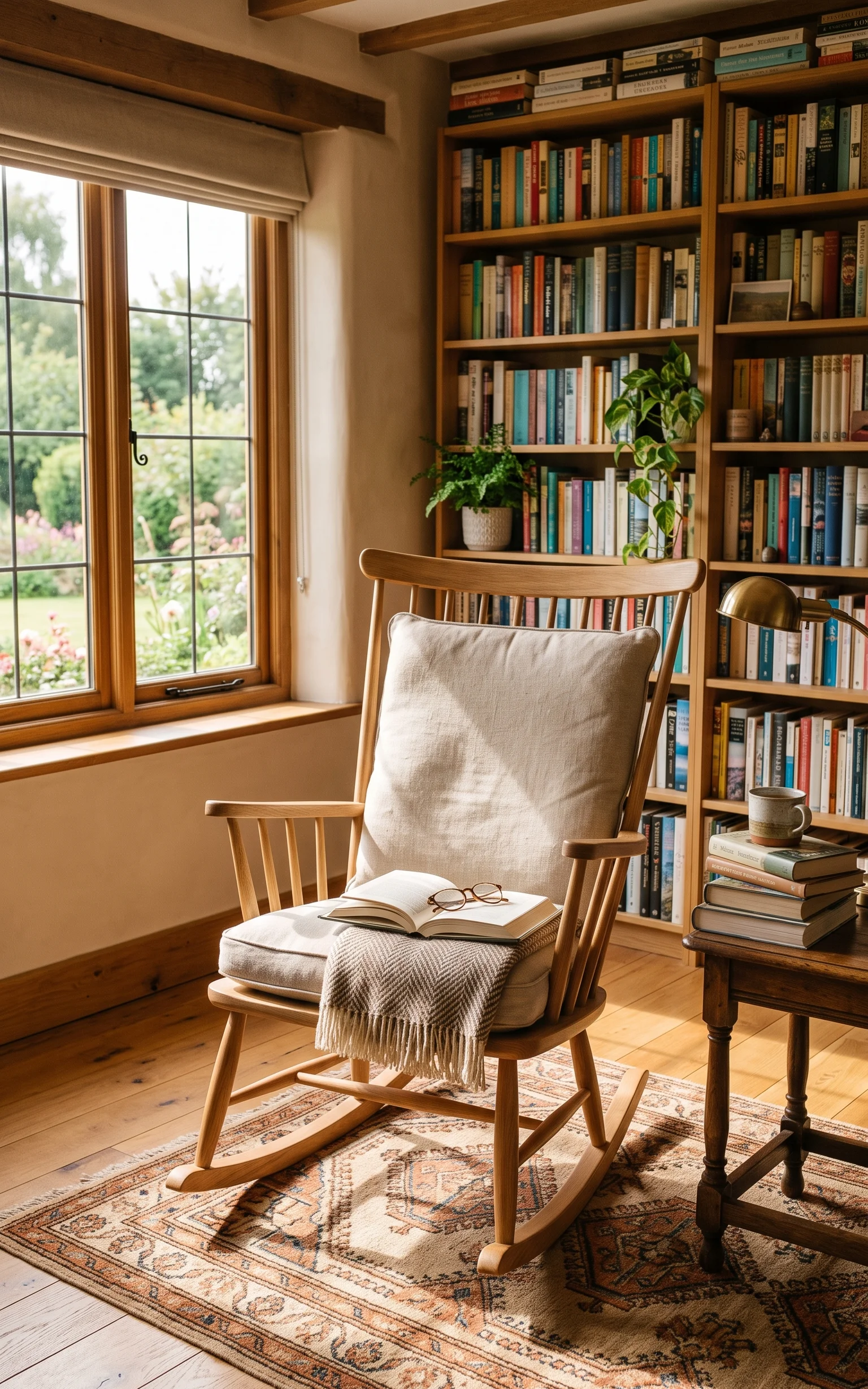
The Rocking Chair for Reading
The biomechanical advantage of a rocking chair is one that almost nobody mentions in design content: the gentle back-and-forth motion keeps your core muscles mildly active, which prevents the static pressure build up in the lower back that makes a stationary chair painful after an hour.
Modern ergonomic rockers designed for living rooms and reading rooms look nothing like nursery furniture. Solid hardwood frames, linen or canvas upholstery, and properly contoured lumbar support put them squarely in the same conversation as accent chairs but with a functional edge most accent chairs can’t match.
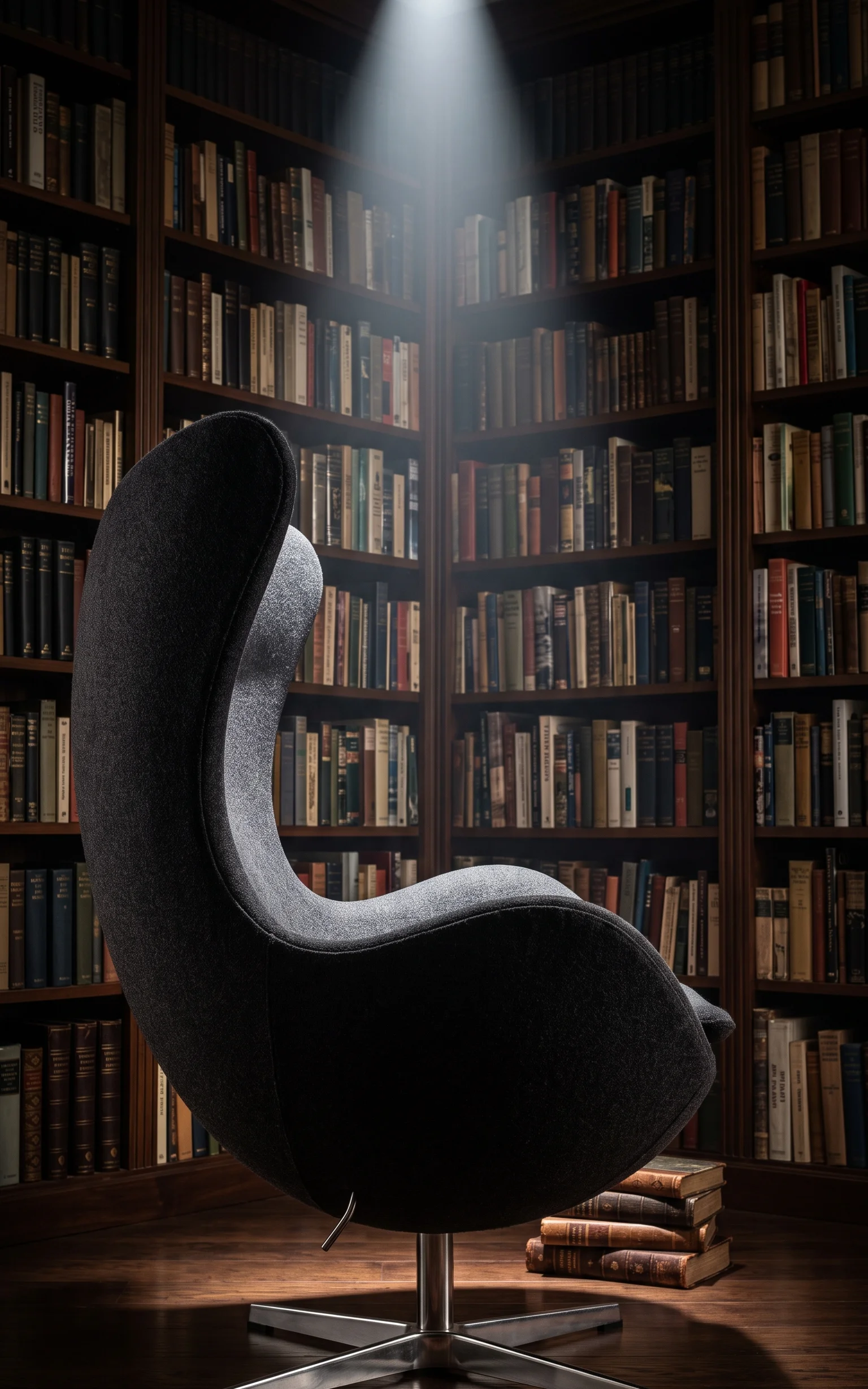
The Egg Chair and Enclosed Swivel
Egg chairs create acoustic as well as visual enclosure: the curved shell around the head and shoulders actually reduces ambient sound, which most chair guides don’t mention. In a home with ambient noise (HVAC hum, traffic, family activity), that enclosure contributes to reading focus in a measurable way.
The swivel base does the same job it does in the barrel chair: lets you orient toward your light source or turn away from distraction without getting up. Diamond quilted upholstery and sound-absorbing micro-perforations are the upgraded versions worth looking at if a reading room is being designed specifically for focus.
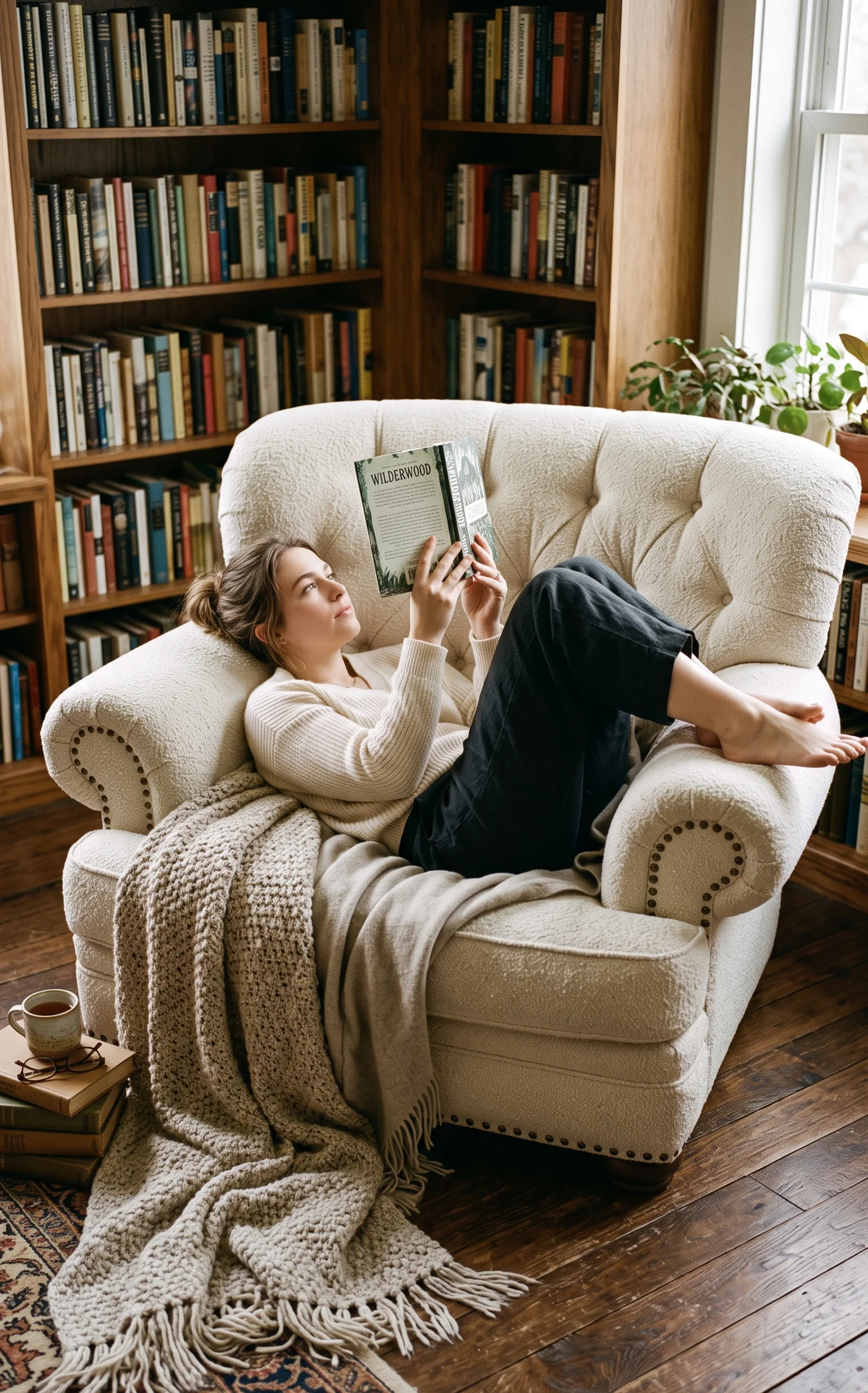
The Oversized Reading Chair
Big comfy reading chairs oversized proportions, deep cushioning, wide enough to curl up in are the most searched version of this category for a reason. They solve something that standard-sized chairs don’t: the ability to shift positions freely without running out of room.
Cross-legged, sideways, legs over the armrest, fully upright an oversized chair accommodates all of it. Stain-resistant upholstery has become the default in this category now, since these chairs are used constantly and often near drinks and food. Worth checking for specifically before buying.
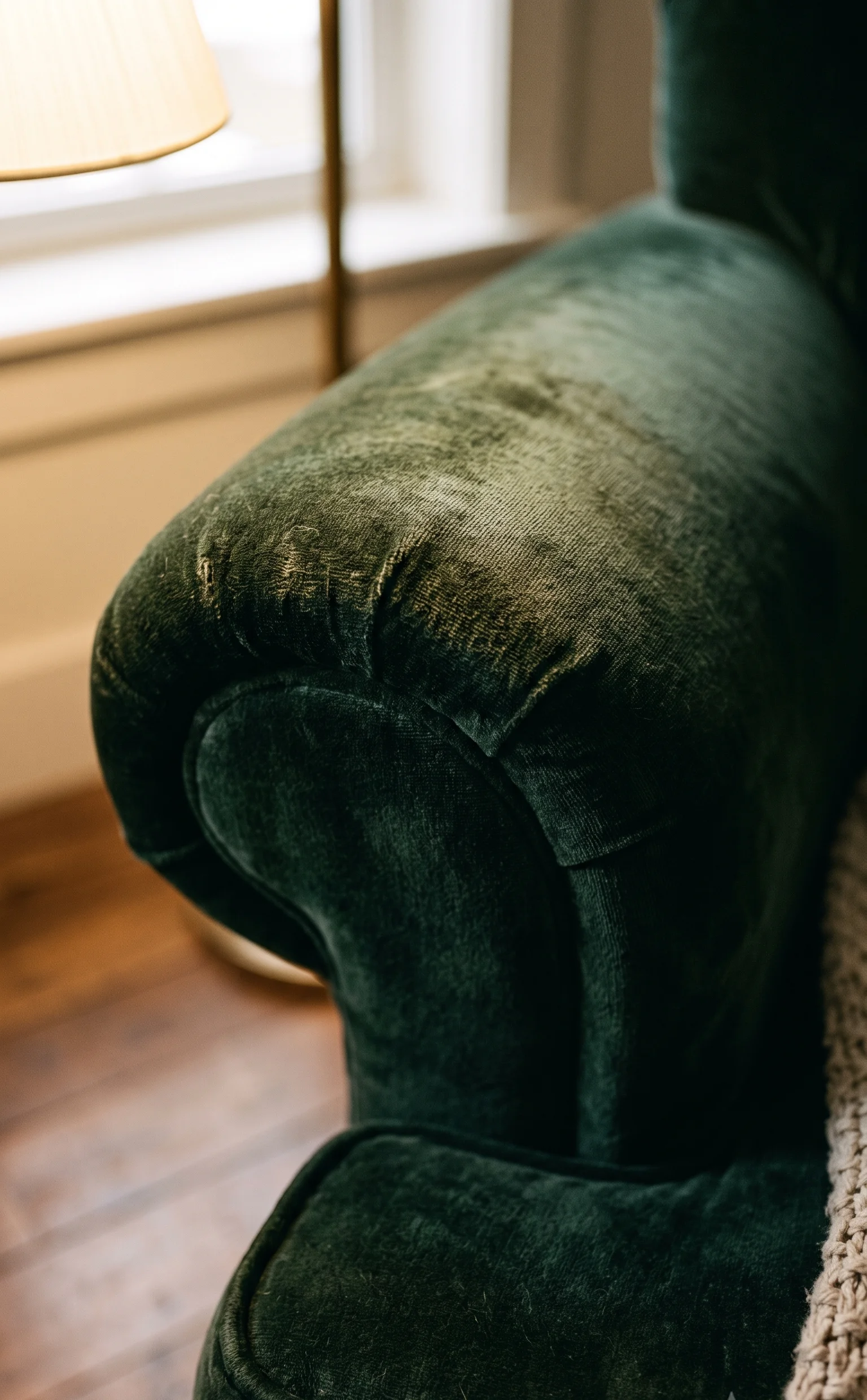
Velvet for Cooler Climates and Evening Reading
Velvet traps warmth and has a surface texture that feels genuinely cozy against skin. It’s the natural choice for a reading chair in bedroom setups where evening use is the primary purpose.
The practical drawback: velvet shows indentations from regular use. A medium-pile velvet in a darker tone (forest green, deep navy, plum) hides daily wear far better than a light-coloured version. Performance velvet specifically designed to resist pilling and fading is worth the small premium for a chair that gets used every day.
Linen and Boucle for Year-Round Comfort
Natural linen breathes in summer and feels soft enough in winter which makes it the most genuinely neutral fabric choice for a cozy reading chair that gets used across seasons. It wrinkles, which some people mind and others find adds to the relaxed, lived-in feeling.
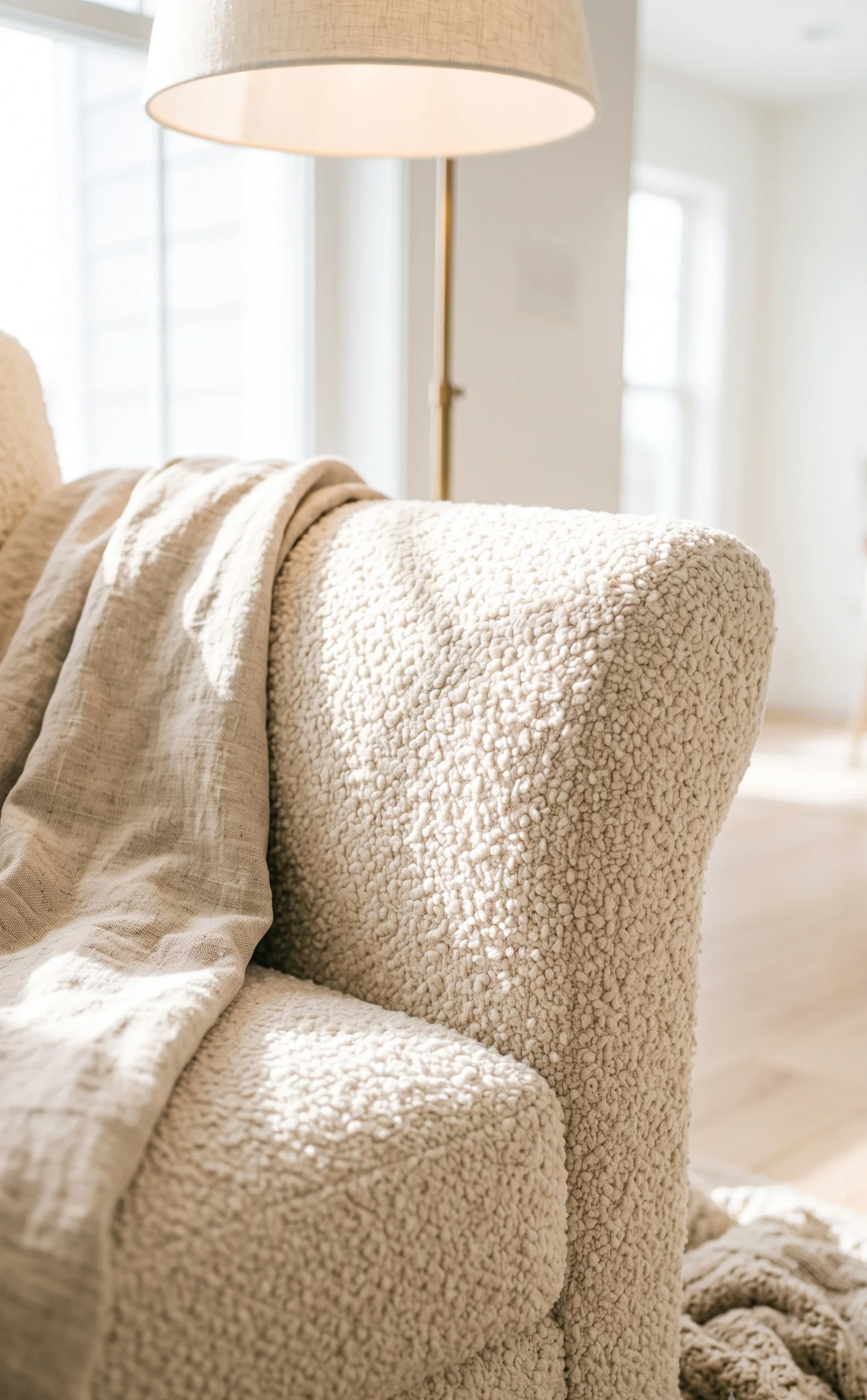
Boucle is the textured alternative: looped yarn that creates a warm, tactile surface without the heat-trapping quality of velvet. In a reading nook chair meant to be used in a room that serves multiple purposes, boucle tends to feel less “precious” than velvet easier to sit in without thinking about it.
Leather and Performance Fabrics for Durability
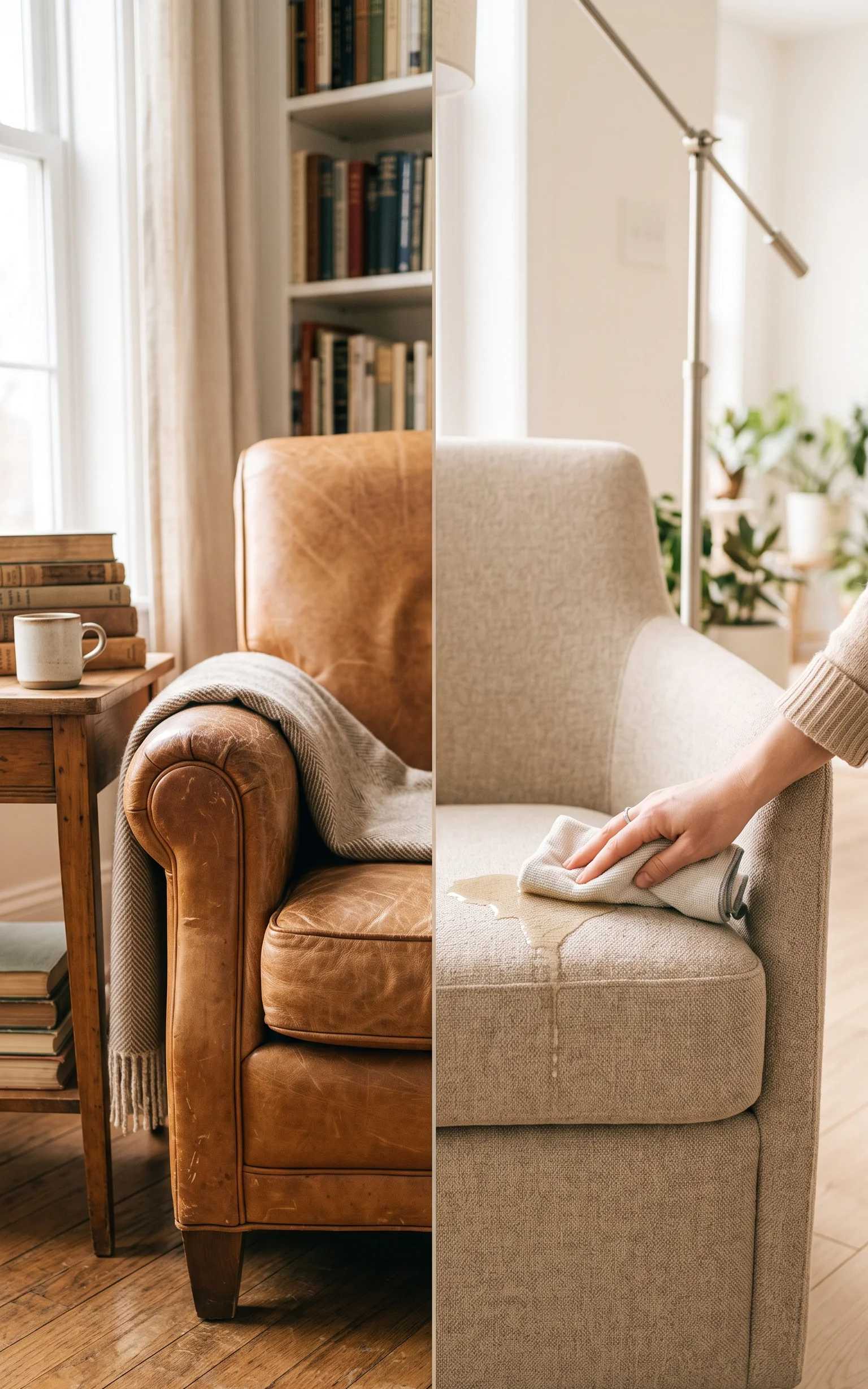
Top-grain leather for a reading room is a long-term investment rather than a quick comfort decision. It develops a patina over years of use that actually improves its appearance but it requires conditioning twice a year and doesn’t tolerate direct sunlight without fading or drying out.
Performance fabrics (crypton weave, solution-dyed olefin, treated linen) are the practical alternative for households with children, pets, or anyone who reads with coffee or tea. They handle spills without panic and maintain appearance after years of daily contact in ways that natural fabrics don’t.
Ergonomics: What the Numbers Actually Mean
Seat Depth Is the Most Overlooked Measurement
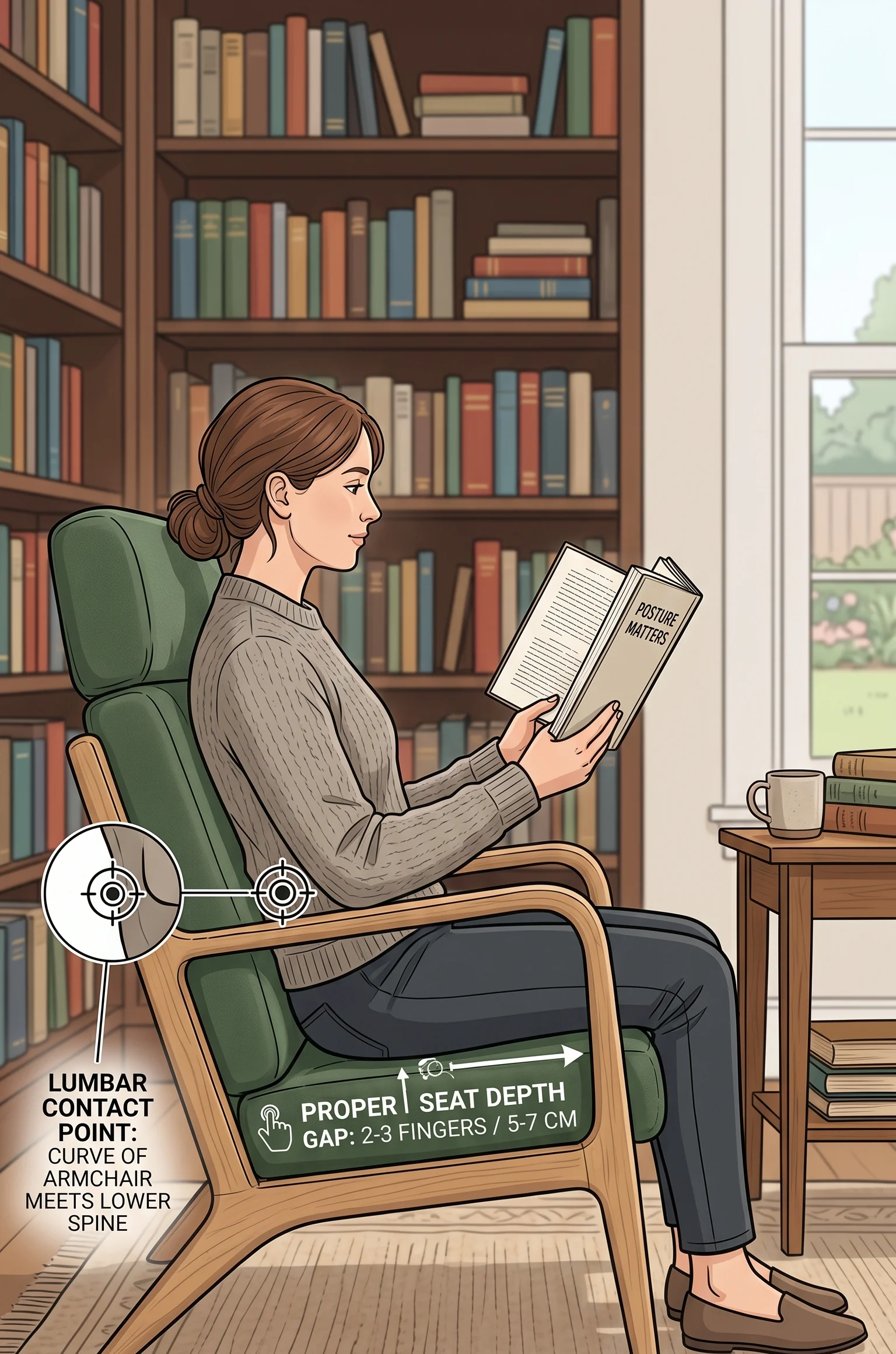
Too deep and you’ll perch forward automatically, losing contact with the backrest, which defeats whatever lumbar support the chair has. Too shallow and your thighs hang unsupported, which creates pressure behind the knees within thirty minutes.
The target is a seat depth that lets you sit fully back against the rest with a gap of roughly two to three inches between the seat edge and the back of your knees.
For most adults, this falls between 18 and 21 inches. Checking this specific measurement in the product specifications not just the chair’s overall dimensions is the single most important thing to do before buying.
Lumbar Support and Recline Angle
Static lumbar support a fixed pad at lower-back height works for some body shapes and fails for others. Adjustable lumbar support, which moves both vertically and horizontally, matches the chair to your specific spinal curve rather than asking you to match the chair.
The recline angle matters separately. A slight recline of 100 to 110 degrees reduces spinal pressure more than a fully upright 90-degree position, which is why reading in a chair that tilts back slightly tends to feel more sustainable for long sessions than sitting rigidly upright.
The key is a stable recline that locks one that rocks backward unpredictably is harder on your core than no recline at all.

Seat Height and Your Feet
Feet flat on the floor, knees at roughly 90 degrees, hips level or slightly higher than knees that’s the ergonomic baseline for a comfy reading chair that works for extended sessions. Any seat higher than your inseam measurement forces your hips into an angle that creates tension in the lower back within an hour.
Tall readers need to check that the chair’s back height actually reaches their shoulders a chair built for a five-foot-six frame doesn’t support the upper back of a six-foot reader no matter how good the lumbar cushioning is. Compact wingback and armless slipper chairs sit lower and suit shorter frames. Oversized lounge chairs and high-back wingbacks suit taller readers.
Lamp Height and Position
Overhead lighting is the worst possible light source for reading. It throws shadows directly onto the page, forces the eyes to compensate, and causes fatigue faster than almost any other environmental factor.
A floor lamp positioned just behind and to one side of the chair with the light source at roughly shoulder height when seated solves this entirely. Bulbs in the 2700K to 3000K range produce warm, easy light for evening reading sessions.
Adjustable arm lamps allow the beam to follow you as you shift positions, which matters more during a two-hour session than it seems like it would.

The Side Table That Actually Works
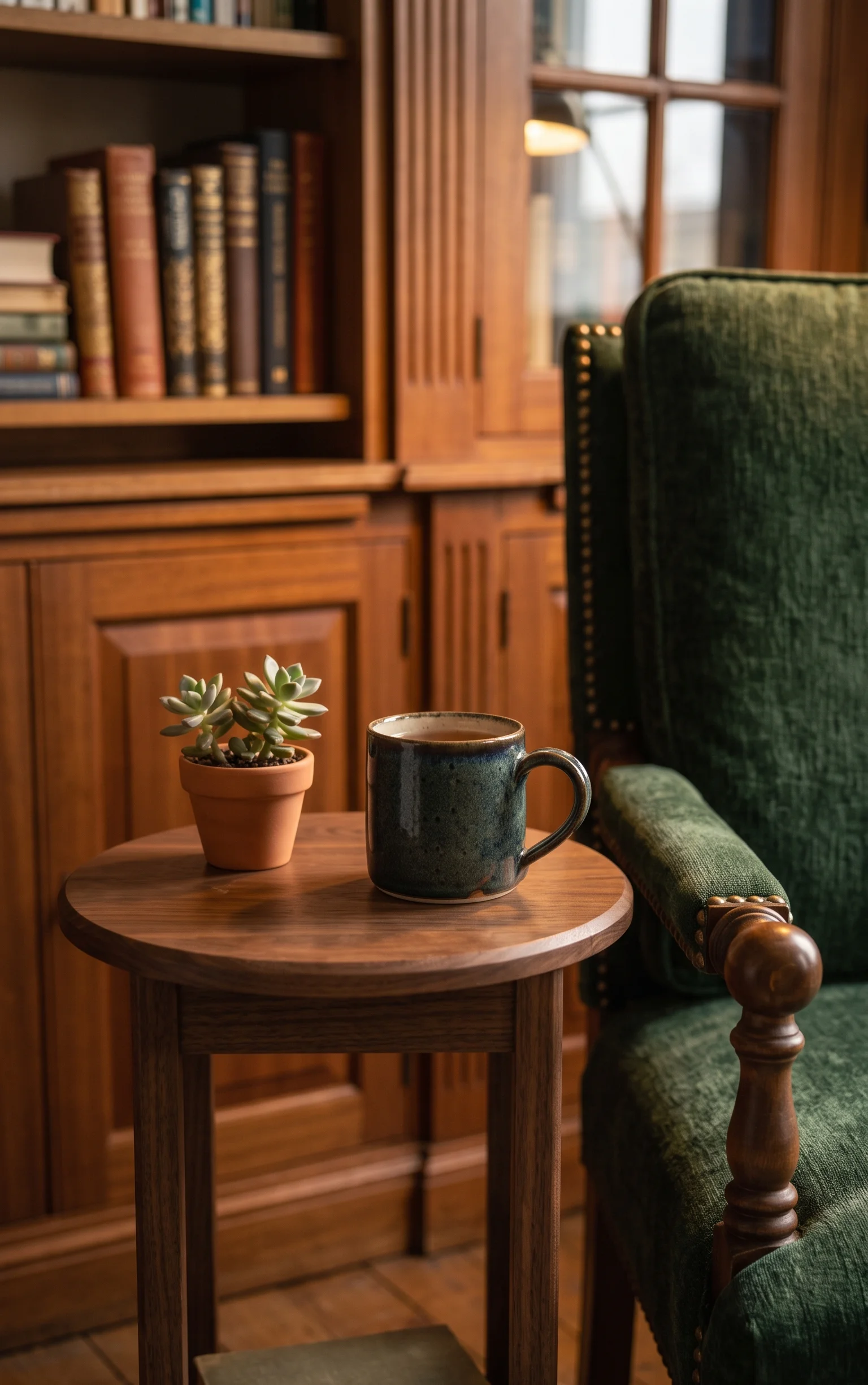
A side table beside a reading chair in bedroom or nook should sit at armrest height, roughly 24 to 26 inches from the floor for most chairs. Too high and you’re lifting your shoulder to reach it. Too low and you’re leaning down far enough to break your reading position.
Diameter matters in a small reading nook cozy corner: anything wider than 18 to 20 inches starts competing for floor space with the chair and the lamp. A narrow surface round, square, or rectangular that holds a drink and a bookmark is more useful than a surface large enough to pile things on and never clear.
Rug Size and Acoustic Function
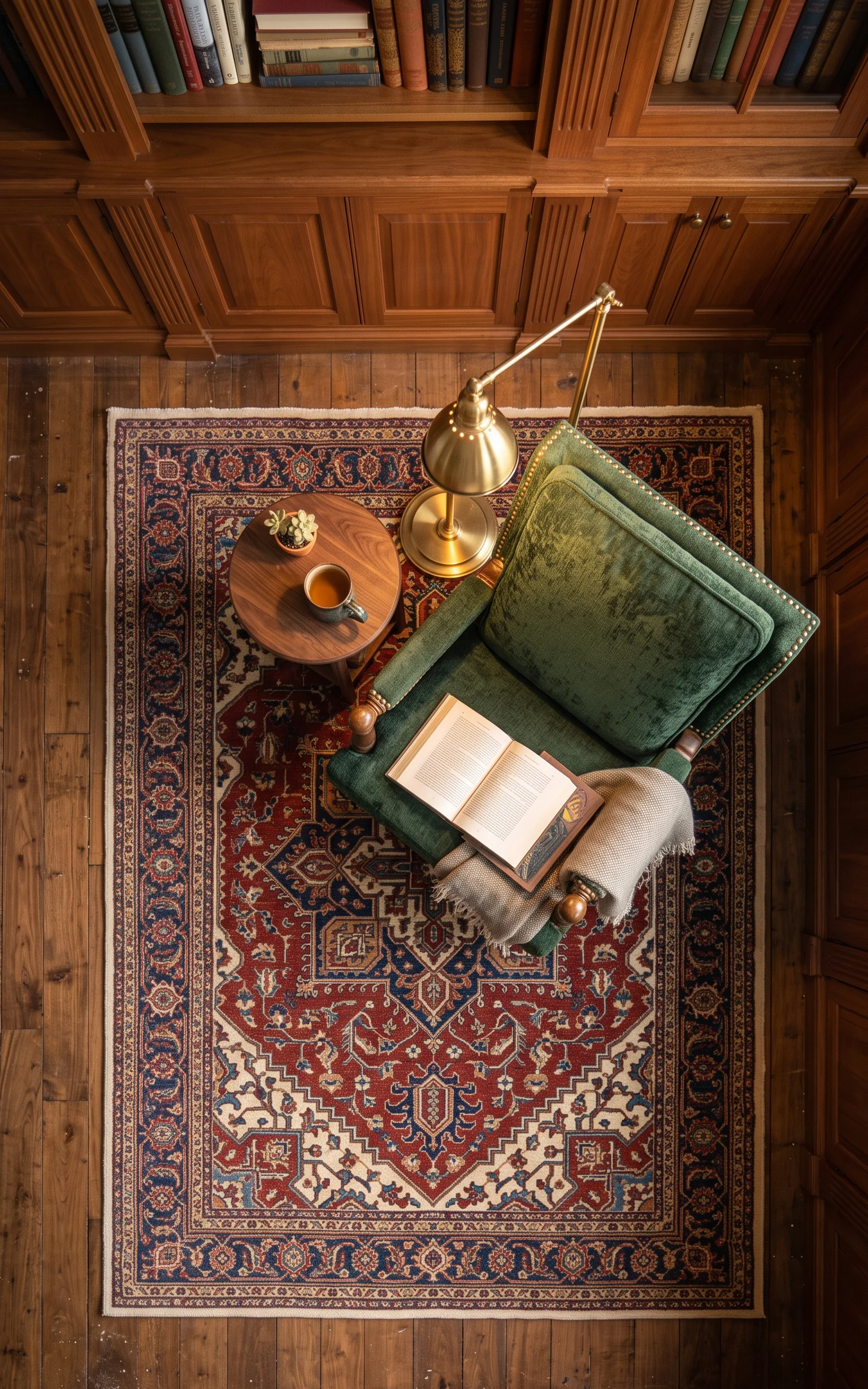
A rug under a reading chair does two things that most people only credit to visual styling. The first is obvious: it anchors the chair visually and protects the floor.
The second is less discussed: hard floors and empty walls bounce ambient sound HVAC noise, traffic, appliances in ways that increase mental fatigue without you realizing it. A rug absorbs that ambient noise and makes a cozy reading corners setup feel noticeably quieter.
In a small reading nook, a rug that extends 18 to 24 inches beyond the chair on each side is usually enough. In a dedicated reading room, a larger rug that encompasses the chair, the lamp stand, and a small side table creates a visually defined zone that reads as intentional rather than placed.
Reading Chair for Small Spaces
A reading chair in bedroom corners or studio apartments needs to solve a different problem than one placed in a dedicated reading room. Floor space is the constraint, and every inch counts.
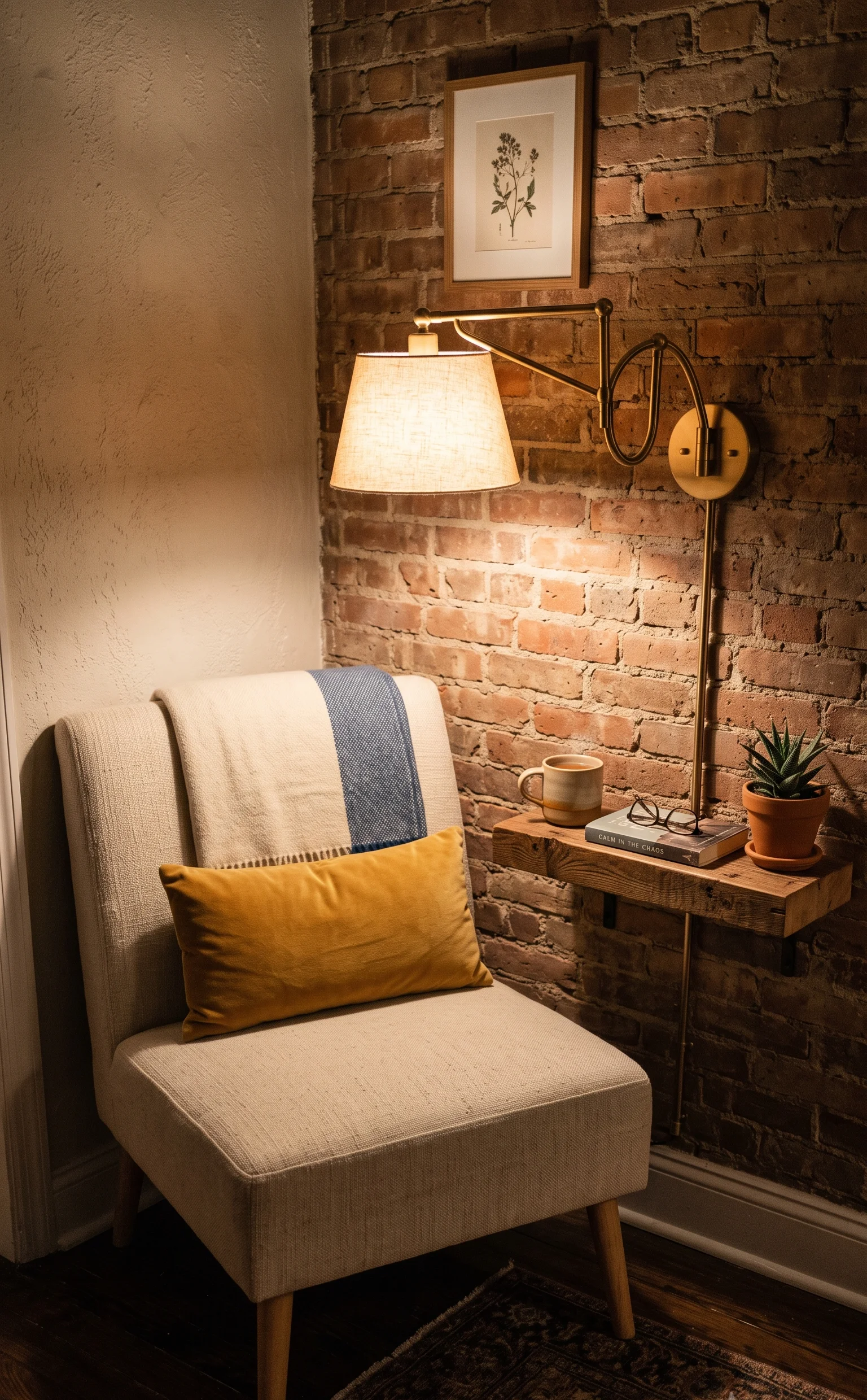
Armless slipper chairs and compact saucer chairs solve this most directly neither requires significant floor clearance beyond the seat itself. A wall-mounted swing-arm lamp eliminates the floor lamp footprint entirely. A floating shelf at armrest height replaces a side table.
Together, these three adjustments create a complete small reading nook cozy corner that a standard chair-plus-lamp-plus-table setup simply can’t fit.
For anyone who reads primarily in bed but wants proper support, a free-standing reading wedge pillow behind a compact armchair pushed against the wall achieves the same back support as a full wingback in roughly half the floor footprint.
Before You Buy: A Quick Checklist
A few measurements worth confirming before ordering anything:
- Seat depth between 18 and 21 inches for most adults
- Seat height at or slightly below your inseam measurement
- Chair width at least 28 inches for comfortable repositioning
- Back height reaching at least to shoulder level for full upper-back support
- Total footprint including any ottoman, measured against your actual floor space
A Few Final Thoughts
The reading chair you end up loving is almost never the one that looked best in the product photo. It’s the one that still felt right at the end of a long afternoon, in your actual room, under your actual light.
Start with the ergonomic measurements. Then choose the style and fabric that fits the room. A chair that looks exactly right but fails at hour two is just expensive furniture. A chair that holds you well at hour three, even if it’s plainer, is the one you’ll actually use.
FAQs
What is the most comfortable reading chair for long sessions?
For sessions longer than an hour, a wingback chair, chaise lounge, or recliner-lounge hybrid with adjustable lumbar support and the correct seat depth for your frame tends to outperform purely decorative accent chairs. The key measurements are seat depth (18–21 inches for most adults) and a recline between 100 and 110 degrees.
What is the best reading chair for a small bedroom?
Compact slipper chairs, armless accent chairs, and small-scale barrel chairs work best in a reading chair in bedroom setups with limited floor space. Wall-mounted swing-arm lamps eliminate the floor lamp footprint, maximizing usable space further.
What’s the difference between a chaise lounge and a reading chair?
A chaise lounge reading nook setup supports the full body including the legs, which reduces lower-back pressure during extended reading. A standard reading chair supports only the seated position. The chaise is better for longer sessions; the chair is better for upright reading where you need to stay alert.
Is velvet or linen better for a reading chair?
Velvet traps warmth and feels cozy for evening reading, but can feel hot in summer and shows wear more visibly. Linen breathes across seasons, wrinkles, and develops a relaxed lived-in character over time. Boucle sits between the two warm-feeling without the heat retention of velvet.
How do I create a cozy reading corner in a small space?
A small reading nook cozy corner needs three things: a compact chair (slipper, saucer, or armless), a light source at shoulder height (wall-mounted or slim floor lamp), and a small surface at armrest height for a drink. A rug that extends just beyond the chair’s edges completes the zone without requiring significant floor space.
What size rug works under a reading chair?
For a standalone reading chair, a rug that extends 18 to 24 inches beyond the chair on each side provides enough visual grounding. In a reading room with multiple pieces, a larger rug that encompasses the chair, lamp stand, and side table together creates a more cohesive defined zone.
