

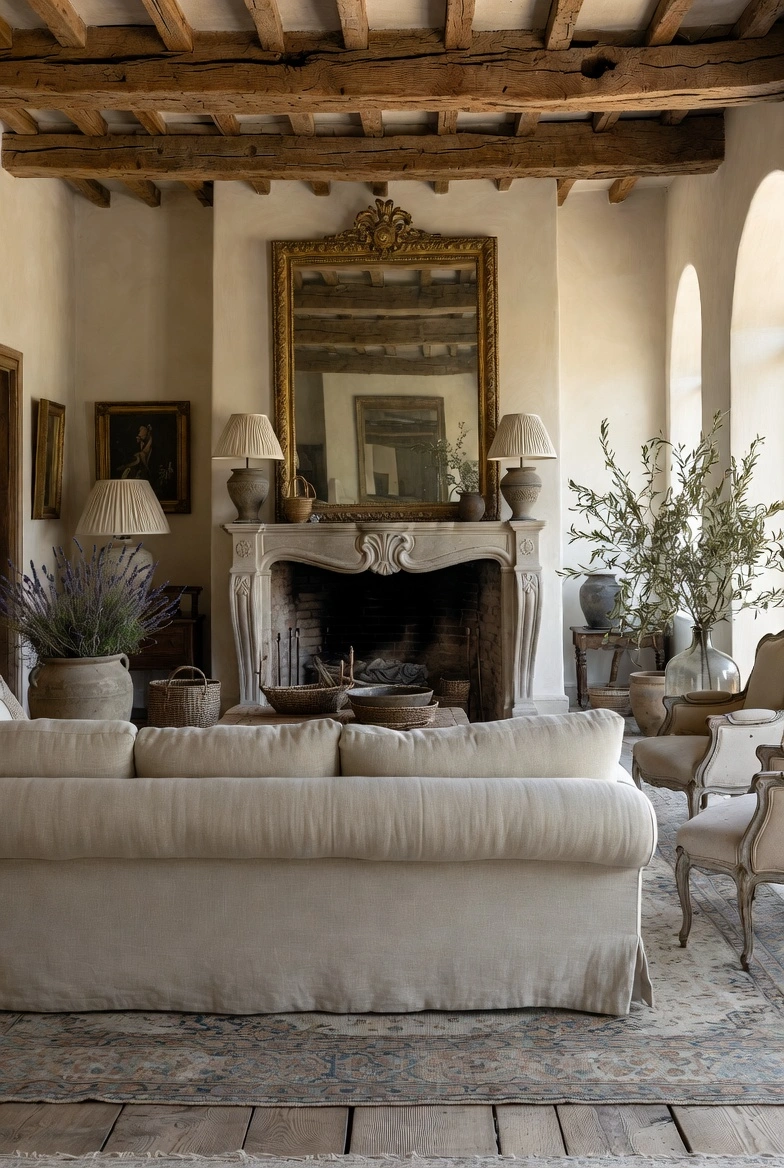
Some styles chase trends. French country simply waits for trends to circle back, and in 2026 they have. The year’s big shift toward warm neutrals, natural texture, and lived-in rooms is exactly what French country living room ideas have offered for two centuries: linen and lime wash, timeworn wood, faded colour, and rooms that feel collected rather than bought.
Here’s the style in one paragraph: a modern French country living room rests on a warm white and linen base, adds faded blues, sages, and ochres in small doses, mixes one or two genuinely old pieces with comfortable new ones, and lets patina show. The rooster clutter of the 1990s version stays in the 1990s.
Nineteen ideas follow, from the foundation to the finishing lavender. The last two are for everyone decorating an apartment instead of a farmhouse.
Build on Warm White and Linen
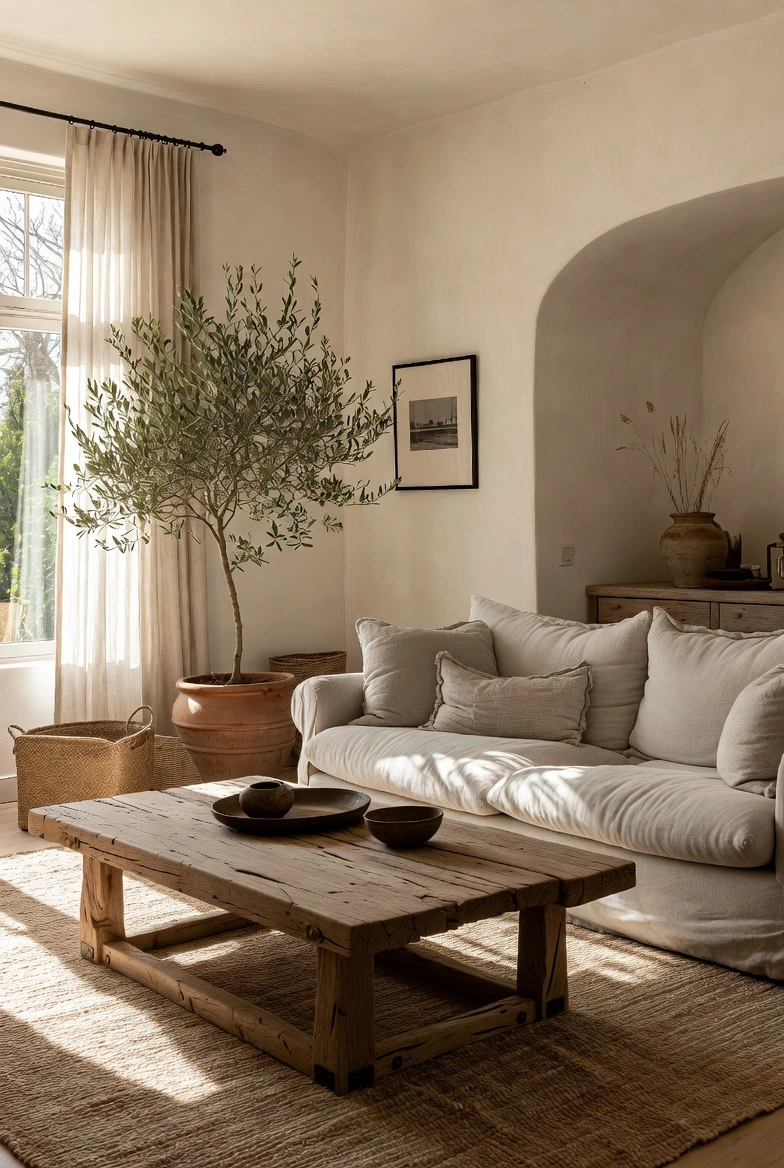
The updated French country formula starts by stripping things back. Walls in creamy warm white, a sofa in washed linen or cotton slipcovers, curtains in the same relaxed fabric family. This quiet base is what separates today’s version from the busy, pattern-stacked rooms of decades past.
Linen is the signature material here. Slightly rumpled, softly draping, and completely unbothered about wrinkles. If a fabric needs ironing to look right, it belongs to a different style.
Add Colour the Faded Way
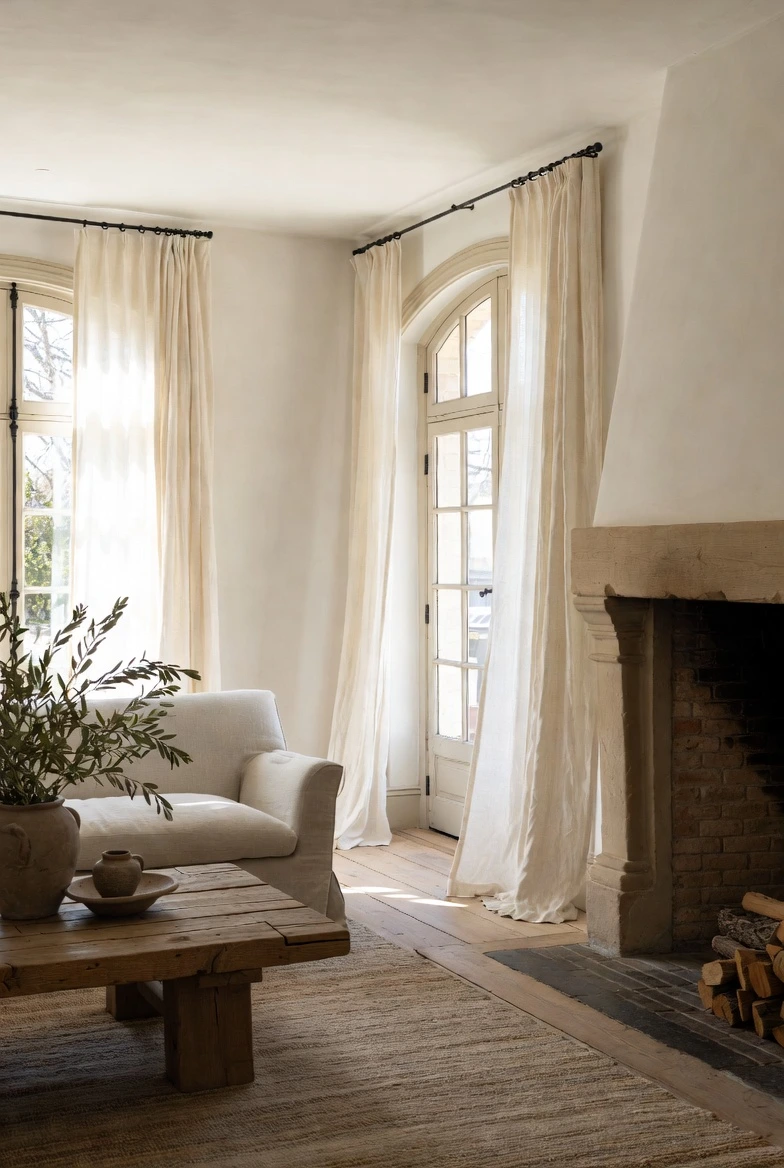
French country colour arrives pre-softened: dusty blue, sage, faded ochre, muted terracotta. Think of pigments that have spent forty years near a sunny Provence window. One or two of these tones, repeated in cushions, a throw, and a vase, complete the palette.
Warm accents like ochre and clay tie the room straight into 2026’s broader direction, the same warmth behind these persimmon accent tones.
Texture the Walls With Lime wash
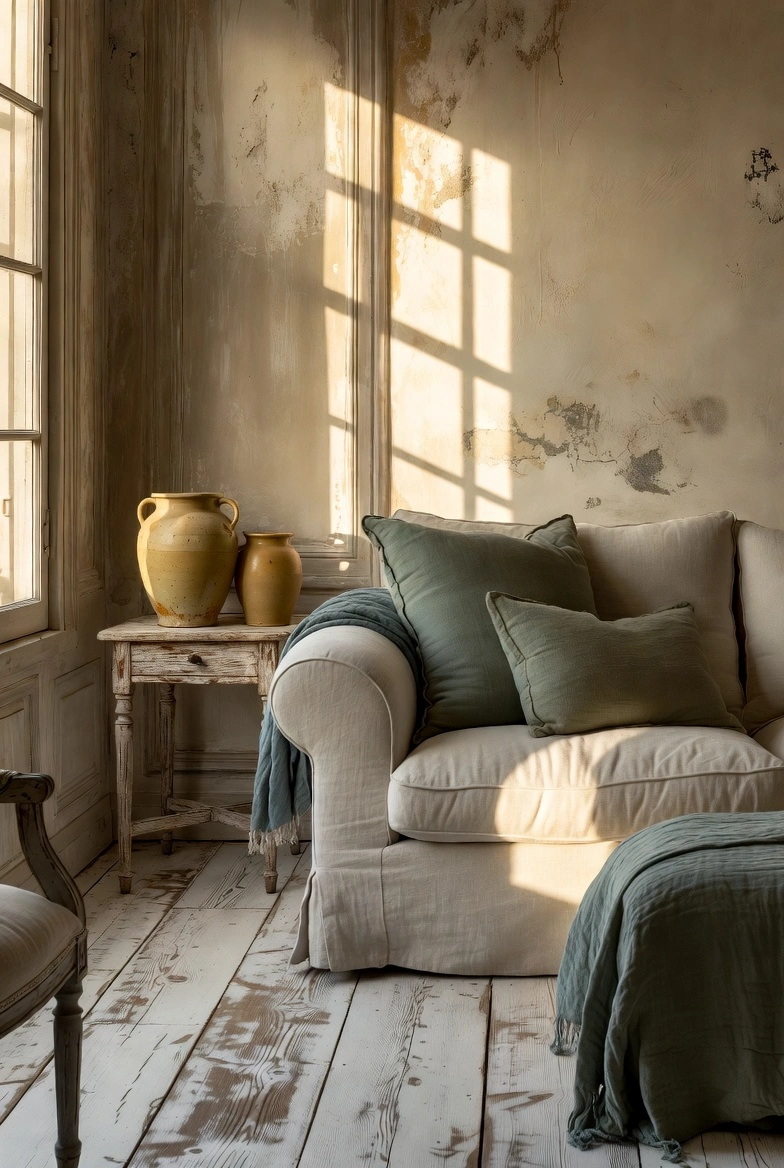
Flat builder paint is the quiet enemy of this style. Lime wash or plaster-effect paint gives walls the soft, cloudy depth of an old French farmhouse, shifting subtly as daylight moves across the room.
Modern lime wash paints apply like regular paint with a brush technique anyone can learn in an afternoon. Of every idea on this list, this one changes the room’s atmosphere the most per euro.
Look Up: Beams, Real or Borrowed
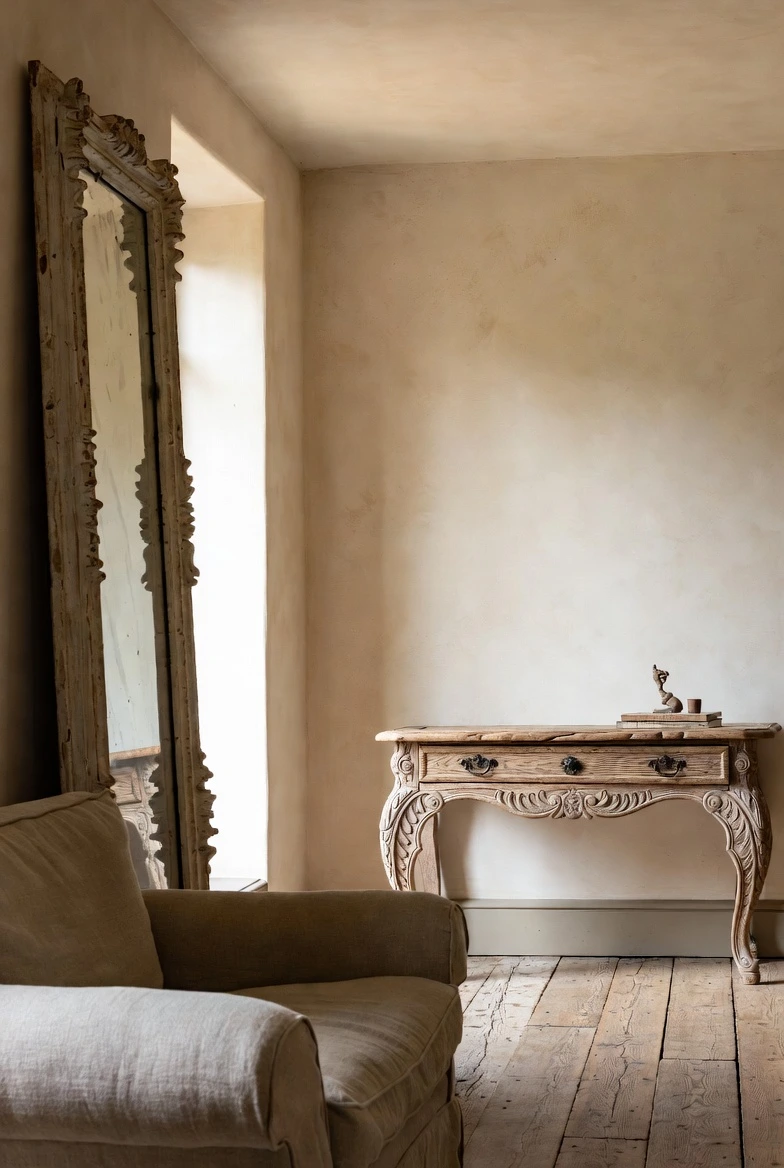
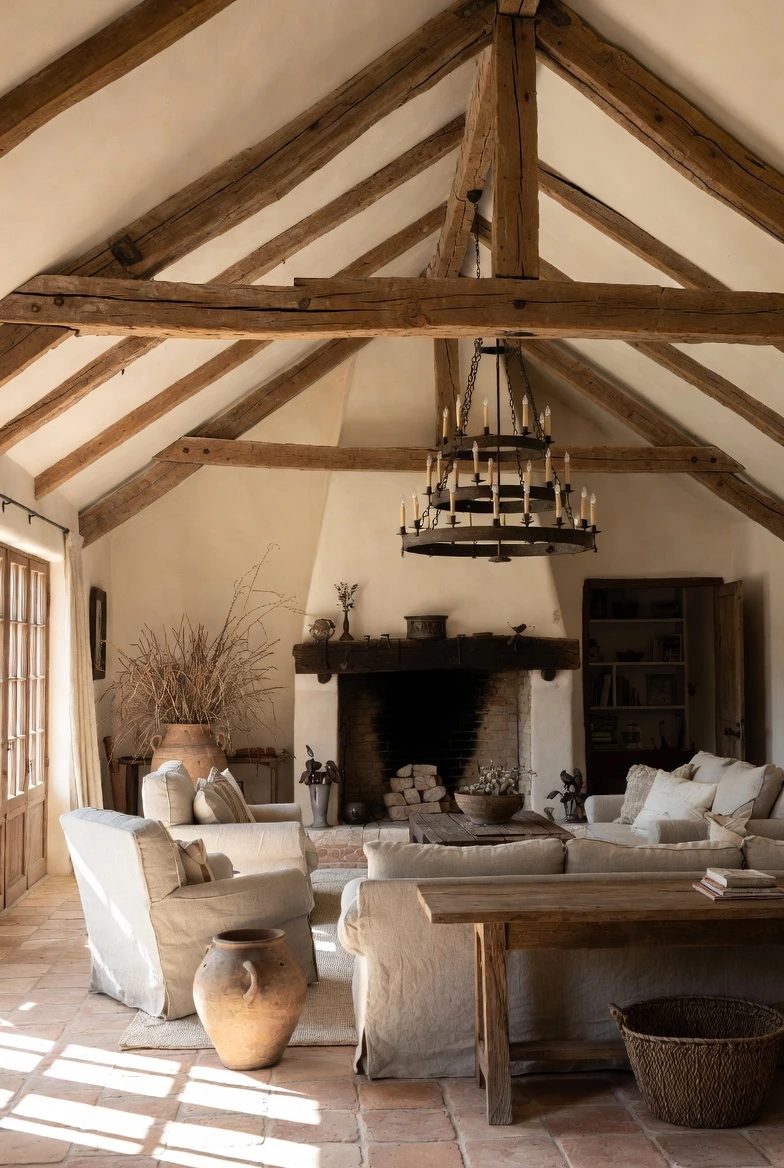
Exposed wooden beams are the ceiling signature of the style. Homes that have them should celebrate them, stained warm or washed pale. Homes that don’t can borrow the look with faux beams made of lightweight wood or high-density foam, installed in a weekend. Even a single beam across the room’s width reads as architecture and instantly ages the space in the best way.
Give the Room a Hearth
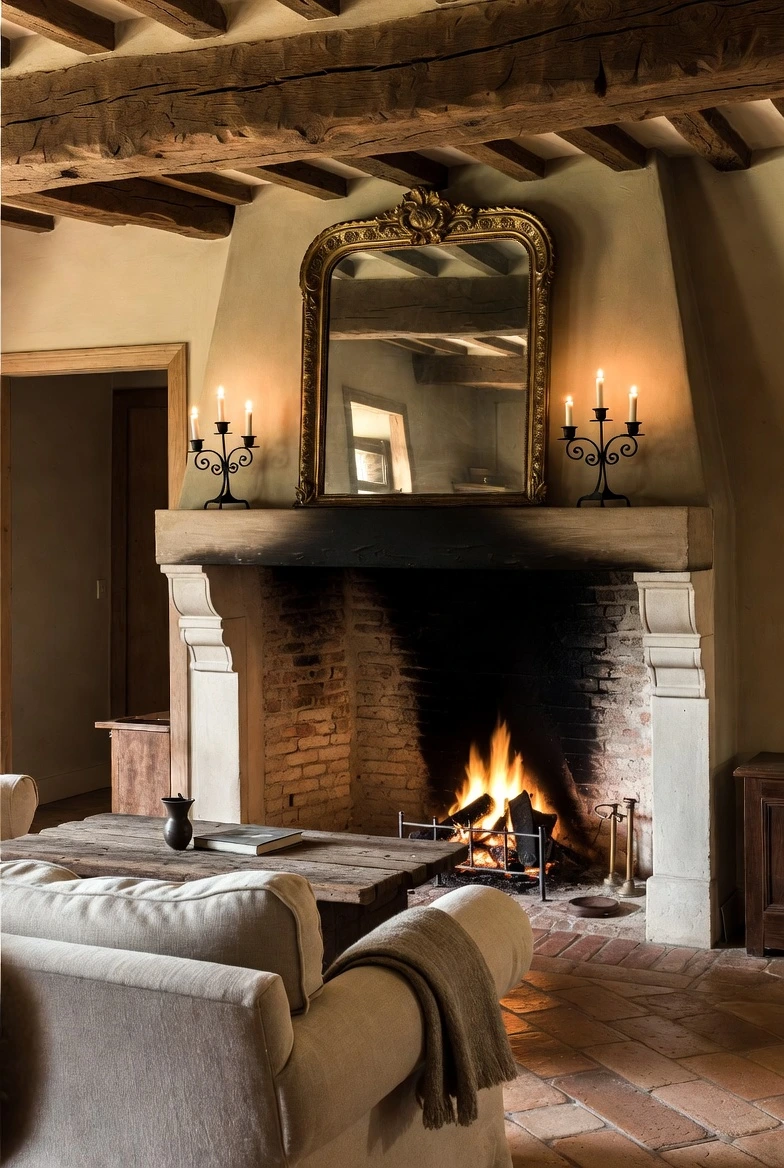
In a true French country room, the fireplace is the heart, worn stone or carved wood, looking like it predates everyone in the house. No working fireplace? A reclaimed or reproduction mantel against the wall, styled with candles inside the opening, delivers the focal point without the chimney.
The mantel top wants restraint: one mirror or artwork, two candlesticks, a small jug of dried stems. The French leave room to breathe.
Anchor With One Genuinely Old Chair
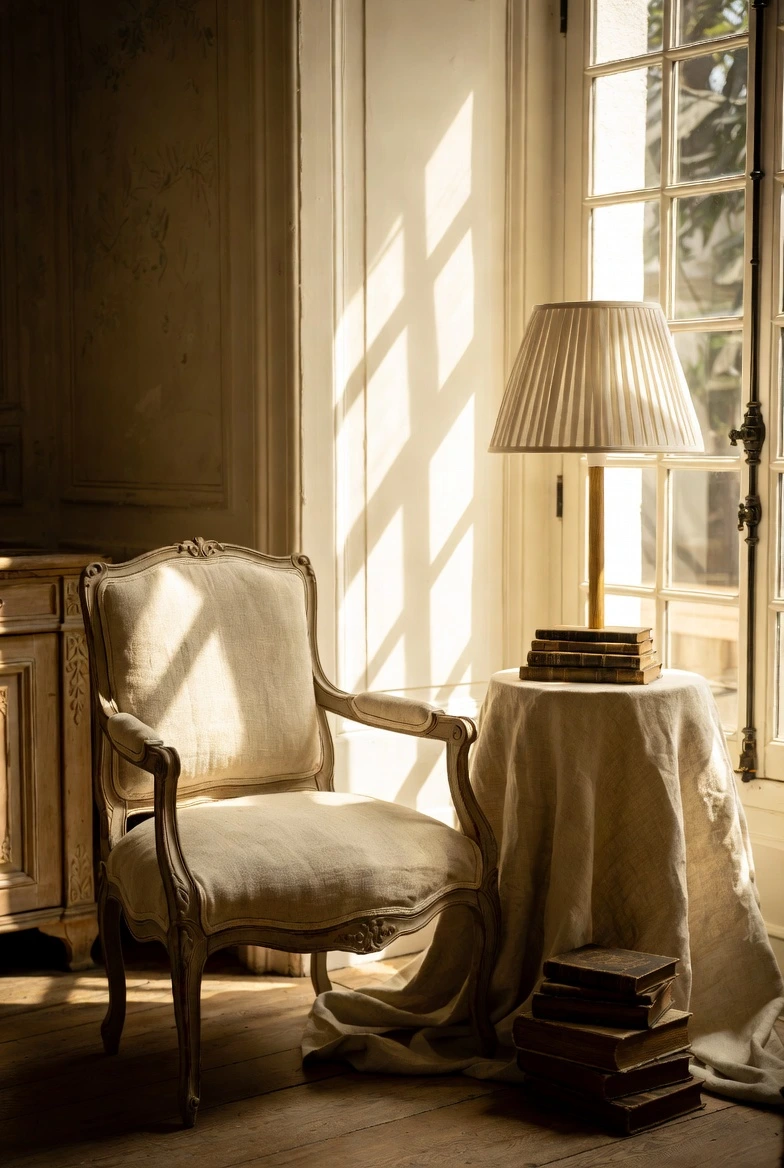
Here is the single most transformative purchase in this entire style: one authentic antique French chair, or an honest lookalike. Carved frame, faded gilding, upholstery in plain linen or even deconstructed burlap. Placed beside a modern sofa, it does more for the room than any five new accessories.
Hunt estate sales, auctions, and second hand platforms. These chairs cost far less than people assume, precisely because modern buyers overlook them.
Choose a Sofa You Can Sink Into
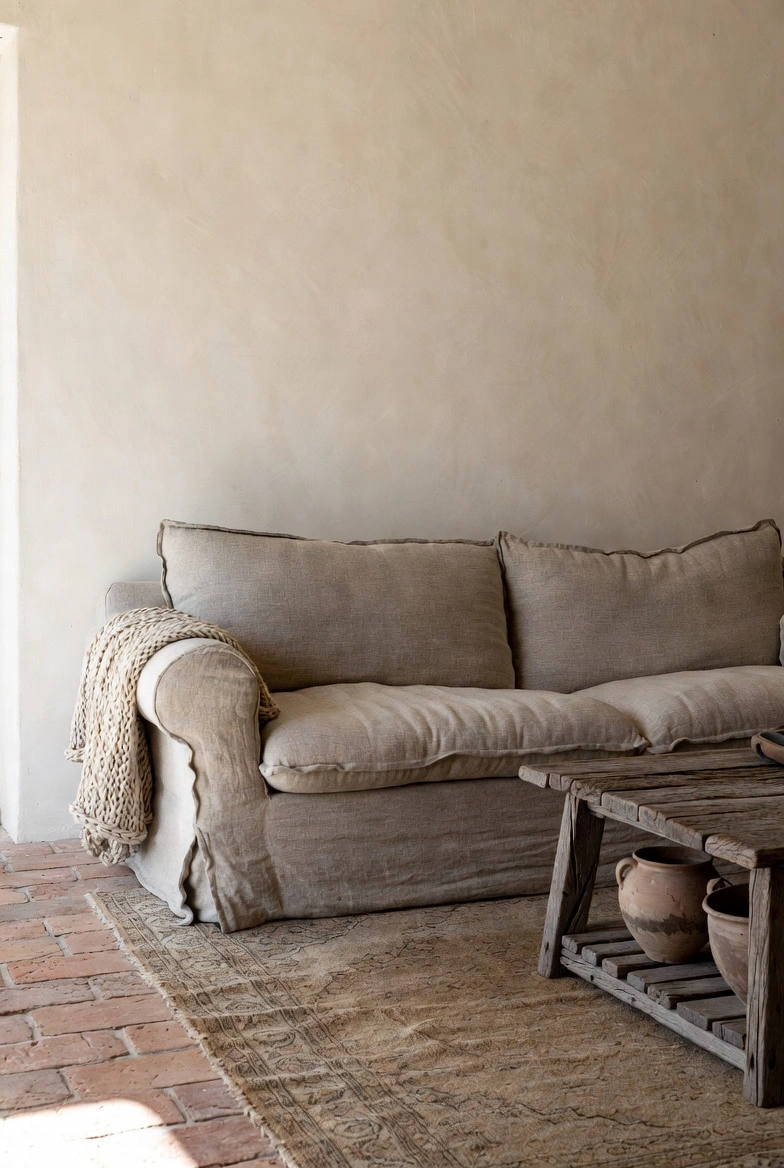
French country comfort is deep, slipcovered, and generous. A relaxed sofa with loose cushions and a washed cotton or linen cover invites actual living, and the slipcover survives it, because it zips off and washes. Avoid anything tight, tufted, and formal on the main seat. Elegance in this style comes from ease, never stiffness.
Let the Legs Do the Talking
Cabriole legs, carved aprons, turned wood details: French country furniture shows its craft at the edges. One coffee table with a natural wood top and painted carved legs, or a side table with gently curved lines, carries the vocabulary without the room becoming a period set. Mixing wood tones is not just allowed but expected. Matching sets are the opposite of collected.
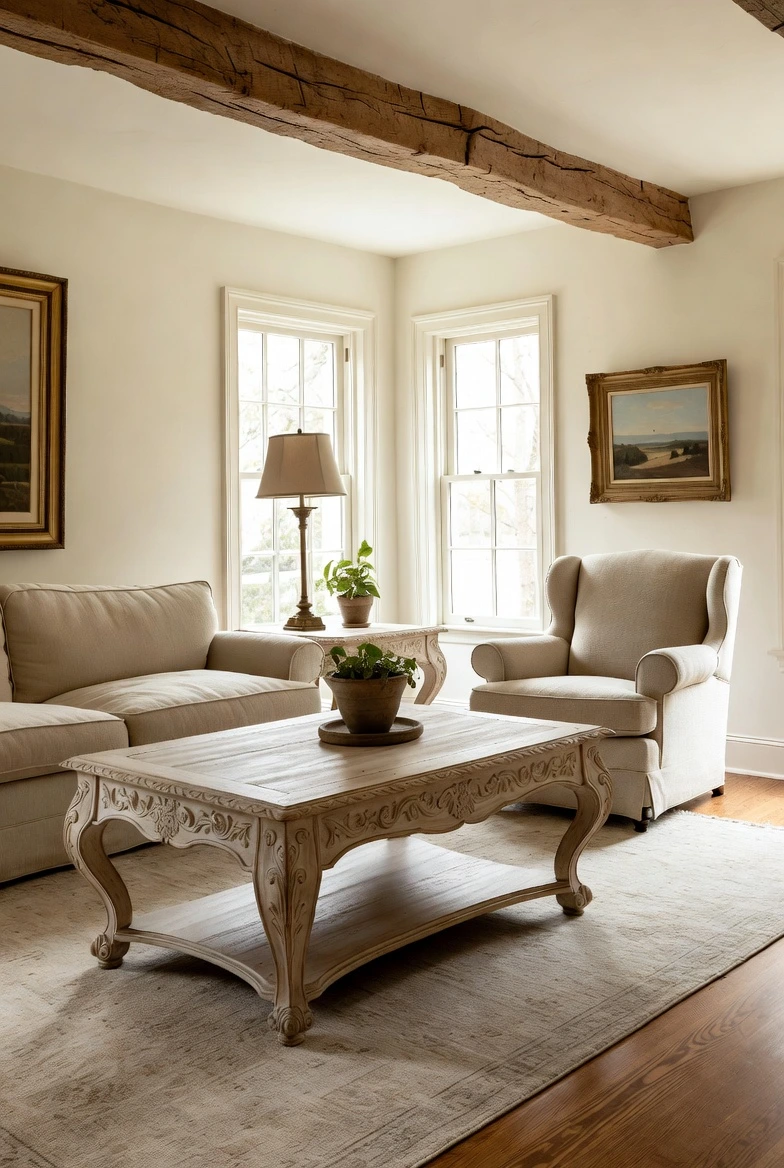
Bring In an Armoire (or Fake Its Presence)
A large armoire or vintage bookshelf gives the room presence and history in one piece, holding books, ceramics, baskets, and the television nobody wants to see. Small rooms can substitute a tall painted bookcase or open shelving styled with old crockery and linen-bound books. Big vertical furniture is the backbone move most modern rooms are missing.
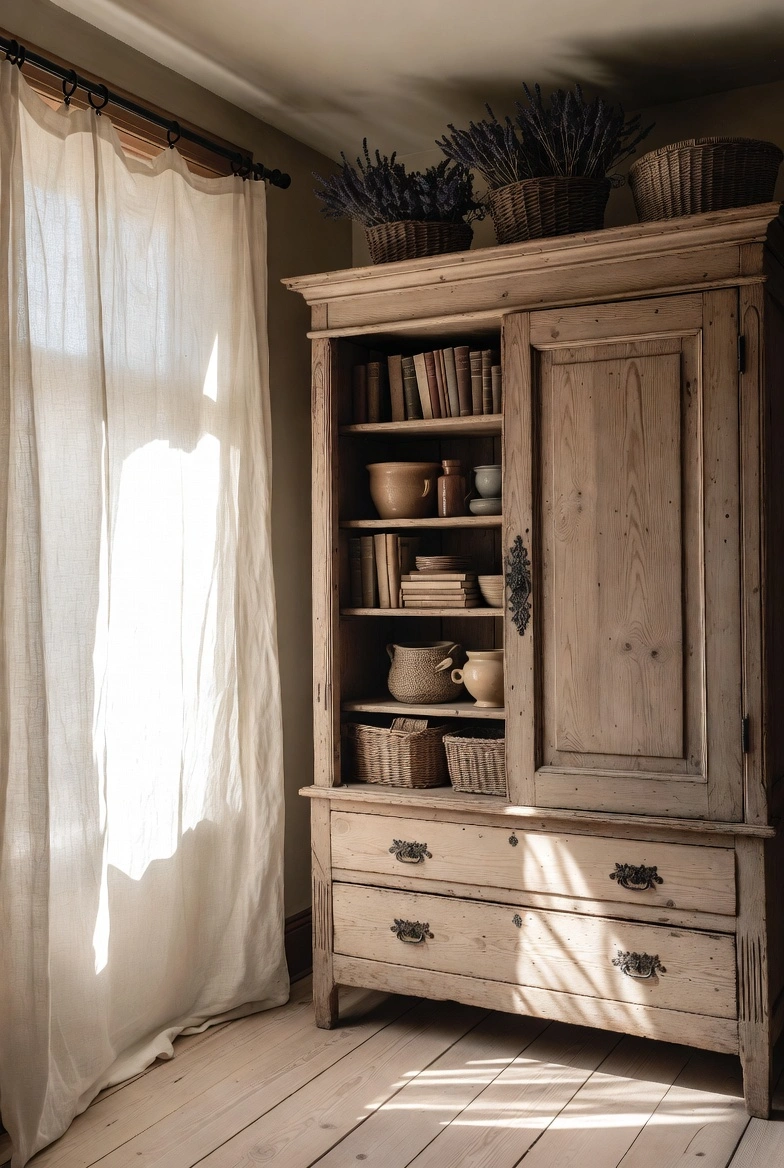
Blend Old and New Deliberately
The working ratio designers use: roughly one aged or antique piece for every two or three new ones. All-new reads as showroom. All-old reads as museum. The tension between a crisp modern lamp and a chippy painted table is where this style actually lives. Every French country room worth copying breaks some rule on purpose. That is the rule.
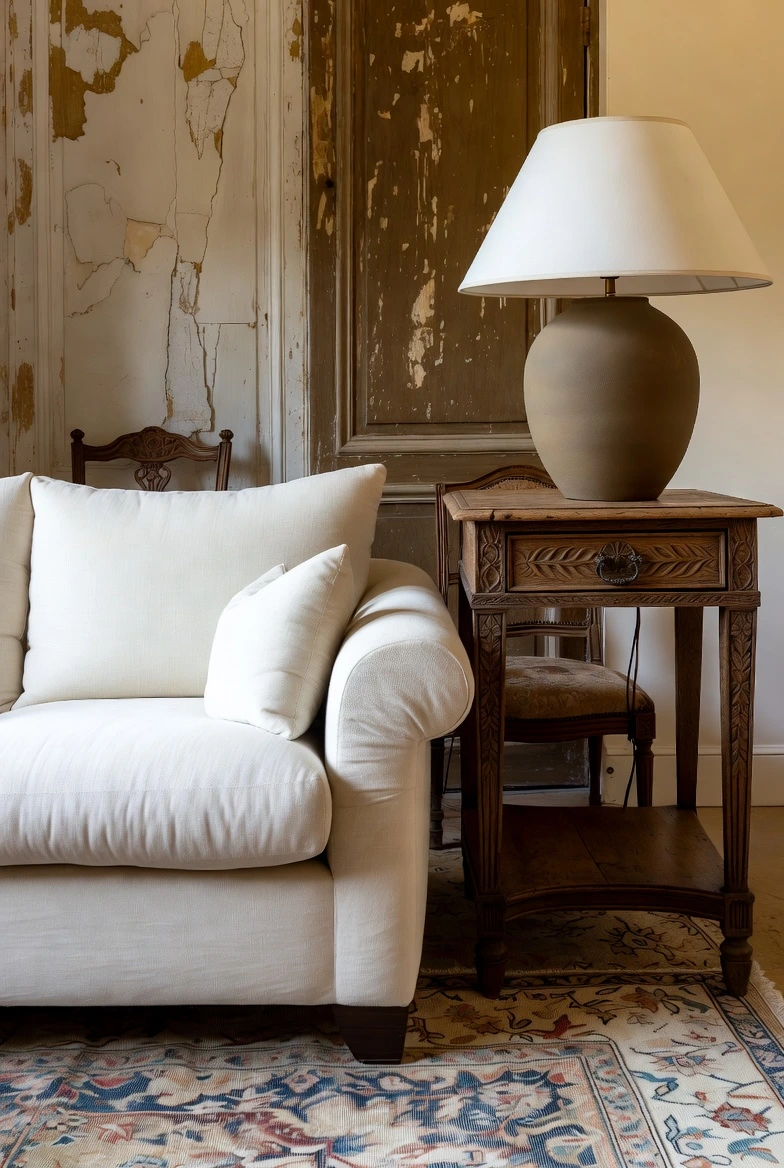
Hang a Gilt or Trumeau Mirror
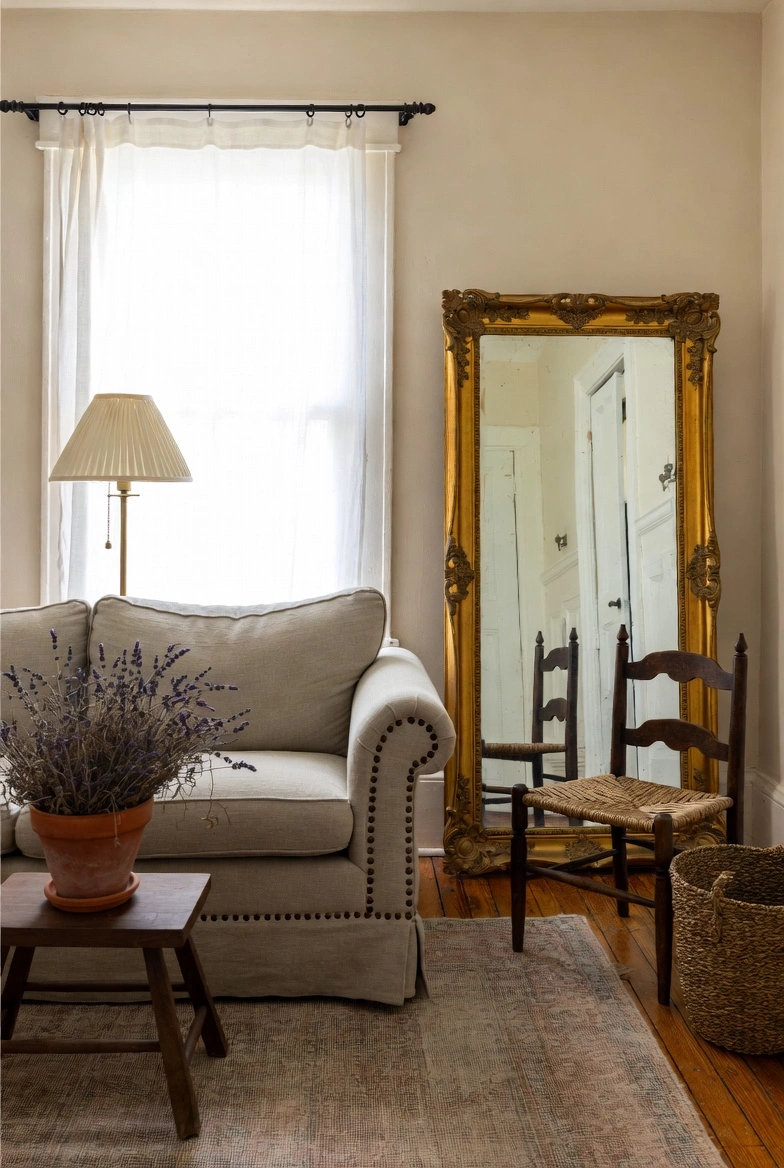
One gilded mirror above the mantel or sofa is the jewellery of the room, catching light and adding old-world formality against all that relaxed linen. A trumeau mirror, the tall French style with a painted or carved panel above the glass, is the collector’s version. Convincing reproductions abound, and the statement mirror principle applies fully: choose the one that feels slightly too grand.
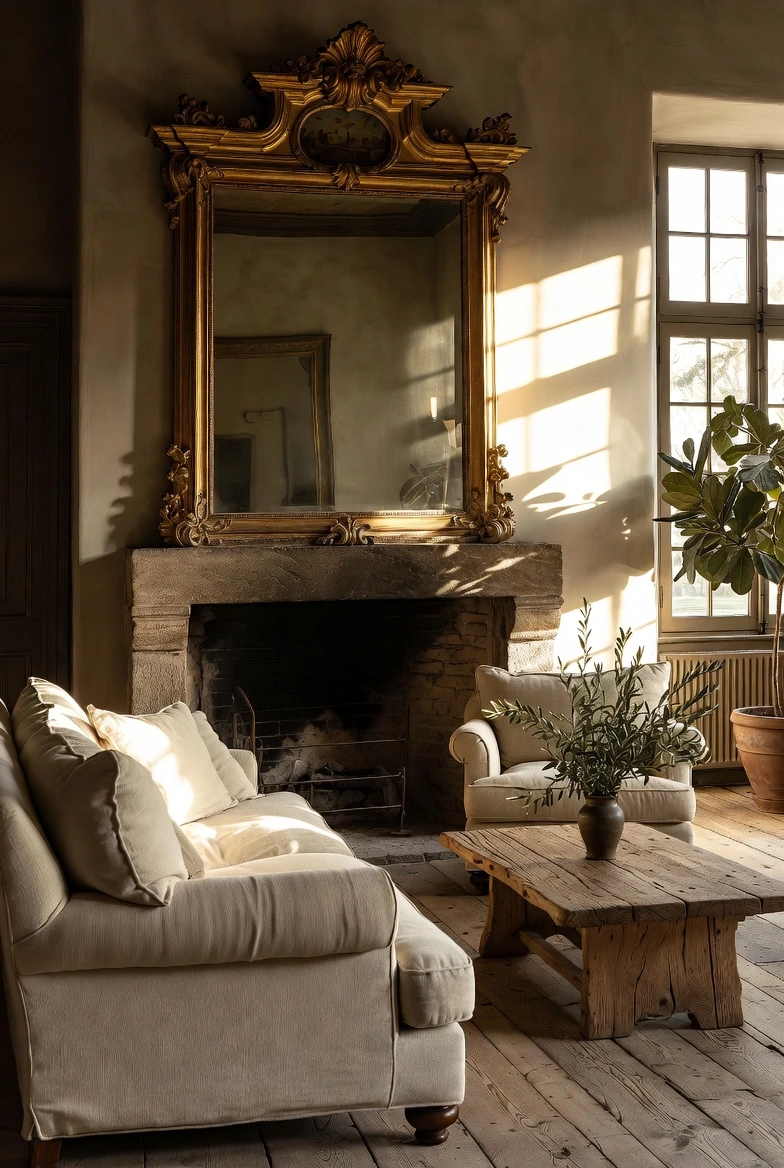
Fade the Floor
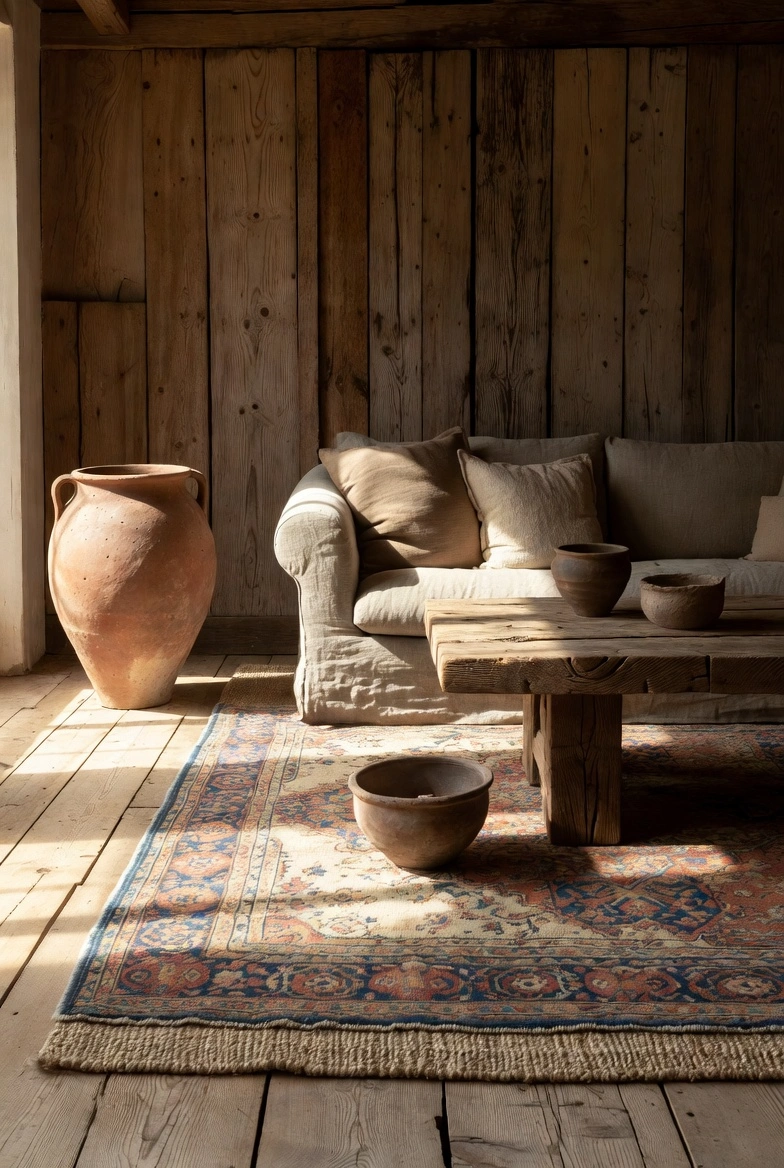
Rugs in this style should look inherited: a vintage Persian or Turkish rug in washed-out tones, or a natural jute layer with a faded rug on top. Colours worn soft, patterns gently blurred, edges honestly imperfect. Skip anything plush, bright, or obviously new. On this floor, a little wear is worth more than a lot of polish.
Mix Patterns the French Way
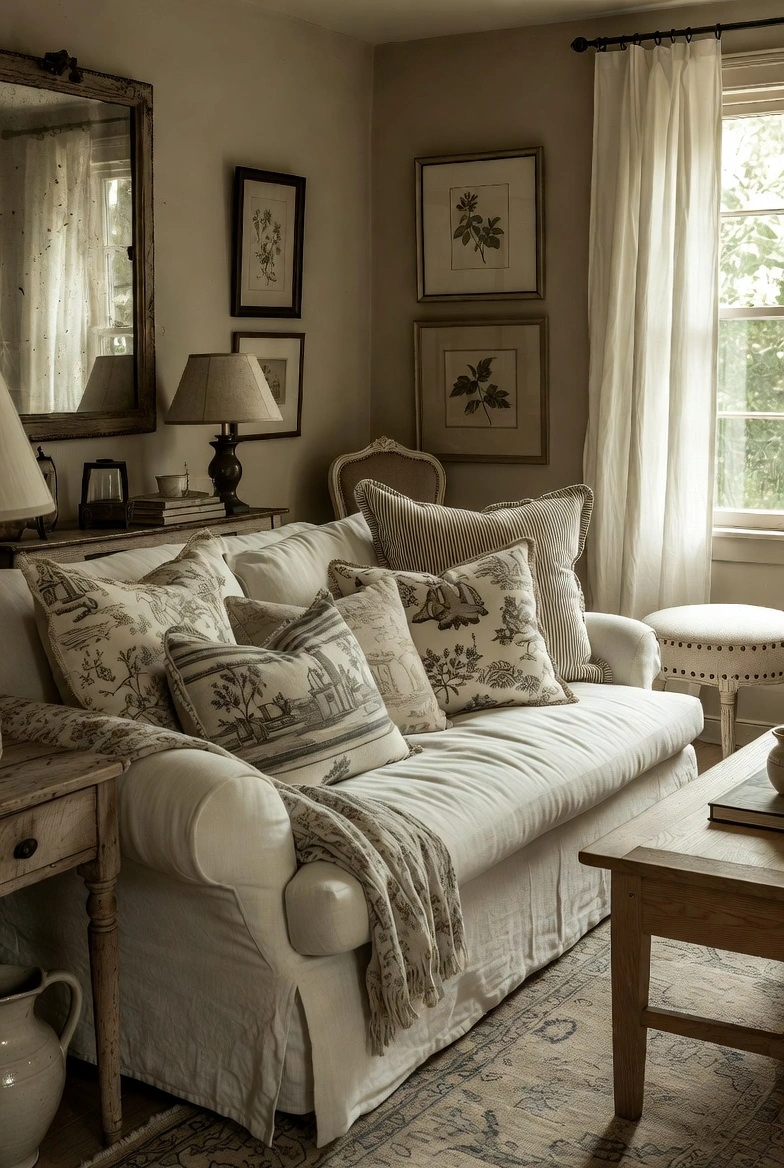
Toile scenes, ticking stripes, small checks, faded florals. The French mix them confidently by keeping every pattern inside the same soft palette and varying the scale: one large print, one medium, one small.
Three patterns in cushions against a plain linen sofa is the beginner-proof dose. The busy 1990s version stacked ten; the 2026 version chooses three and stops.
Work Iron and Aged Brass Into the Details
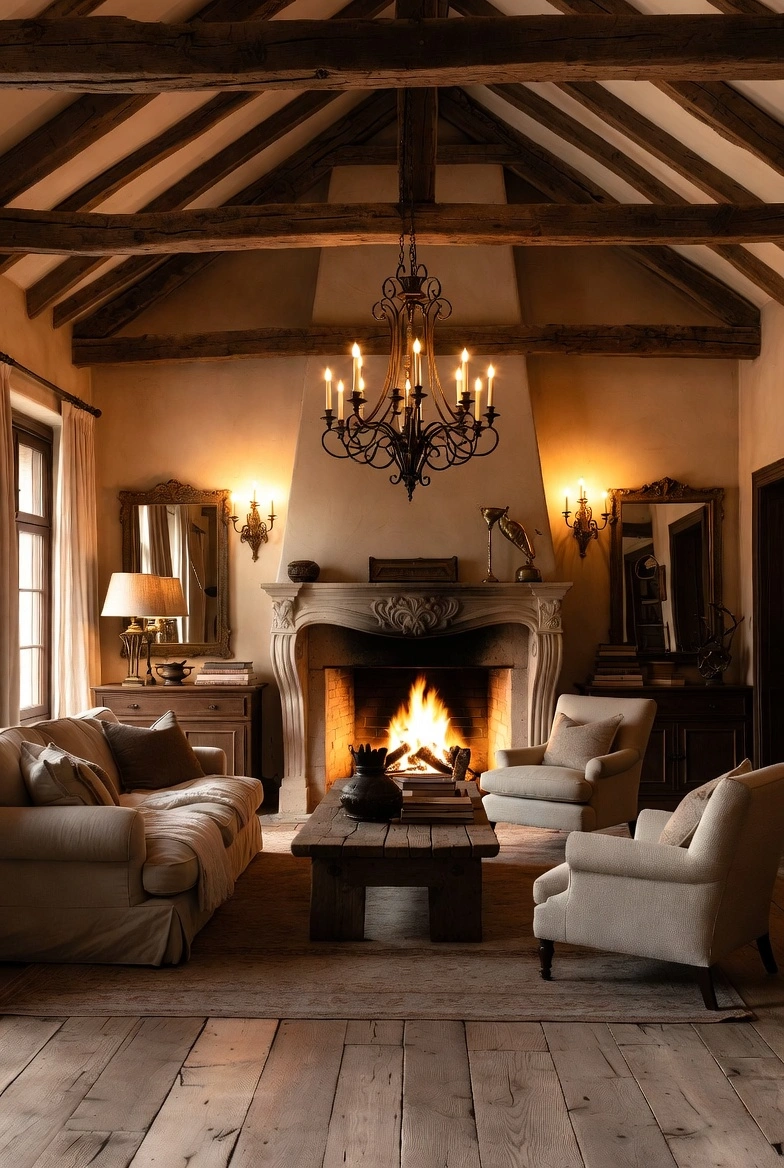
Wrought iron in the chandelier or curtain rods, aged brass in the lamp bases and picture lights. These darkened, softened metals are the hardware language of French country; chrome and polished steel speak a different dialect entirely. A candle-style iron chandelier over the seating area is the classic move, and dimmed low in the evening it earns its keep nightly.
Light in Warm Pools, Not Floods
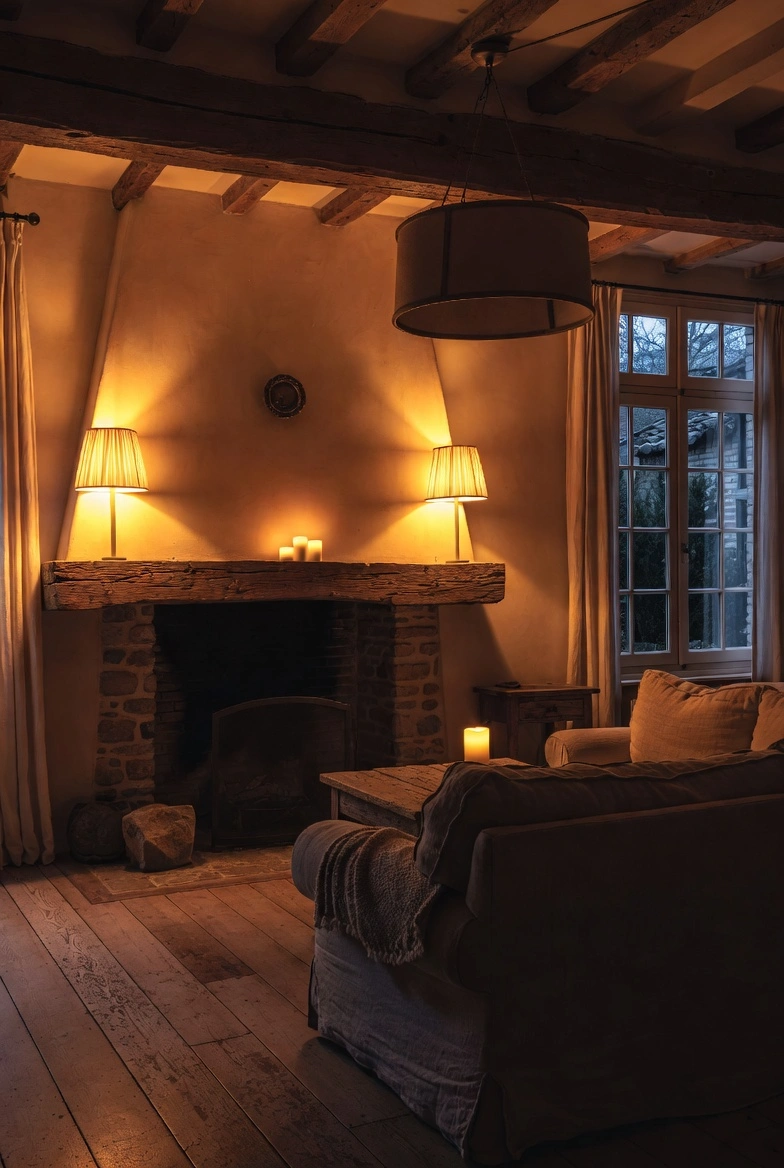
Overhead brightness flattens all the texture this style works to build. The French country evening runs on pools: table lamps with pleated or linen shades, a floor lamp by the reading chair, candlelight doing the rest.
Pleated shades in particular are having a full revival, and a ceramic-based lamp wearing one delivers more charm per euro than nearly any accessory in the room.
Honor the Patina
Chipped paint, worn edges, the water ring on the old table: in this style these are credentials, not flaws. Resist the urge to refinish everything smooth. A piece that shows its decades grounds a room full of newer things.
Buying new?
Look for honest finishes rather than factory-applied “distressing,” which tends to look like a costume. Real wear happens at handles, edges, and feet, where hands and life actually touch.
Finish With Lavender, Olive, and Dried Stems
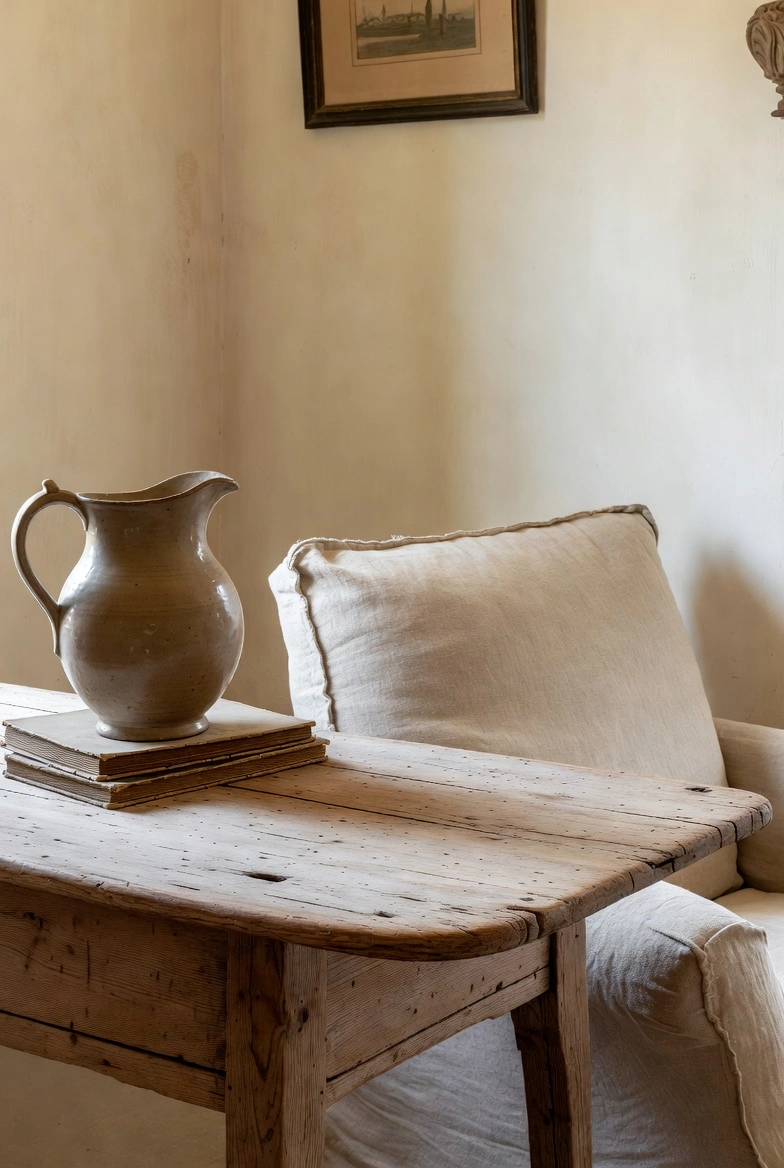
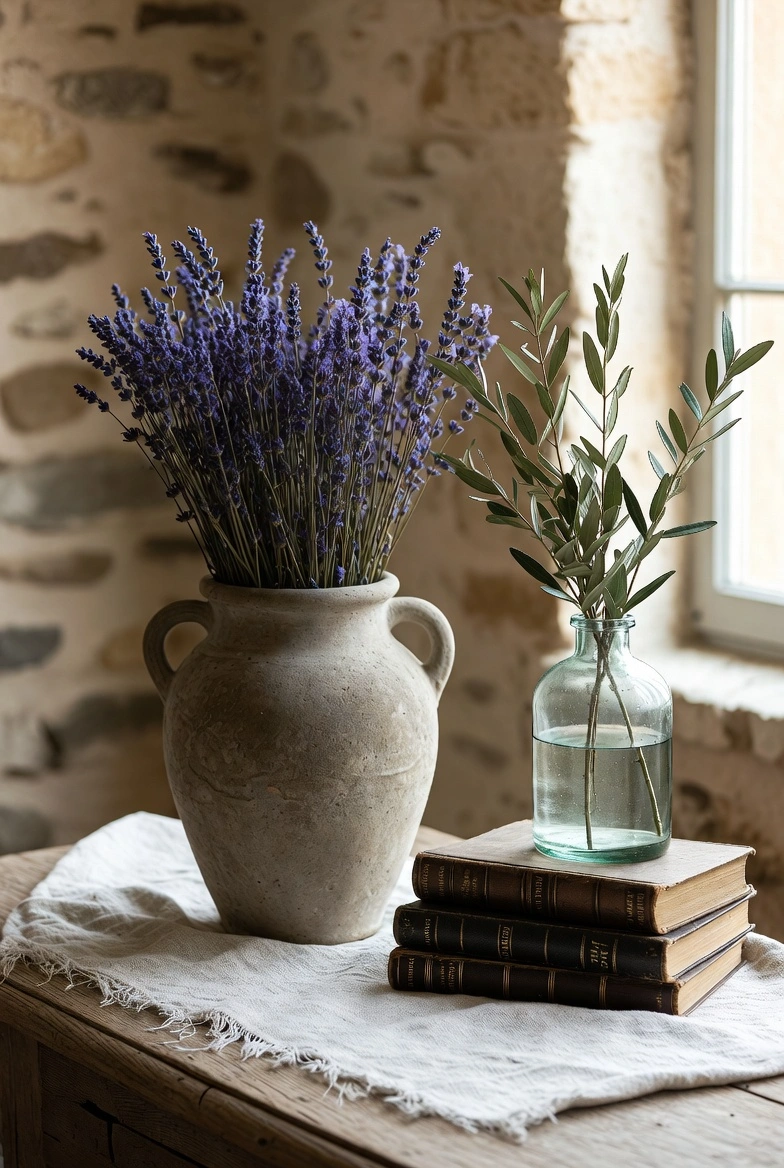
The Provence signature costs almost nothing: dried lavender bundles in a stoneware jug, olive branches in a glass bottle, wheat or hydrangea gone beautifully papery. Dried arrangements last months and look more authentically French than any fresh bouquet. Add one cloche over a candle or found object and the vignette finishes itself.
No Farmhouse? The Apartment Version
Renters and apartment dwellers can build the entire look without touching walls or ceilings: linen slipcover on the existing sofa, lime wash-effect on one wall if painting is allowed (or heavy linen curtains if not), a faded rug, one second hand French-style chair, a gilt mirror leaned rather than hung, pleated lamps, and the dried lavender.
No beams, no fireplace, no problem. The style was always about materials and ease, not square footage. Even the budget math cooperates, on the same logic as expensive-looking rooms on a budget: second hand hunting does the heavy lifting.
Retire the Roosters
The honest edit that updates everything: the 1990s French country of rooster figurines, grape motifs, “Paris” script pillows, and sunflower borders is what makes the style feel dated. The 2026 version communicates France through material and patina, never through souvenirs.
If an object announces “French theme” out loud, it leaves. If it simply feels old, warm, and useful, it stays. That single filter modernizes an entire room.
3 Mistakes That Date a French Country Room
Buying the matching set. A coordinated sofa, loveseat, and armchair trio erases the collected-over-time soul that defines the style. Assemble the seating from at least two different sources.
Distressing everything. When every surface is chipped and whitewashed, the room tips from farmhouse to theme park. Two or three patina pieces among calm neighbours is the believable dose.
Stacking small patterns everywhere. Tiny florals on curtains, cushions, lampshades, and wallpaper at once is the 1990s trap. Keep most surfaces plain linen and let three patterns, in varied scales, do the talking.
FAQs
What defines French country style?
A relaxed, rustic elegance built on natural materials: linen, weathered wood, stone, and wrought iron, in warm neutrals with faded blue, sage, and ochre accents. It blends genuinely old or antique pieces with comfortable new ones and treats patina as a feature.
What are French country colours for 2026?
Creamy warm whites and linen tones as the base, with dusty blue, sage green, faded ochre, and muted terracotta as accents. The palette aligns naturally with 2026’s wider shift toward warm, earthy interiors.
What’s the difference between French country and farmhouse style?
Farmhouse leans casual, graphic, and often black-and-white American; French country leans softer, older, and more romantic, with curved furniture, gilt accents, and faded European colour. Farmhouse says shiplap; French country says limewash.
How do I get the French country look on a budget?
Secondhand is the style’s natural habitat: hunt estate sales and online marketplaces for carved chairs, gilt mirrors, and old lamps, then add washed linen slipcovers and dried lavender. One authentic old piece among affordable basics outperforms a room of new reproductions.
Is French country still in style for 2026?
Yes, arguably more than it has been in a decade. The 2026 movement toward warm palettes, texture, and lived-in rooms plays directly to French country’s strengths; only the cluttered rooster-era version is out.
Final Thoughts
French country in 2026 asks for surprisingly little warm white walls, washable linen, one old chair with stories, light in gentle pools, and lavender going quietly dry in a jug. The style rewards patience over spending. Build it piece by found piece, and the room will feel like it has always been yours. Start this weekend at the nearest flea market. The chair is waiting.
