

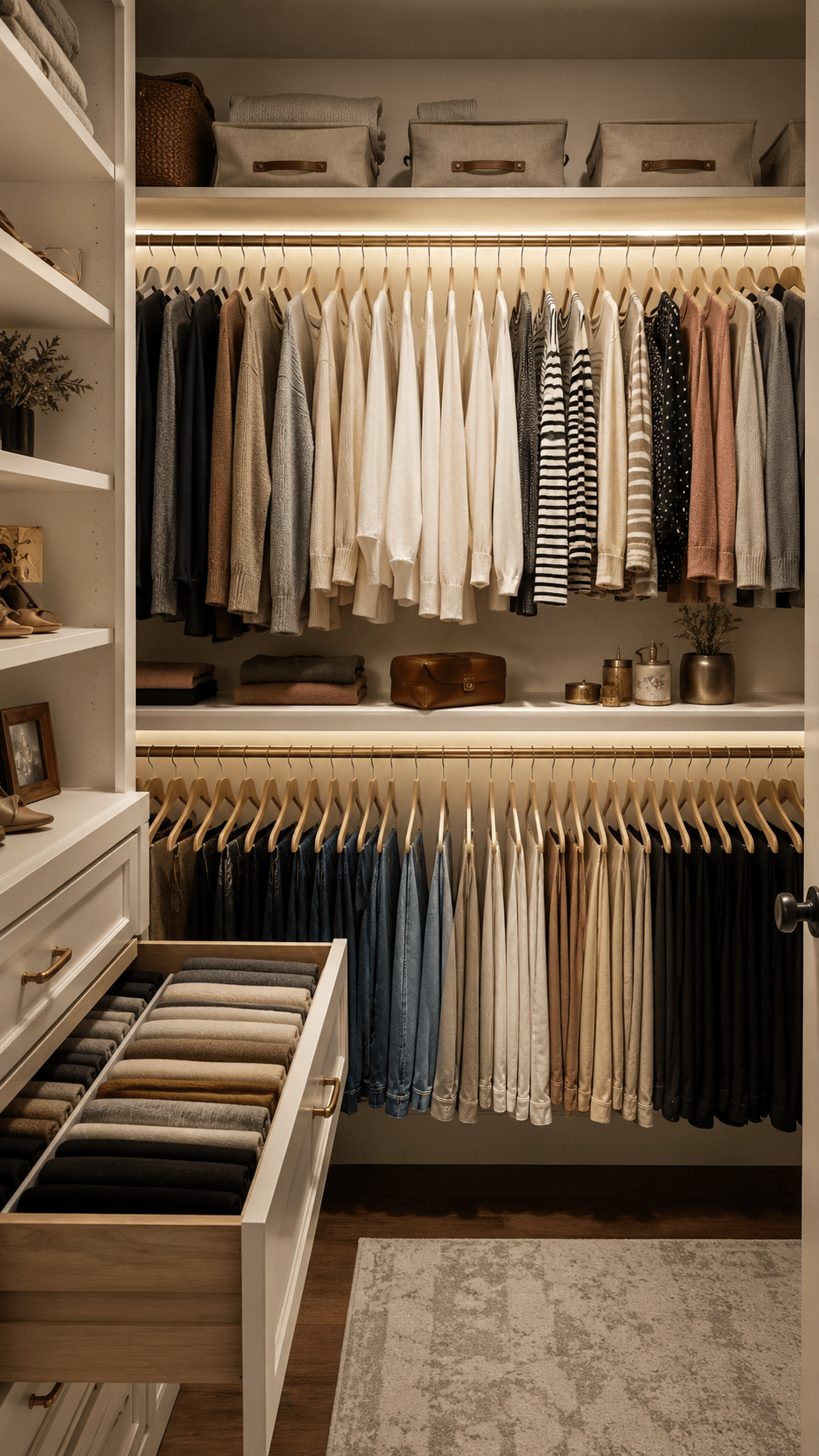
You own a chair that has never once been sat on. It holds the jeans from Tuesday, the hoodie from the gym, and the shirt that is technically clean but not clean enough to rehang. Every home has this chair, and it exists because most bedroom closet organization ideas are designed for a fantasy person with fewer clothes and more discipline.
This list is for the real person. The short version: purge with the hanger flip trick, match the storage to how you actually dress, double the vertical space, give the daily-wear limbo clothes a legitimate home, and run one ten-minute audit per season. No custom closet system required. Twenty-one ideas. The chair gets dealt with in number sixteen.
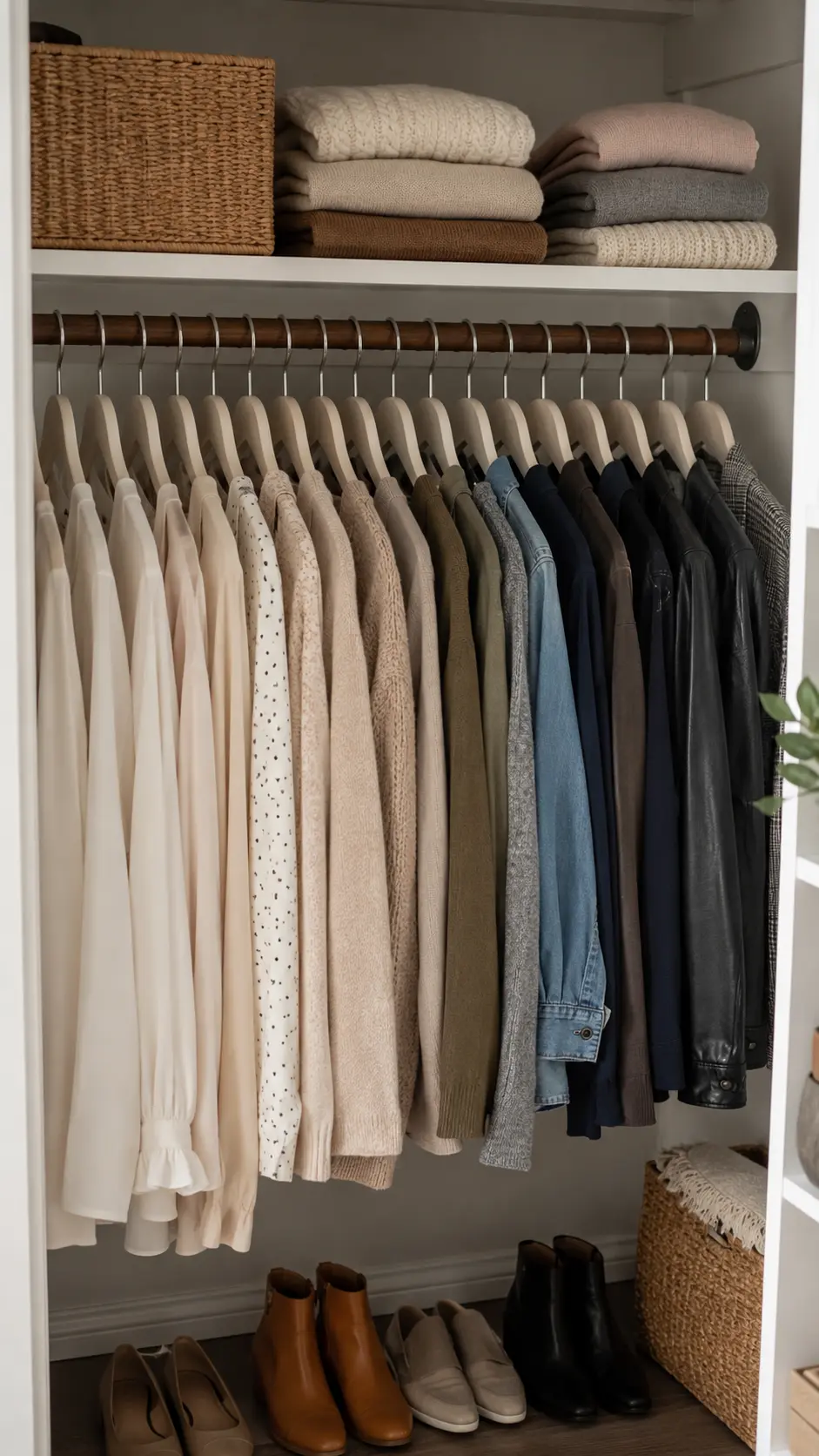
Start With the Hanger Flip
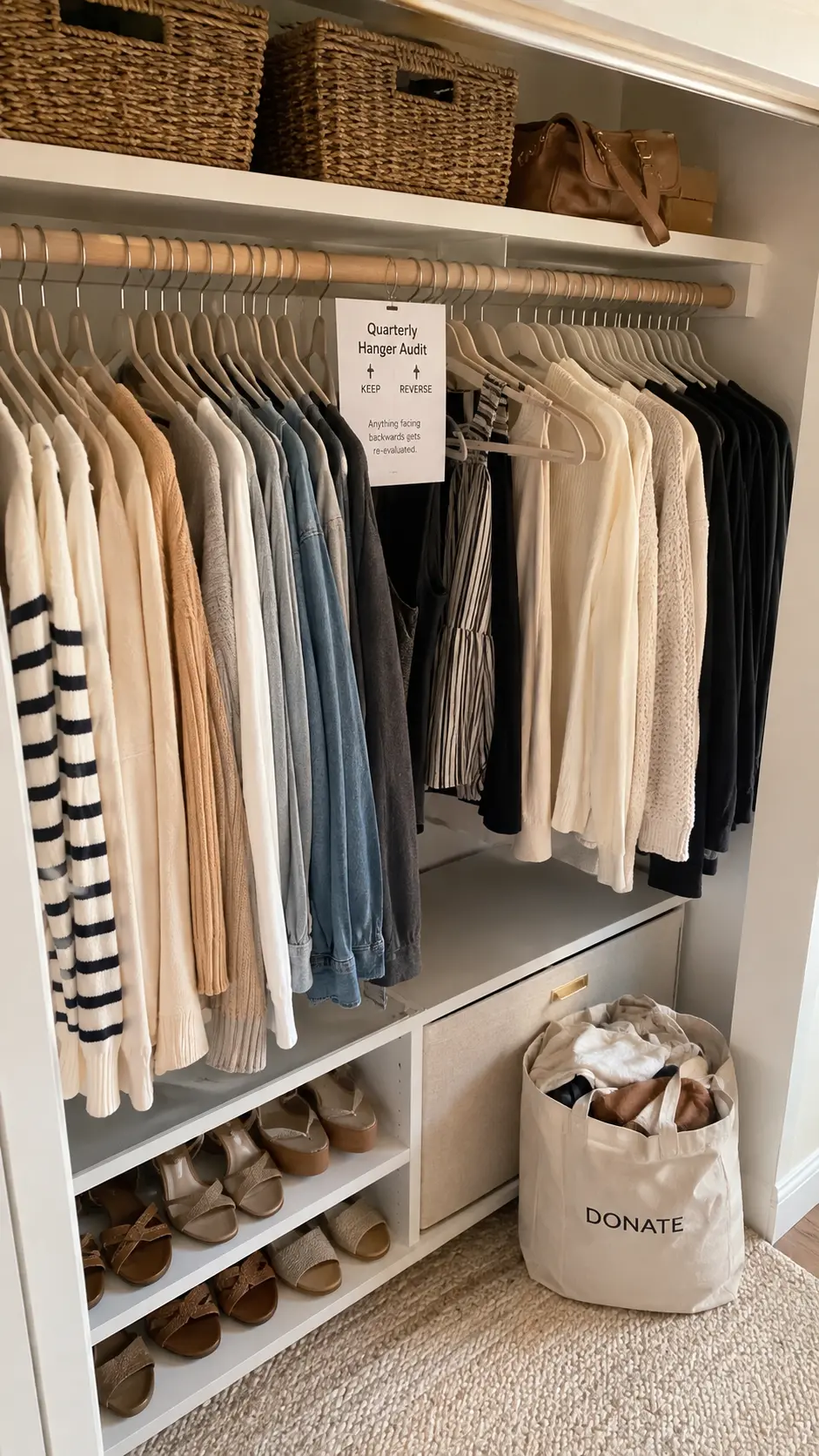
Turn every hanger in your closet backward today, hook facing you. Each time you wear and return an item, hang it the normal way. Six months from now, anything still backward has testified against itself.
No agonizing, no “but I might wear it.” The hangers keep the score for you. Most people discover a third of their closet never turned around, and that third is the space problem.
Map Before You Buy
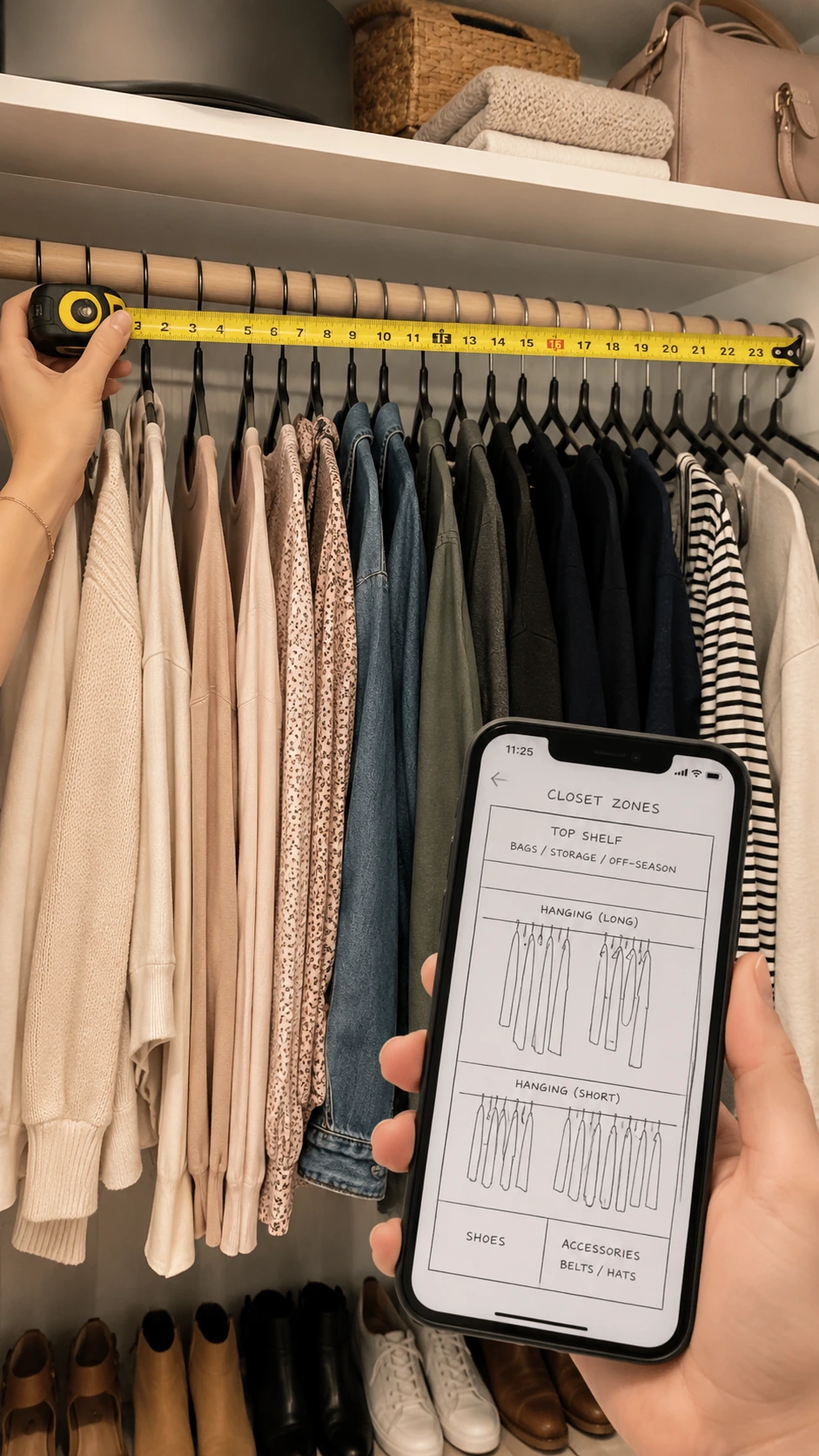
Grab a tape measure and note four numbers: rod length, shelf depth, the height under the rod, and the dead space above the top shelf. Sketch it on your phone. Every organizer purchase checks against these numbers first. That’s the whole idea. Skipping it is why so many bins end up in the returns pile.
Switch to One Hanger Type
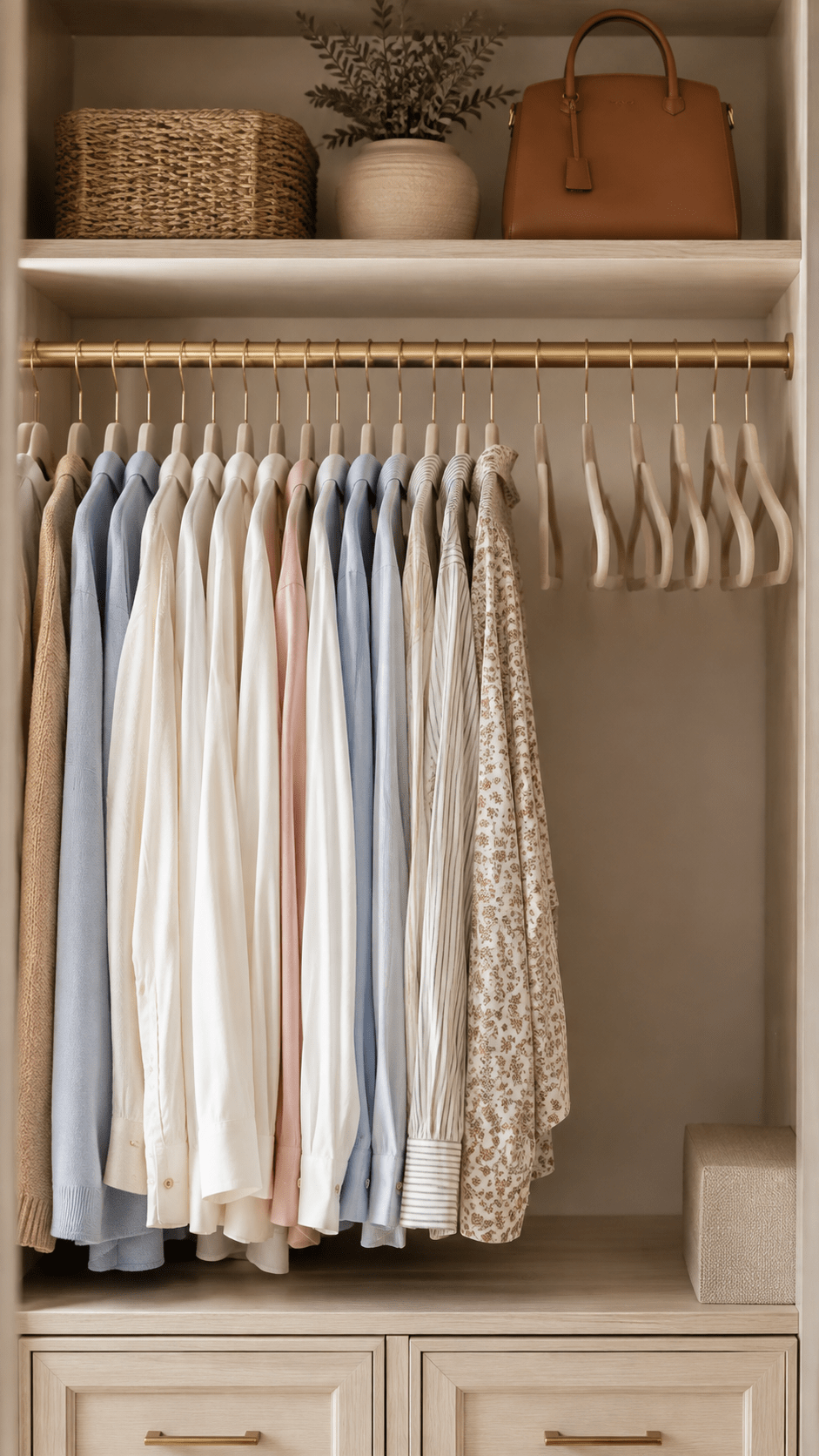
Slim velvet hangers, all of them, all matching. This single swap recovers 30 to 40 percent of rod space because bulky mixed hangers waste centimeters between every garment, and the velvet grip ends the shirts-on-the-floor situation.
Does uniformity matter beyond space? More than you’d expect. A rod of identical hangers reads calm even when the clothes are chaos, and calm closets get maintained.
Double the Rod Without Tools
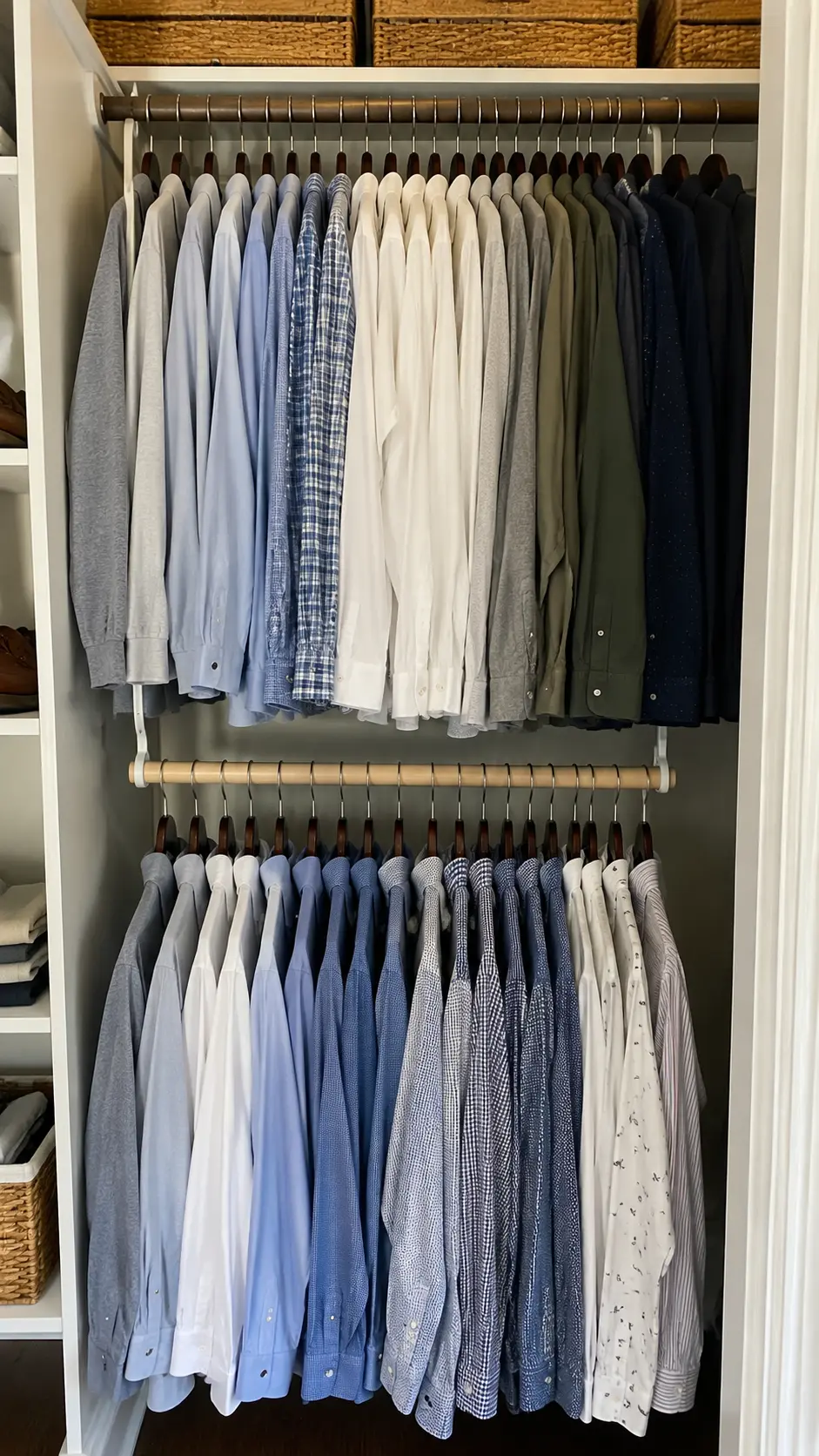
The space below your hanging shirts is doing nothing. A hanging second rod, the kind that hooks over the existing one with two straps, instantly doubles capacity for shirts, folded-over trousers, and kids’ clothes.
Renters take note: this is the entire “custom closet” effect for around fifteen euros, and it moves out when you do. Homeowners can mount a permanent second rod at 100cm with the top one at 200cm.
Learn What Hangs and What Folds
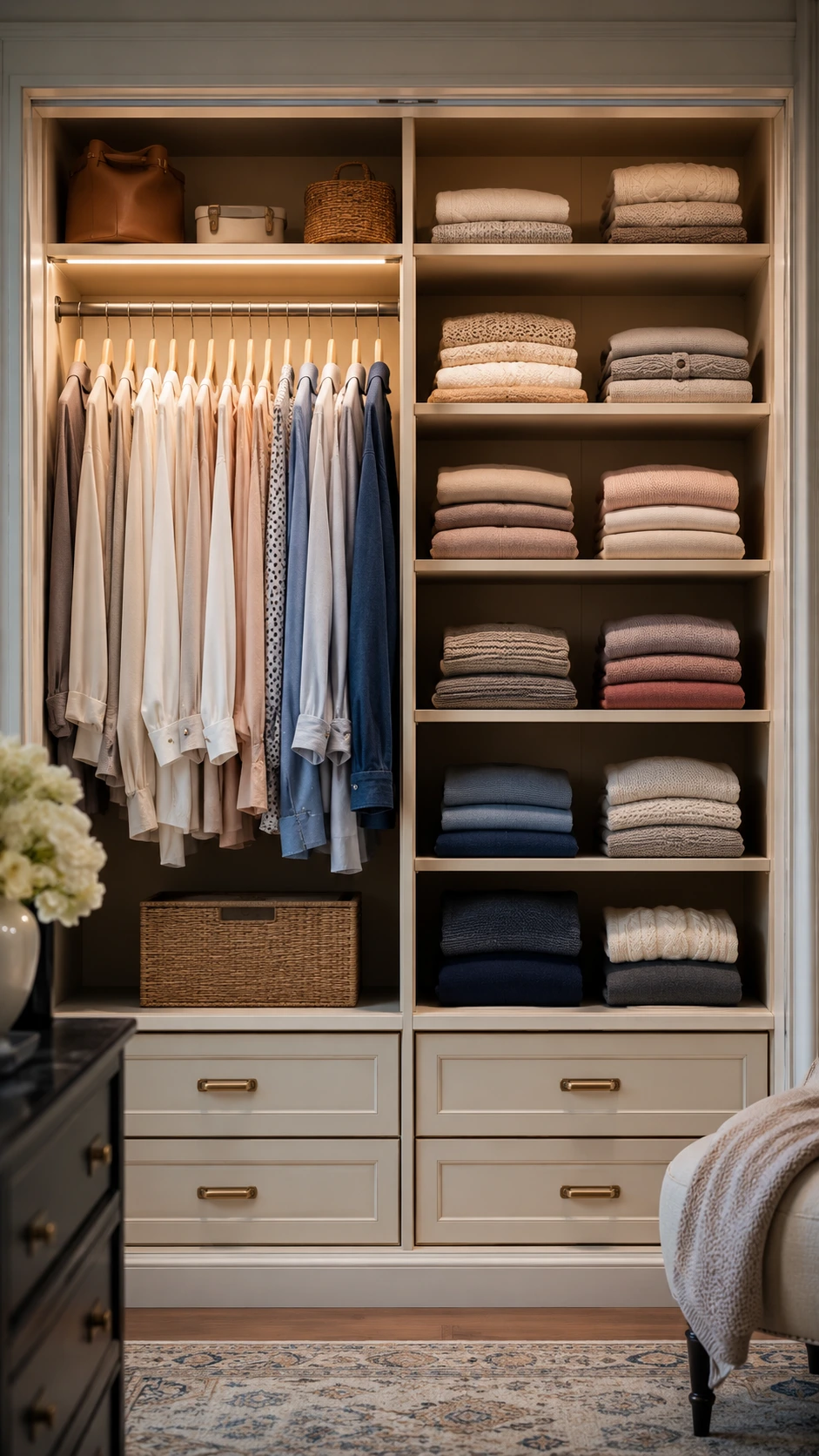
Should everything hang? No, and getting this split right frees more space than any product. Hang: anything that wrinkles or holds a shape. Shirts, dresses, blazers, trousers with a crease. Fold: everything knit. Sweaters, t-shirts, jeans, athletic wear. Knits on hangers grow shoulder bumps and stretch long; folded wovens crease. The fabric decides, not the habit.
Divide Every Shelf
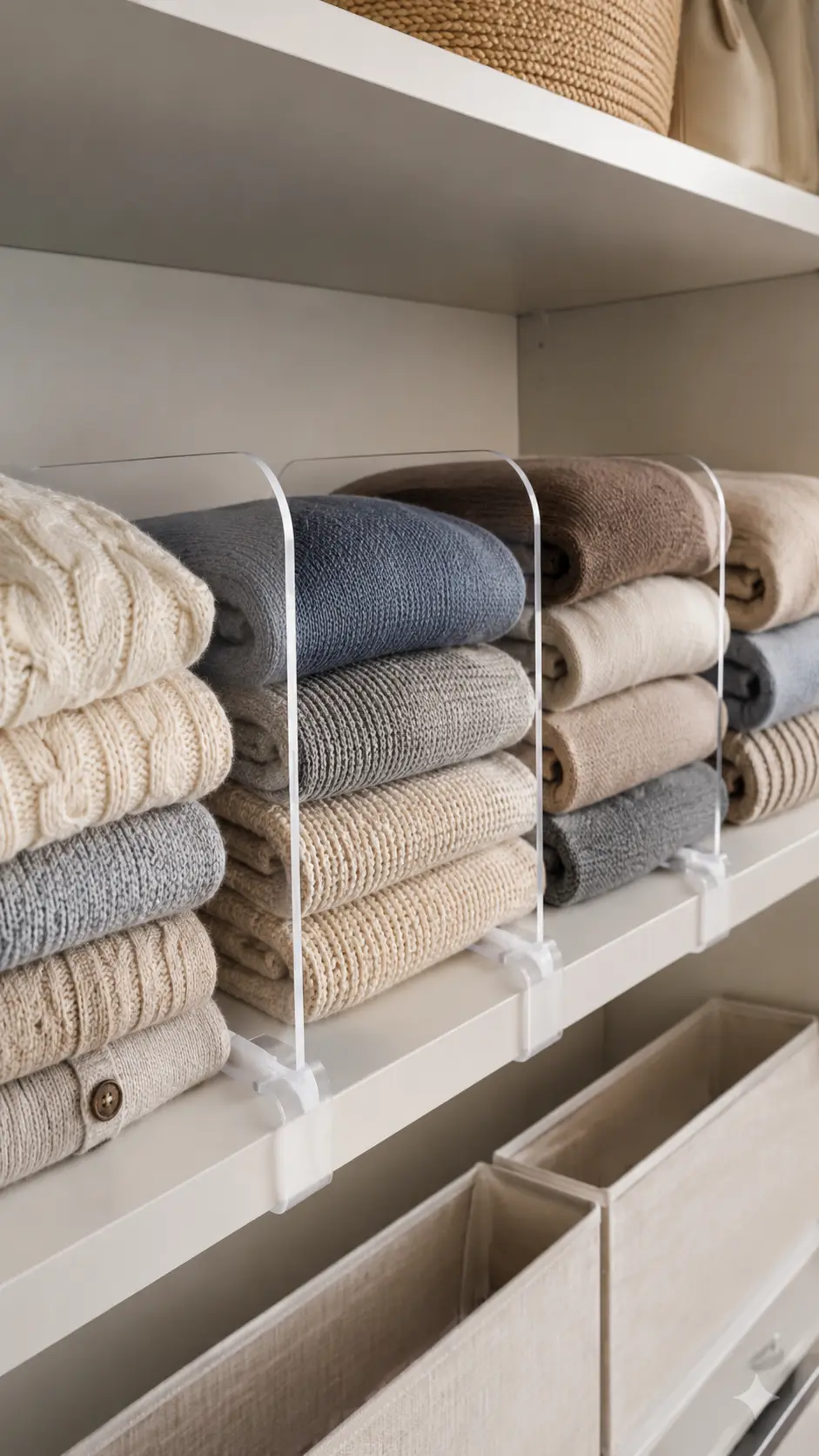
Sweater stacks lean, then merge, then avalanche. Clip-on shelf dividers hold each stack in its own lane. Two euros a divider. That’s the section.
File-Fold the Drawers
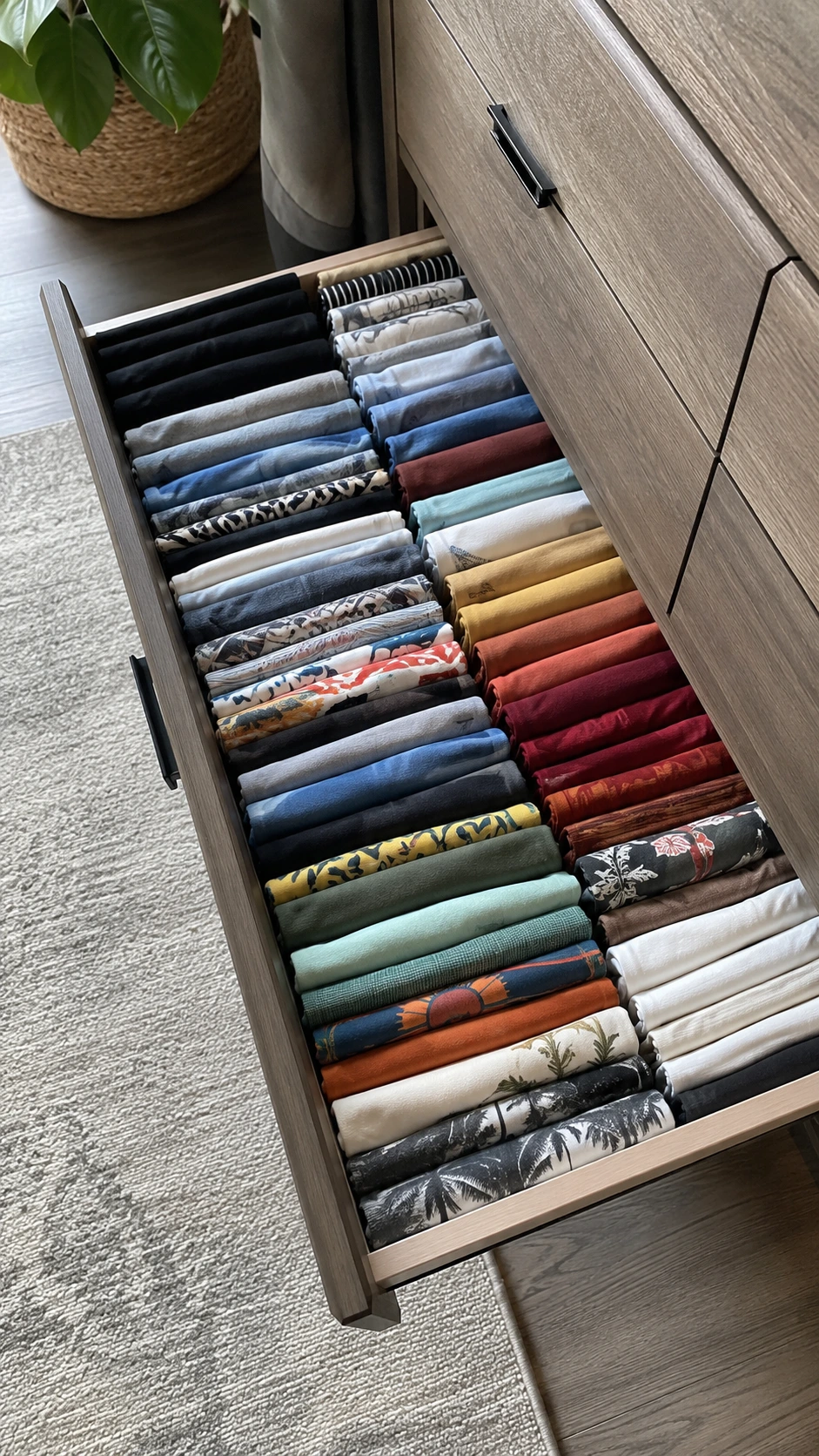
Fold t-shirts and jeans into rectangles and stand them vertically, spines up, like files in a cabinet. You see every item at once, and pulling one out disturbs nothing.
Add small boxes inside the drawer to keep the files upright when the drawer is half empty. Socks and underwear get their own compartments; mixed drawers always decay into soup.
Send the Off-Season Upstairs
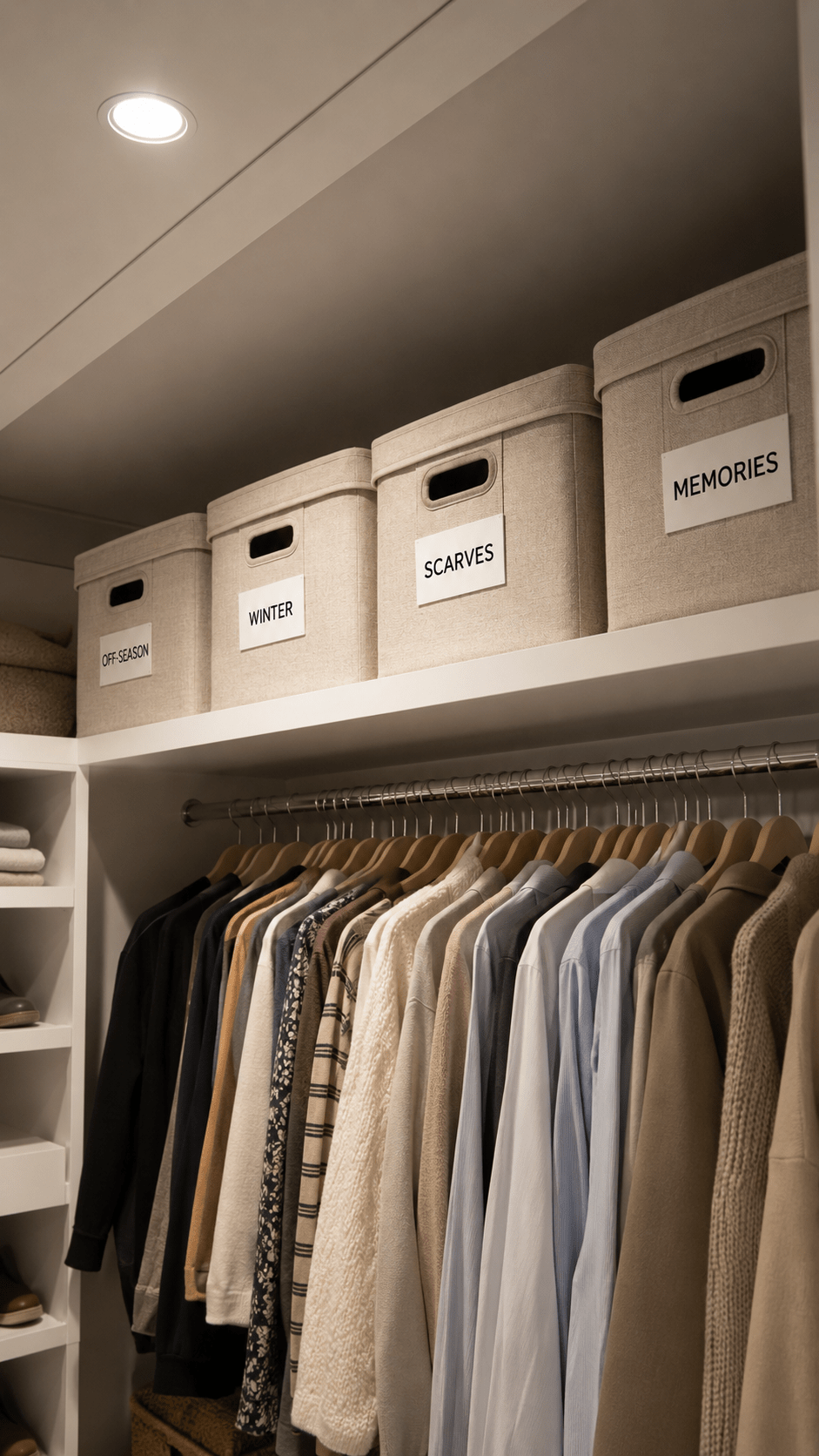
The coats in July and the linen in January are renting space your daily clothes need. Lidded bins on the top shelf hold the off-season wardrobe, labeled on the front edge so they’re readable from below.
Handles matter up there. A bin you can’t hook a finger into never comes down, and never coming down means the system quietly dies.
Make the Seasonal Swap a Ritual
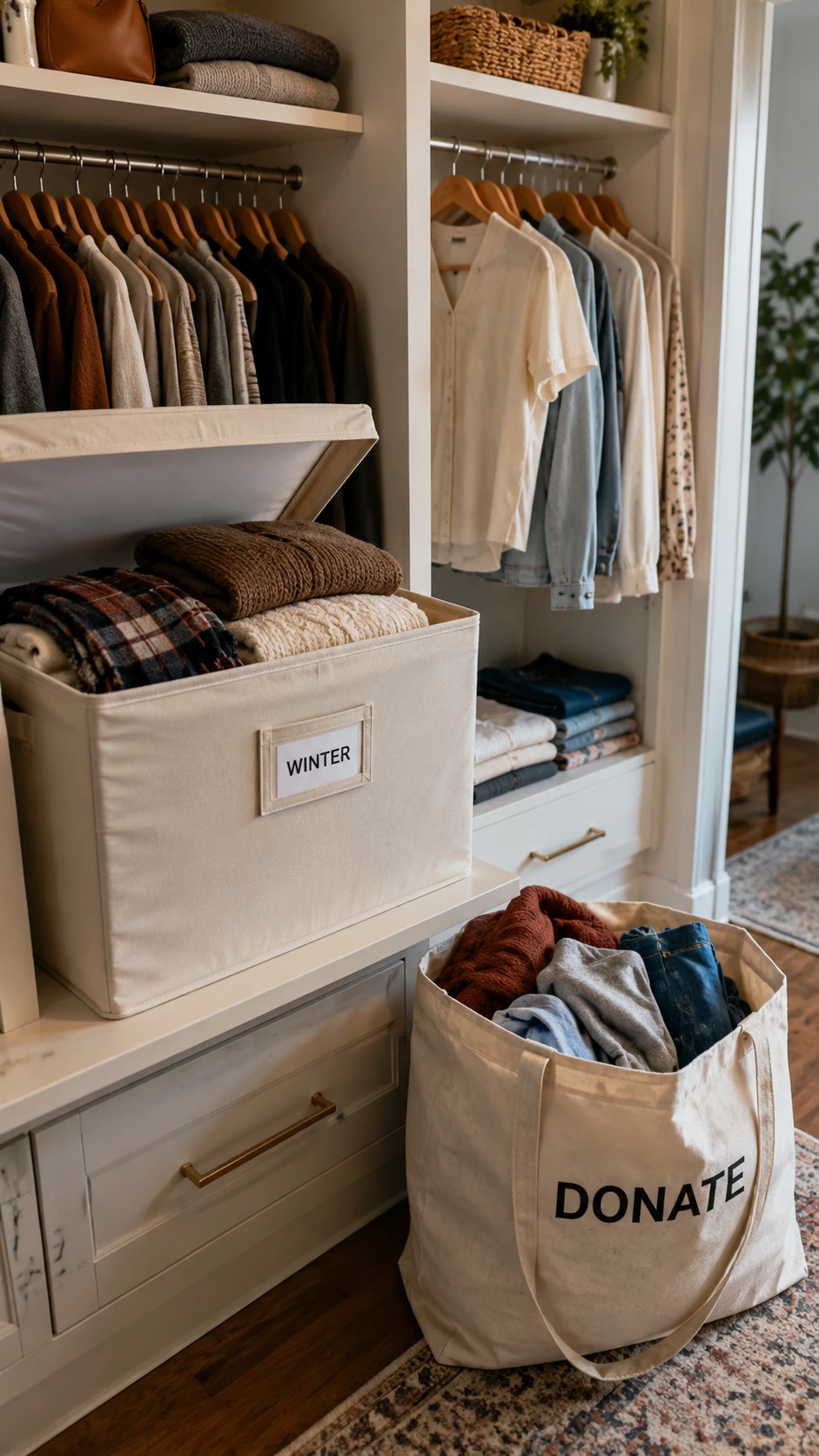
Twice a year, on the first properly warm and first properly cold weekend, the bins come down and the closet flips. Fifteen minutes, a cup of chai, some music. Everything coming out of storage passes one question on its way to the rod.
Anything you didn’t miss goes straight to the donate bag without touching a hanger. This is the gentlest purge system ever invented, because the clothes sort themselves by absence.
Put the Door to Work
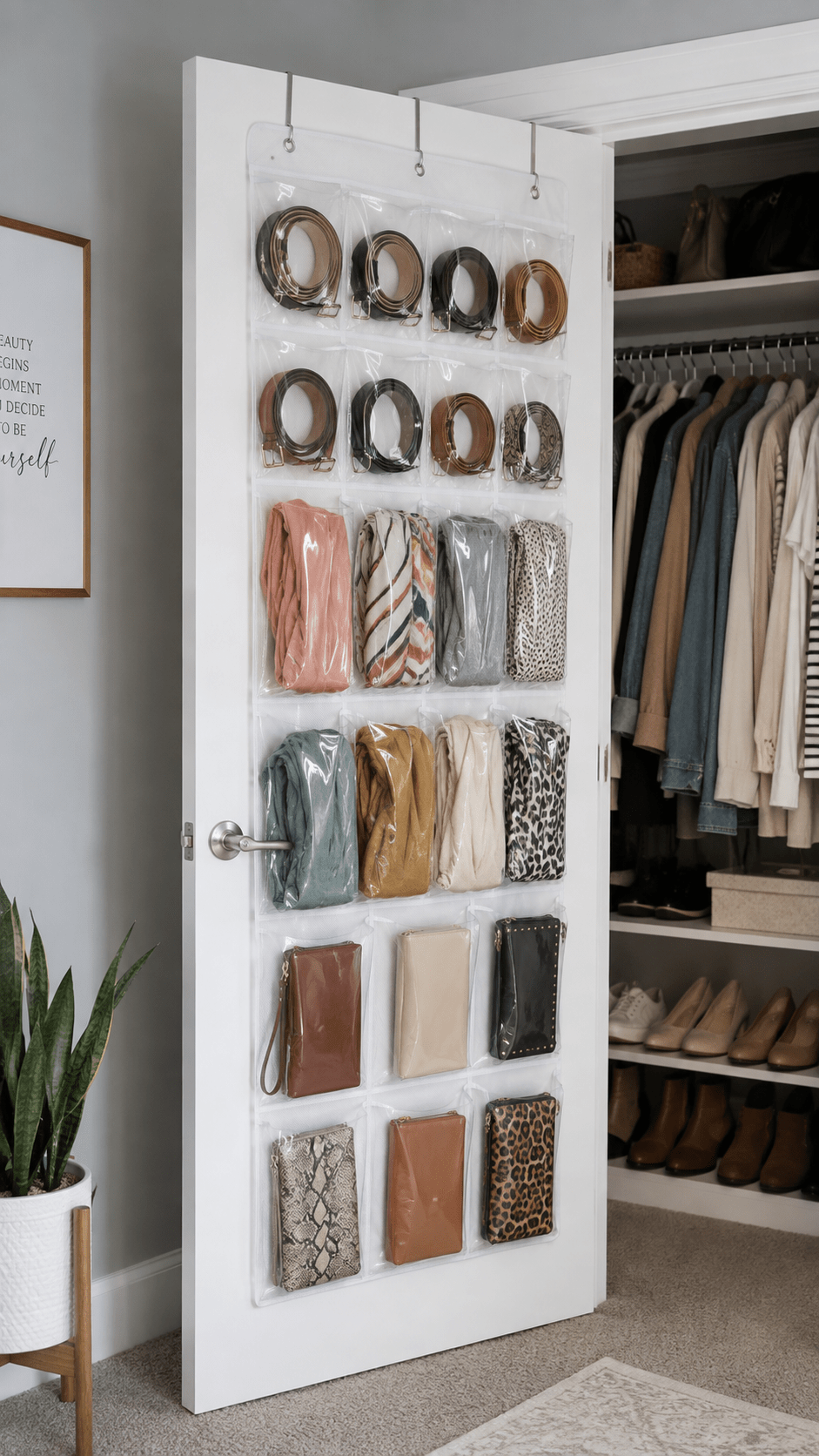
An over-door organizer with clear pockets swallows the small chaos: belts rolled, clutches, scarves, the accessories that vanish in drawers. Hooks on the inside face hold tomorrow’s outfit or the robe. Zero drilling. Invisible when the door stands open.
Solve Shoes Once
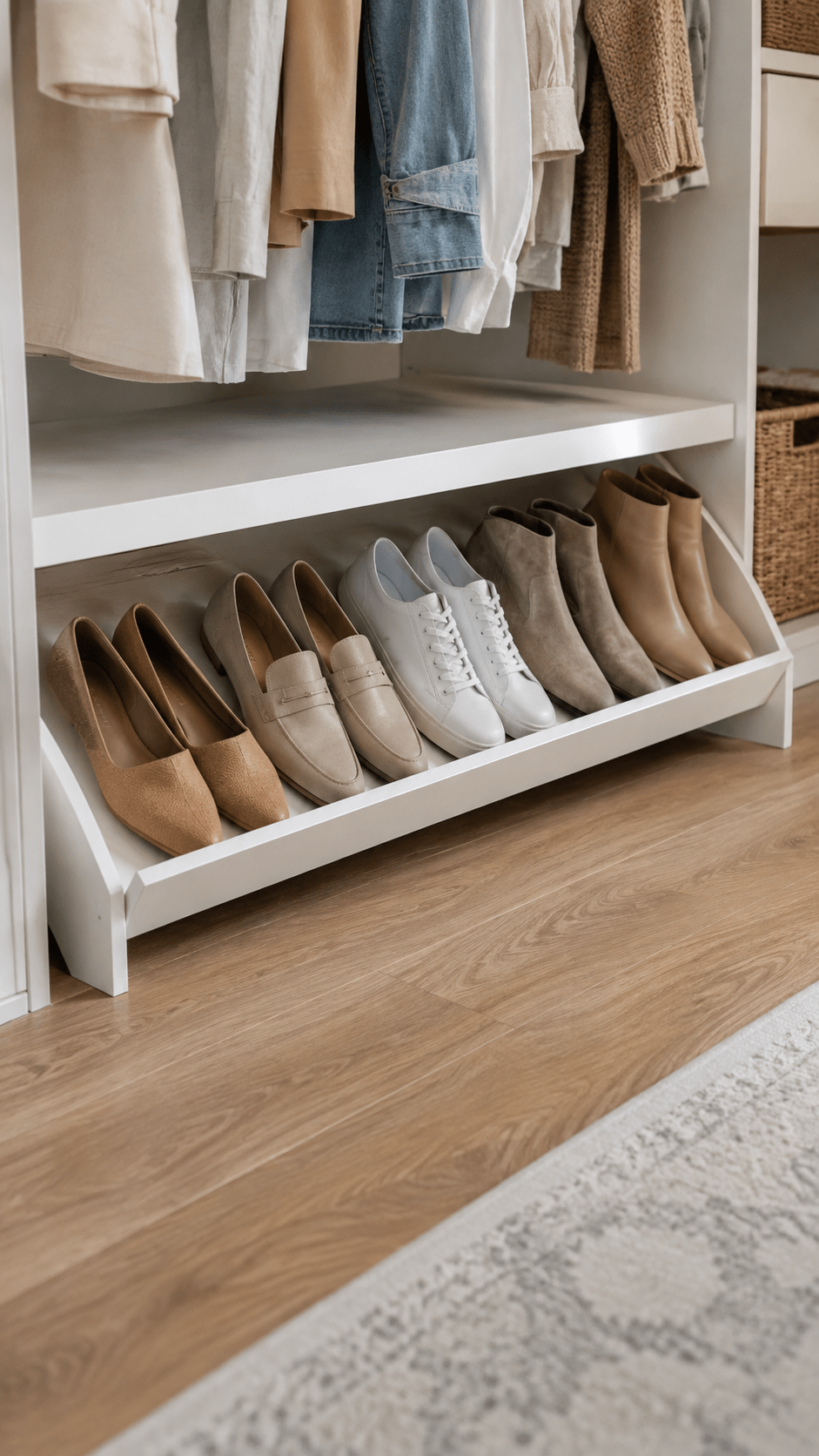
Where do shoes actually go? Pick one answer and commit: a slanted shelf at the closet floor, a hanging shoe organizer on the rod’s end, or a two-tier rack. The specific product matters less than the rule that comes with it: shoes live there and only there. Rotate the pairs by season too. Sandals don’t need January real estate.
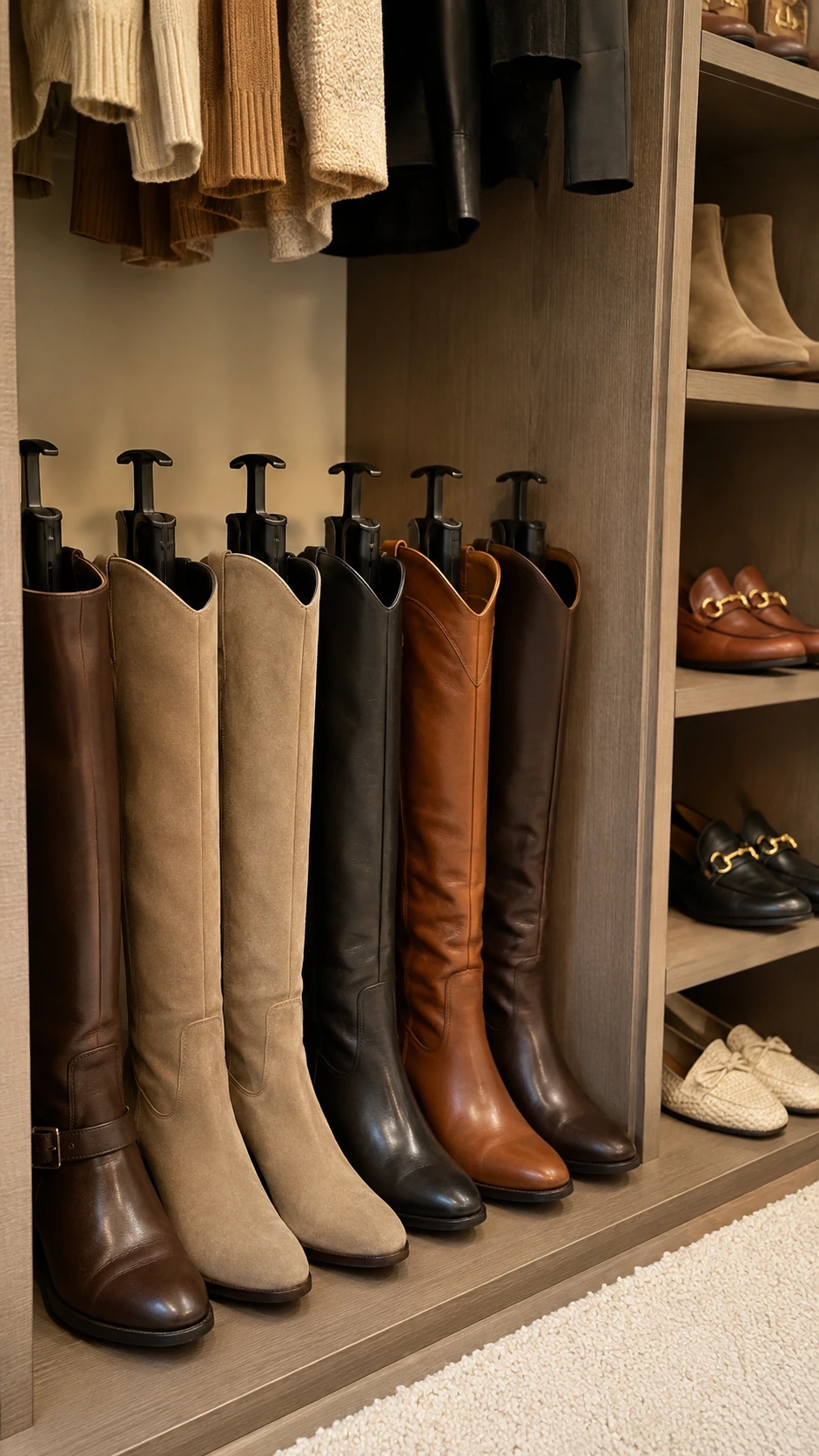
Keep Boots Standing
Tall boots flop, crease, and colonize double their floor space. Boot shapers (or rolled magazines doing the same job free) keep them upright in a tidy row. Small thing. Noticeable difference.
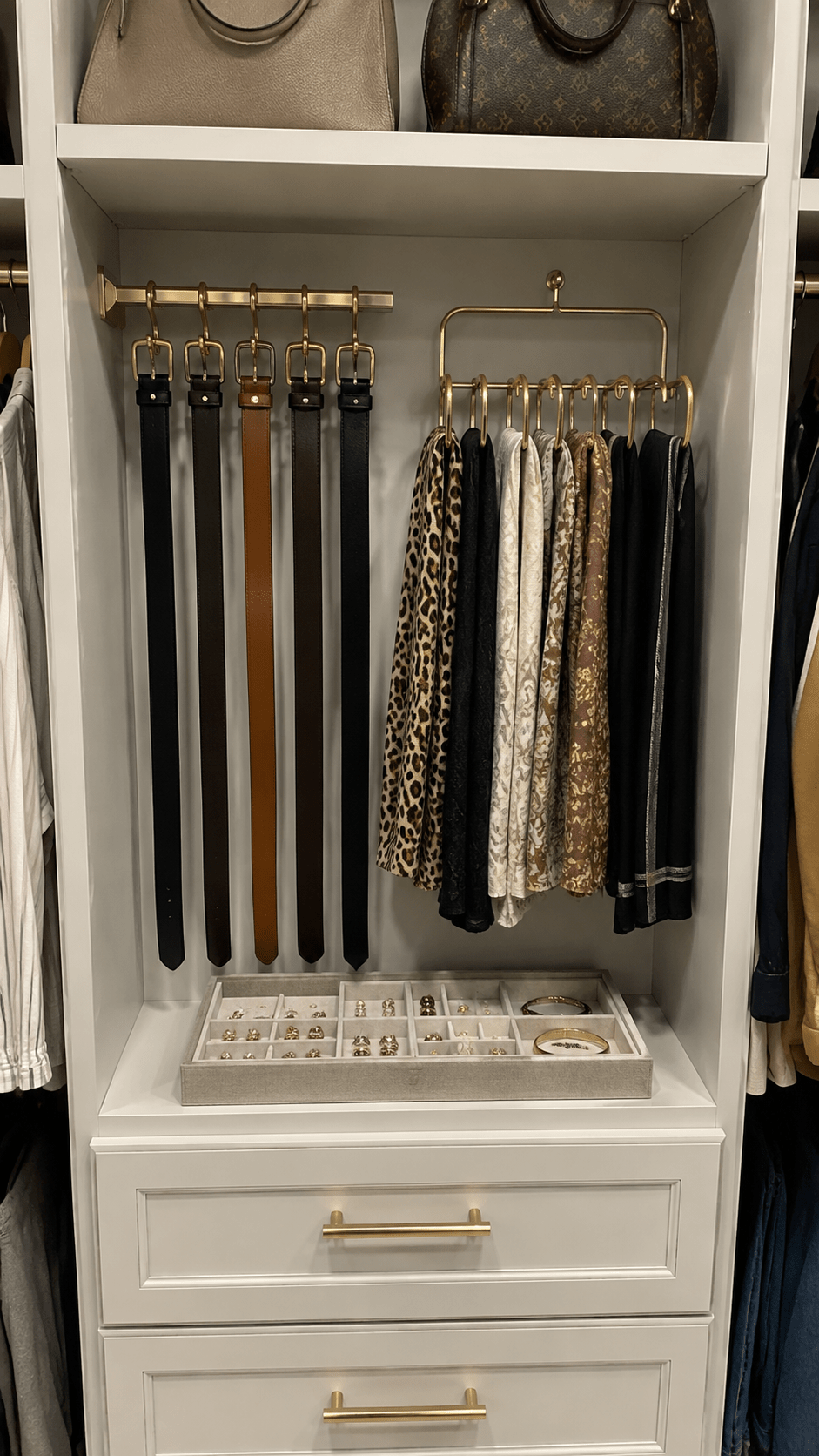
Build One Accessory Station
Picture getting dressed and finding the belt in four seconds. One section of wall or door does it: a belt rack, scarf rings on a single hanger, a small tray or hooks for daily jewelry. All of it together, at eye level, where outfits get finished. Scattered accessories cost minutes every morning and are the reason half of them never get worn.
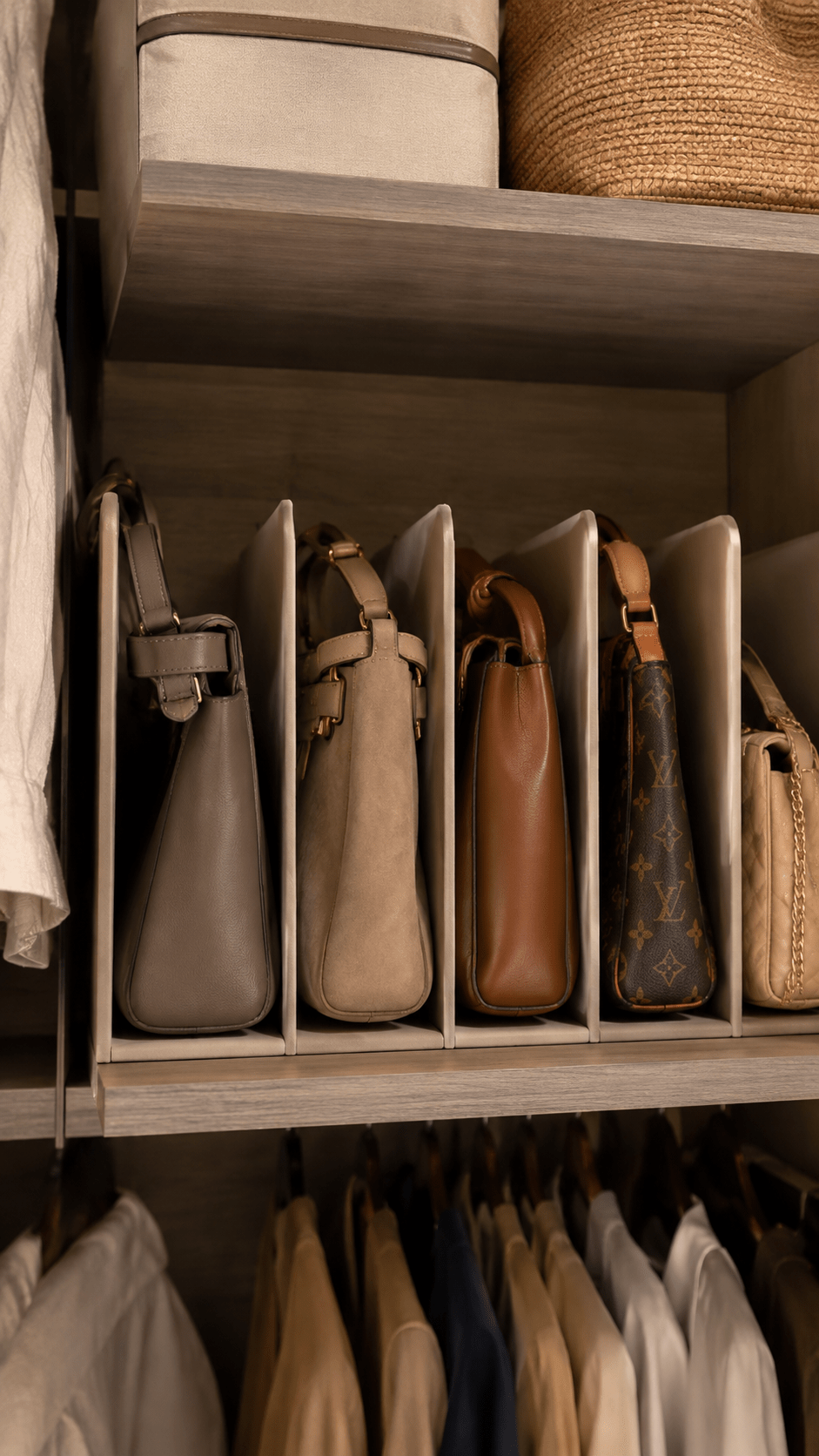
Store Bags Vertically
Stand handbags upright between shelf dividers, the way books stand between bookends. Stuff the structured ones with paper to hold shape. Dust bags for the special ones, top shelf. Everyday bag? It doesn’t live in the closet at all. It lives on the drop zone hook, coming next.
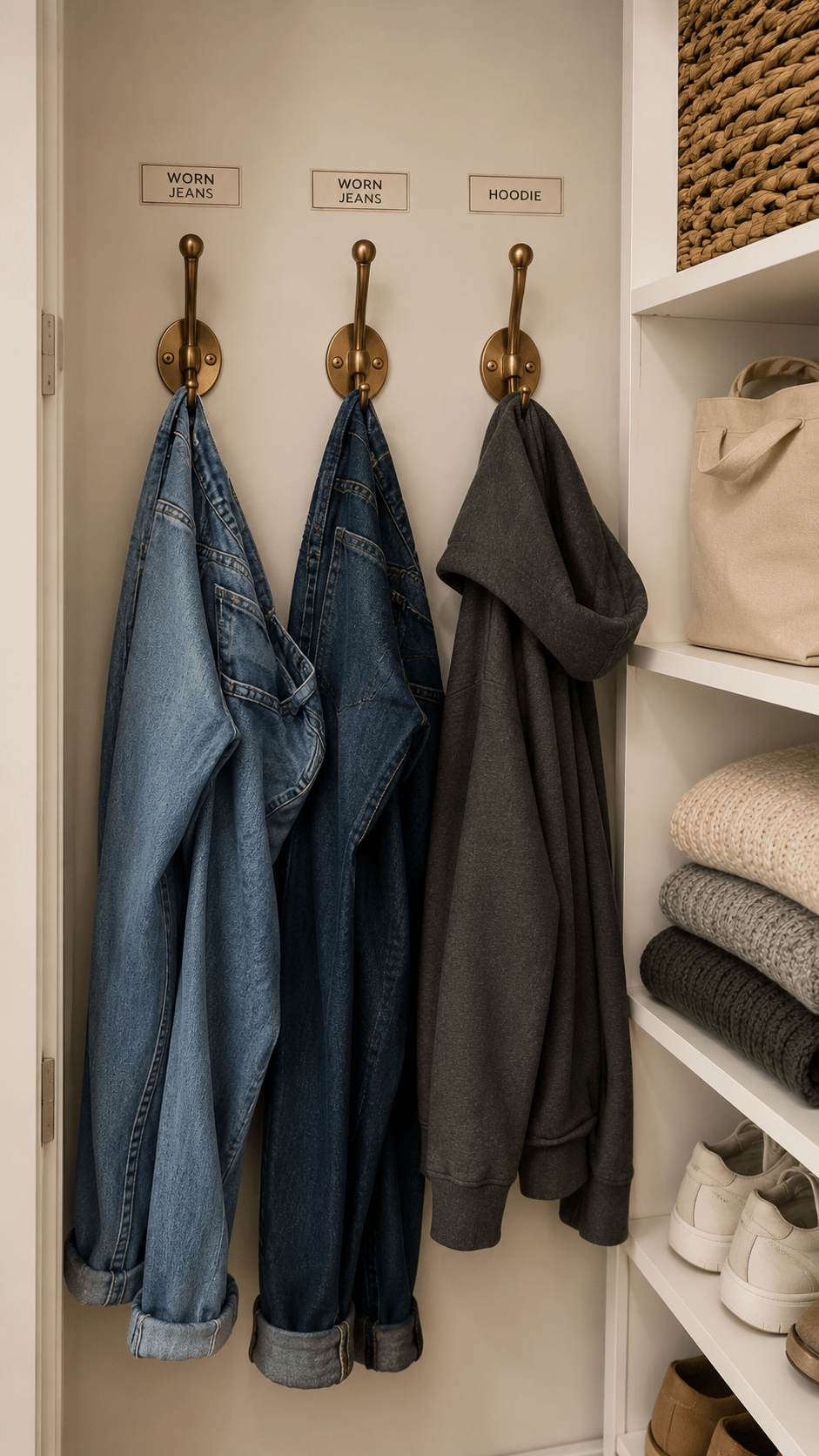
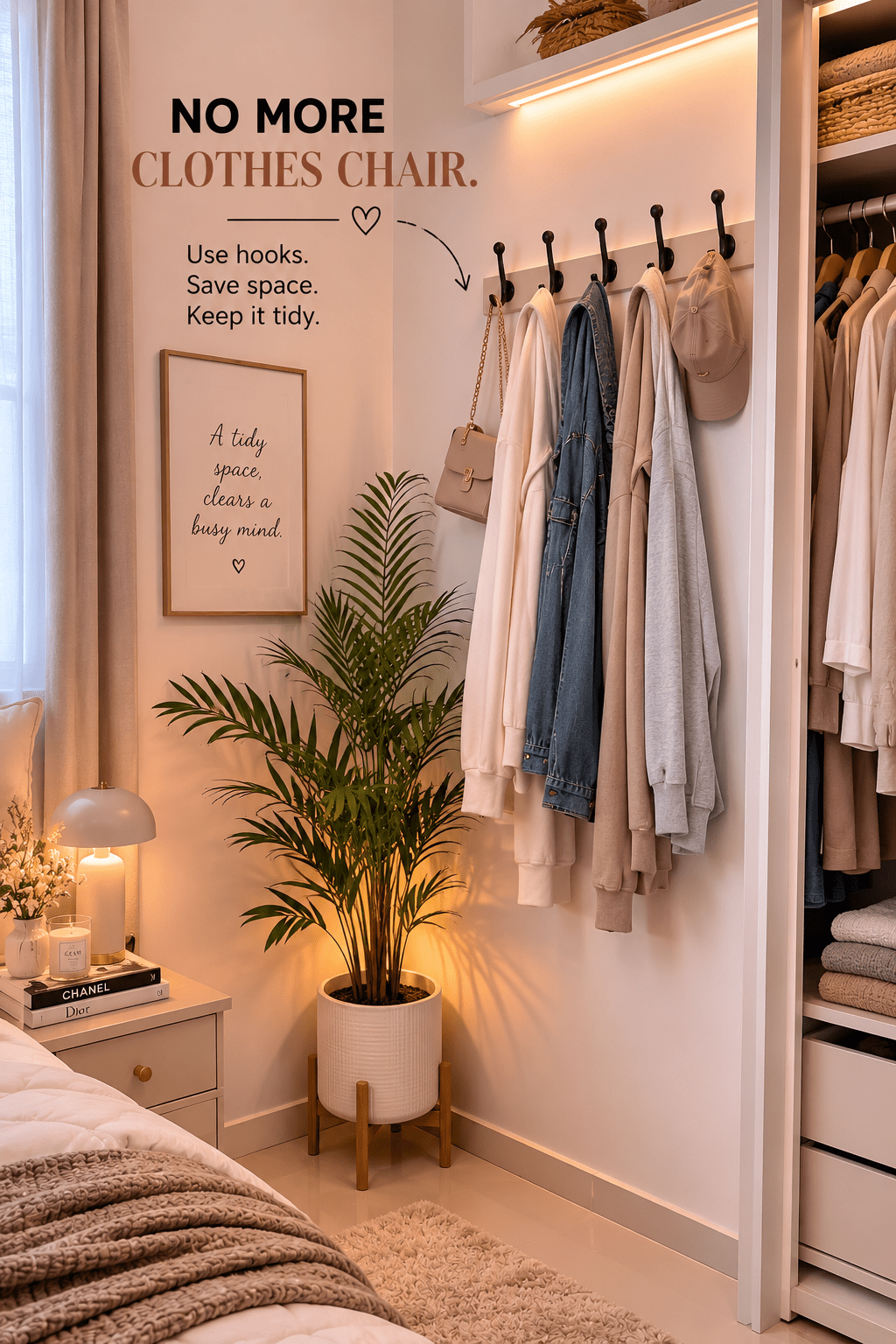
Create the Daily Drop Zone
The clothes you wore today and will wear again this week deserve a real home, not the floor and not the good rod. Two or three hooks inside the closet or on its side wall, maybe a small valet rail: that’s the daily zone.
Jeans from Tuesday hang there guilt-free. This one idea prevents more mess than any bin in this article, because it legalizes the behavior instead of fighting it.
Retire the Chair
And here it is. The chair exists because worn-but-clean clothes had no legitimate address; you built one in idea fifteen. Now move the chair out of the bedroom entirely for two weeks, or pile books on it so it can’t accept laundry. The habit needs about ten days to reroute to the hooks. The chair was never the problem. The missing category was.
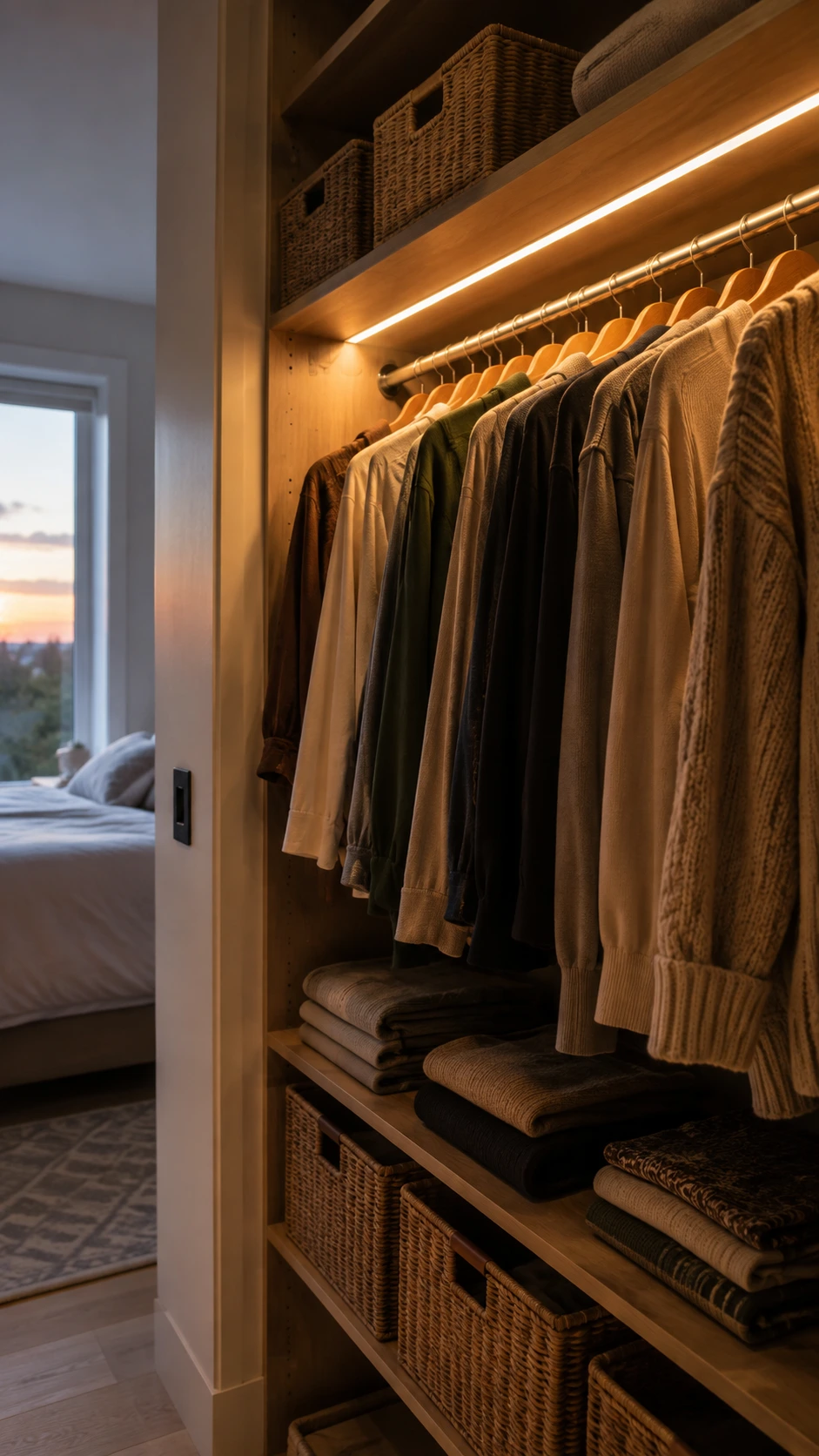
Light It Like You Mean To Use It
Most closets are lit by whatever bedroom light leaks in, which is why the navy and black trousers keep getting confused. A battery LED strip under the shelf, or a motion-sensor puck light, fixes it for under twenty euros. Stick-on, rechargeable, renter-proof. Morning-you will be grateful all winter.
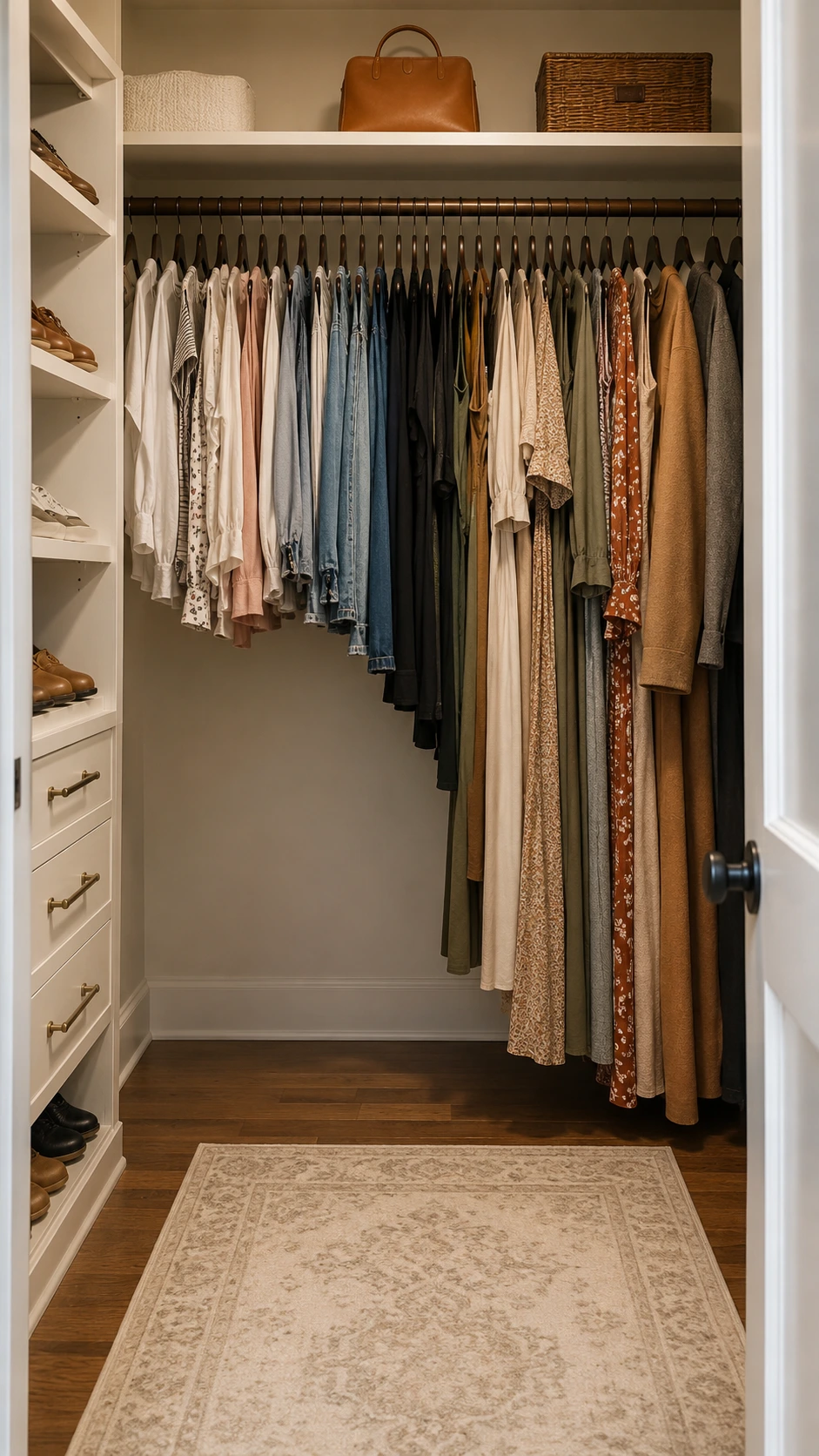
Hang in Order: Category, Then Short to Long
Shirts with shirts, trousers with trousers, dresses at the end. Within each category, short to long. The sloping hemline this creates opens a triangle of floor space under the short end, exactly where a shoe rack or laundry basket fits. Order also means the morning search happens in one zone instead of the whole rod.
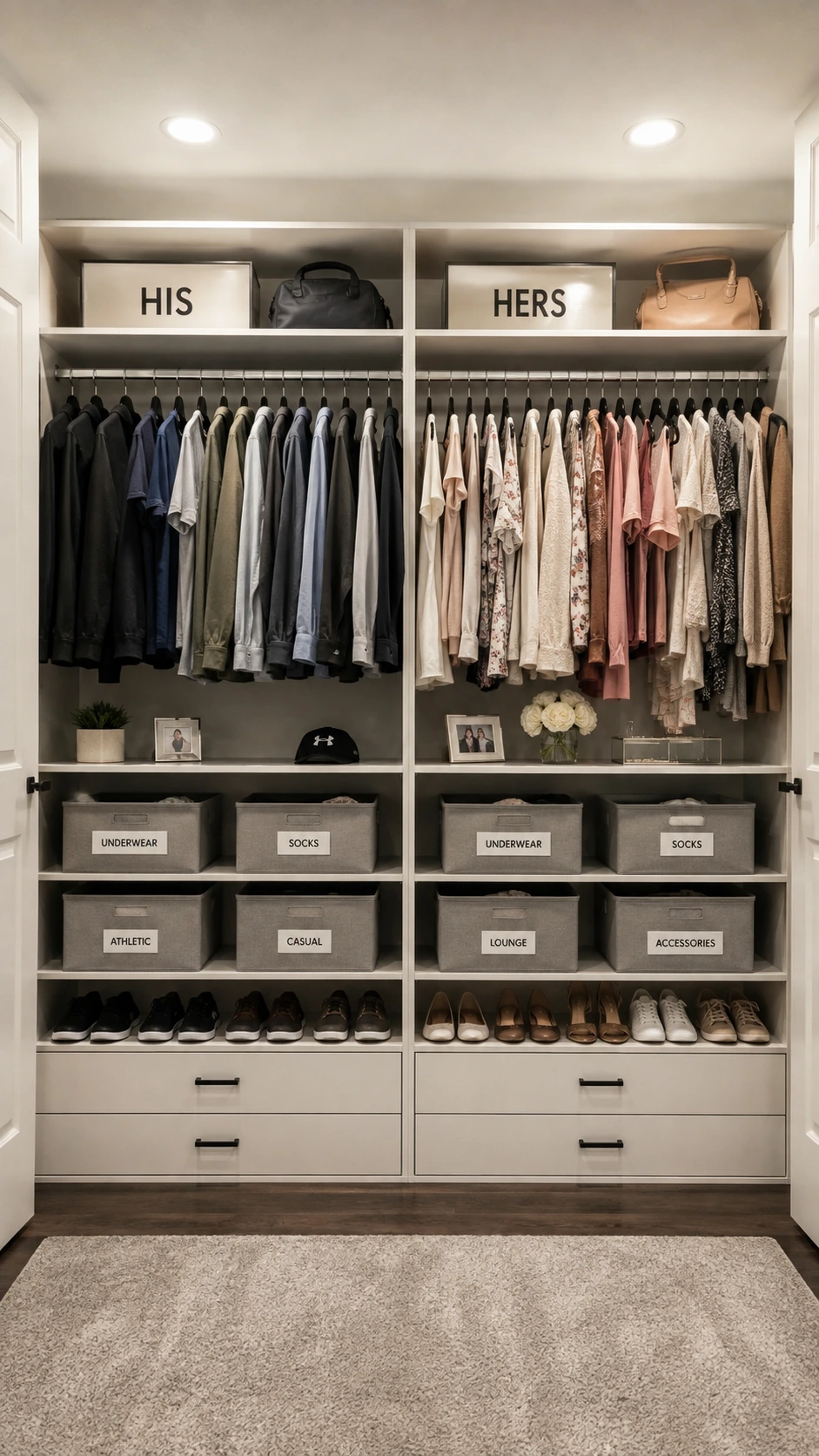
Label the Shared Closet
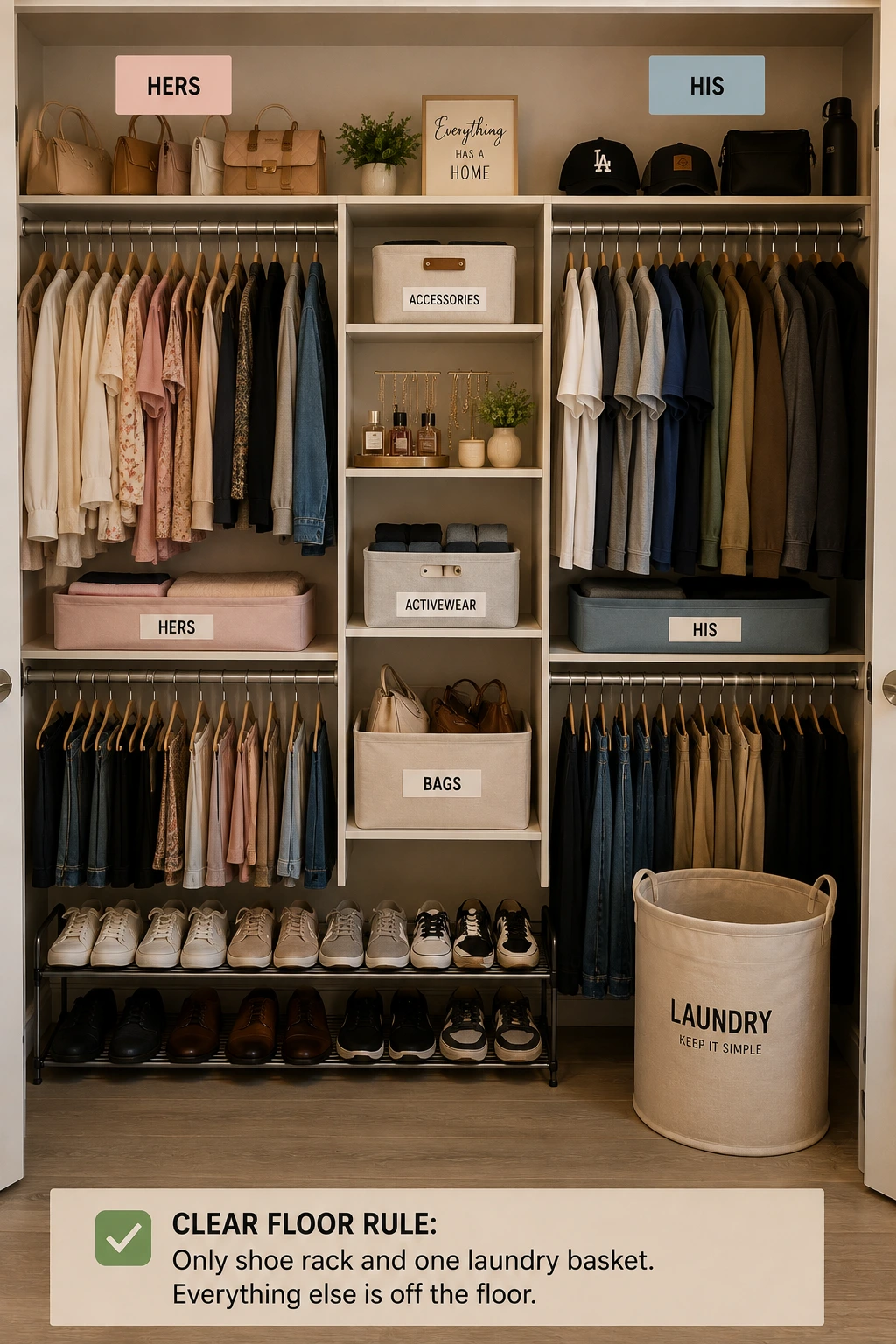
Two people, one closet? Draw the border and label the zones, including the shelf bins. His, hers, off-season, gym. Labels sound bureaucratic until the third argument about migrated hangers ends before it starts. For kids’ closets, picture labels work before reading does.
Keep the Floor Almost Empty
The closet floor holds exactly two things: the shoe solution and one laundry basket. Nothing else lands there, because floor piles are where organization goes to die, one dropped hoodie at a time. An empty floor also makes the whole closet read tidy even mid-week. It’s the visual trick that buys goodwill for the rest of the system.
Audit With the Flip, Quarterly
Remember the backward hangers from idea one? Keep the trick running forever. Every season-change weekend (idea nine already booked it), glance at what’s still flipped and let the hangers make the hard calls. Ten minutes a quarter is the entire maintenance bill for everything above. The closet stays organized because the system audits itself.
3 Mistakes That Undo Closet Organization
Organizing for your fantasy self. The gala dress for a life you don’t lead, the jeans from two sizes ago. Clothes for an imagined future crowd out the wardrobe you actually wear. Keep one small “maybe” bin with a six-month expiry, then let it go.
Keeping the wire hangers. Dry-cleaner wires crease shoulders, tangle constantly, and rust onto fabric over time. They’re free, and they’re worth exactly that.
Packing the rod tight. If garments need force to slide, they wrinkle on the hanger and you stop seeing what you own. A closet at 80 percent full works; at 100 percent it’s storage, not a wardrobe.
FAQs
How do I organize a bedroom closet with too many clothes?
Purge first with the hanger flip trick, move off-season items to lidded top-shelf bins, then double the usable space with slim uniform hangers and a second hanging rod. Most “too small” closets are actually unpurged and single-rod.
What is the hanger flip trick?
Turn all hangers backward, then flip each one forward as you wear and return that item. After six months, everything still backward is a proven non-wearer and a donation candidate. The method removes the guesswork and guilt from purging.
Is it better to hang clothes or fold them?
Hang woven items that wrinkle or hold a shape: shirts, dresses, blazers, creased trousers. Fold knits: sweaters, t-shirts, jeans, and gym wear, since hangers stretch them out of shape. Matching the method to the fabric frees space on both sides.
How can renters organize a closet without installing a system?
A hook-over second rod, slim velvet hangers, stacking drawers or a small dresser inside the closet, over-door organizers, and stick-on LED lighting together recreate most of a custom system’s function, with nothing drilled and everything reusable at the next apartment.
In what order should clothes hang in a closet?
Group by category (shirts, trousers, dresses), then arrange each group short to long. The sloping hem line frees a corner of floor space, and some people add light-to-dark color order within categories for faster morning searches.
Final Thoughts
A bedroom closet stays organized when the system matches the person: hooks for the in-between clothes, bins for the off-season, hangers that report what you really wear. Flip the hangers tonight. In six months the closet will tell you exactly what it wants to be, the same way a well-planned small bedroom tells you where the furniture belongs.
