
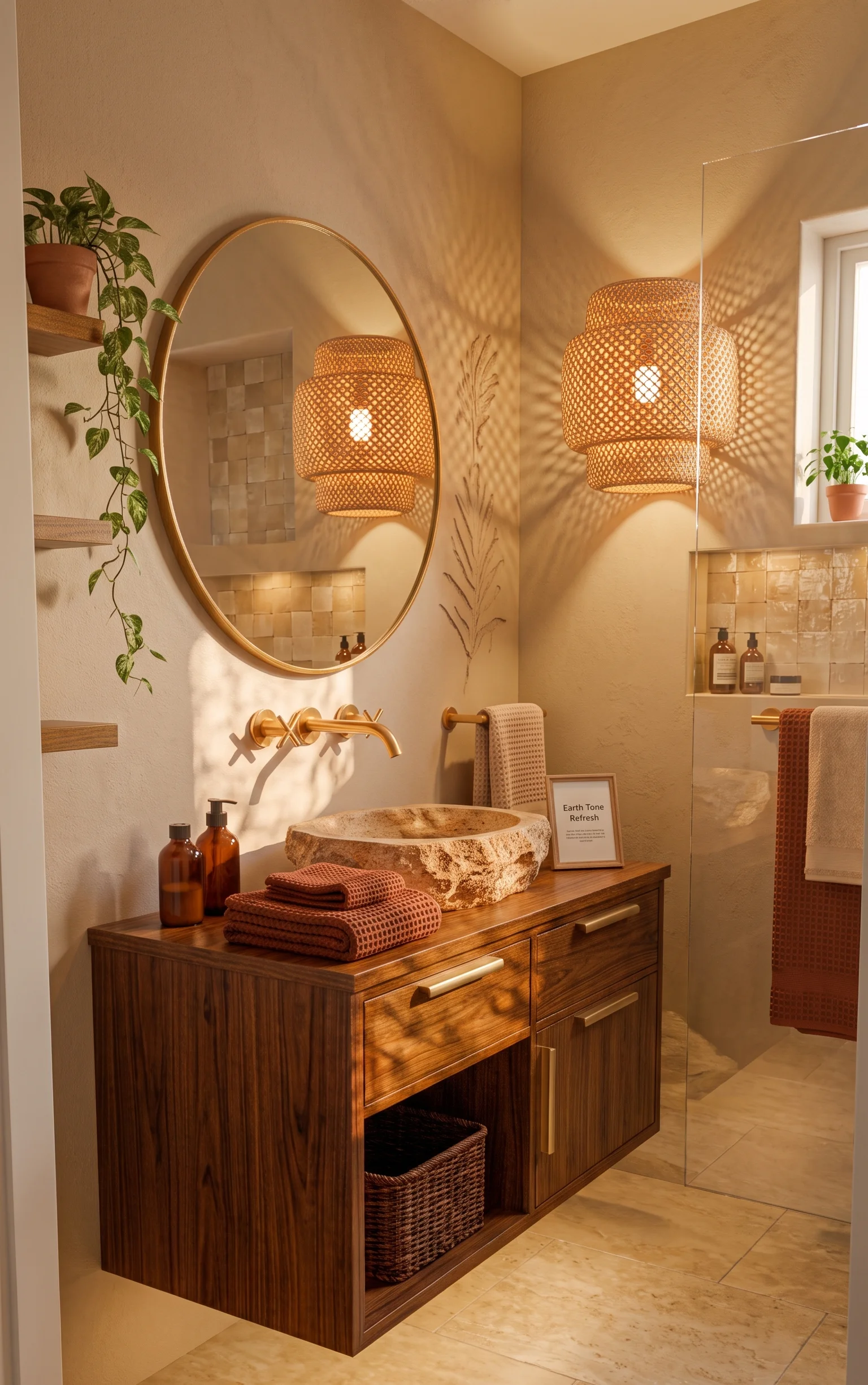
White bathrooms photograph beautifully. They also show every water spot, every smudge, and every bit of soap residue the moment a guest walks in.
Earth tones don’t do that. A terracotta wall, a sandy beige tile, a warm mushroom brown vanity: these shades absorb the messiness of daily life rather than putting it on display. That’s part of why the shift away from stark white bathrooms has felt less like a trend and more like a collective sigh of relief.
The other reason is simpler. A bathroom finished in warm, natural tones just feels different to be in. Not staged. Not clinical. More like somewhere you’d actually want to spend ten minutes before leaving for work, or twenty minutes at the end of the day.
Here’s what that actually looks like across nineteen real design approaches: the colors, the materials the fixtures, and the things nobody tells you until after the tiles are already installed.
Color Palette Ideas
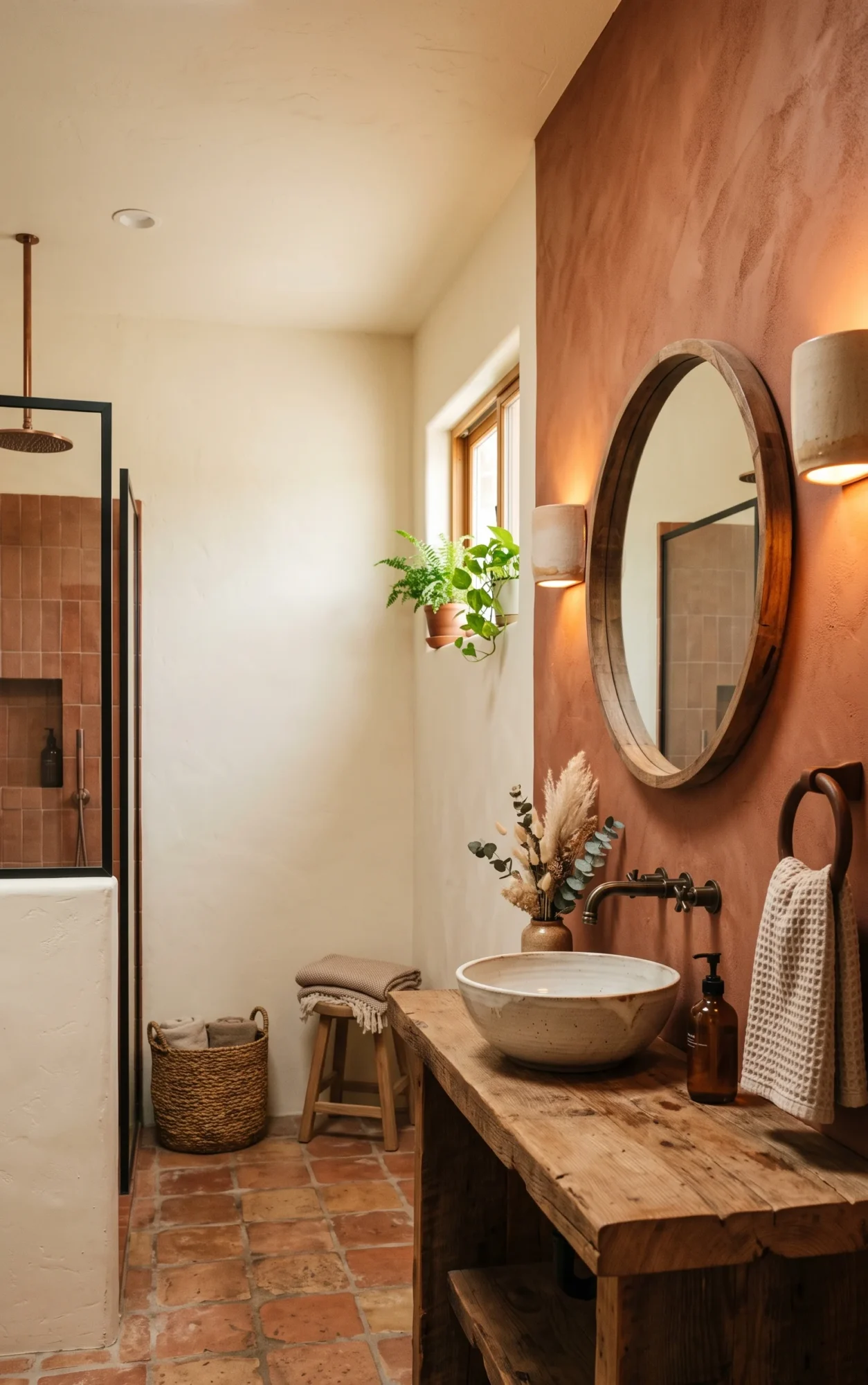
Terracotta and Cream Walls
Terracotta is the color that started this whole conversation in modern bathroom design, and it earns its place. It brings a sun-baked, clay warmth that reads as cozy rather than dated when it’s kept away from orange-heavy companion shades. Paired with a creamy off-white on the remaining walls, it avoids the visual fatigue of a fully terracotta room while still making a clear color statement.
For paint, look for terracotta shades with a slightly muted, brownish undertone rather than a bright orange one. The muted versions age better under shifting light throughout the day. A clay tile floor in a similar warm register ties the two wall colors together without matching them exactly.
Mushroom Brown and Brushed Brass
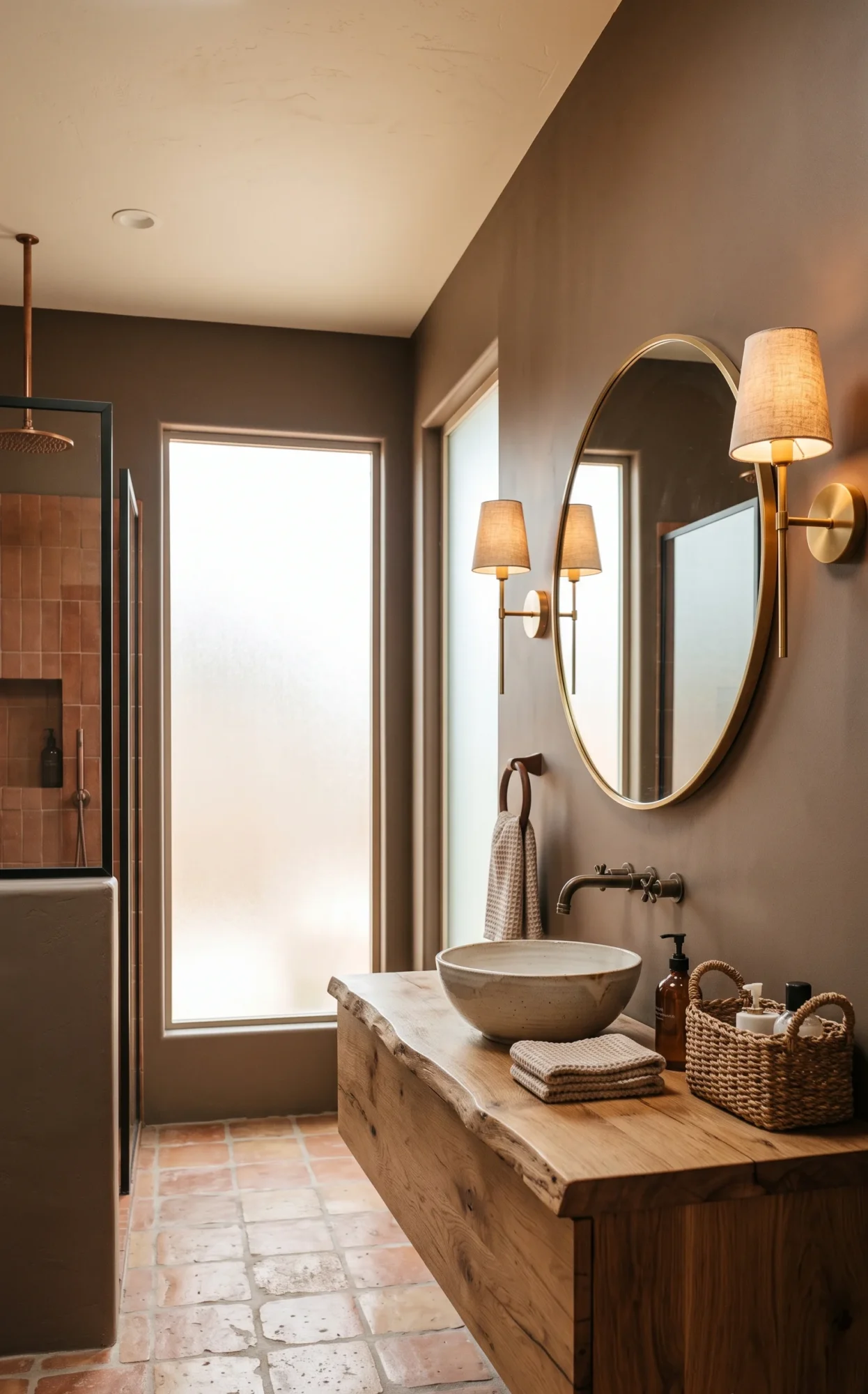
Mushroom brown is quieter than terracotta but arguably more versatile: it has a warm, slightly greyed quality that reads as sophisticated rather than earthy in the obvious sense. Against brushed brass fixtures, it comes alive in a way that feels current without being trendy.
This palette works especially well in primary bathrooms with natural light. The brass catches the morning light and gives the warm brown tones something to play against. For walls, look for shades with a beige-pink undertone rather than a grey-green one, since the brass will pull towards warmth.
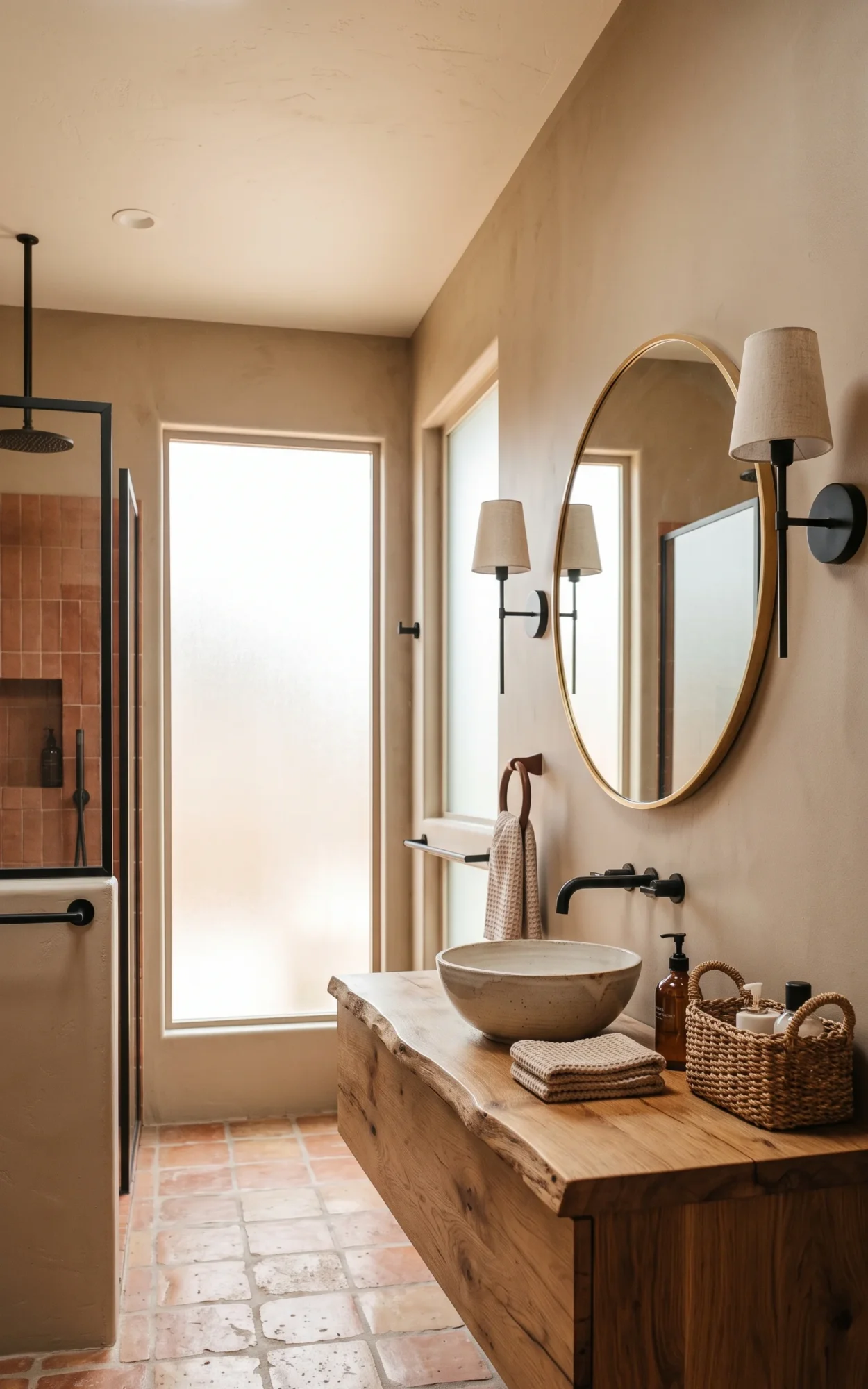
Sandy Beige and Matte Black Edge
Sandy beige on its own can drift toward bland. The fix is a deliberate contrast, and matte black hardware is the cleanest way to get there. Matte black bathroom fixtures, faucets, towel bars, showerhead, give a sandy beige palette enough edge to read as intentional rather than builder-grade.
This is the “desert modern” approach that has been gaining traction in warmer climates. Keep the beige consistent across walls and large tile surfaces, then let the matte black do the defining work through fixtures alone. The result is a warm neutral bathroom that feels considered without requiring bold color decisions.
Olive Green Vanity With Warm Wood
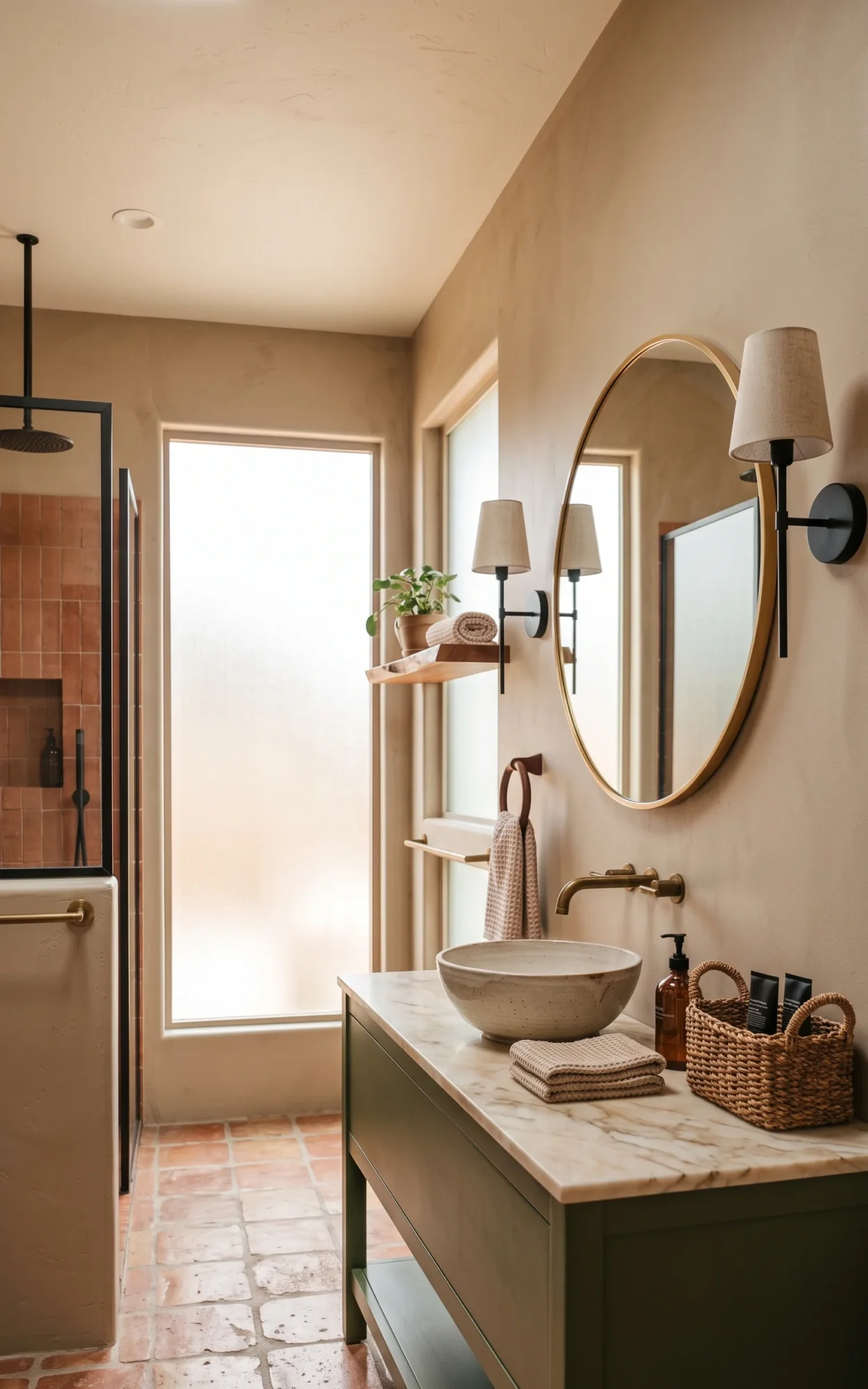
A deep olive green vanity is one of the braver earth tone choices because it asks the rest of the bathroom to stay quiet. Warm wood tones on open shelving or a floating shelf above the toilet answer that request naturally, since they share the same underlying warmth as the olive without competing in saturation.
The organic modern bathroom approach works well here: keep countertops in a light stone or cream marble, use brushed brass or unlacquered brass fixtures, and let the vanity be the clear focal point. Against warm white or cream walls, olive green reads as grounded and sophisticated rather than heavy.
Layered Clay and Sage Palette
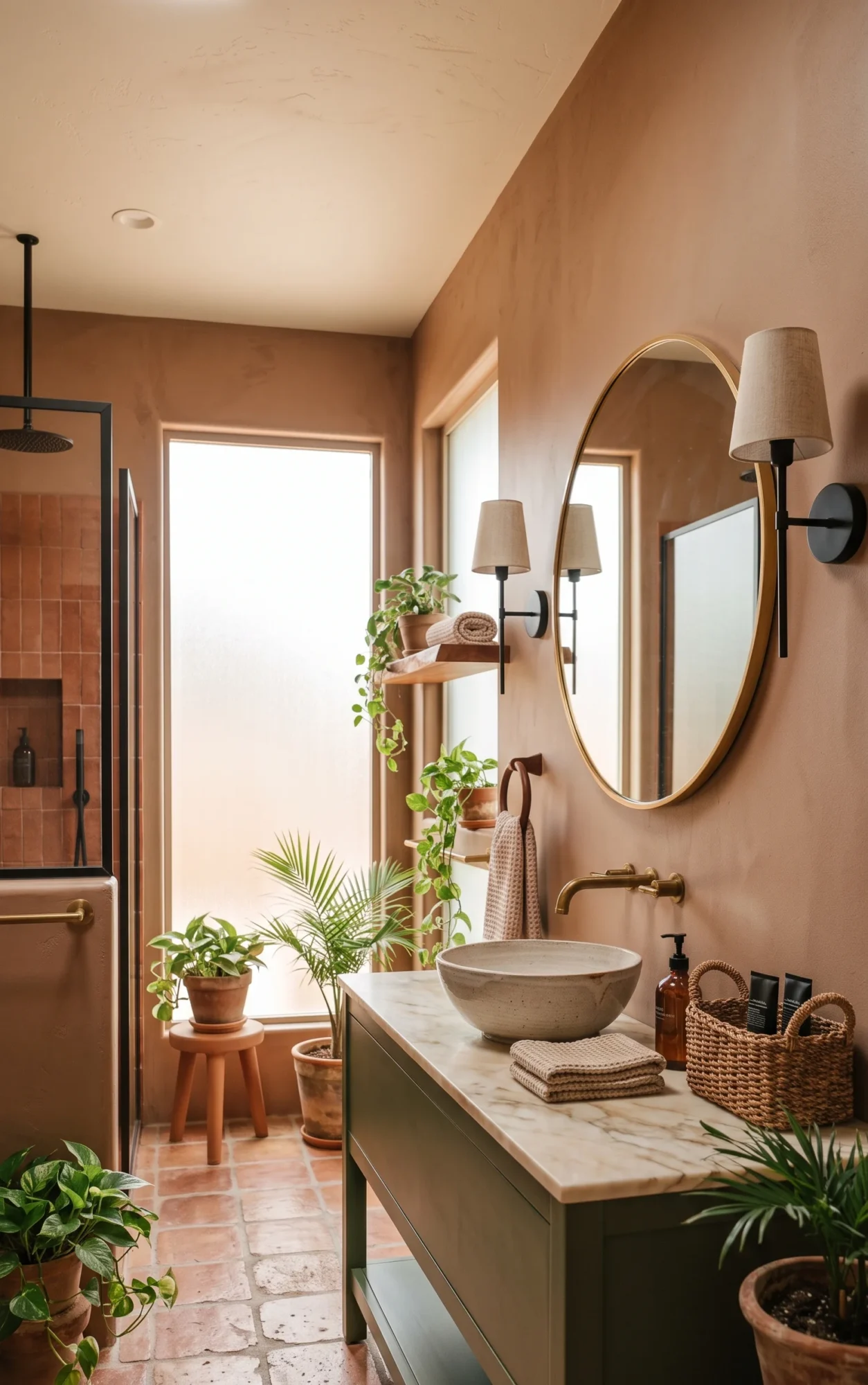
Rather than anchoring the whole room in one earth tone, a layered dual-palette approach uses clay as the dominant base walls, large floor tile and sage green as a secondary note through a painted vanity, towels, or plant pots. The two tones share the same muted, dusty quality, which makes them sit naturally together without competing.
This is the biophilic bathroom design principle applied directly to color: two nature-inspired tones that would coexist in a landscape, brought indoors as a coordinated palette. The result feels more collected than a single-color room and more cohesive than a multi-tone one.
Tile and Surface Ideas
Zellige-Inspired Tile
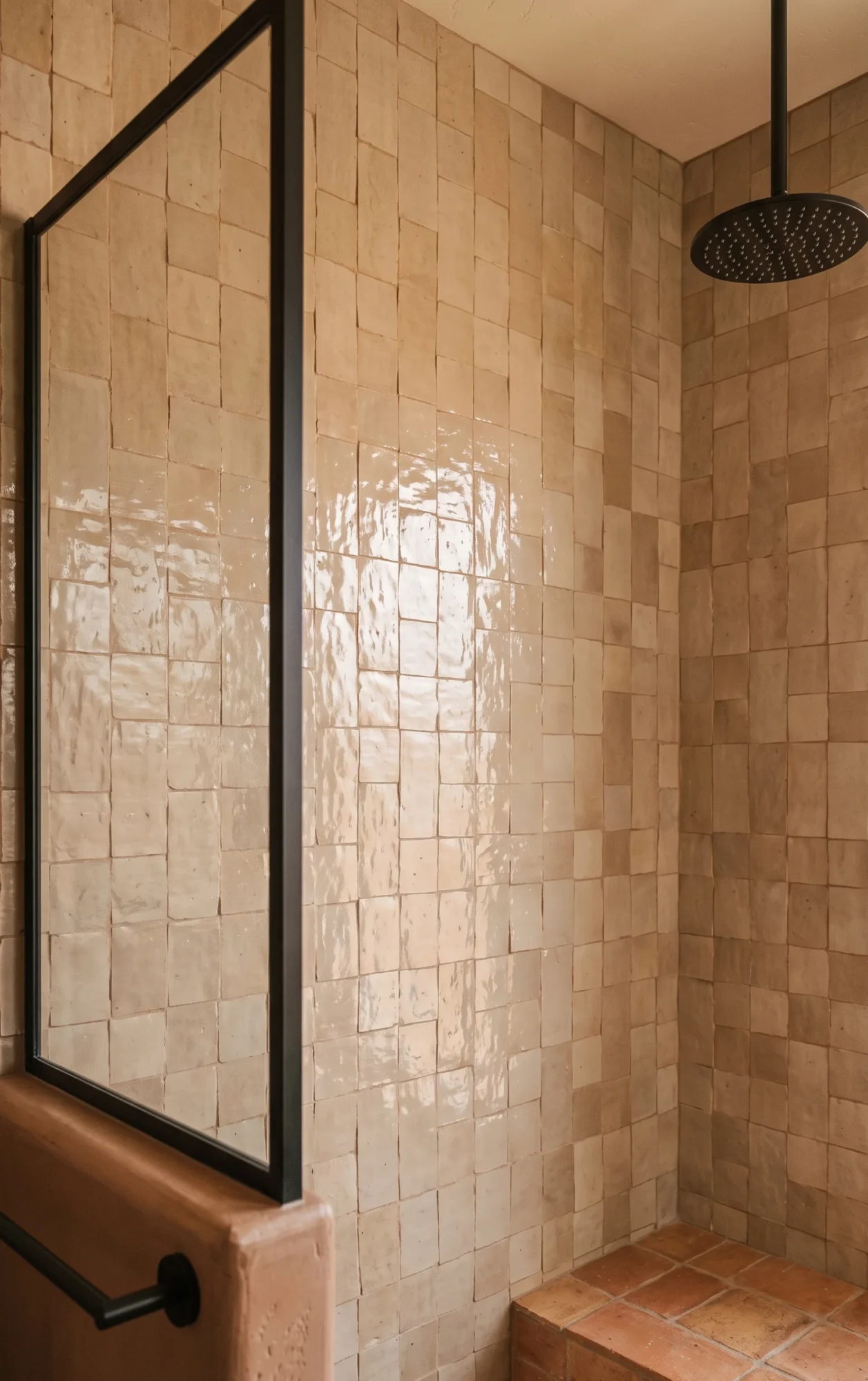
Zellige is a traditional Moroccan handmade tile with an intentionally uneven, slightly rippled glaze surface. No two tiles are identical: the variation in glaze colour, and reflectivity is the point. In a bathroom, Zellige or Zellige-inspired tile on shower walls or behind a vanity catches light differently at different times of day, creating a quiet movement that flat tile can’t replicate.
The earth tone versions, warm beiges, sandy taupes, soft terracottas, are the ones that have shown up most consistently in 2026 bathroom design. They add an artisanal, handcrafted quality that porcelain can rarely match, and their matte-to-semi-gloss finish handles bathroom moisture without requiring aggressive sealing.
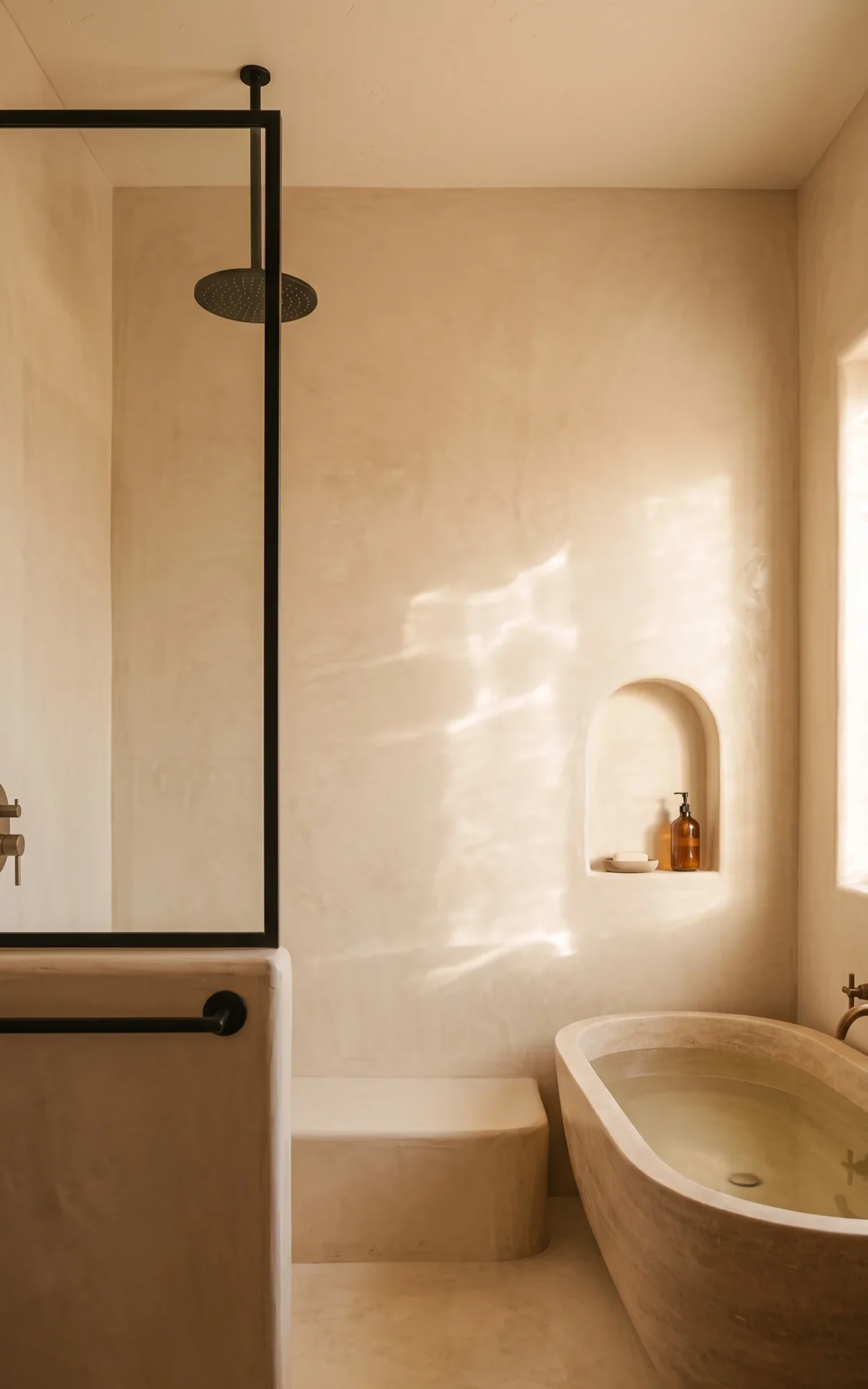
Tadelakt Plaster Walls
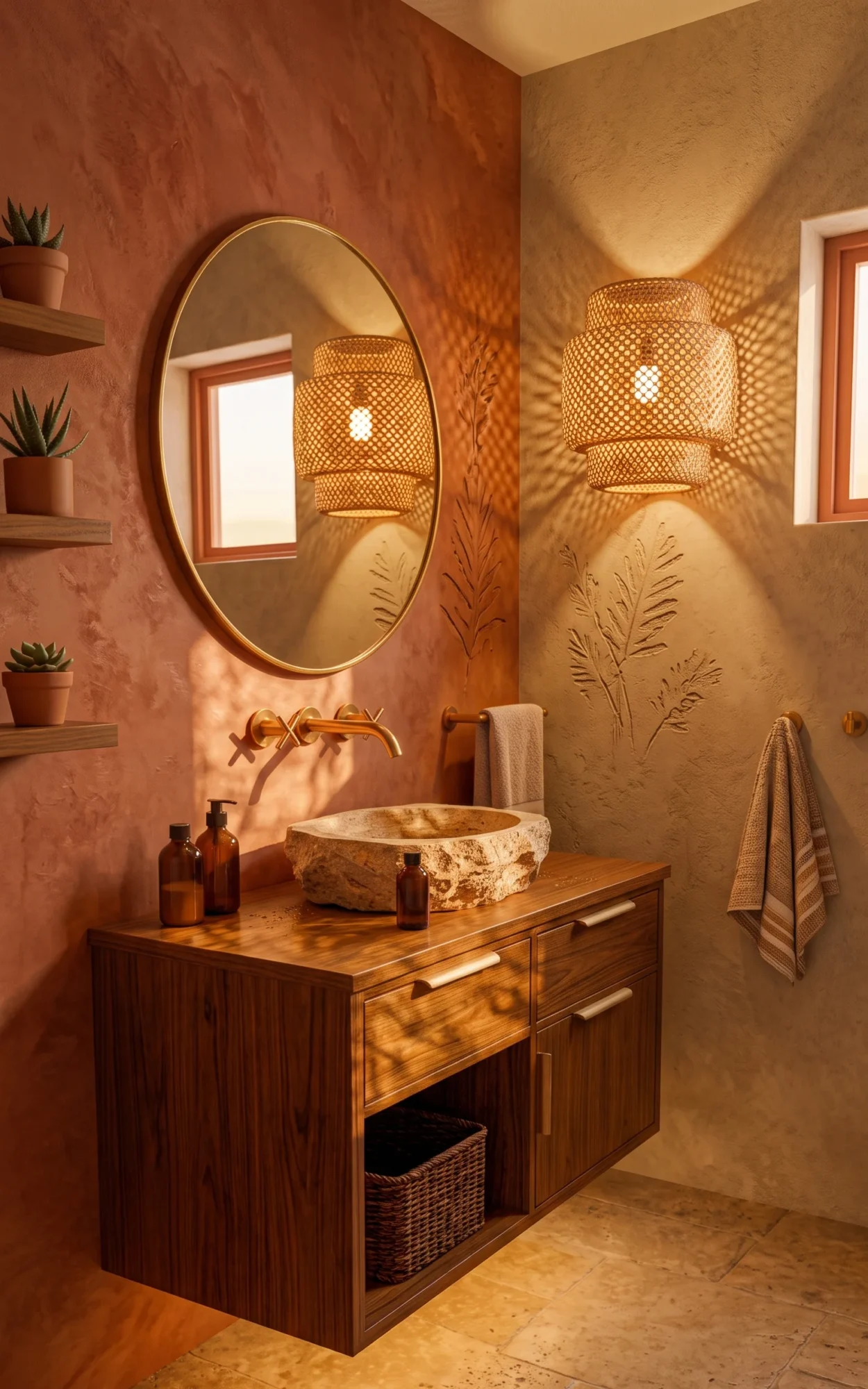
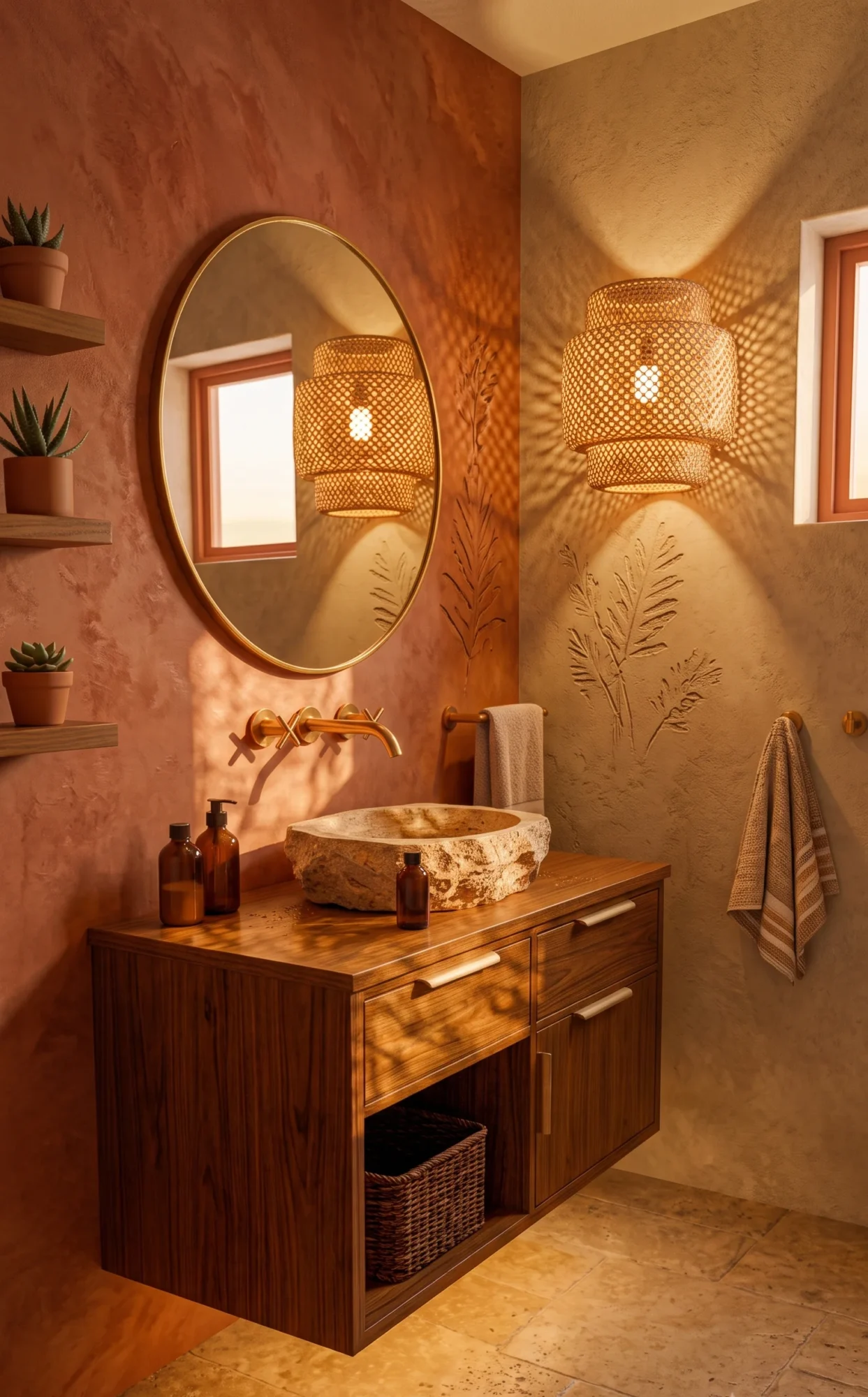
Tadelakt is an ancient Moroccan lime plaster technique that is naturally waterproof once polished with olive oil soap. It creates a seamless, smooth wall surface with a subtle sheen: no grout lines no visible tile edges, just a continuous, softly textured surface. In a bathroom, this eliminates the grout-cleaning problem entirely.
For earth tone bathrooms, Tadelakt in soft tan, dusty rose, or warm cream brings a tactile warmth that tile simply can’t match. It works in showers, around soaking tubs, or as a full accent wall. The practical reality: Tadelakt application requires a skilled artisan and carries a higher cost than standard tile work. It is not a DIY project. But for a spa-like bathroom that prioritizes both aesthetics and moisture resistance, it is worth understanding as an option.
Travertine-Look Porcelain Tile
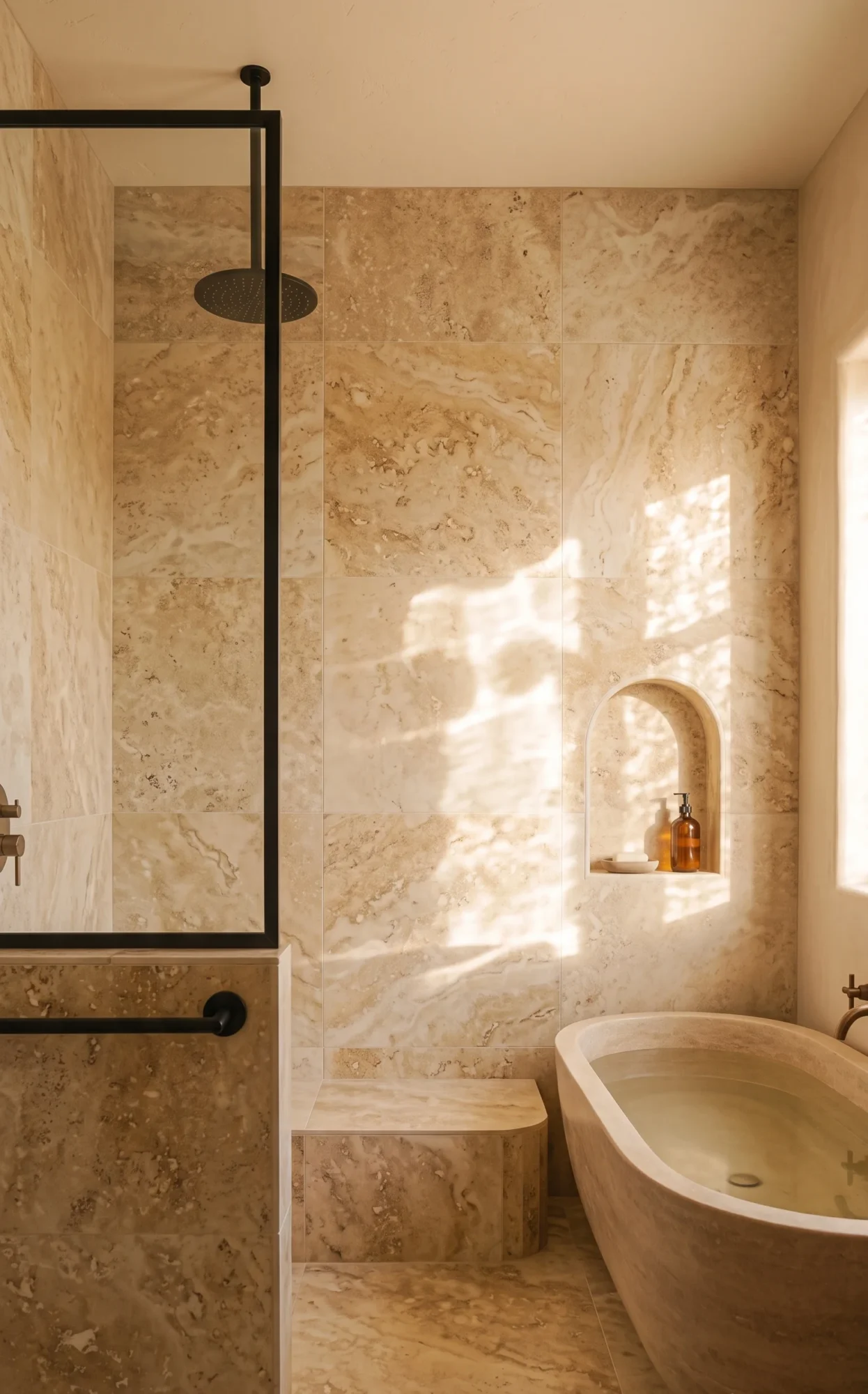
Natural travertine has a warm honey and cream tone with soft, organic movement in the veining. It’s one of the most beautiful stone options for bathroom floors and shower walls. It also requires regular sealing, is porous enough to stain, and can be costly.
Travertine-look porcelain solves all three problems. Modern large-format porcelain tiles that replicate travertine are now indistinguishable from the real thing at normal viewing distance, while being non-porous, easier to maintain, and available at a fraction of the cost. For a warm neutral bathroom on a renovation budget, this is one of the most practical choices available.
Terracotta Floor Tile
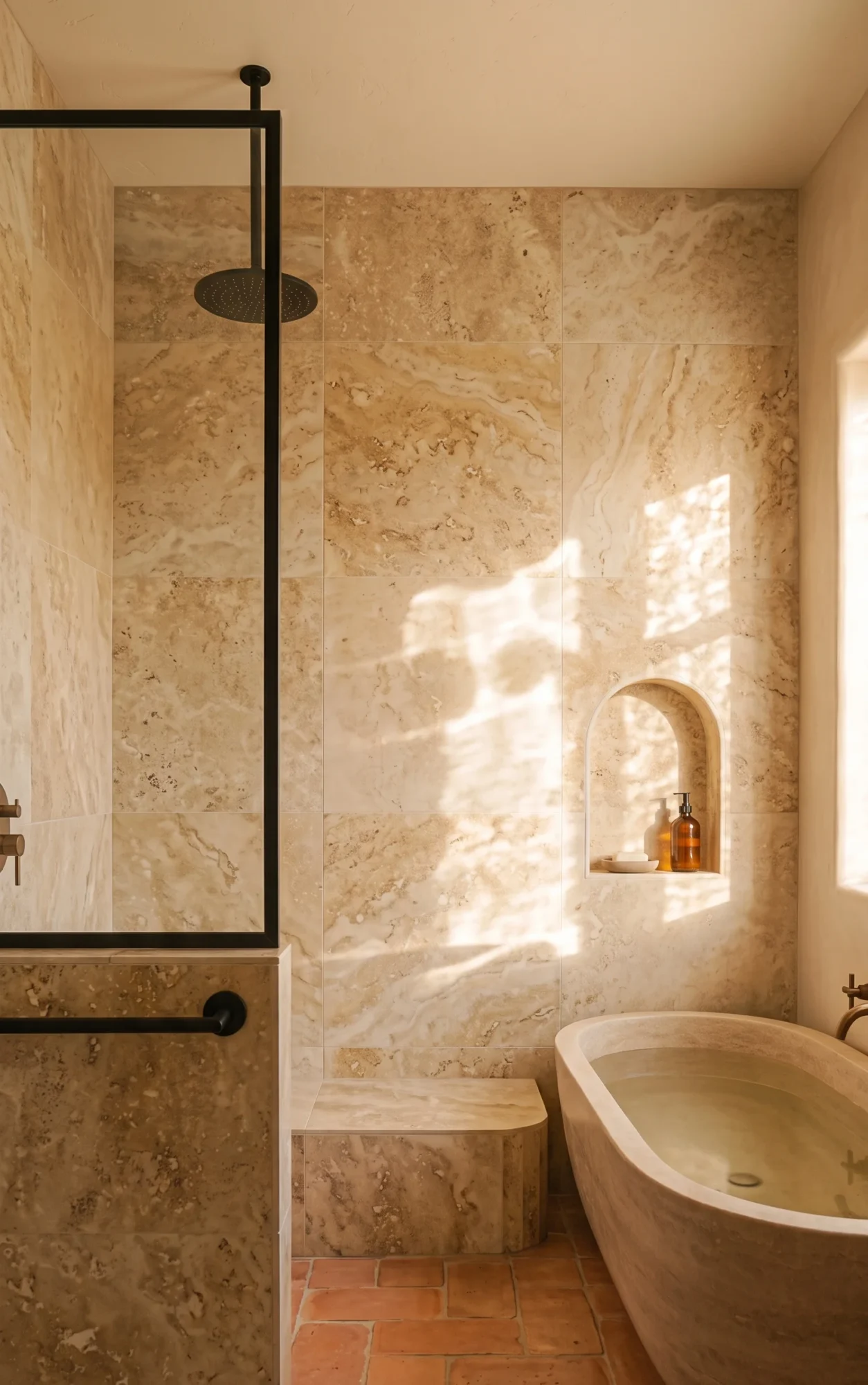
Terracotta floor tile brings the sun-baked warmth of Mediterranean and Southwestern interiors directly into the bathroom. The unglazed version has a matte, clay-rich finish that feels warm underfoot — almost the opposite of cold polished stone. It also pairs with nearly every other earth tone surface, since its warm orange-red-brown range bridges both the brown and red sides of the earthy palette.
One thing nobody mentions upfront: unglazed terracotta tile must be sealed before installation and resealed periodically, since it is porous and will absorb water and stain without protection. Glazed terracotta is lower-maintenance but loses some of the raw, clay-like quality that makes the material so appealing. Ask your tile supplier specifically about sealing requirements before committing.
Vanity and Fixture Ideas
Sealed Wood Vanity: What Nobody Tells You
Natural wood vanities are one of the most popular elements in organic modern bathroom design right now, and for good reason: the grain, warmth, and texture they bring is impossible to fake convincingly with painted MDF. But wood and bathroom humidity are genuinely at odds, and most articles skip over this completely.
The key is how the wood is finished. A properly sealed wood vanity either factory-finished with a waterproof lacquer or site-sealed with marine-grade polyurethane can handle daily bathroom moisture without warping, swelling, or developing mold behind the doors. A wood vanity that is only lightly oiled or waxed will not hold up the same way. When shopping, ask specifically whether the finish is waterproof or water-resistant, since the difference matters significantly in a high-humidity environment.
Teak and oak are the most moisture-tolerant species used in bathroom vanities. Teak in particular has a naturally high oil content that resists moisture absorption even with lighter finishing.
Hardware Finish Guide for Earth Tone Bathrooms
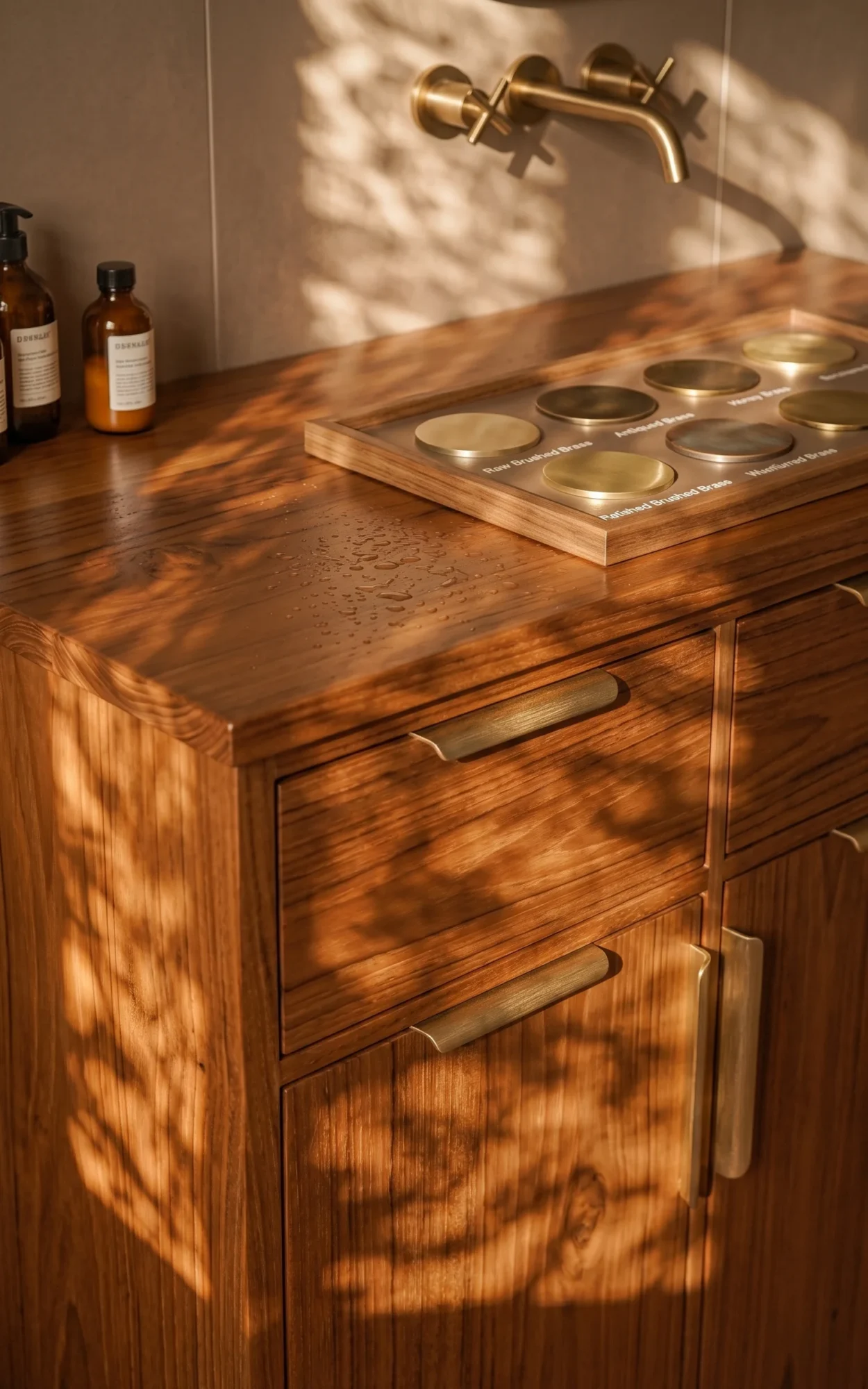
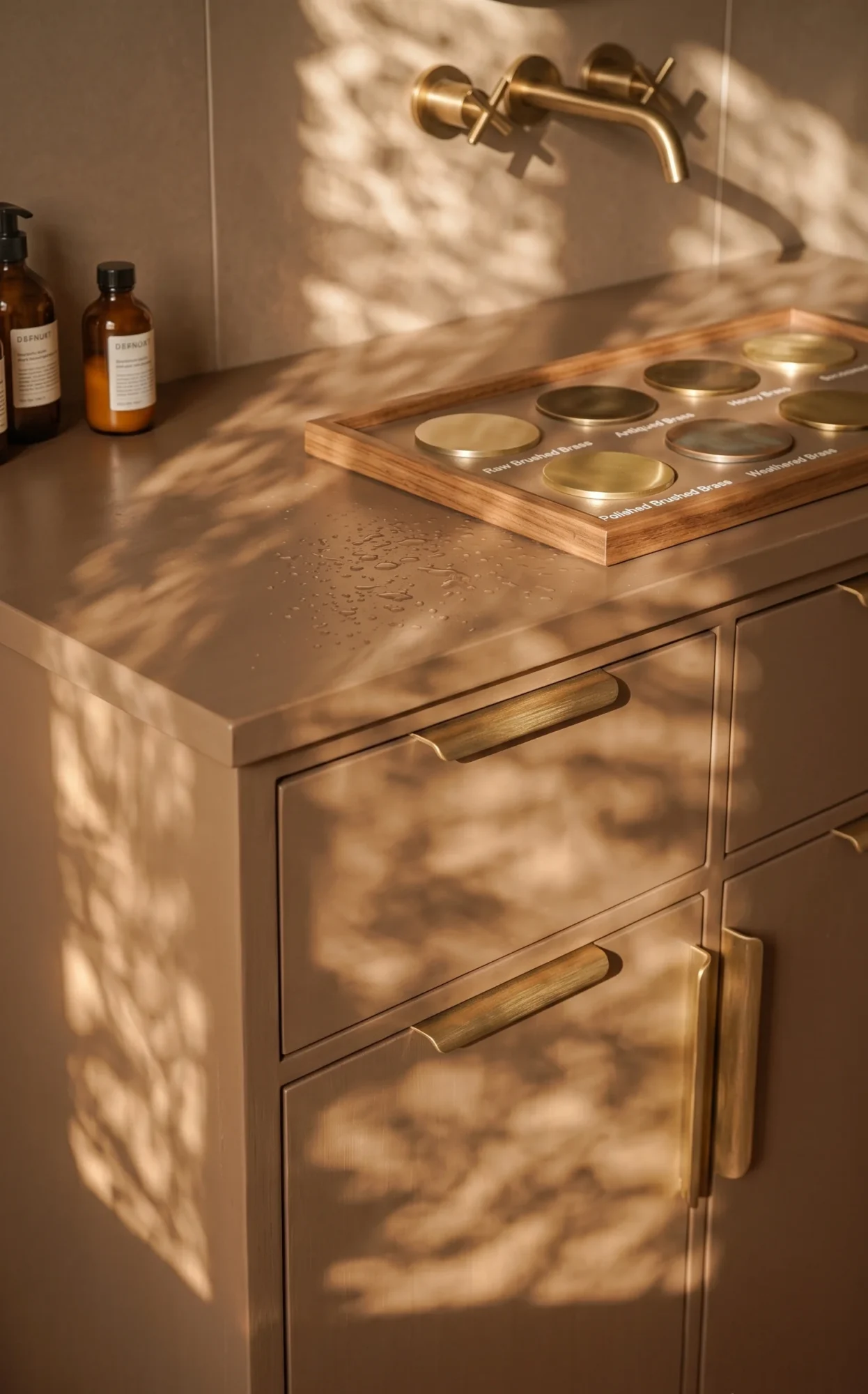
The metal finish you choose for faucets, towel bars, and cabinet pulls changes the temperature of the whole bathroom. Most articles show one or two options without explaining the logic. Here’s a practical breakdown:
Brushed brass or satin brass works with almost every earth tone palette: terracotta, mushroom brown, clay, sandy beige. The warm golden tone adds richness without going bright or flashy. It’s the most forgiving choice for a first earth tone bathroom.
Unlacquered brass develops a natural patina over time, aging from bright gold to a warm, slightly darker tone. Beautiful in the right room, but requires acceptance that it will change appearance over months and years.
Champagne bronze is slightly warmer and less yellow than standard brass, sitting closer to a rose-gold in some light. Pairs well with mushroom brown and sandy beige. Less successful with terracotta where the similar warm undertone can create a muddy overlap.
Matte black is the contrast choice: it works against sandy beige cream, and warm white because the contrast creates definition. Against darker earth tones like terracotta or olive, matte black can feel heavy rather than grounded.
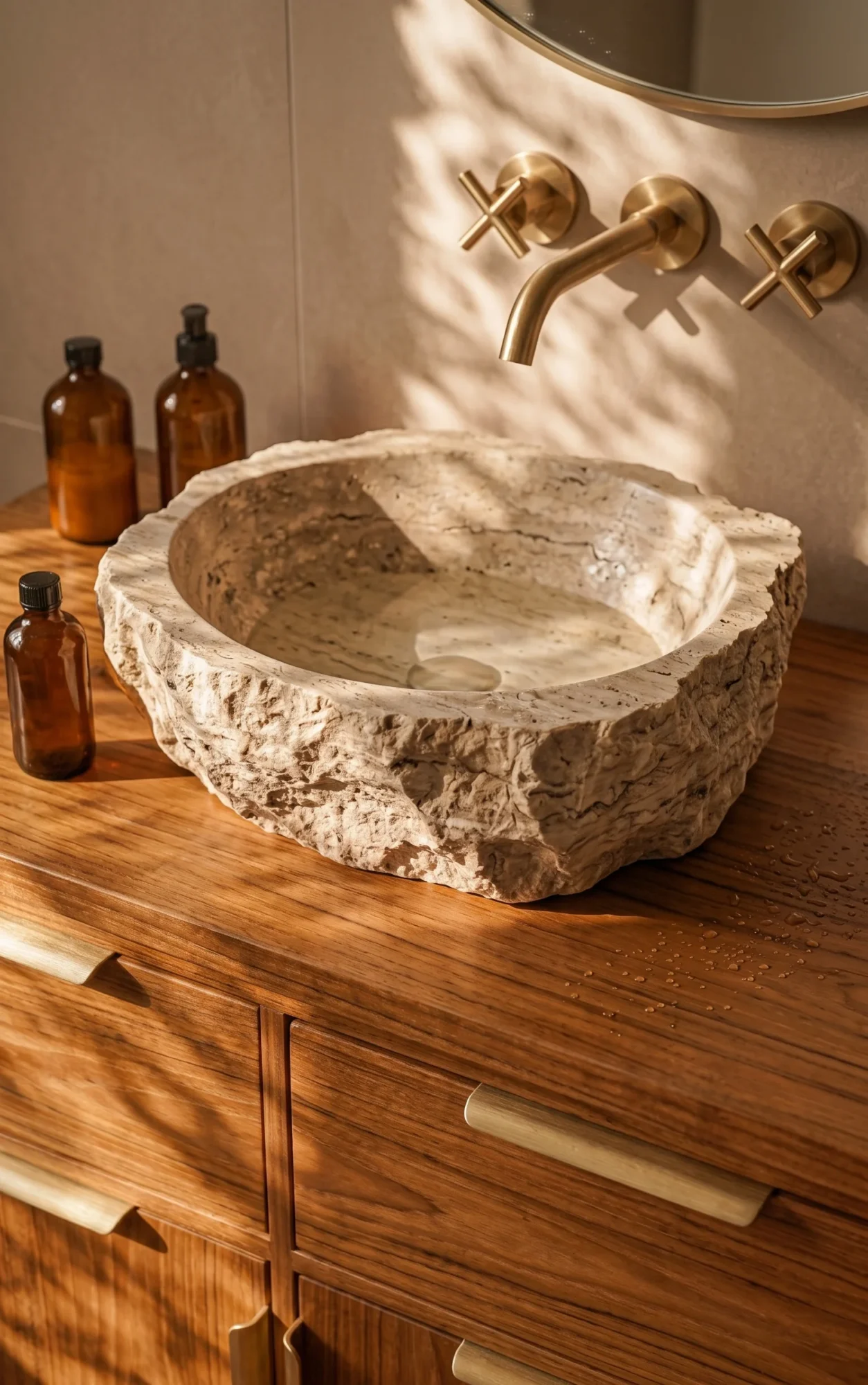
Stone Vessel Sink
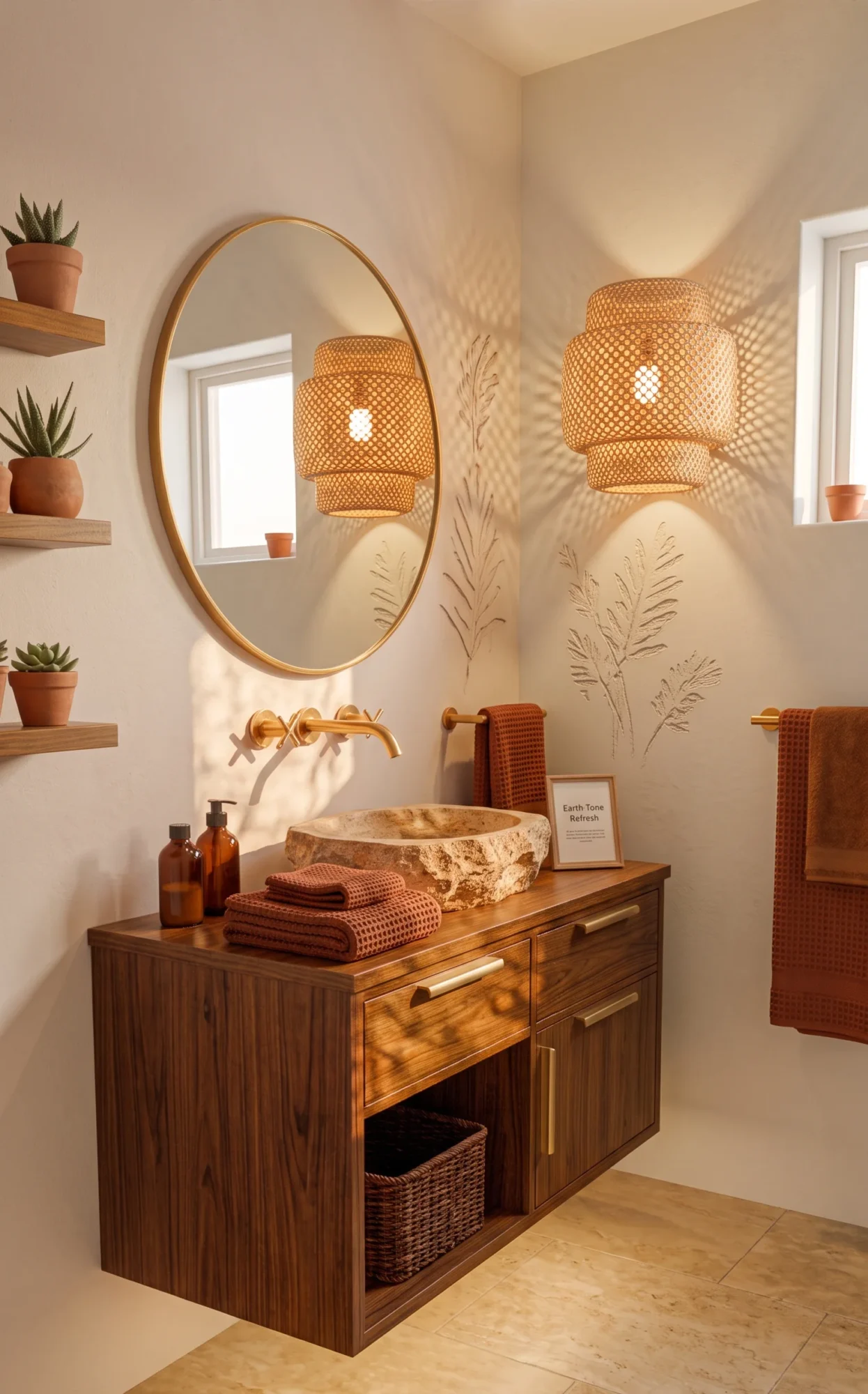
A stone vessel sink, carved from travertine, marble, limestone, or basalt, sits above the counter surface rather than being recessed into it. The visual effect is immediate: it reads as a sculptural object rather than a utilitarian fixture, which is exactly the goal in a nature-inspired bathroom.
One practical consideration nobody mentions: stone vessel sinks are heavy. A standard countertop may not support the weight without additional reinforcement. Before ordering, confirm with your contractor whether the vanity and counter surface can handle the load. Also, vessel sinks sit higher than standard undermount sinks. The faucet needs to be tall enough to clear the rim, which limits fixture choices.
Lighting and Atmosphere
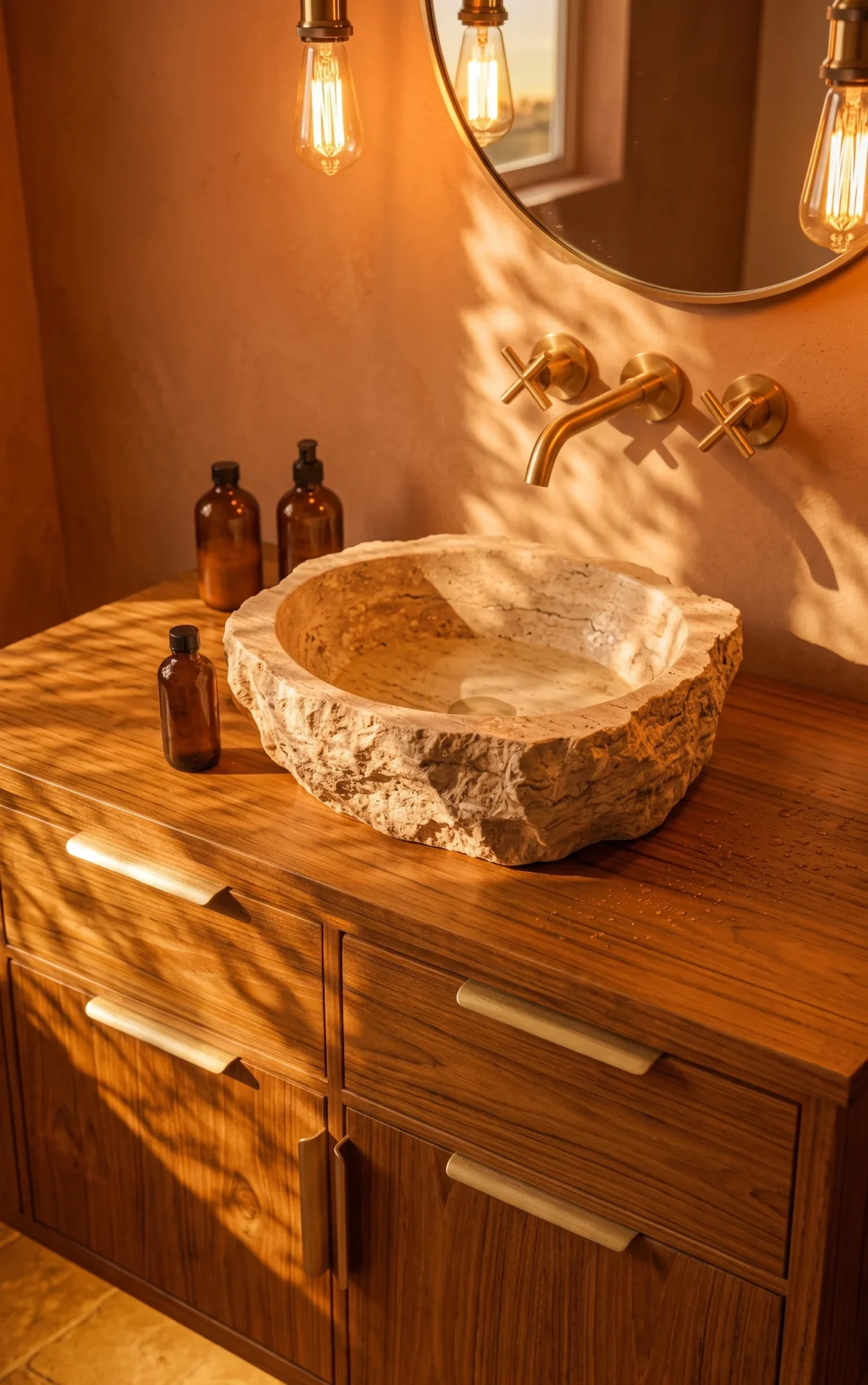
Warm Bulb Temperature Changes Everything
This is the single most overlooked detail in earth tone bathroom design, and it’s the one that most often explains why a bathroom looks right in person but flat in photos, or feels completely different between morning and evening.Earth tones are warm by nature.
Cool white LED bulbs, the kind that come standard in most bathroom fixtures, push against that warmth and flatten the tones toward grey or beige without depth. The result is a space that looked beautiful at the tile showroom under warm display lighting and feels unexpectedly dull at home under cool overhead light.
The fix is straightforward: use bulbs in the 2700K–3000K range throughout the bathroom. This warm white light enhances terracotta’s warmth, deepens mushroom brown, and makes Zellige tile’s variation come alive. For sconces flanking a mirror, warm bulbs at eye level also provide flattering light for grooming, which cool overhead lighting cannot replicate.
Maximizing Natural Light in an Earth Tone Bathroom
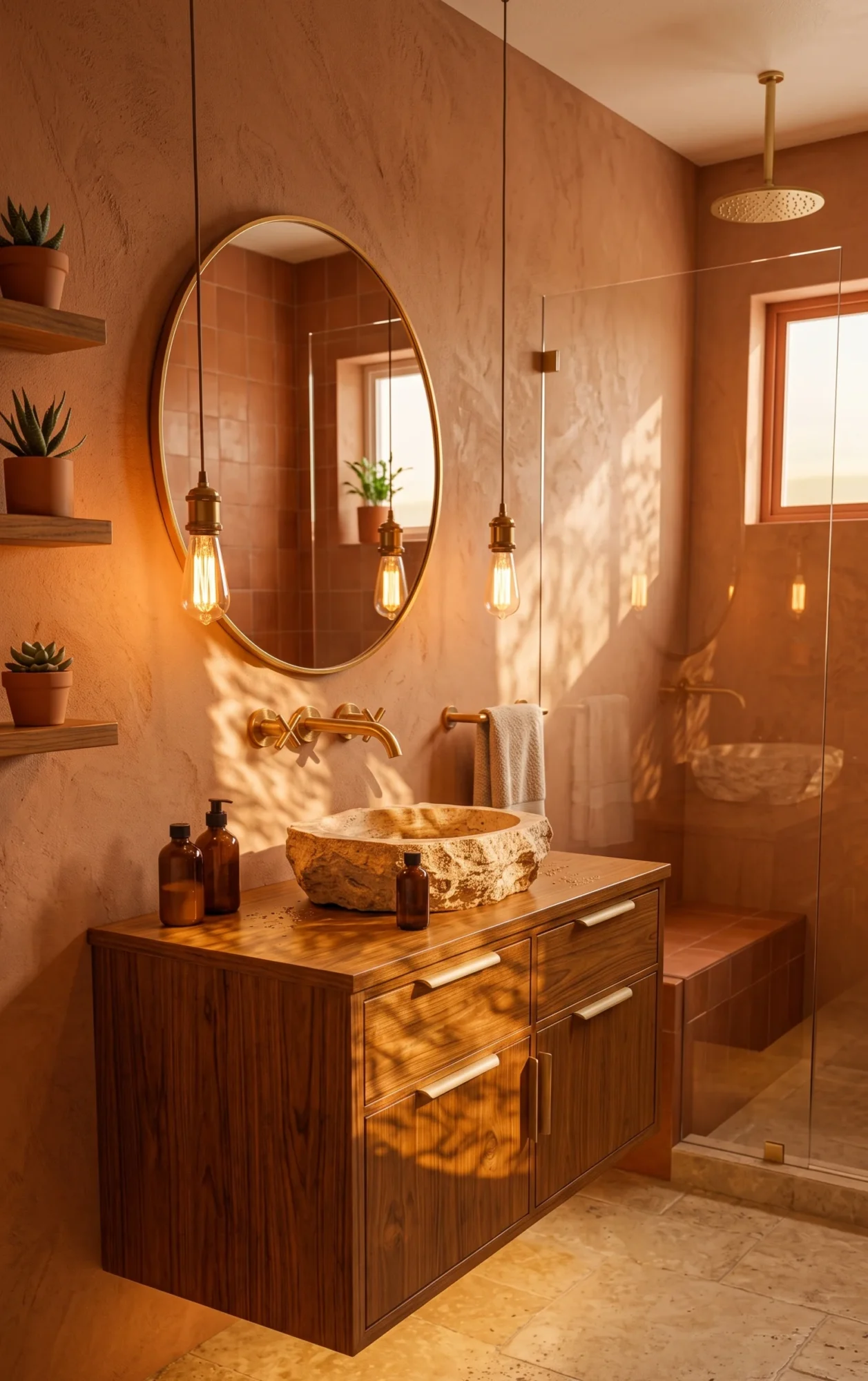
Natural light and earth tones work together differently depending on which direction the window faces. South-facing bathrooms with warm natural light will intensify earthy tones, which is generally desirable. North-facing bathrooms with cooler, bluer light will mute them, which can make the same terracotta tile look surprisingly flat.
For north-facing bathrooms, lean toward lighter earth tones, sandy beige, warm cream, mushroom brown, rather than deep terracotta or dark clay. A large mirror on the wall opposite the window doubles the available light and reflects the earthy textures back across the room, creating depth without adding another surface to clean. Frosted or ribbed glass windows maintain privacy while still bringing in diffused natural light.
Size-Specific Ideas
Small Bathroom Earth Tones
The most common worry about earth tones in a small bathroom is that warm, darker shades will make the space feel even smaller. This concern is mostly unfounded when the approach is right. Dark walls that read as heavy in large rooms actually “recede” in small ones, creating an intimate, cocooning feeling rather than a cramped one.
The practical adjustments for small bathrooms: keep the floor lighter than the walls (sandy beige tile with a slightly deeper wall color reads as grounded, not heavy), use a floating wood vanity so the floor is visible beneath it, and install a large mirror to reflect both light and texture. Vertical subway tile or Zellige in a tall format draws the eye upward, making ceiling height feel greater than it is.
Powder Room Earth Tone Design
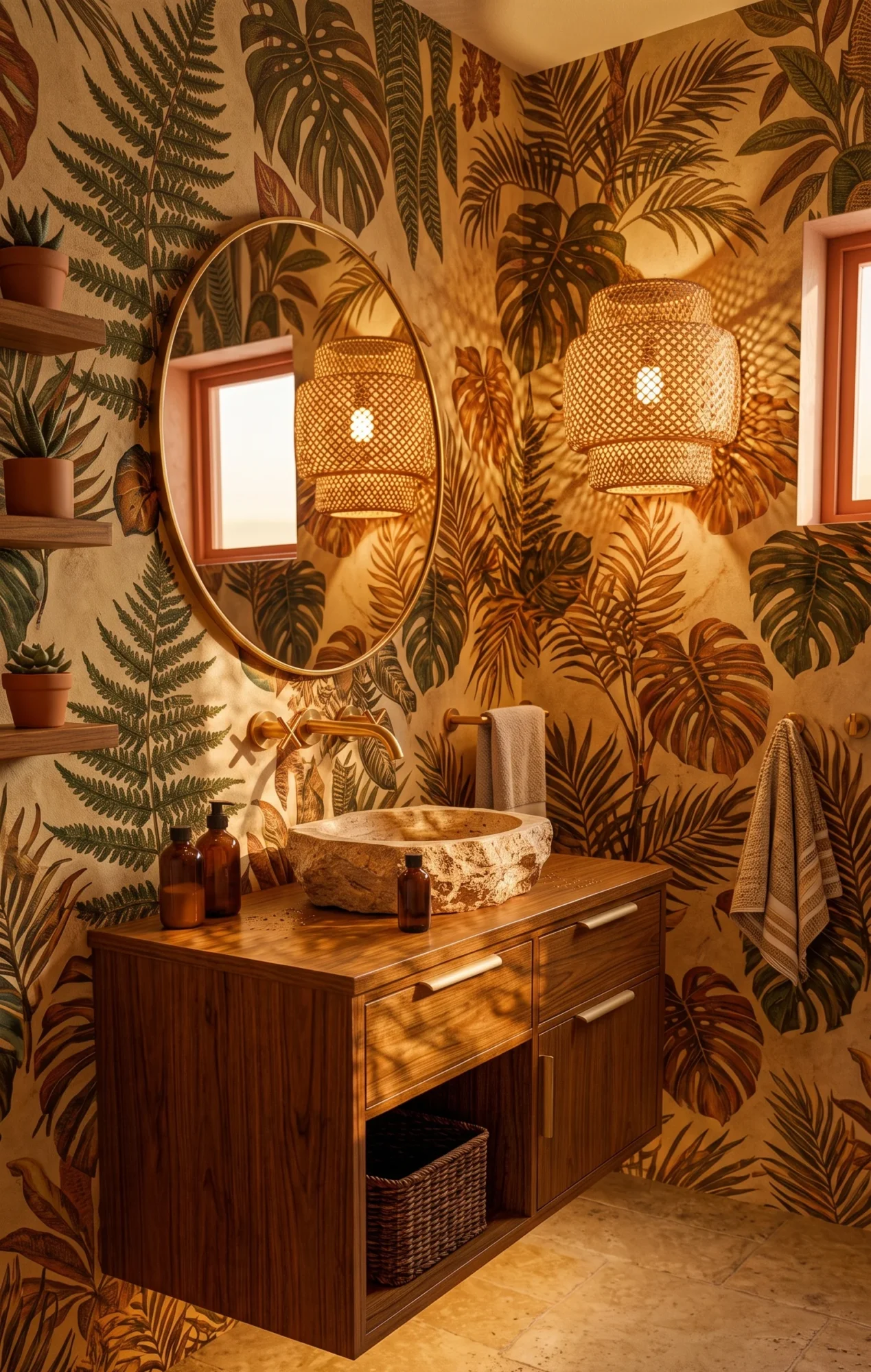
A powder room is the one bathroom in the house where going bold is genuinely low-risk. Guests spend a few minutes in it. They never live with it the way household members live with a primary bathroom. This makes the powder room the ideal place to try a deeply saturated earth tone, a patterned Zellige wall, or a dramatic dark vanity that might feel too intense in a full bathroom.
In 2026, the most striking powder rooms are using warm, nature-inspired wallpaper, botanical prints, abstract earthy textures, combined with a single statement fixture like a stone vessel sink or an unlacquered brass faucet. The result feels curated and personal in a way that most full bathrooms don’t get to be.
Practical Considerations
Common Mistakes That Undermine Earth Tone Bathrooms
Using wrong materials near water.
Natural wood shelves without proper sealing, untreated terracotta tile, or unglazed stone in the shower zone will absorb moisture, stain, and eventually develop mold behind the surface. The earth tone look requires moisture-smart material choices: porcelain over natural stone in wet areas, sealed terracotta on floors, lacquered wood for vanity cabinetry.
Going too dark without enough light.
Deep clay or dark olive in a bathroom with one small window and basic overhead lighting will feel oppressive rather than cocooning. The formula is: the darker the palette, the more lighting sources the room needs, both natural and artificial.
Skipping greenery.
Earth tones are heavily based on wood and stone, which can tip toward dry and static without something living in the room. A single trailing plant on a shelf, a small pot on the vanity, or a tall snake plant in a corner adds the biological element that completes a nature-inspired bathroom design.
Matching everything too exactly.
Real earthy landscapes aren’t perfectly coordinated. A bathroom where the terracotta wall perfectly matches the terracotta tile which perfectly matches the terracotta towels reads as flat and manufactured. Slight variation in tone, texture, and finish across surfaces creates the layered, collected look that makes earth tone bathrooms actually beautiful.
Budget Refresh Without Renovation
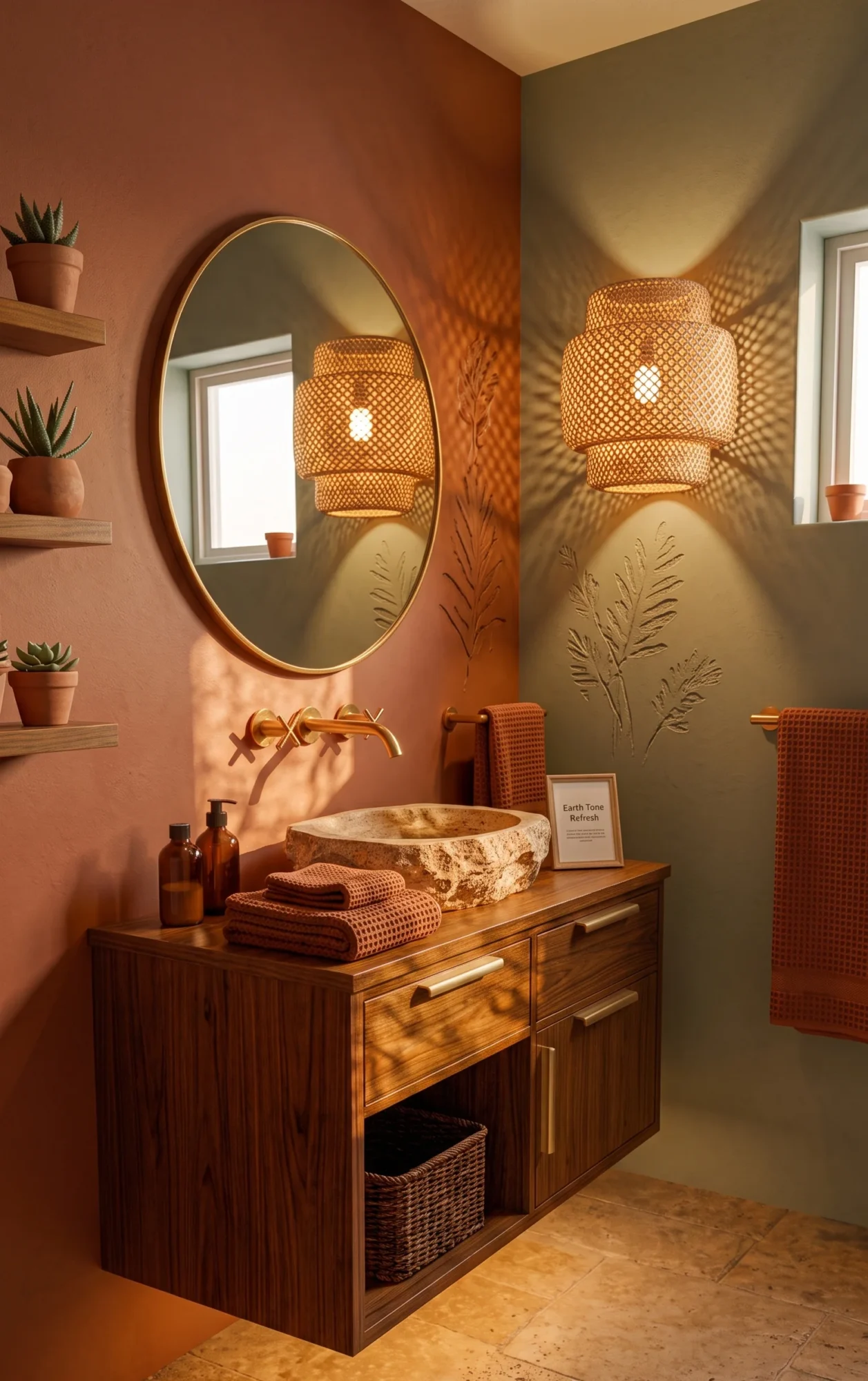
Not every earth tone transformation needs new tile and a new vanity. A useful sequence: fix maintenance issues first (grout, caulk, leaks), then address lighting, then paint, then hardware, then textiles with tile and vanity as the last and most expensive layer.
In practice, this means a bathroom with white or beige existing tile can shift toward an earthy warm palette through paint alone (warm white, sandy beige, or mushroom brown walls), plus new brushed brass or champagne bronze hardware, terracotta or rust-colored towels and bath mats, a woven basket for storage, and warmer light bulbs. The total cost of these changes is typically under $300-$500, and they can shift the entire mood of the room before a single piece of tile is replaced.
Earth Tone Bathrooms and Resale Value
This question comes up more than designers like to admit. The honest answer is nuanced. Permanent earth tone choices, terracotta tile, dark green vanity, deeply saturated wall color, appeal strongly to buyers who share the aesthetic and feel off-putting to buyers who prefer neutral white bathrooms. In a competitive market, a distinctive bathroom can be either a selling point or a reason a buyer moves on.
The more resale-conscious approach: keep permanent finishes (tile, countertop, vanity) in a warm but relatively neutral range: sandy beige, warm cream, light travertine-look porcelain, warm white. Use earth tone depth through paint (easily changed), hardware (easily swapped), and textiles (removed at sale).
This approach lets you live in the warm, grounded bathroom you want while keeping the permanent finishes accessible to a broader range of future buyers.
A Few Final Thoughts
The bathrooms that pull off earth tones well aren’t necessarily the ones with the most expensive materials. They’re the ones where the lighting is warm enough to let the colors actually show up, the materials are chosen with humidity in mind rather than purely for aesthetics, and at least one element, a plant, a piece of handmade pottery, a woven mat, introduces something that feels genuinely alive rather than designed.
Start with the light. Fix the ventilation. Then choose your palette.
Frequently Asked Questions
What are the best colors for an earth tone bathroom?
Terracotta, sandy beige, mushroom brown, warm taupe, clay, olive green, muted sage, and soft cocoa are the most commonly used earth tone bathroom colors. For 2026, mushroom brown and clay-layered palettes have gained particular traction alongside the longer-running terracotta trend.
Do earth tone bathrooms work in small spaces?
Yes. Warm, slightly darker earth tones can actually make a small bathroom feel more intimate and cocooning rather than cramped, especially when paired with a floating vanity, a large mirror, and warm lighting. Sandy beige and warm cream are the safest choices if you’re uncertain about going darker.
Is natural stone necessary for an earth tone bathroom?
No. Travertine-look porcelain tile, wood-look porcelain, and high-quality ceramic tiles in earthy shades deliver a very similar visual result at lower cost and with less maintenance. Real stone requires sealing and is more porous. Porcelain alternatives are often the more practical choice in wet bathroom environments.
What hardware finish works best with earth tones?
Brushed brass is the most versatile choice across terracotta, mushroom brown, sandy beige, and clay palettes. Champagne bronze works well with cooler earth tones like mushroom and taupe. Matte black is best suited to lighter, more neutral earth tone schemes where contrast is needed rather than warmth.
What is Zellige tile and why is it used in earth tone bathrooms?
Zellige is a traditional Moroccan handmade tile with an intentionally uneven, hand-cut glaze surface. Each tile reflects light slightly differently, creating subtle movement across a wall. Earth tone Zellige, warm beige, sandy, soft terracotta, adds an artisanal tactile quality that factory-made tile cannot replicate.
How do I prevent an earth tone bathroom from feeling dark?
Use warm-toned bulbs at 2700K–3000K, install a large mirror to reflect light, keep the floor slightly lighter than the walls, and ensure the exhaust fan and ventilation are adequate. Natural light from a window matters most. South-facing bathrooms with warm light can handle deeper earth tones more easily than north-facing rooms.
