

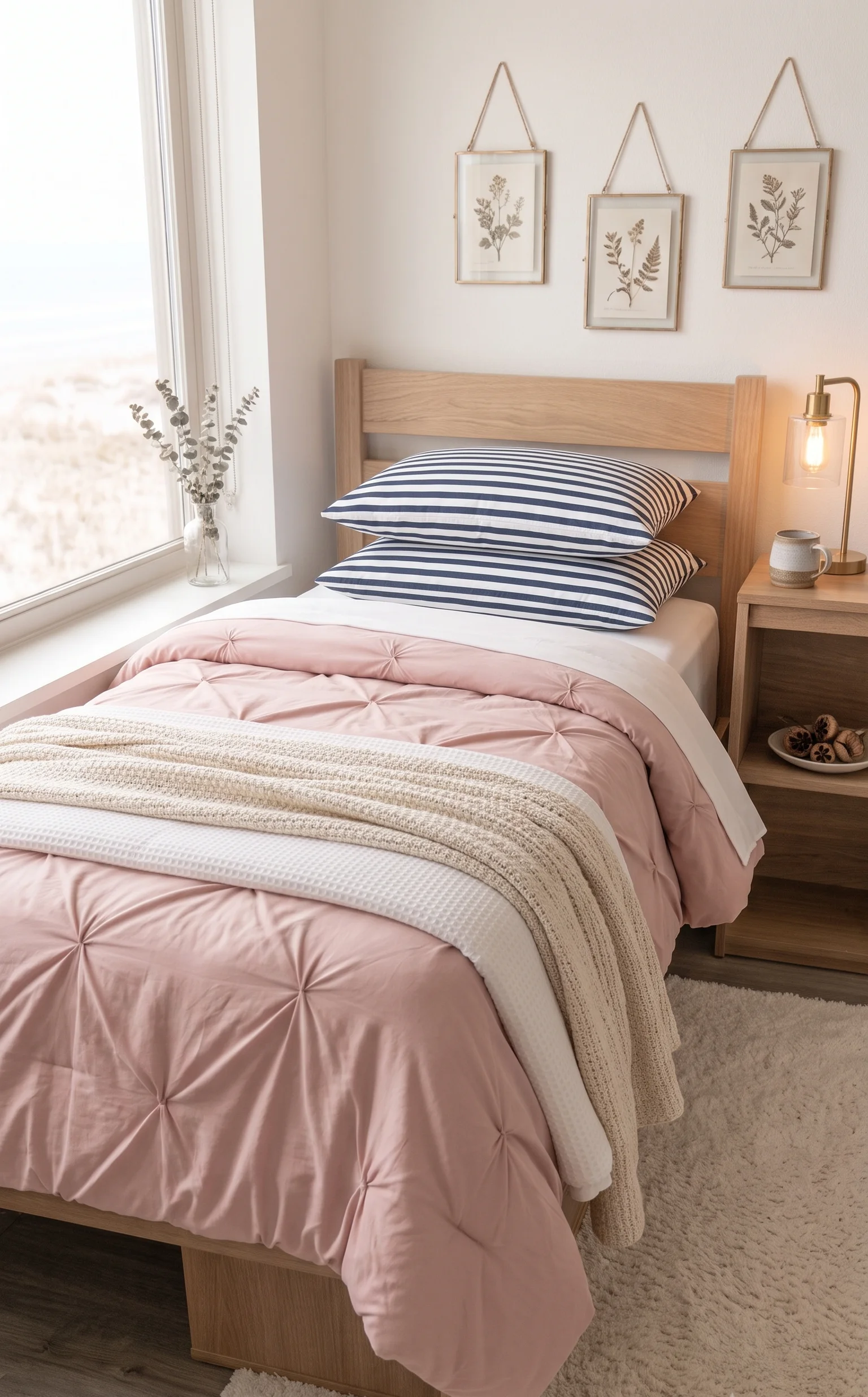
Your dorm bed isn’t just where you sleep. In a room that’s roughly the size of a walk-in closet, the bed takes up more than half the visual space. Whatever’s on it becomes the entire vibe of the room whether you planned it that way or not.
That’s the part nobody really warns you about before move-in day. You spend weeks researching storage bins and desk lamps, then show up and realize the bedding you grabbed at the last minute is doing most of the decorating for you.
Here’s what’s actually worth putting on that bed in 2026 the styles that are trending, the practical stuff that makes dorm life genuinely easier, and a few things that every article seems to skip over.
One Thing to Get Right Before Anything Else
Most dorm beds are Twin XL. Not Twin. Twin XL is about five inches longer, which sounds minor until your fitted sheet pops off at 2 AM during finals week. Before buying a single piece of bedding, check that it’s labeled Twin XL. Everything else in this article assumes you’ve already done that.
What’s Trending in 2026
Cinched and Ruched Bedding
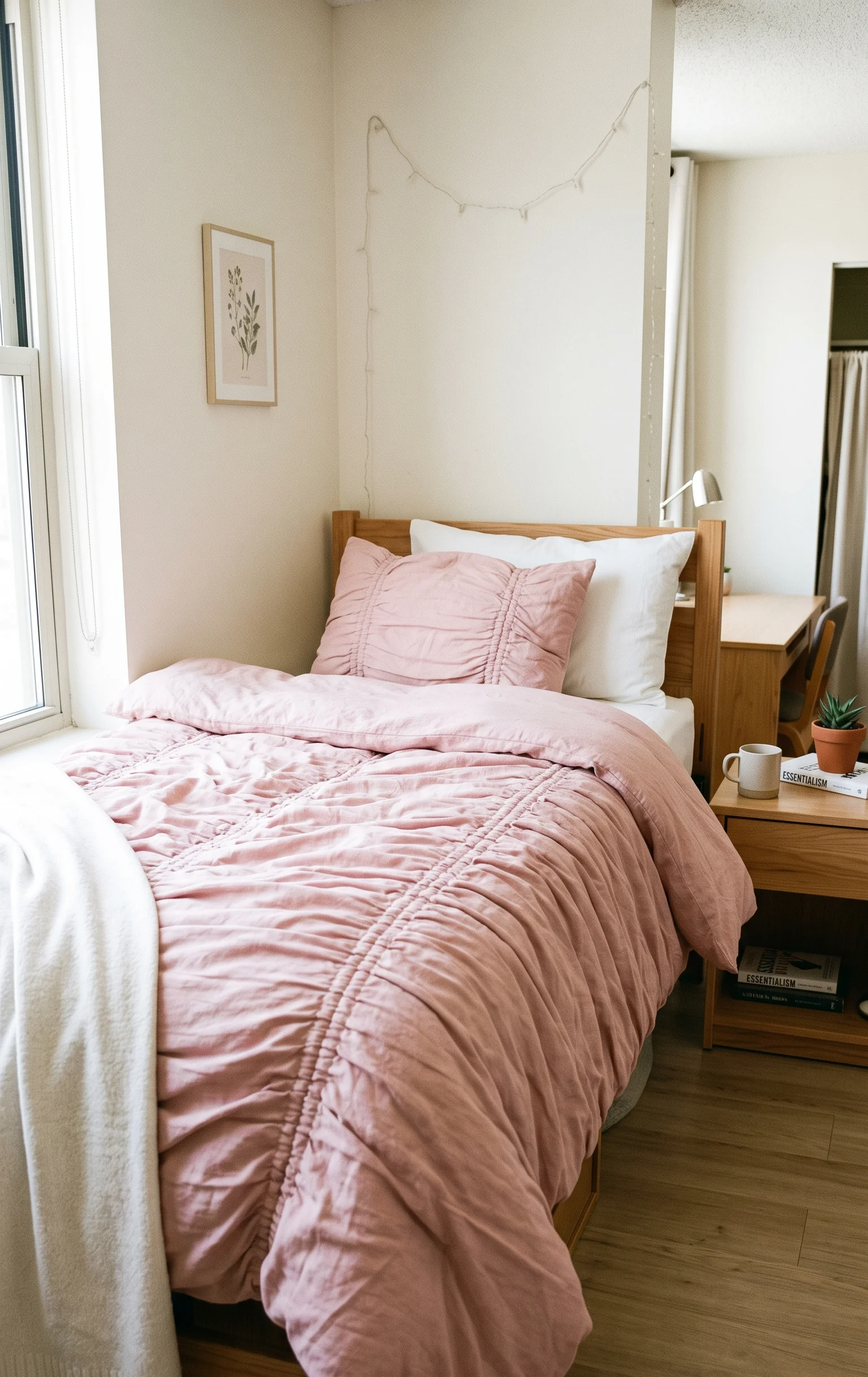
The biggest dorm bedding story of 2026 is texture over pattern. Cinched duvet covers, with gathered, ruched fabric that creates a soft, pillowy look, are showing up in every dorm tour worth watching right now. They make the bed look effortlessly styled even when it’s just barely made.
They come in a dozen colors, so you’re not locked into a specific palette. The white and pink versions have been especially popular, but the technique works just as well in sage or dusty blue if you want something a little quieter.
Varsity Whimsy: Quilts Over Duvets
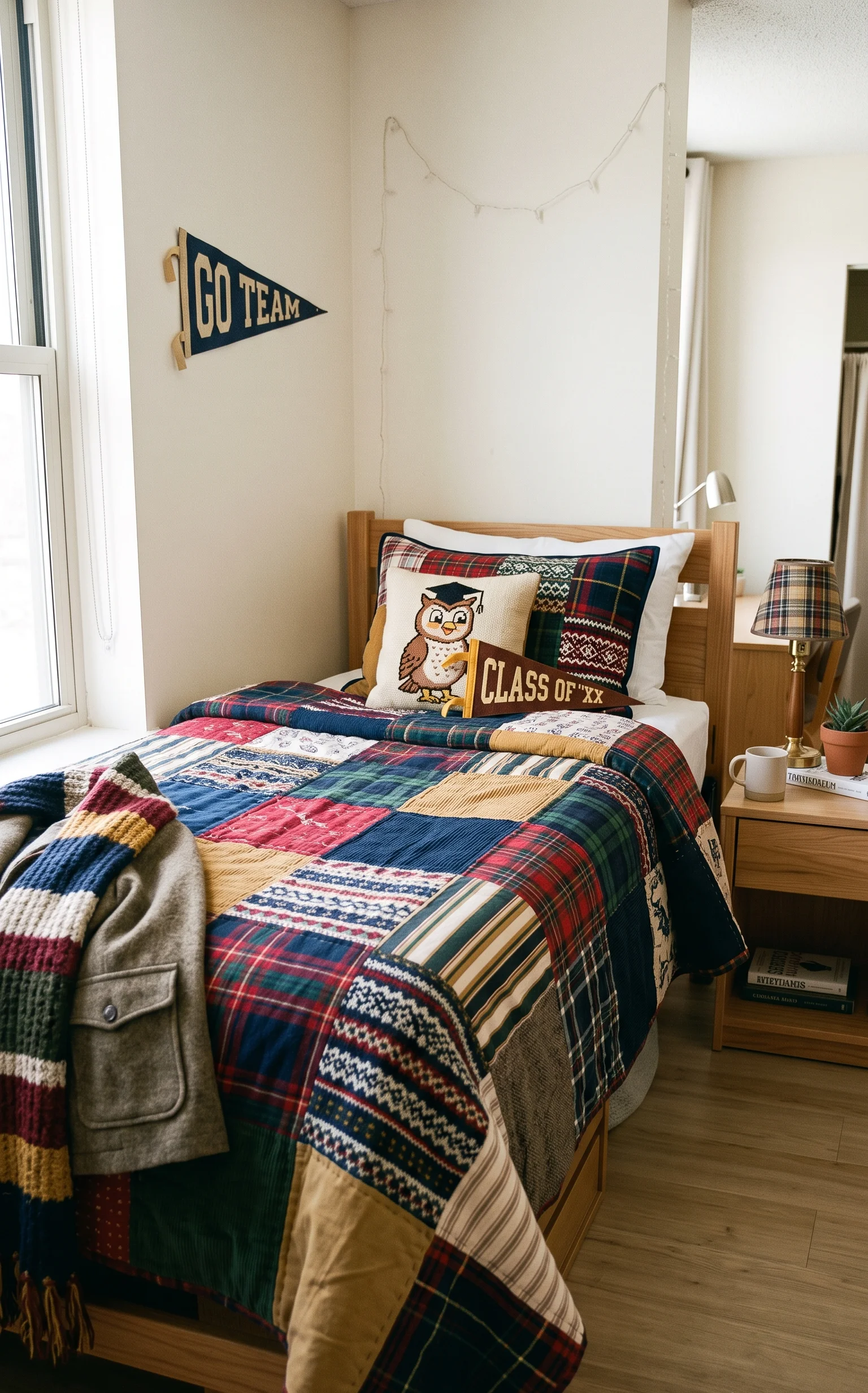
Quilts are having a genuine comeback, specifically the bold, patchwork-patterned kind that sit closer to folk art than standard bedding. The aesthetic running through them is called “varsity whimsy” classic collegiate energy mixed with something a little irreverent and pattern-heavy.
Beyond style, quilts have a real practical edge in a dorm: no duvet insert to stuff every laundry day. You just wash the quilt and put it back. That matters more than people expect once you’re sharing one washing machine with an entire floor.
Bold Stripe Pillowcases as Statement Pieces
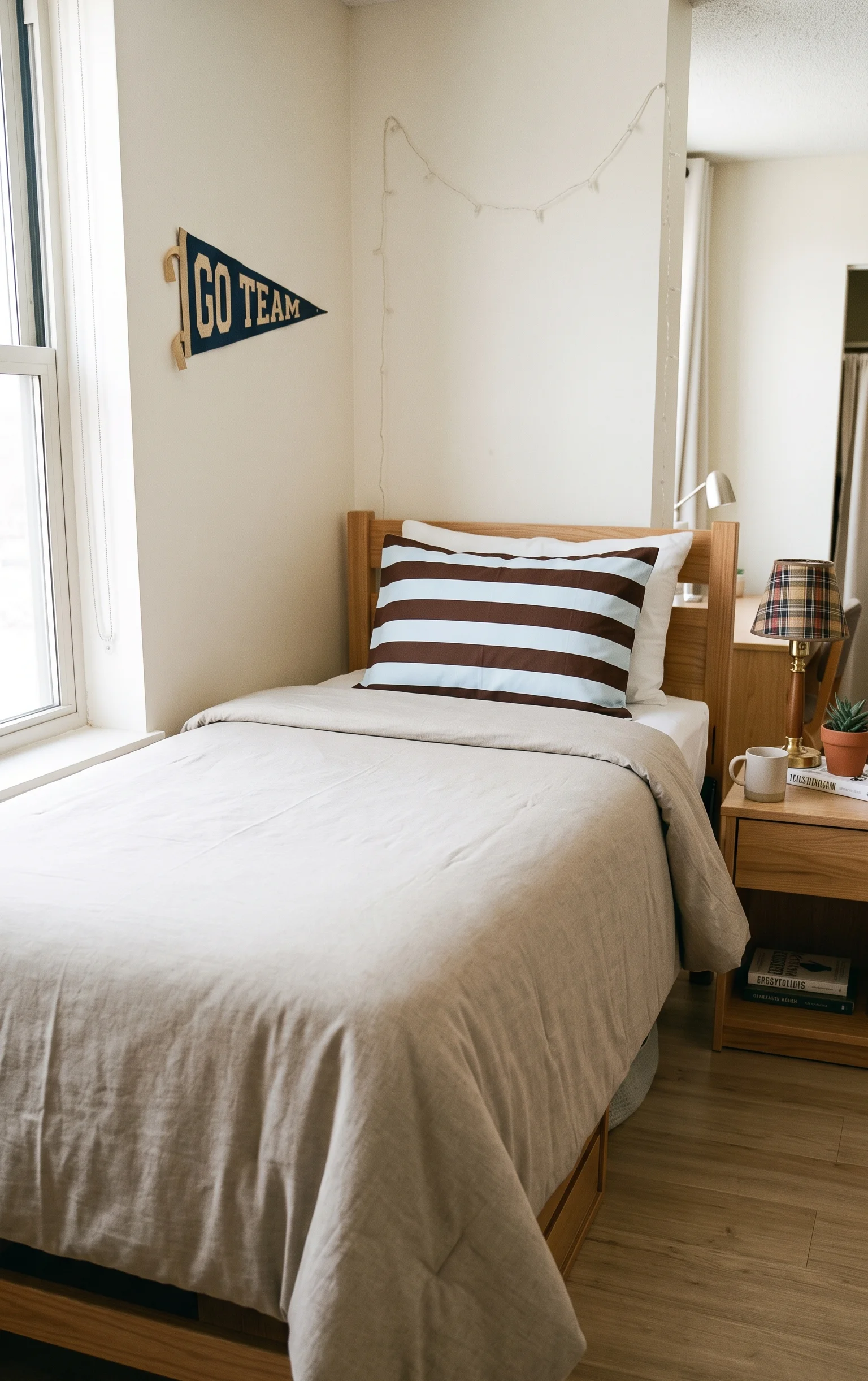
When your bedding is kept simple, a set of high-contrast striped pillowcases can carry a surprising amount of personality. Thick horizontal stripes in color combinations like iced blue and chocolate or sage and cream are the version showing up most in 2026.
The trick here is keeping the rest of the bedding low-key so the pillowcases actually land as a statement rather than getting lost in a pattern clash.
Aesthetic Styles Worth Trying
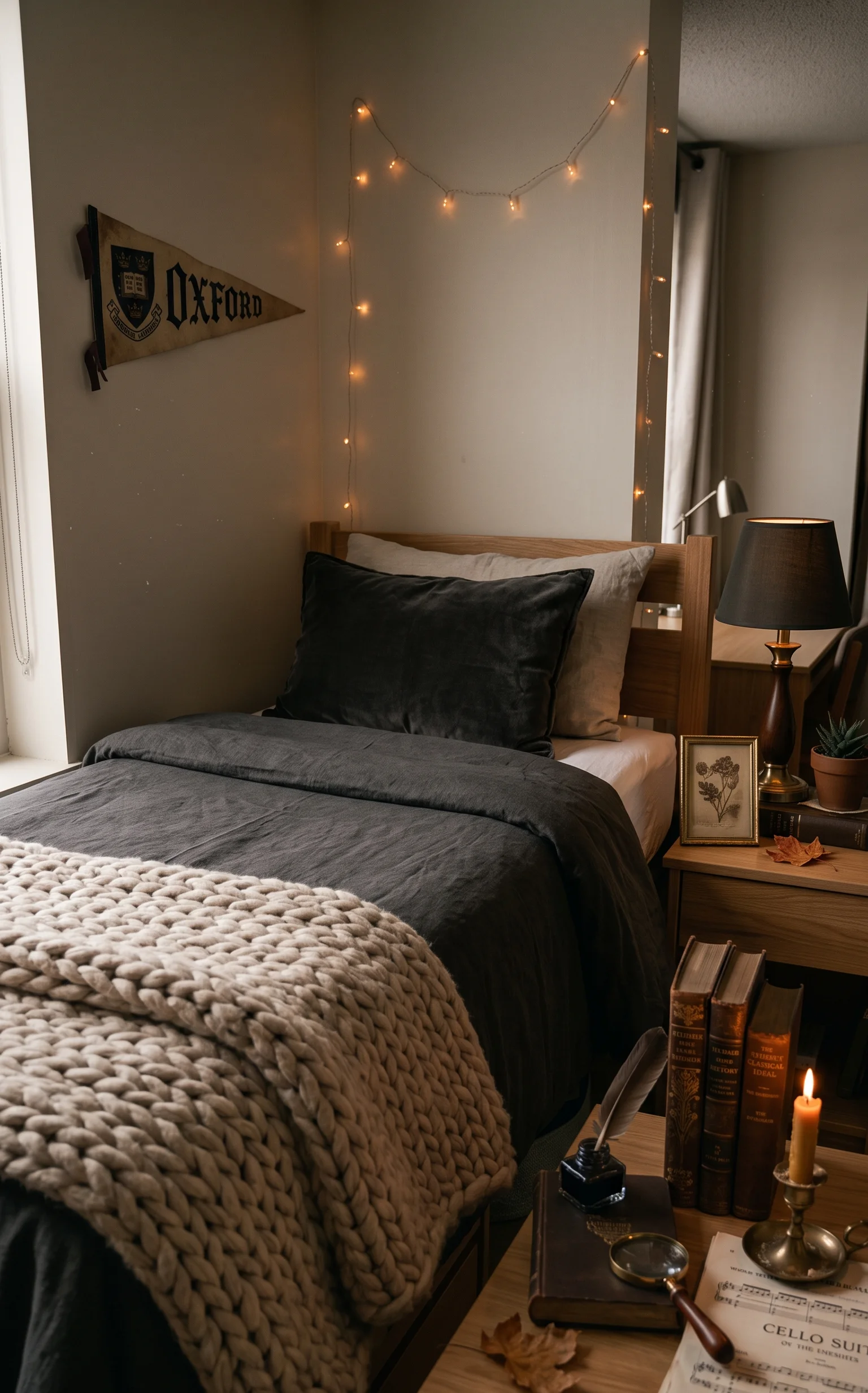
Dark Academia
Dark academia works especially well in dorms because the rooms themselves tend to be a little dim and utilitarian, which normally feels like a problem but here actually becomes part of the look. Neutral bedding in oatmeal, stone, or deep charcoal, layered with a chunky knit throw and a few dark wood or vintage-inspired accents, plays into the “perpetually about to go to a literature lecture” mood.
The key is keeping the pattern subtle classic checks or simple ribbed textures rather than anything too decorative.
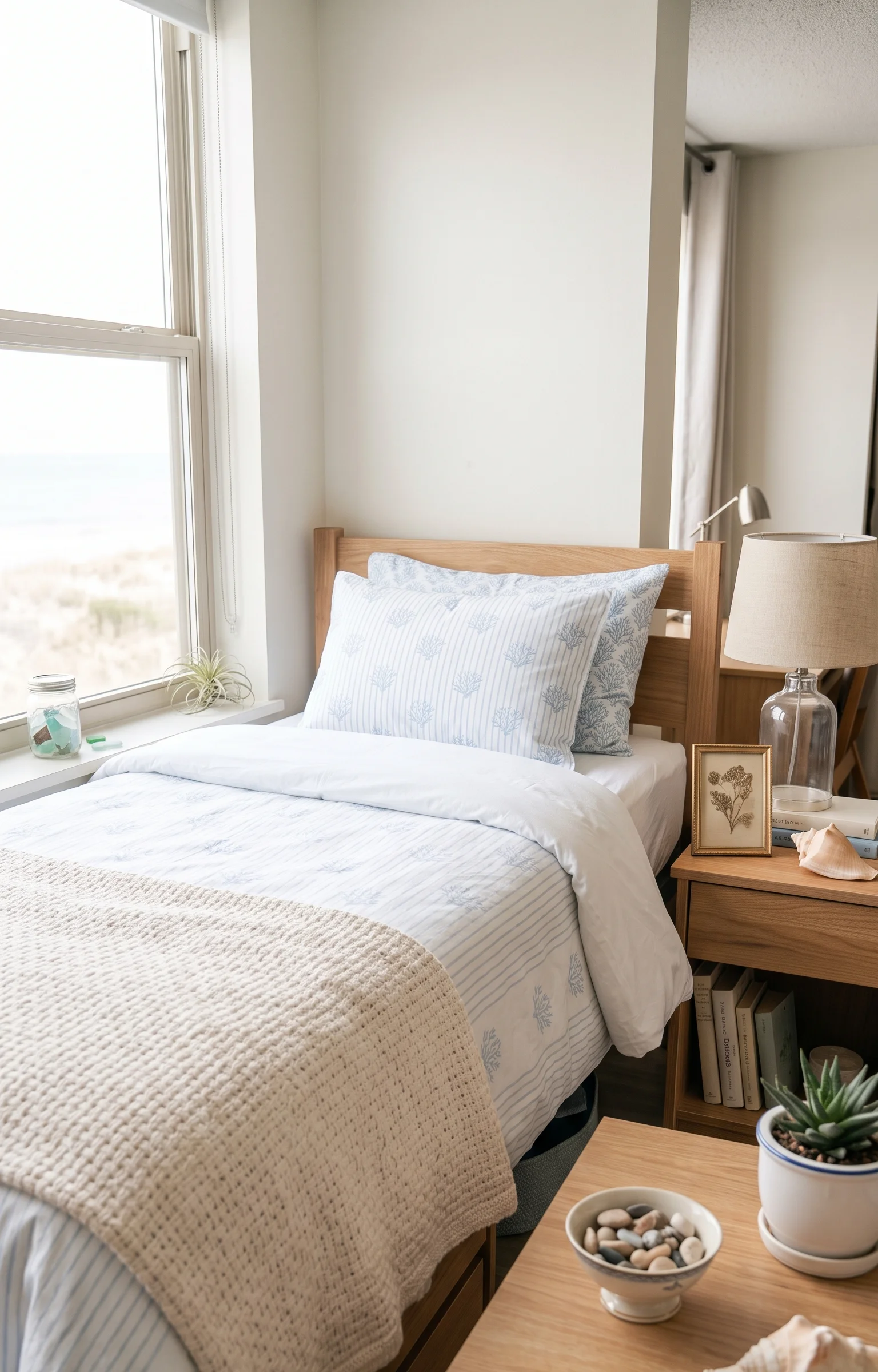
Coastal Calm
This one is harder to get wrong than you’d think. White or pale blue bedding, a woven throw, and a couple of natural textures nearby a rattan lamp, a basket, a small plant and the room shifts toward a breezy, collected feeling that makes the cramped square footage feel a little less oppressive.
It’s also one of the easiest styles to coordinate with a roommate, since the palette is neutral enough to not clash with much.
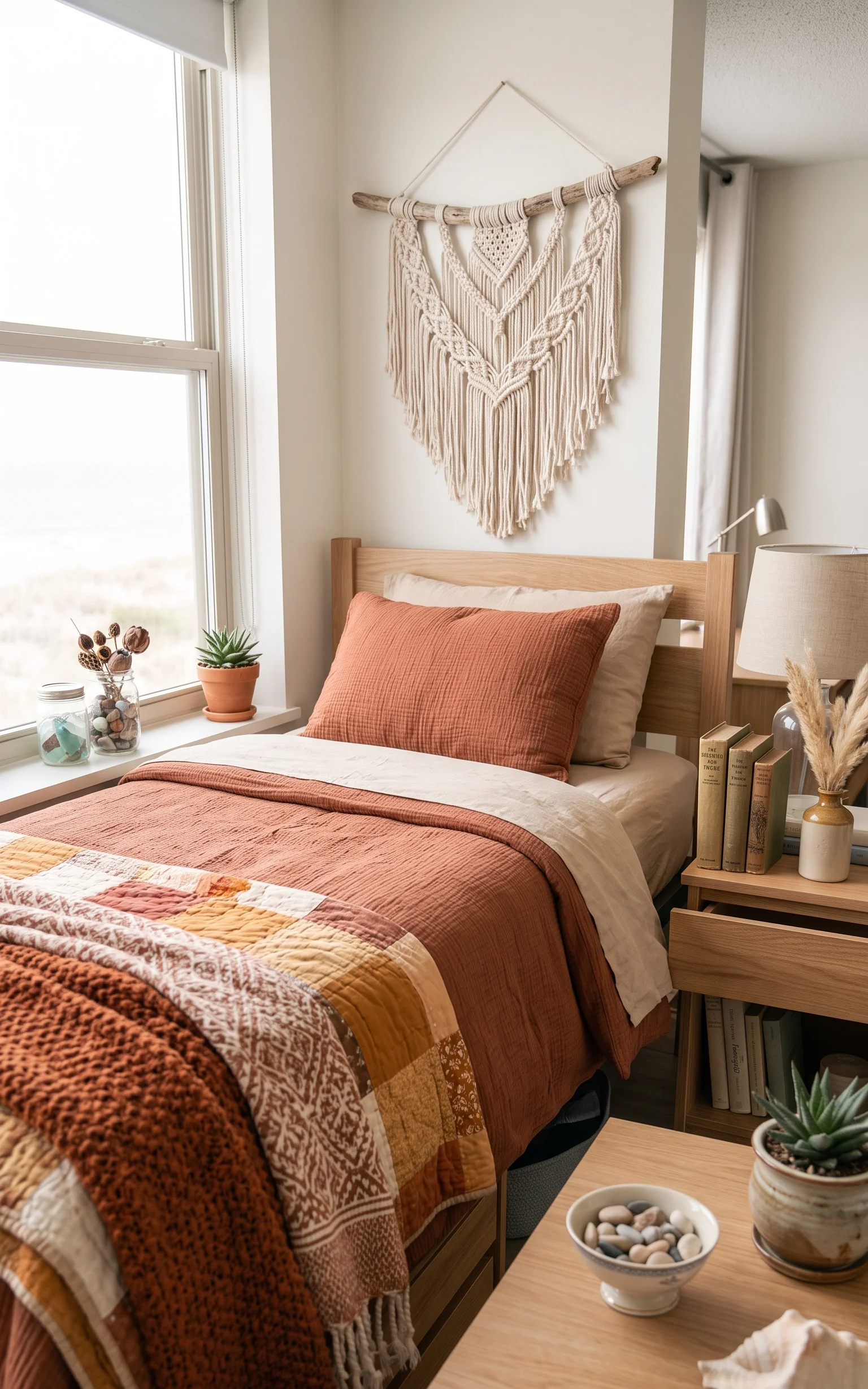
Boho Earthy
Terracotta, warm beige, and burnt orange bedding with a few layered throws and a macramé wall piece above the bed reads as put-together without trying hard. This style is forgiving because it’s built on the idea that everything doesn’t have to match exactly, just stay in the same warm tonal range.
Good for: people who want their room to feel cozy and personal but don’t want to spend a lot of time styling it.
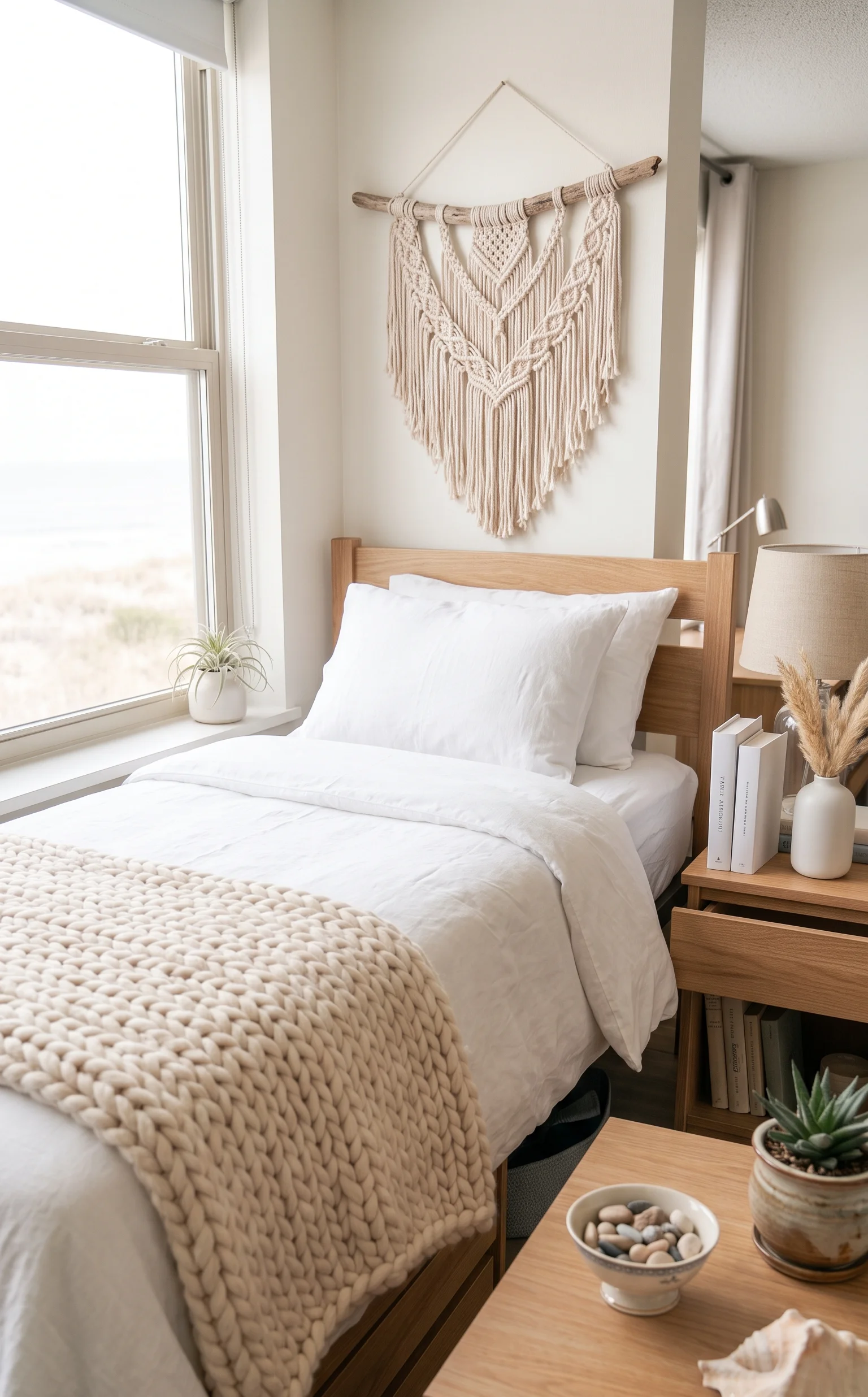
Minimalist Neutral
Crisp white or soft grey bedding with no print, one slightly different-textured throw, and nothing else. It sounds boring on paper, and it’s genuinely the hardest to pull off because every wrinkle and stain shows. But when it works, it makes even a small dorm room look like someone actually thought about it.
Worth adding: a mattress topper in this situation makes the bed look substantially more elevated when made, since the extra height and fluffiness adds visual weight that a flat institutional mattress can’t.
Practical Stuff Nobody Really Explains
How to Actually Layer a Dorm Bed
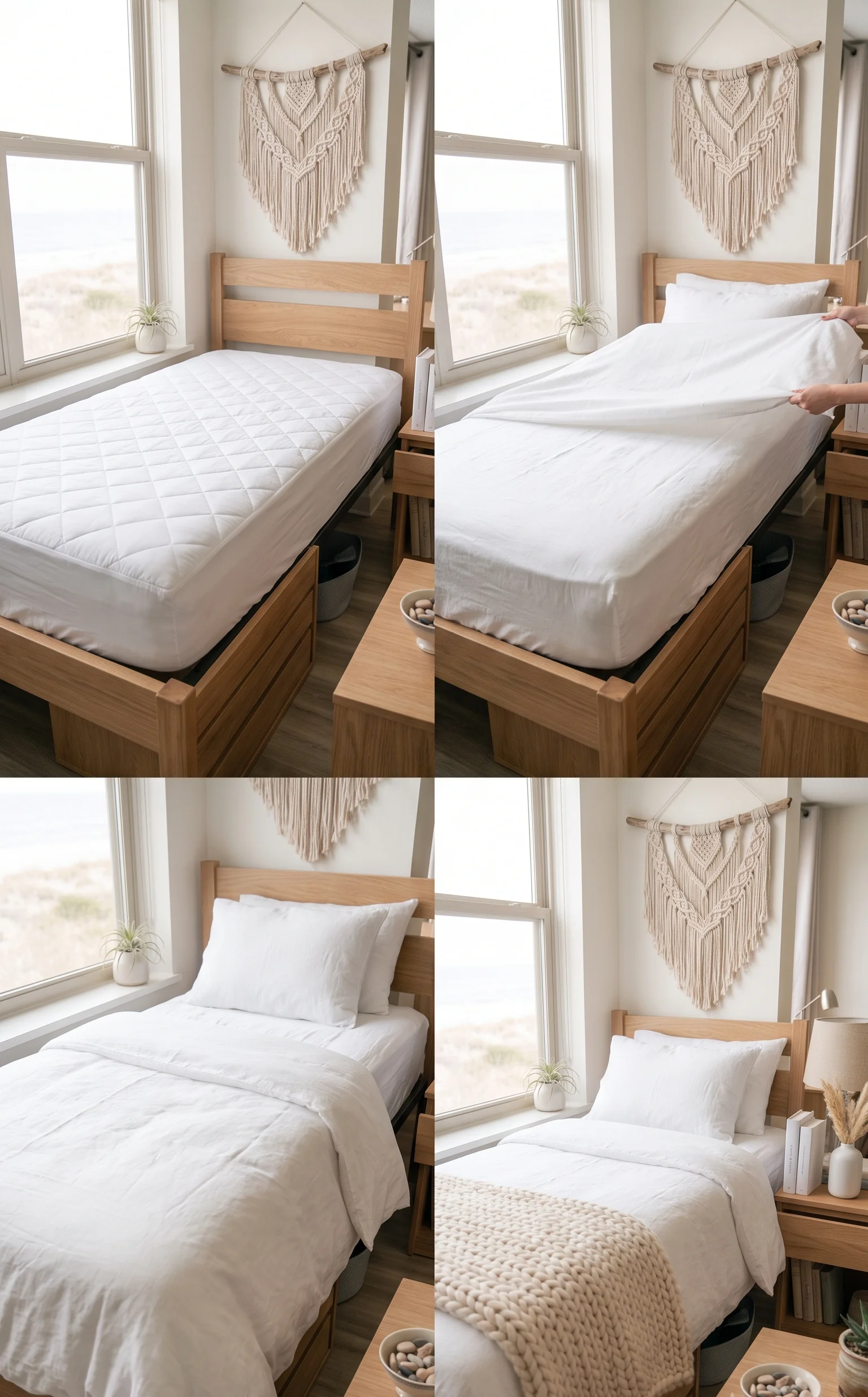
Most bedding articles show you pictures of finished beds without telling you what order the layers go in. Here’s the actual sequence:
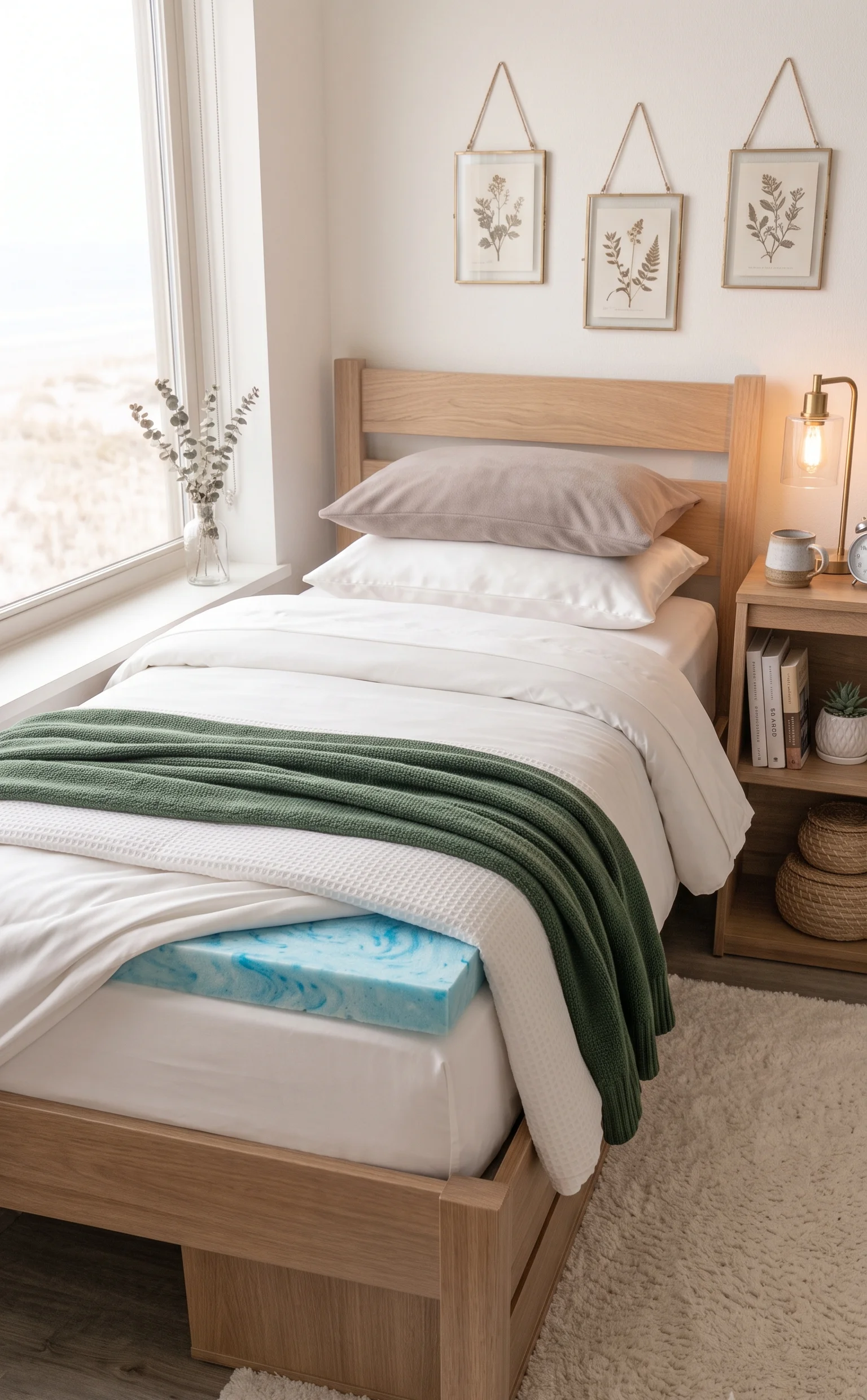
Start with a mattress protector waterproof, not optional in a shared building. Add a mattress topper if the bed feels like a gymnastics mat (memory foam or gel foam, at least 2 inches). Then your fitted Twin XL sheet, flat sheet if you use one, duvet or comforter, and at least two pillows with matching pillowcases. A throw folded at the foot of the bed finishes the look and adds an extra layer for temperature changes between September and December.
The Quick-Change Duvet System
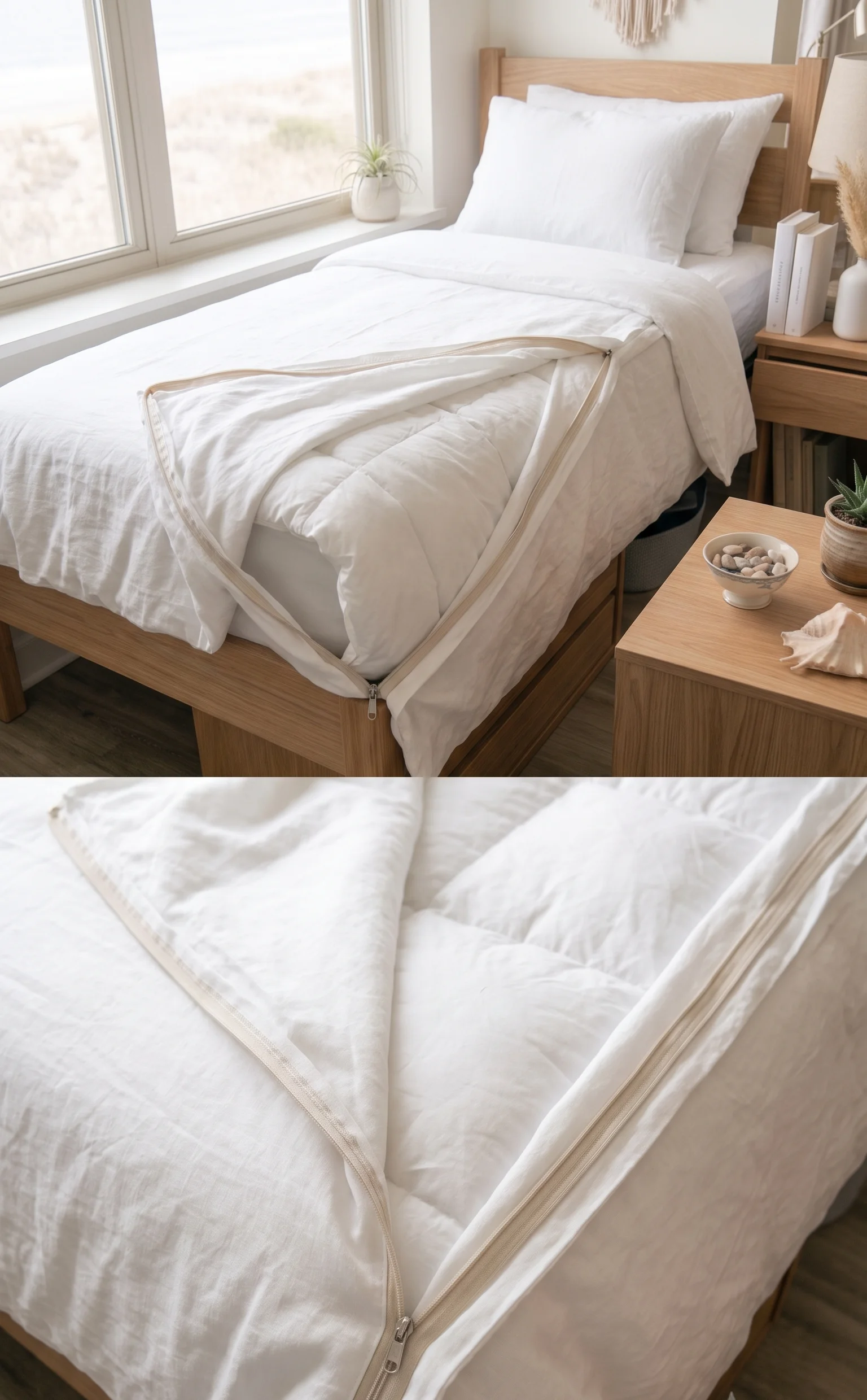
Stuffing a duvet insert into a cover is miserable in a normal-sized bedroom. In a dorm room, where you’re essentially standing on the bed to do it, it’s worse. Duvet systems with a three-sided zipper that opens the cover like a book have started gaining real traction among college students because they cut laundry day friction significantly.
If you’re buying a new duvet cover anyway, this is worth looking for specifically. It costs about the same as a standard option and removes one of the more genuinely annoying parts of dorm bedding maintenance.
Temperature Regulation Matters More Than You Think
Dorm room HVAC systems are notoriously inconsistent. The room might be 60 degrees in October and somehow 80 degrees in November. Bedding that’s designed to regulate temperature, like bamboo or moisture-wicking fabrics, handles that range better than a single heavy comforter that’s either too warm or too cold depending on the week.
If you run hot at night, lightweight bamboo sheets are a better base layer than traditional cotton. If you run cold, a heavier comforter with lighter sheets gives you more control over how much warmth you’re actually getting.
Always Bring at Least Two Sheet Sets
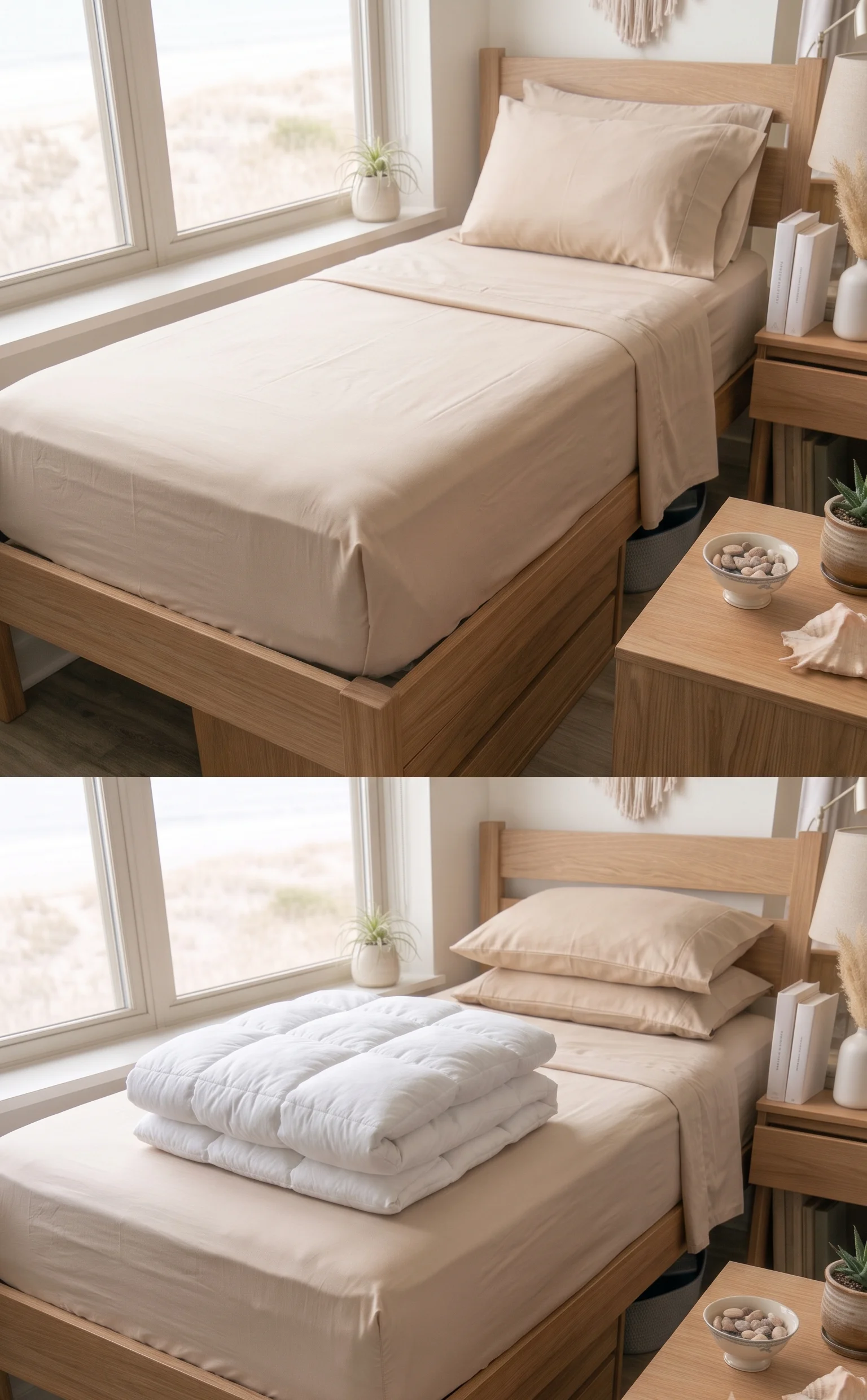
This is the advice that feels obvious and still gets ignored every year. Laundry in a dorm either costs money per load or involves waiting in line for a machine. Having a second complete set of sheets means you can strip the bed, put on fresh sheets immediately, and do laundry on your own schedule instead of sleeping on a bare mattress while you wait.
Situations Nobody Plans For
Lofted Bed Bedding Challenges
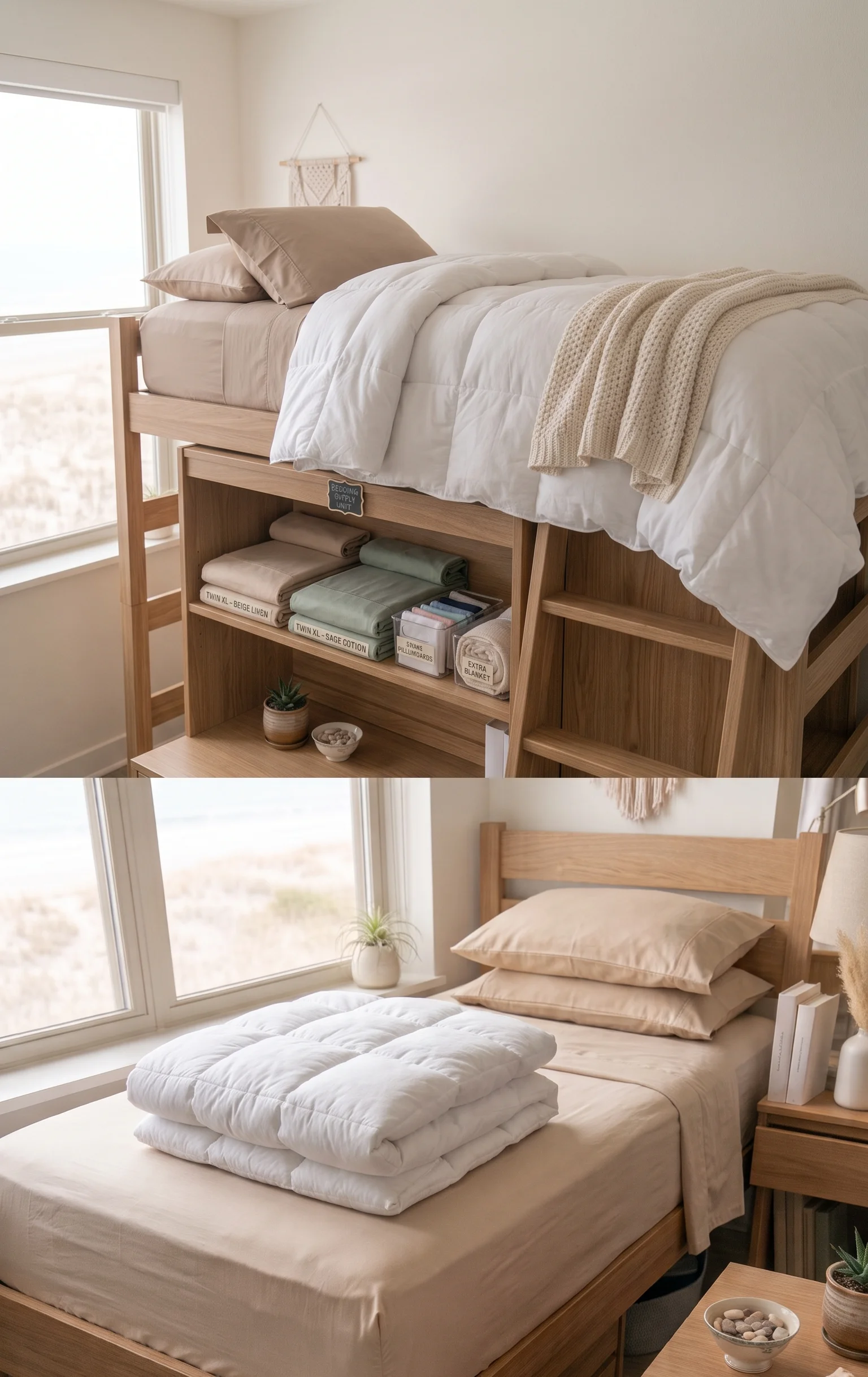
Many dorms have lofted beds, and nobody tells you until you get there that making a lofted bed is genuinely different from making a normal one. The main issue: you can’t easily tuck anything under the mattress from the side, and your fitted sheet is more likely to pop loose because you’re reaching across the whole mattress from one end.
Solutions that actually help: deep-pocket fitted sheets with elastic all the way around (not just at the corners), keeping your duvet slightly oversized so it drapes rather than needing to be tucked, and a set of mattress clips to hold the sheet corners in place.
When Your Roommate Has Completely Different Taste
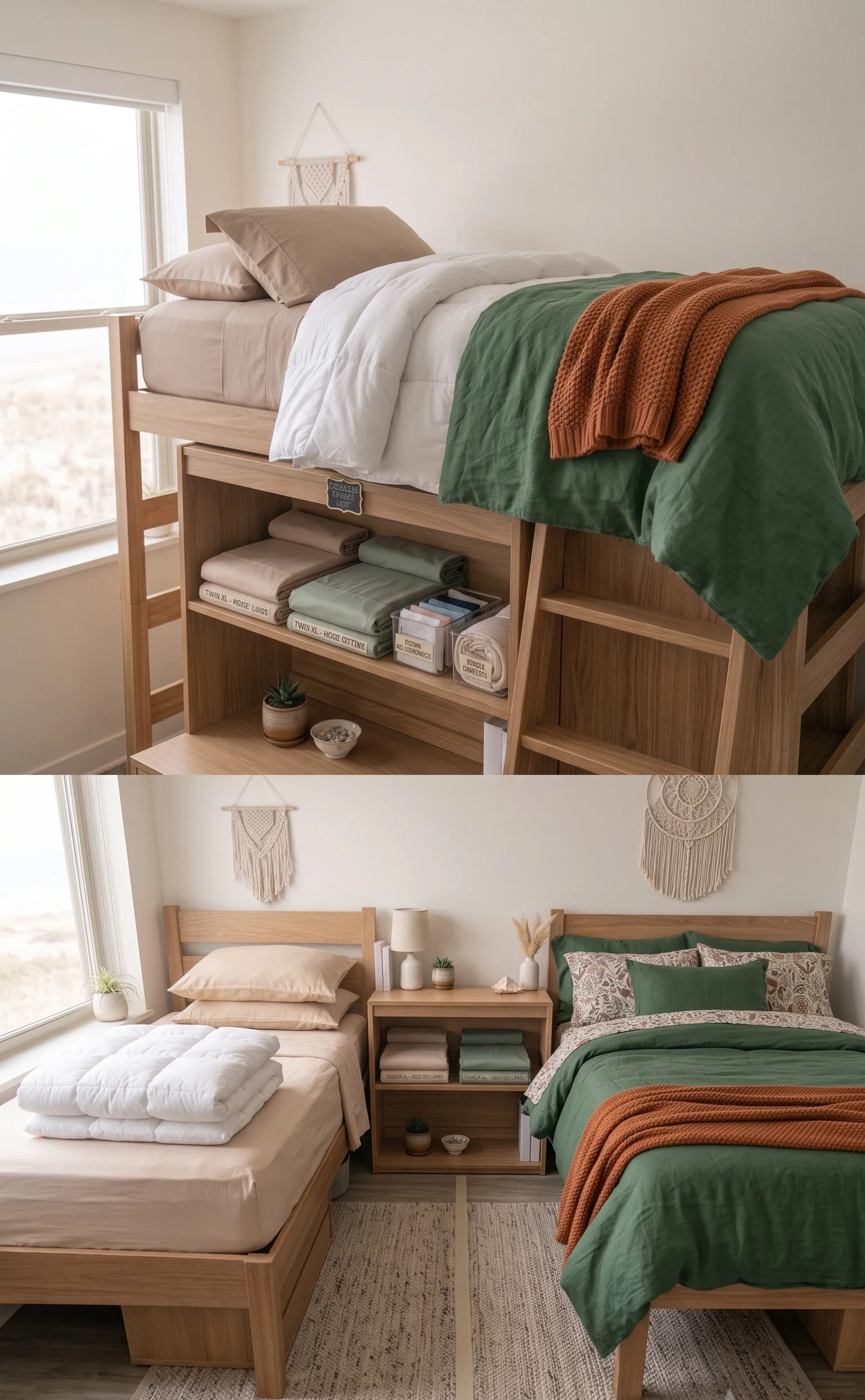
This is genuinely common and nobody addresses it. You want dark academia, they want pastel pink. You’ve already ordered terracotta bedding, they’ve already ordered floral prints.
The easiest way through it: agree on a neutral for the shared parts of the room (rug, curtains if allowed) and let each person’s bed be their own territory. A loose visual agreement, like both of you keeping one throw in a similar color family, ties the room together without either person having to compromise their actual style.
Allergy-Friendly Bedding for Sensitive Skin
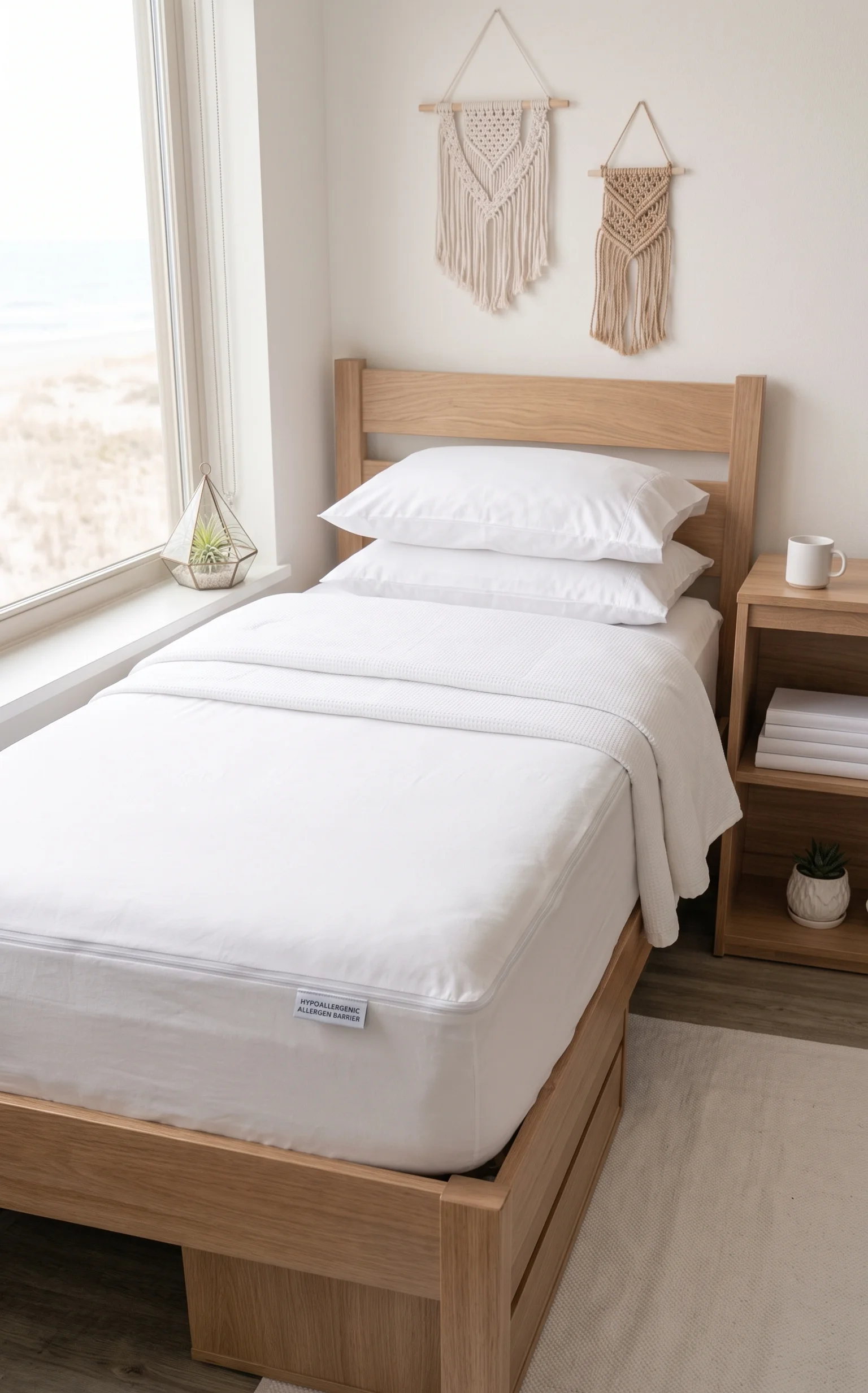
Dorm mattresses are institutional and old, which means dust mites. A good hypoallergenic mattress encasement, not just a mattress pad, fully zips around the entire mattress and creates a barrier between you and whatever the previous occupant left behind.
For bedding itself, OEKO-TEX certified fabrics have been tested for harmful chemicals and are a reasonable check for anyone with skin sensitivities. Bamboo and Tencel fabrics are also naturally hypoallergenic and tend to be gentler than heavily processed cotton.
Budget Breakdown
Under $50: The Functional Setup
A Twin XL comforter set under $45 (many include a fitted sheet and pillowcase), one extra fitted sheet set, a basic waterproof mattress protector under $20, and you’re covered for the semester. It won’t be your most aesthetic arrangement, but it’ll be clean, it’ll fit, and it’ll survive a full year of washing.
$50-$150: Where Style and Practicality Meet
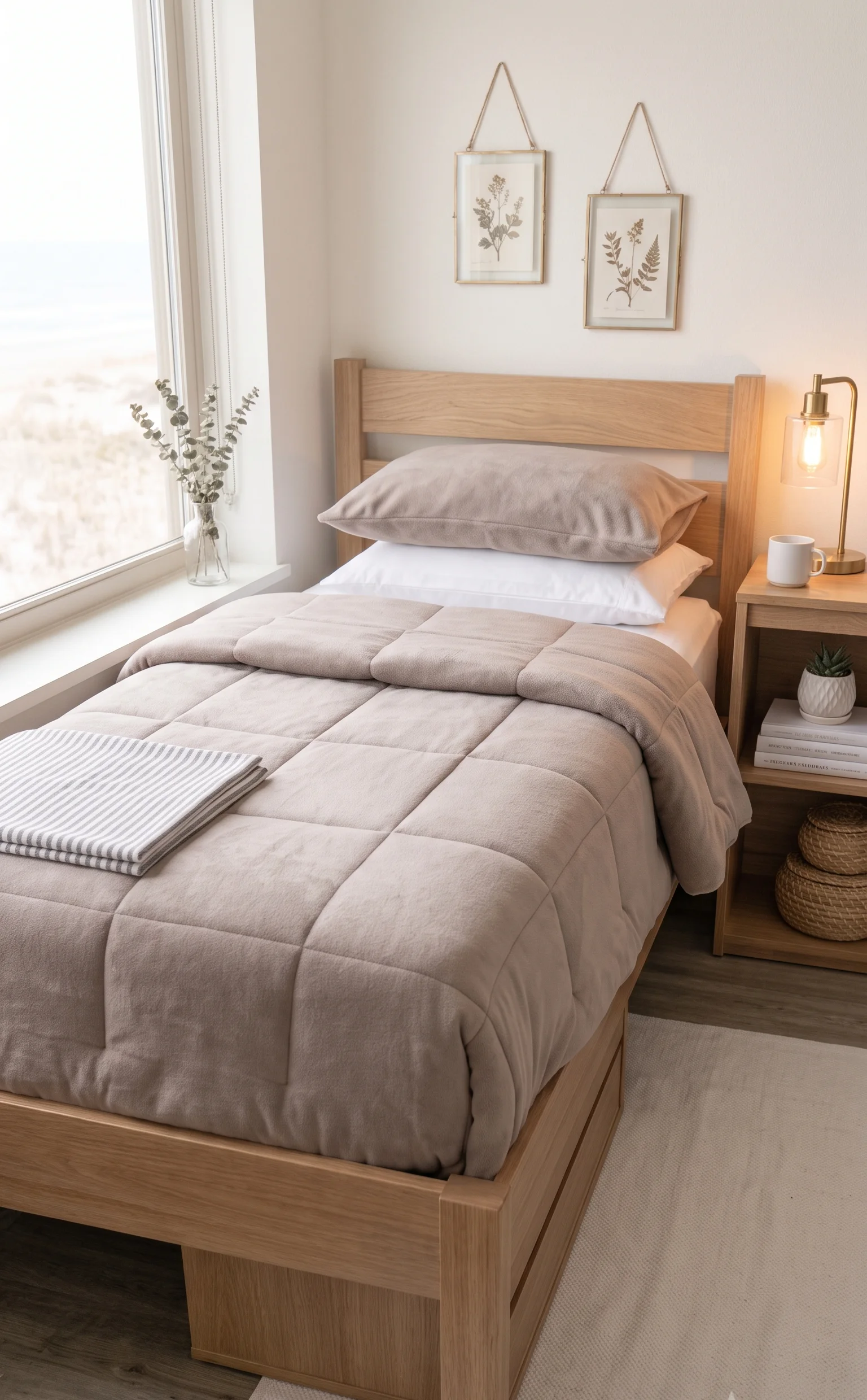
In this range you can get a cinched or textured duvet cover that actually looks intentional, a decent mattress topper (at least 2 inches of memory foam), and a coordinating throw. This budget gets you something that looks designed rather than assembled from whatever was available, without spending the kind of money that makes your parents wince.
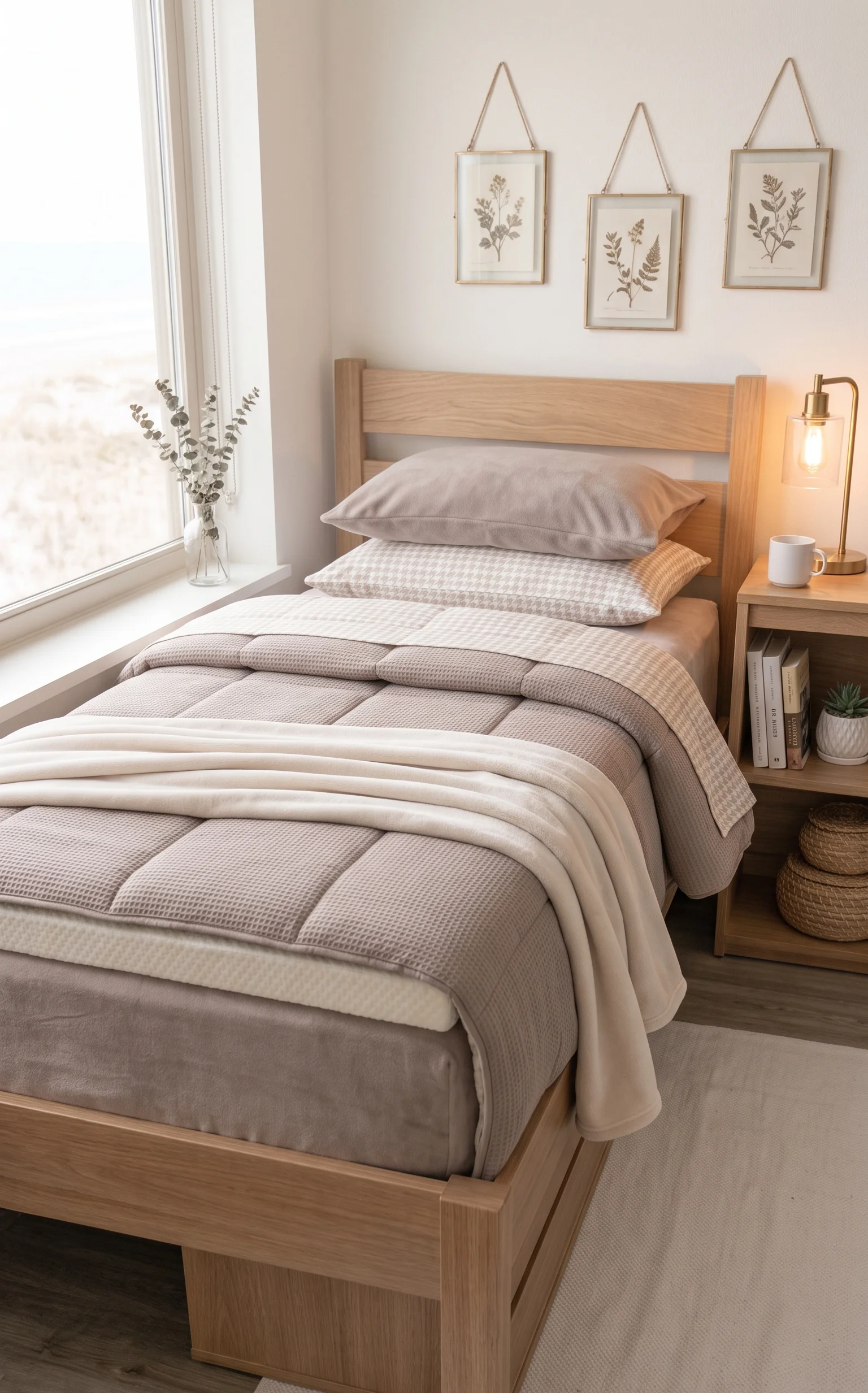
$150+: When Comfort Is the Priority
At this price point, you’re looking at temperature-regulating fabrics (bamboo or Tencel sheets), a proper gel memory foam topper, and a high-quality duvet with a quick-change cover. The difference in sleep quality on a proper setup compared to an institutional mattress with flat sheets is significant enough that many students and parents consider it worth the investment for a full academic year.
Quick Buying Checklist Before Move-In
A few things worth confirming before you buy anything:
- Everything labeled Twin XL, not Twin
- Fitted sheet has elastic all the way around, not just at the corners, especially for lofted beds
- Mattress protector fully encases the mattress (zipper closure, not just a pad)
- At least two complete sets of sheets so laundry day has no urgency
- One throw that works in both September heat and December cold, since they’re not the same temperature
A Few Final Thoughts
The bedding decisions that matter most in a dorm aren’t really about style. They’re about how you feel when you’re tired, sick, stressed about an exam, or just trying to sleep while your roommate has the lights on. Get the practical layers right first, then add the aesthetic on top of it.
Everything else in the room can be figured out once you’re there. The bed is the one thing worth thinking through before move-in day.
Frequently Asked Questions
What size bedding do I need for a dorm room?
Almost all dorm beds are Twin XL, which is the same width as a standard twin but about five inches longer. Standard twin sheets won’t fit properly, so always look for bedding specifically labeled Twin XL.
How many sheet sets should I bring to college?
At least two. Laundry access in dorms is limited, and having a spare set means you’re not sleeping on a bare mattress while your sheets are in the wash.
Is a mattress topper worth it for a dorm bed?
Yes, for most students. Dorm mattresses are firm and thin by design, and a two-to-three-inch memory foam or gel topper makes a noticeable difference in sleep quality over a full academic year.
What do I do if my roommate and I have different bedding styles?
Focus on neutrals in the shared parts of the room (rug, curtains if allowed) and treat each person’s bed as their own design space. A single overlapping color in both setups, like a similar-toned throw, is usually enough to make the room feel cohesive.
What is cinched bedding?
Cinched or ruched bedding uses gathered fabric stitched into the duvet cover or comforter to create a soft, pillowy, cloud-like texture. It’s one of the biggest dorm bedding trends for the 2026-2027 academic year.
Are there bedding options for students with allergies or sensitive skin?
Yes. Look for a hypoallergenic mattress encasement (a fully zippered cover for the whole mattress), OEKO-TEX certified fabrics, and natural materials like bamboo or Tencel, which are gentler than heavily processed cotton and naturally resistant to dust mites.
