

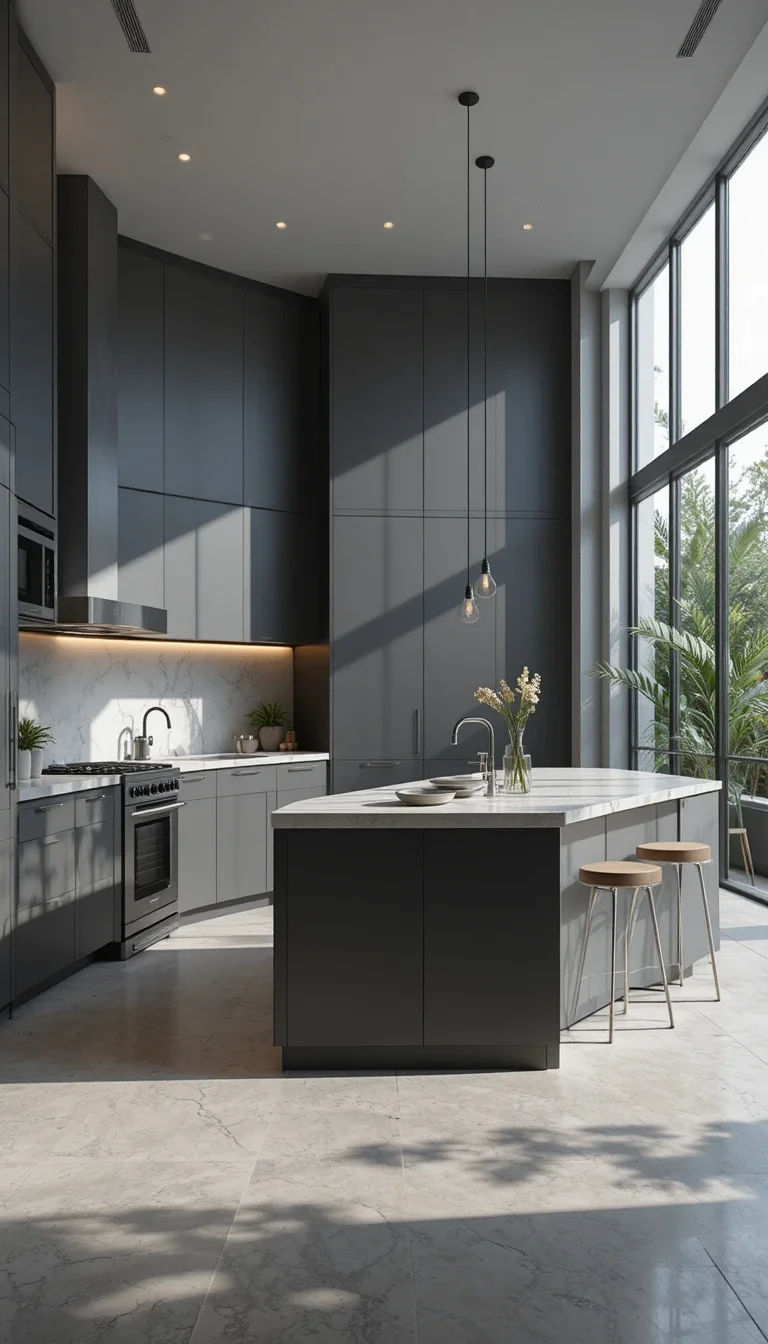
White kitchens are the safe, expected play. But dark kitchens? They’re the rooms that make you stay. There’s a reason every unforgettable restaurant, hotel bar, and home renovation leans into darker tones: they don’t just sell homes, they create moods.
Ready to take the leap? Here’s how to do it without making it look like a mistake.
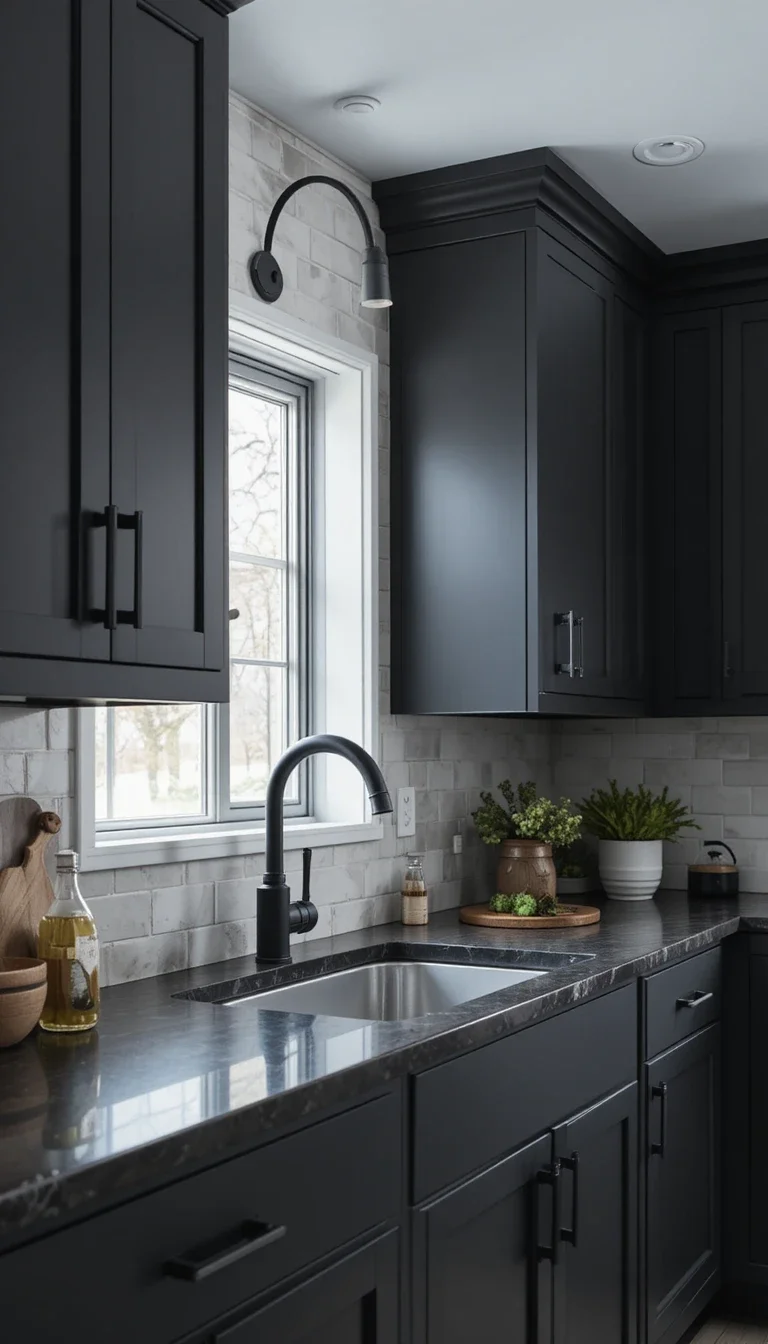
All-Black Matte Cabinetry
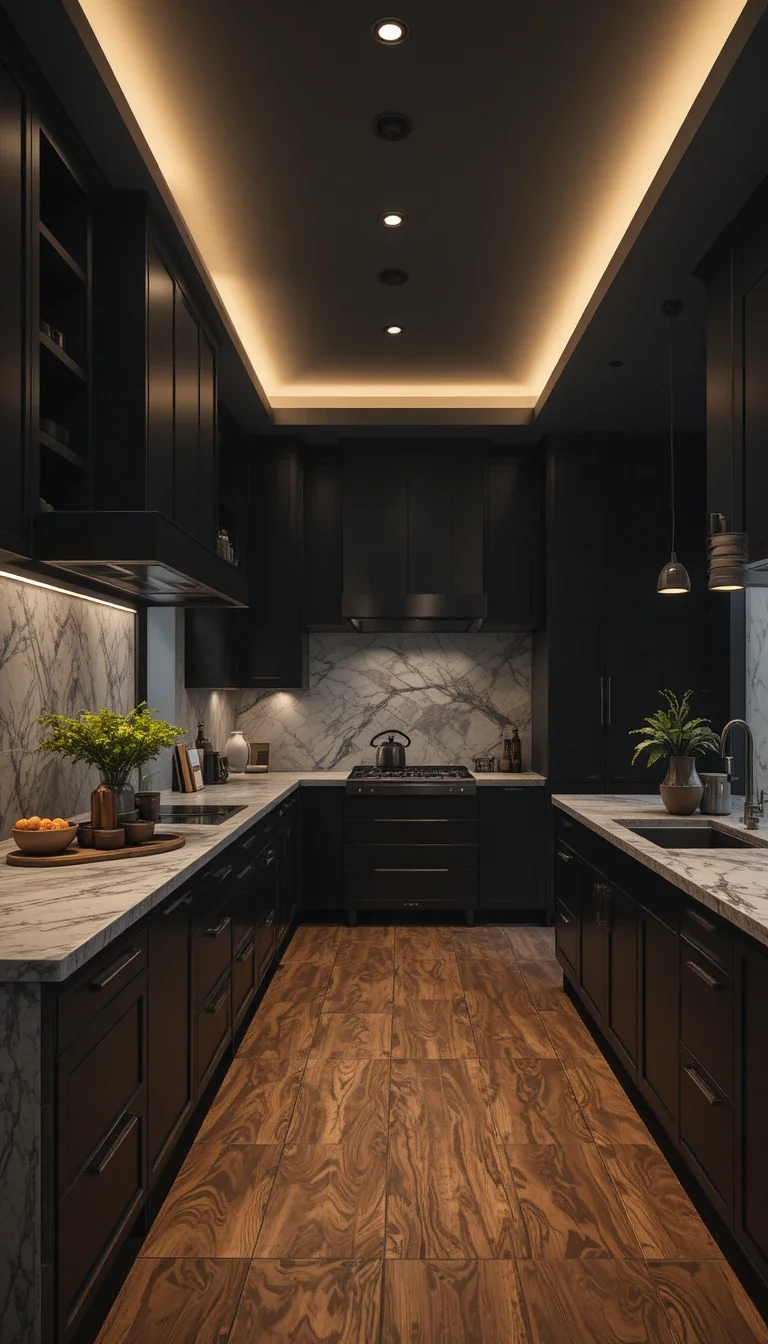
This is the most committed version of a dark kitchen and also the most rewarding when done right. Flat-front or shaker cabinets in a true matte black finish absorb light rather than reflect it, giving the room a depth that glossy finishes can’t achieve.
Balance it with warm wood floors and natural stone countertops. Without those anchors, all-black can tip from dramatic into oppressive.
Charcoal Gray Shaker Cabinets
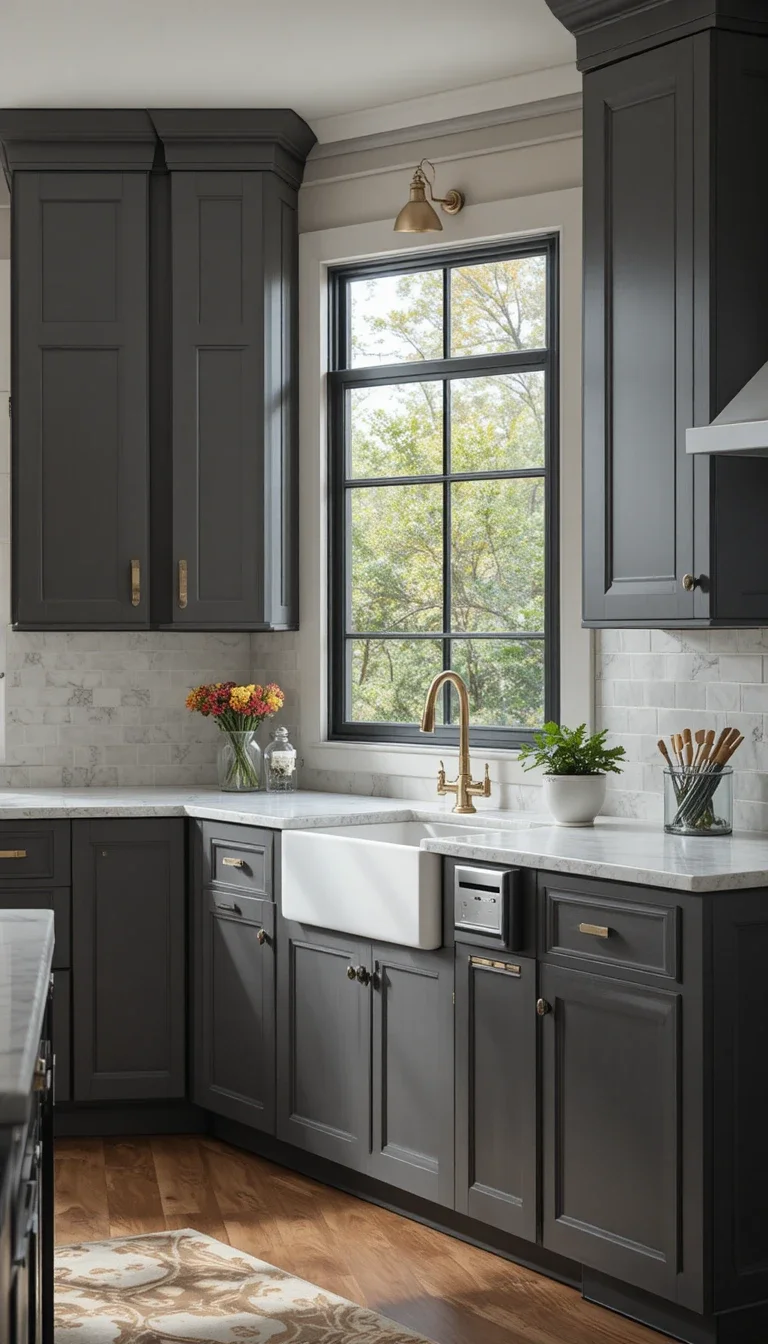
If full black feels too bold, try charcoal gray. It offers drama with flexible countertop and hardware pairing options. Both warm and cool metals, as well as lighter and darker stones, complement charcoal gray effortlessly.
Charcoal gray is practical for everyday living, showing fewer fingerprints and requiring less upkeep than true black. For most, it offers a balanced way to achieve a dark kitchen look without full commitment.
Dark Navy Blue Cabinetry
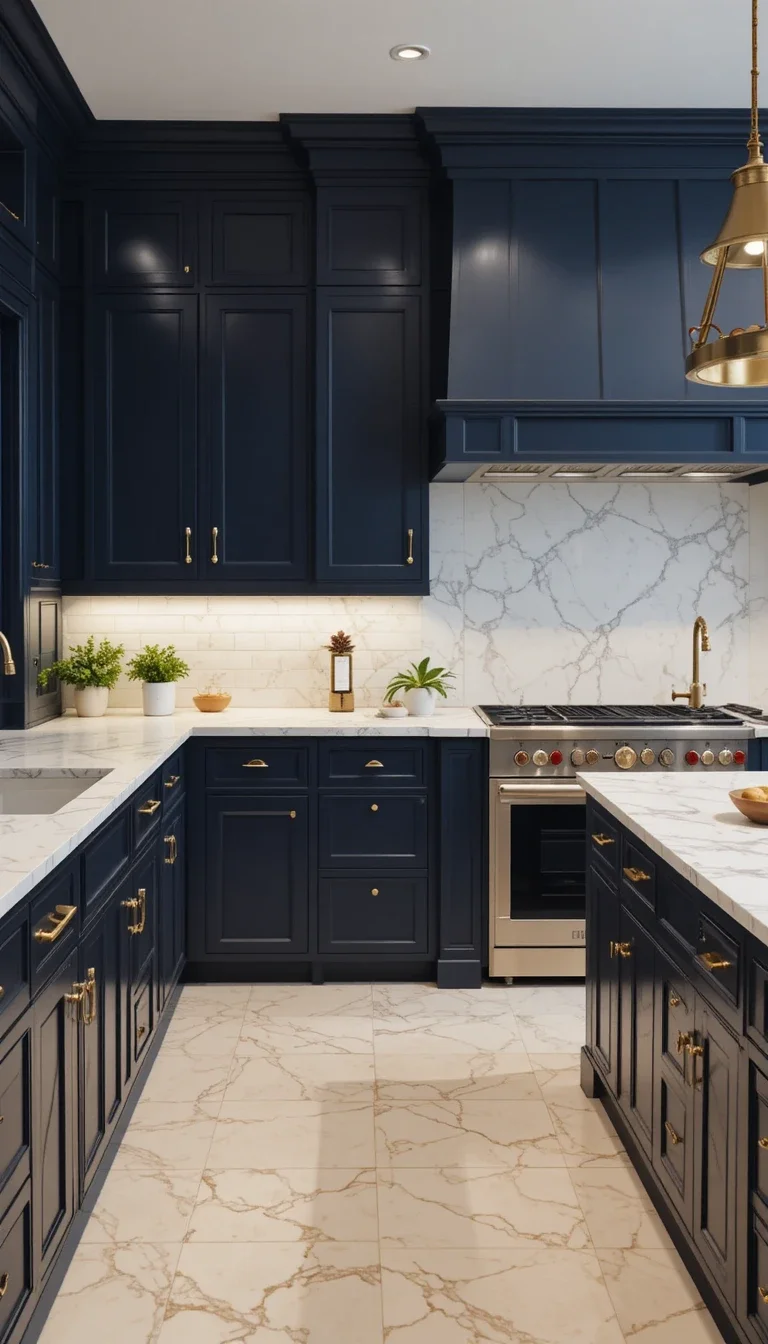
Navy blue brings the drama without the severity of black or charcoal. A deep navy kitchen reads as sophisticated and considered rather than bold for its own sake.
Pair navy blue with brass or gold hardware and white marble countertops for a luxurious effect. Guests will notice the thoughtful design, even if your approach is DIY.
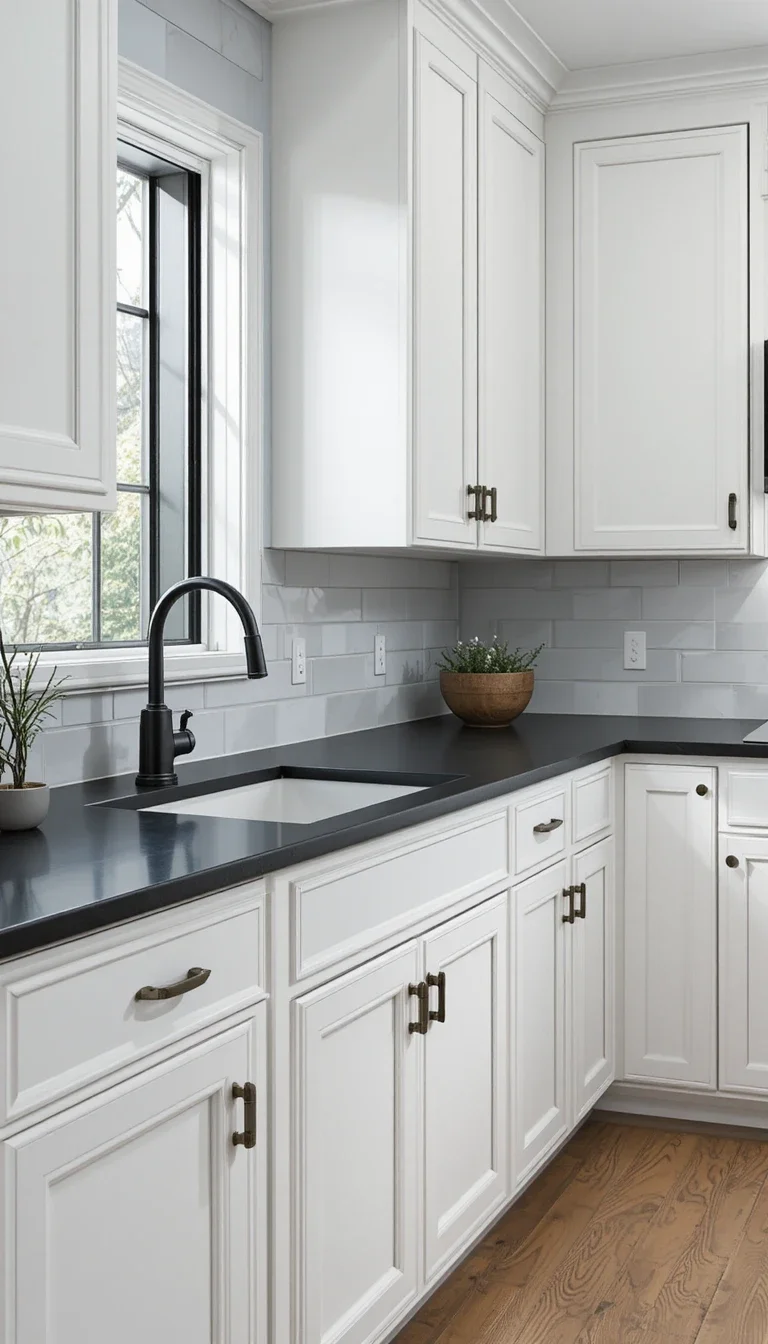
4. Black Countertops with Light Cabinets
You don’t need dark cabinets to get a dark kitchen. Matte black or leathered black granite countertops paired with white or cream cabinets create a high-contrast dark kitchen that feels bold yet not heavy.
The dark surface anchors the room, while light cabinets keep the atmosphere open. This entry-level approach to dark kitchens always makes an impact.
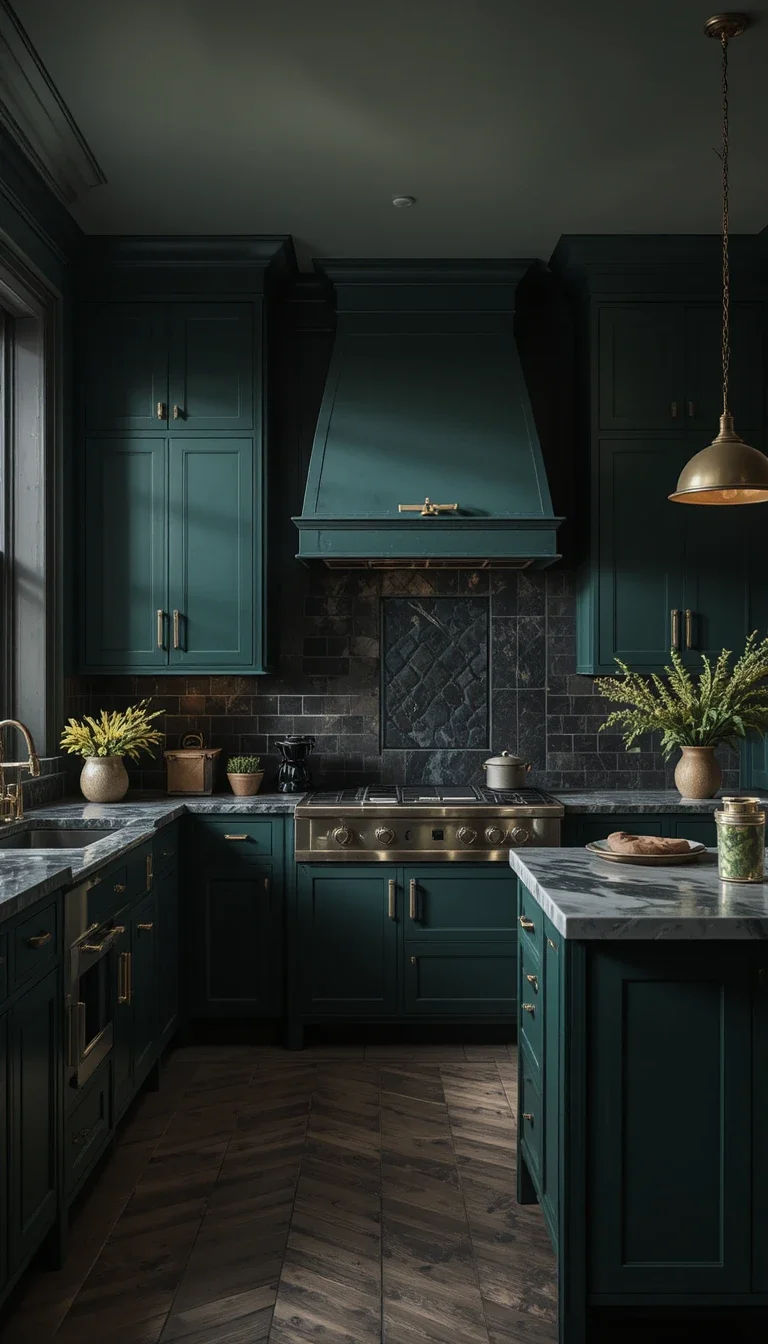
Dark Forest Green Cabinetry
Deep forest green, darker and moodier than emerald, sits right at the intersection of dramatic and natural. It reads as dark in artificial light and reveals its green depth in natural light, which means the kitchen changes character throughout the day.
Pair it with unlacquered brass hardware and terracotta or dark wood floors. This combination has a richness that takes real effort to get wrong.
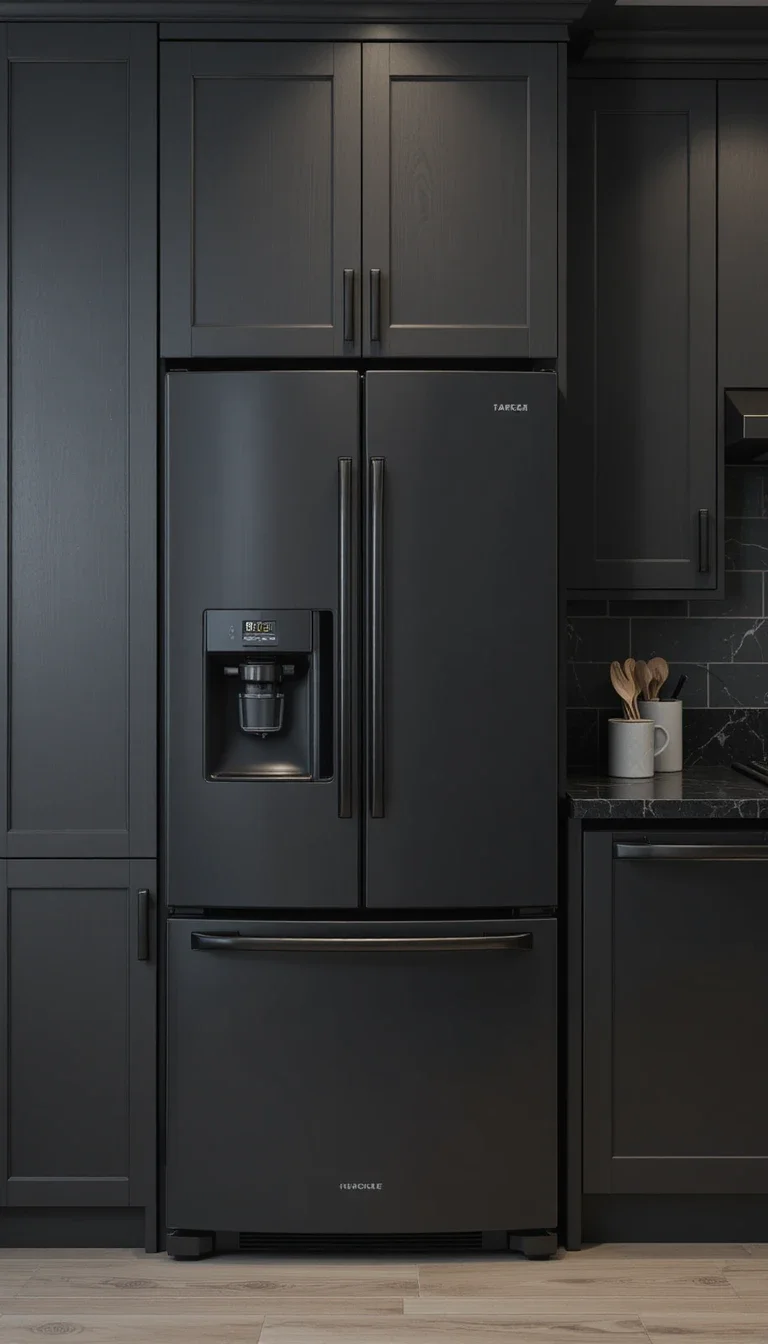
Black Stainless Steel Appliances
Standard stainless steel is fine. Black stainless steel appliances in a dark kitchen create a seamless, intentional look, where the appliances become part of the design rather than interruptions.
Several major brands, Samsung, LG, and KitchenAid, now offer black stainless lines. The finish resists fingerprints better than standard stainless steel, too, which is quietly the best part.
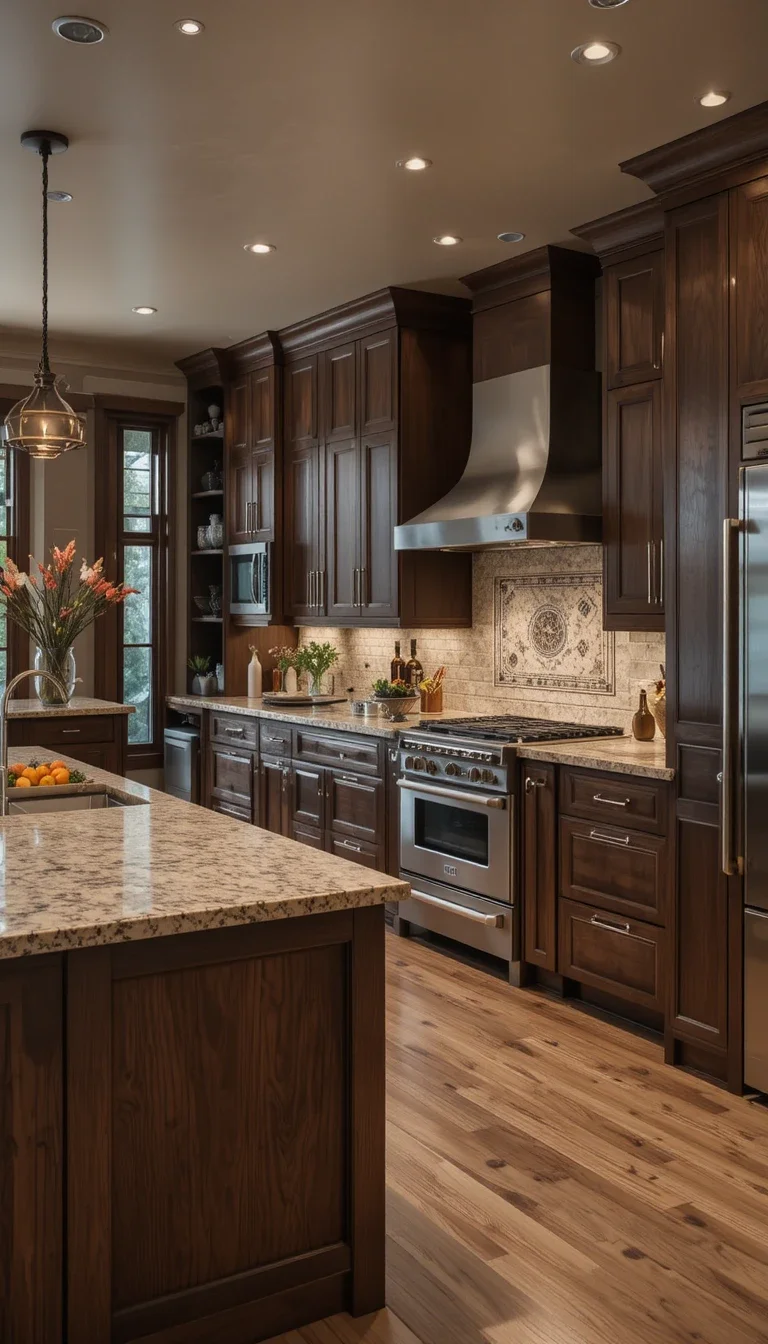
Dark Wood Cabinetry
Walnut or dark-stained oak cabinetry brings warmth to a dark kitchen that painted finishes simply can’t replicate. The natural grain pattern means no two kitchens look exactly the same, and the wood gets more beautiful as it ages.
This style leans more toward organic than industrial, making it easier to live with over time. It also pairs naturally with stone, concrete, and natural fiber textures.
Moody Black Backsplash
Your backsplash does more visual work than you think. A black subway tile, black, or black marble slab backsplash, especially behind the range, anchors the entire kitchen in darkness without requiring a full repaint of the cabinetry.
Use it as a focal feature rather than covering every wall. A single dramatic backsplash zone reads as intentional; covering everything can feel relentless.
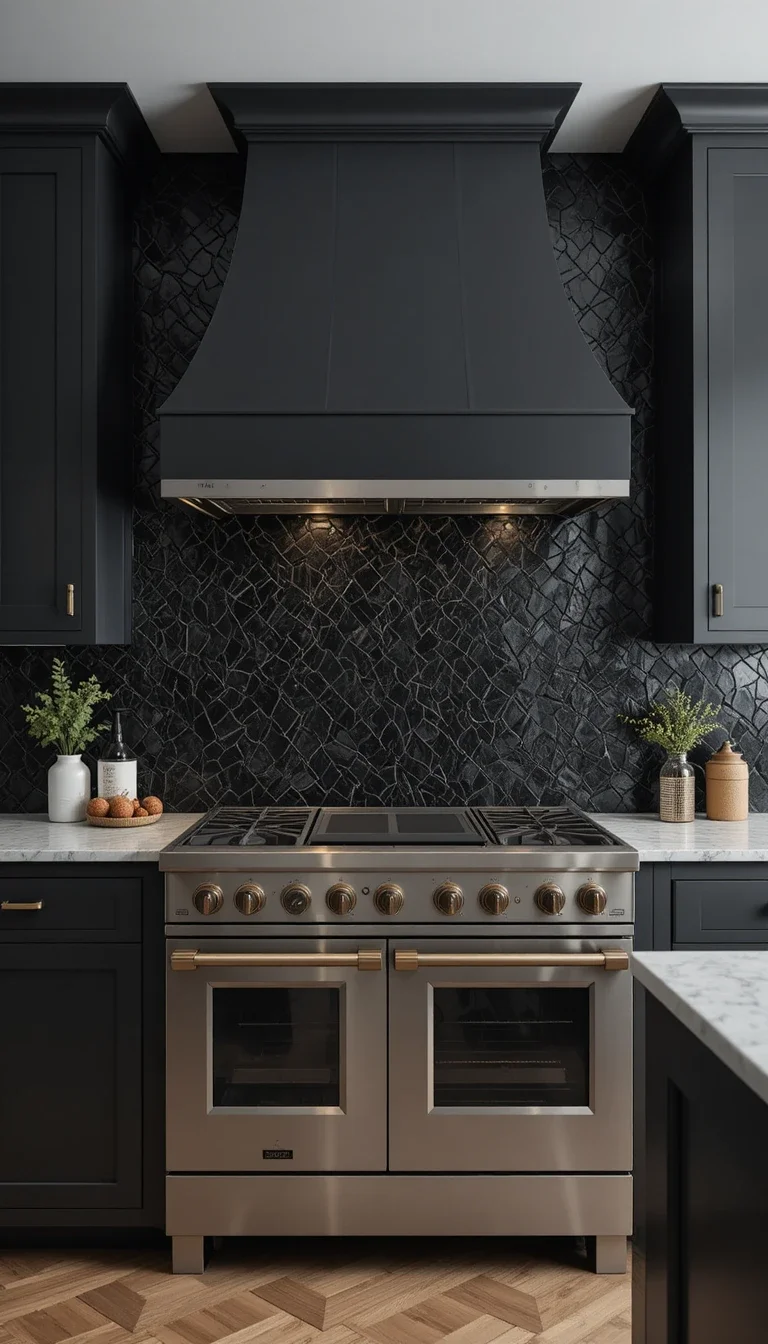
Dark Kitchen with Brass Accents
Brass and dark kitchens were made for each other. The warm gold tone of brass hardware, faucets, and light fixtures cuts through dark cabinetry, preventing the room from looking flat.
Use brushed brass rather than polished; it’s warmer, more forgiving, and it develops a patina over time that makes the kitchen look better the longer you live in it.
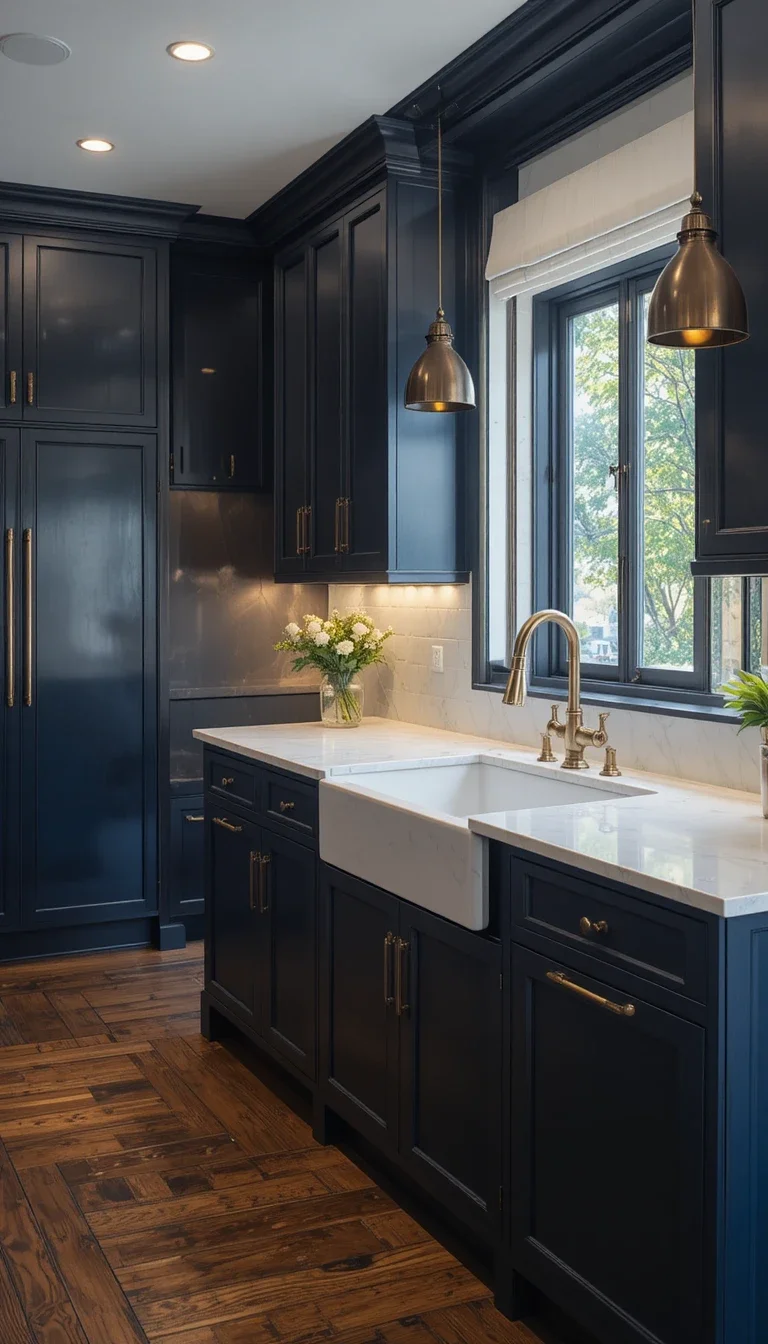
Integrated Dark Appliances
Panel-ready appliances integrated behind dark cabinet fronts create a kitchen where everything disappears into one cohesive surface. No visual interruptions. No stainless boxes breaking the composition.
This is a high-budget move, but it’s the difference between a dark kitchen that looks designed and one that just looks painted dark.
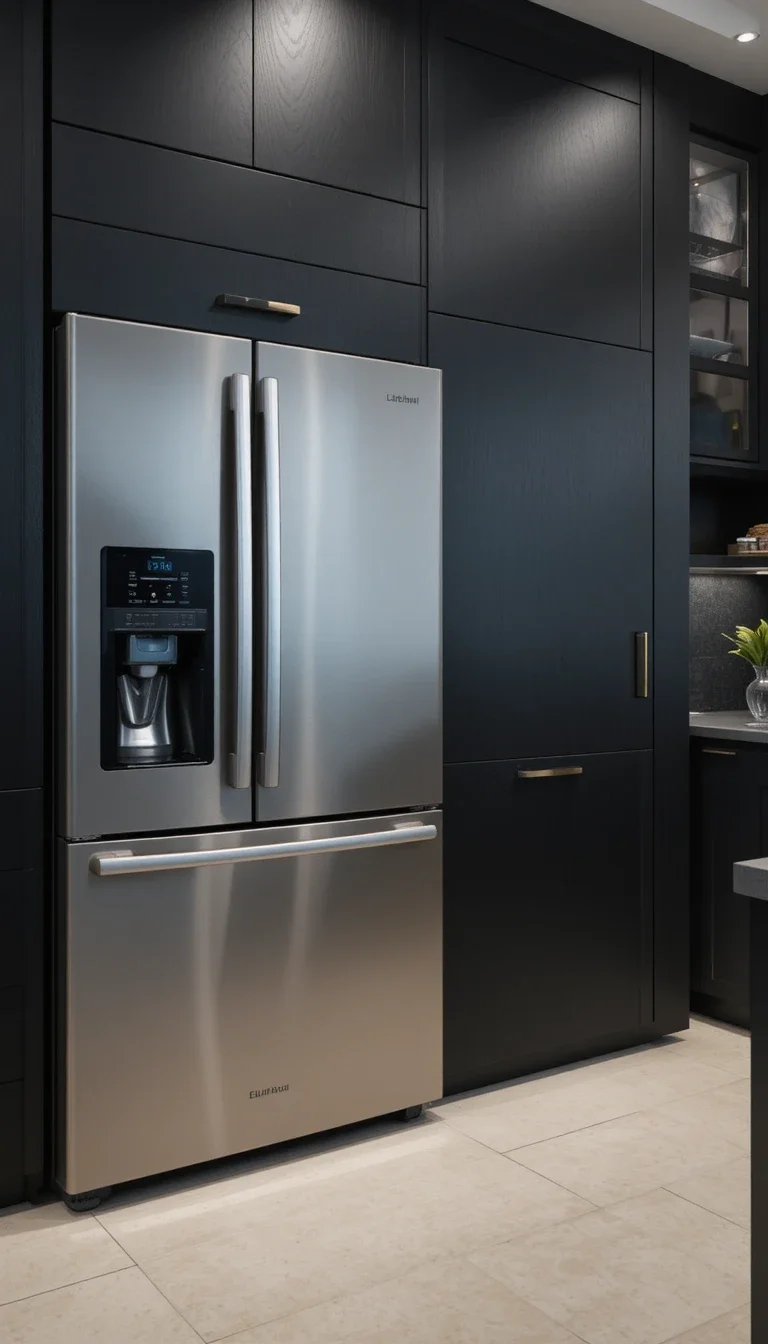
Dark Kitchen with Concrete Floors
Polished or honed concrete floors under dark cabinetry create an industrial-luxe look that feels both raw and refined. The concrete subtly reflects overhead light, while the dark cabinets absorb it. The contrast between the two surfaces gives the room enormous visual depth.
Add warm pendant lighting, and the kitchen feels like somewhere you’d actually want to spend time, not just cook.
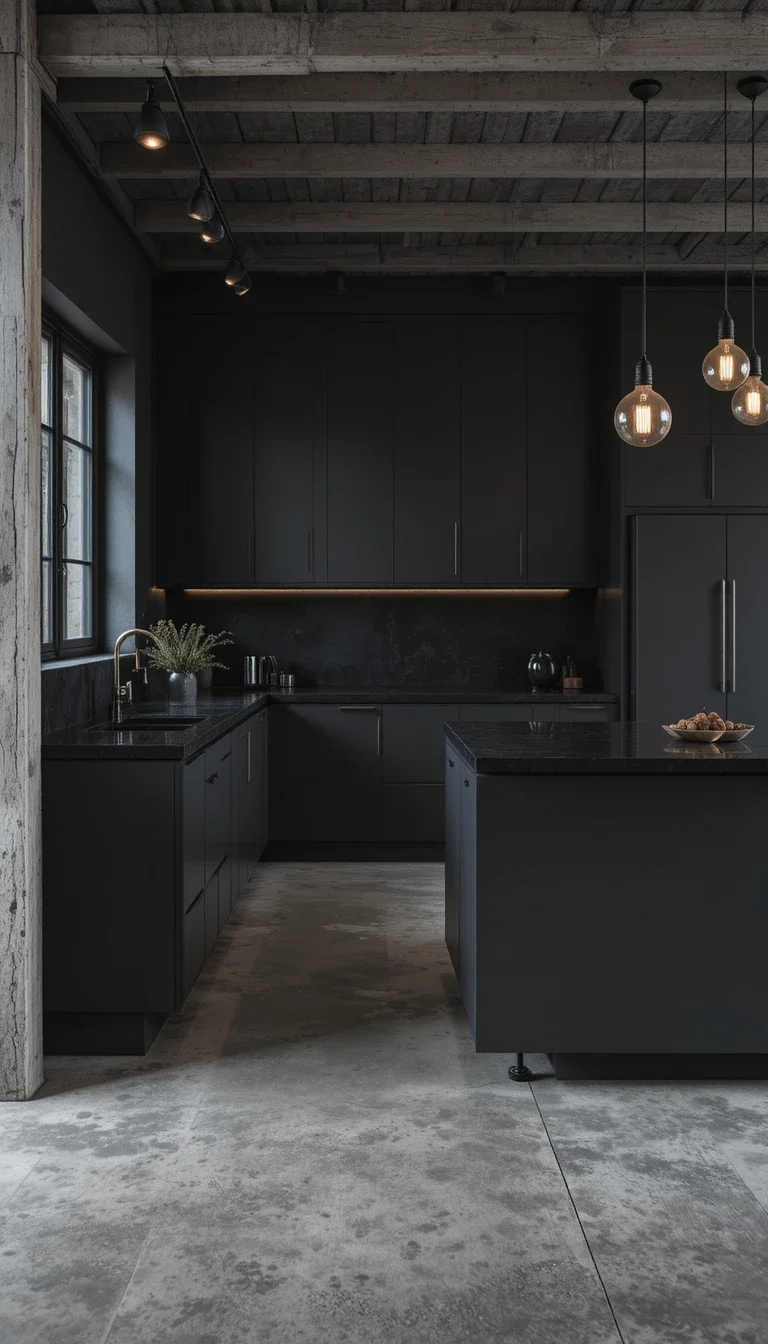
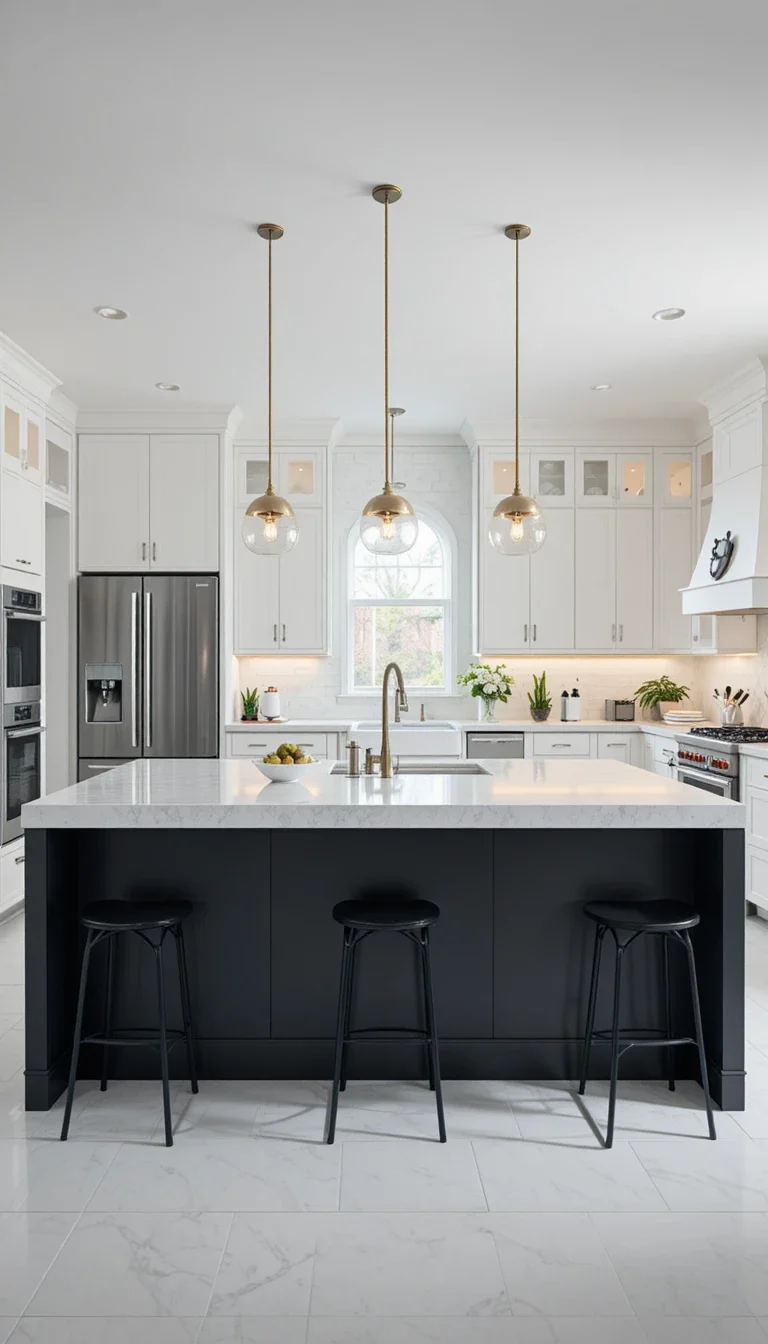
Black Island in a Light Kitchen
Not ready to go dark on every surface? A matte black or dark navy island in an otherwise white or light kitchen gives you the dramatic focal point without the full commitment.
This is also one of the most practical approaches. If you ever want to change direction, you repaint the island rather than the entire kitchen. Low stakes, high impact.\
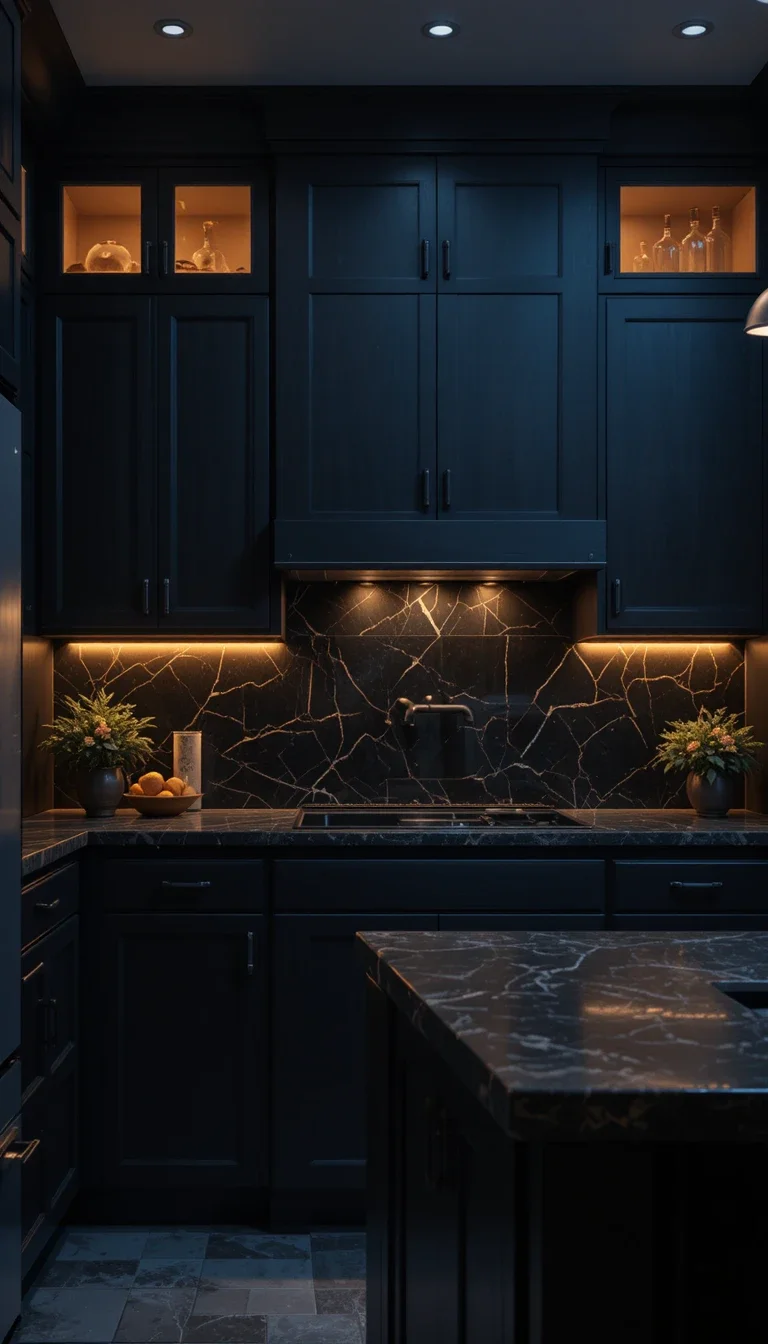
Dark Kitchen with Warm Under-Cabinet Lighting
Dark kitchens need layered lighting overhead alone won’t cut it. Warm LED strip lighting under the upper cabinets illuminates the countertop and backsplash, adding a glow that makes a dark kitchen feel atmospheric rather than dim.
FYI, the color temperature of your under-cabinet lighting matters enormously in a dark kitchen. Go warm (2700K–3000K). Cool white light in a dark kitchen looks clinical and wrong.
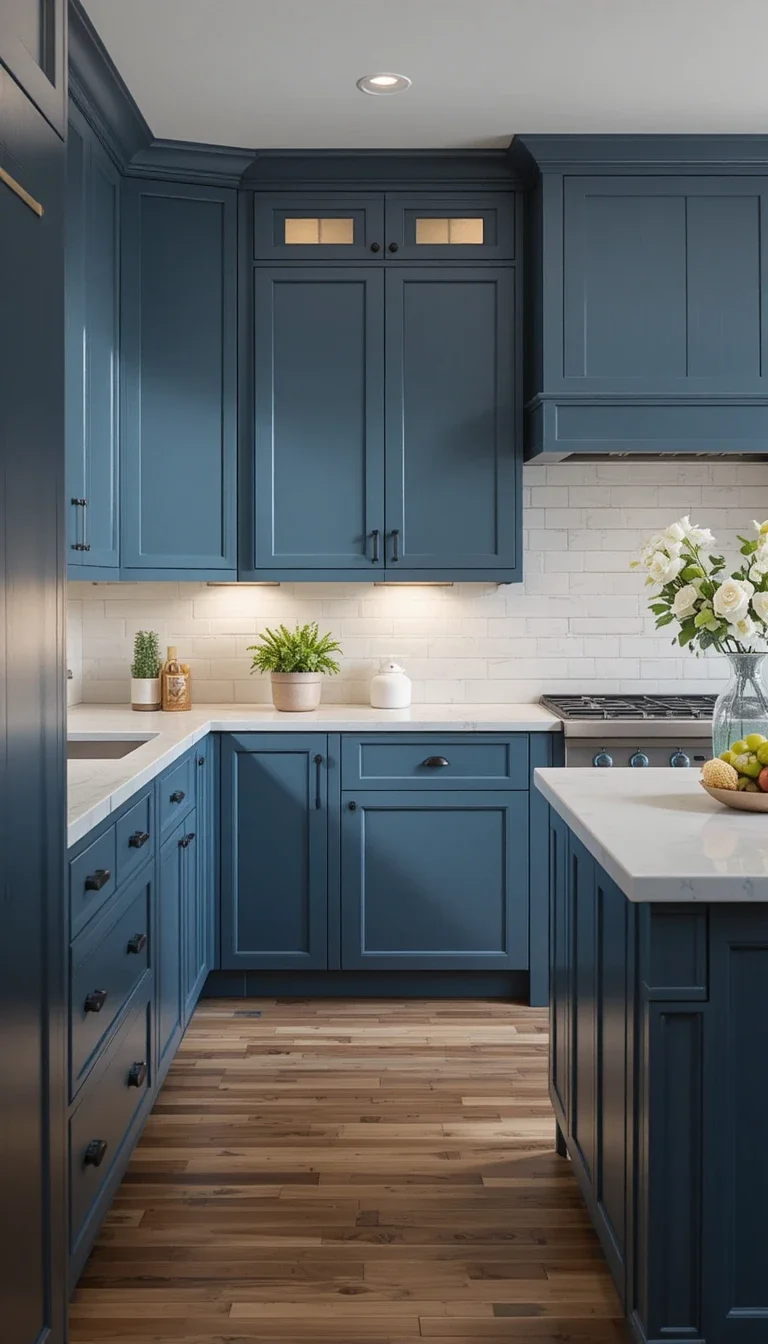
Slate Blue Cabinetry
Slate blue sits between navy and gray and has its own distinct personality. It reads differently in every light, almost gray in overcast conditions, distinctly blue in warm evening light, which keeps the kitchen feeling dynamic rather than static.
Pair it with white or light-cream countertops and matte-black hardware. It’s a combination that photographs well and lives even better.
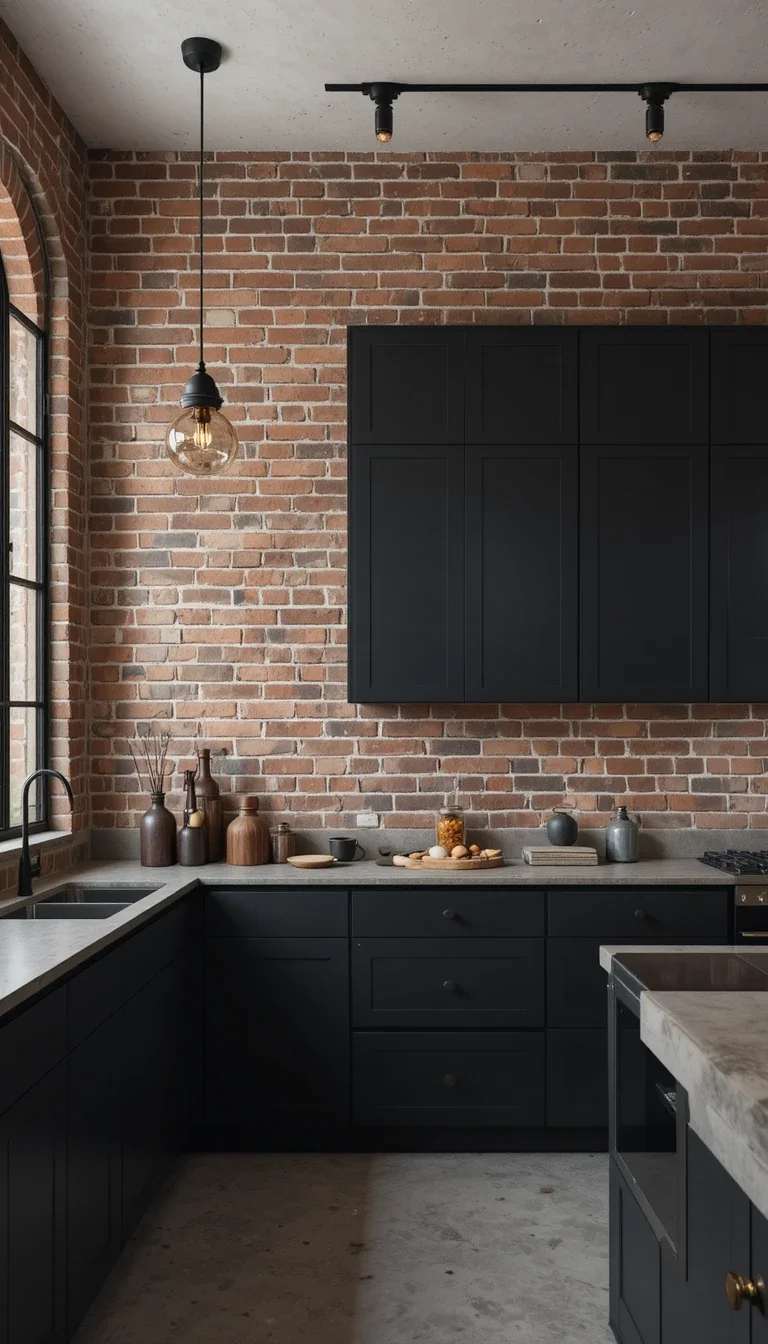
Dark Kitchen with Exposed Brick
Exposed brick walls in a dark kitchen add texture, warmth, and history that smooth painted surfaces can’t fake. The rough organic texture of brick contrasts beautifully with the precision of dark flat-front cabinetry.
Keep the brick natural, don’t paint it. The original color, whatever it is, will work with dark cabinetry better than painted brick ever would.
Matte Black Fixtures Throughout
Commit to matte-black fixtures, faucets, hardware, light switches, outlet covers, pot filler, and the kitchen starts to feel like every detail was considered. This level of consistency transforms a dark kitchen from “painted dark” to “designed dark.”
It’s the difference between a costume and a wardrobe.
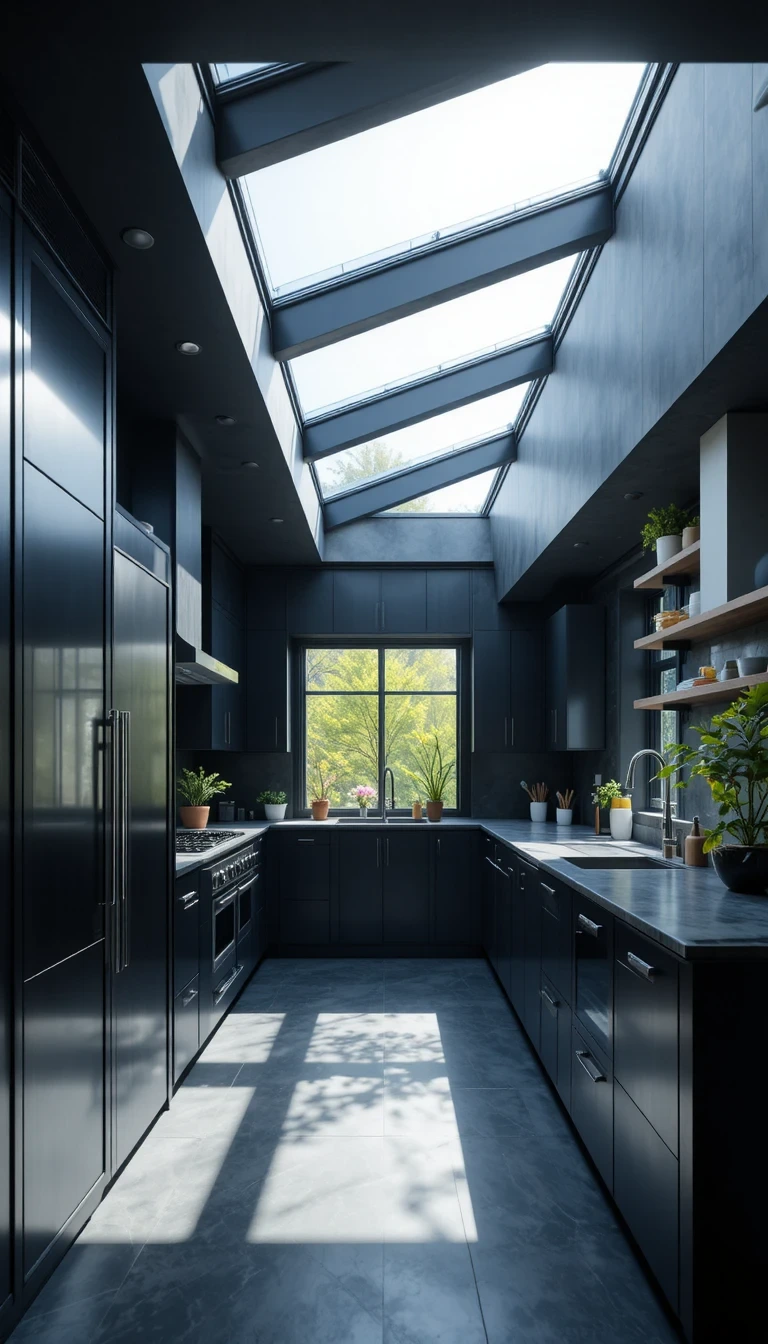
Dark Kitchen with Skylights
The single most effective way to make a dark kitchen work in a space that needs light. Skylights flood the room with natural light from above without competing with the dark aesthetic the way large side windows sometimes do.
Dark surfaces absorb and reflect skylight differently throughout the day, which means the kitchen genuinely changes atmosphere from morning to evening.
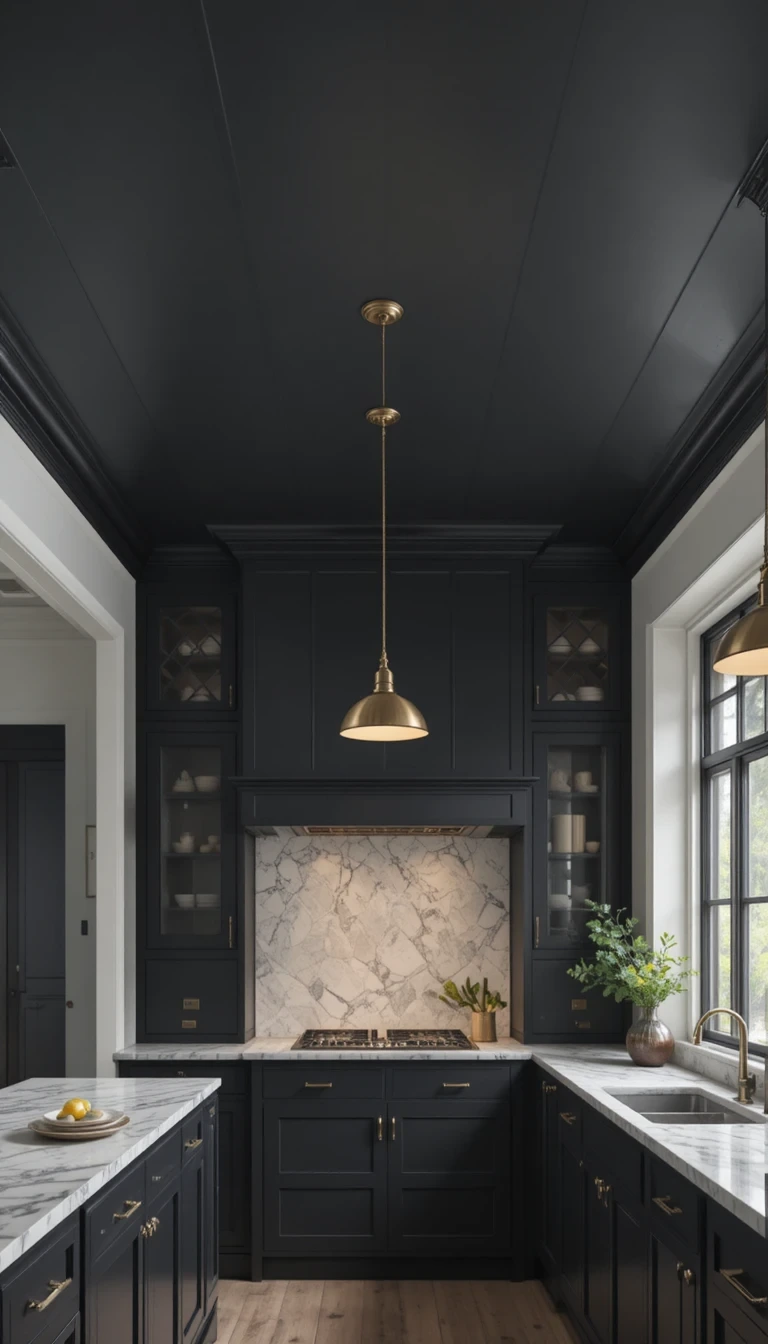
Dramatic Dark Ceiling
Most people only think about their walls and cabinets. Painting the kitchen ceiling in the same dark tone as your cabinetry, or even darker, wraps the entire room in color and creates an enveloping, intentional atmosphere.
This works best in kitchens with sufficient height. In a low-ceiling kitchen, a dark ceiling will feel like it’s sitting on your head. Know your room.
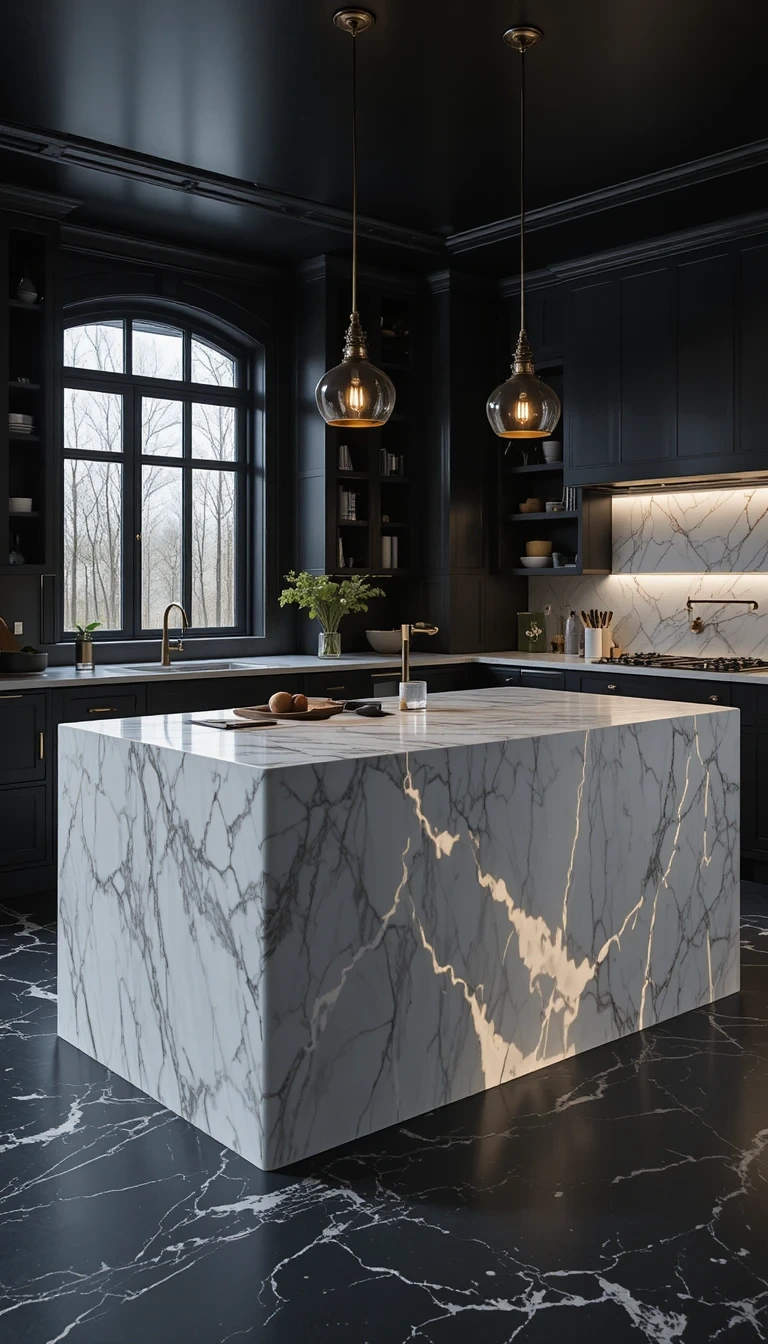
Dark Kitchen with Marble Waterfall Island
A white or cream marble waterfall island in a dark kitchen creates the most dramatic contrast available in kitchen design. The white stone glows against the surrounding darkness, as if it had its own light source.
A light island surface is also genuinely practical; crumbs and debris are more visible and easier to clean than on a dark one. 20. Black Fluted Cabinet Fronts
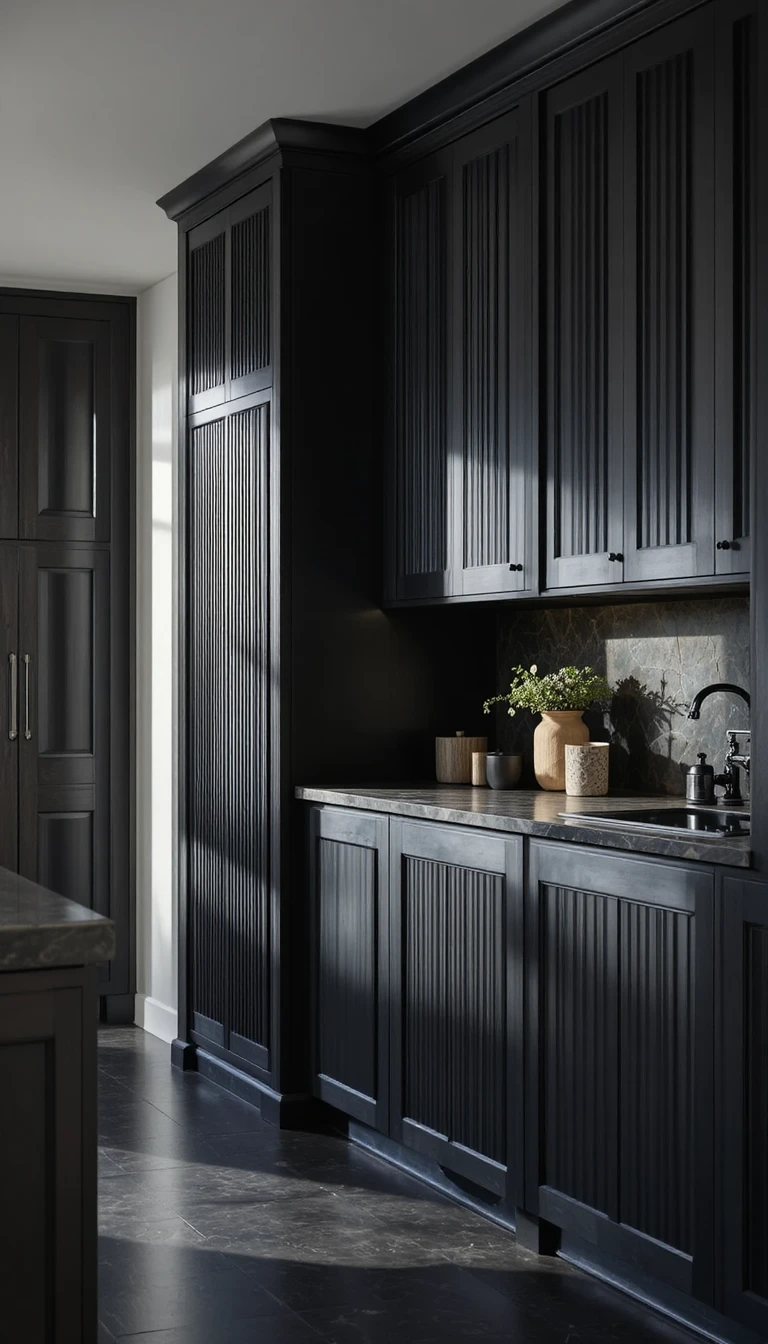
Fluted or cabinet fronts in matte black add texture to a dark kitchen without adding color. The vertical grooves catch light and shadow throughout the day, giving the cabinets a depth that flat doors simply don’t have.
Use them selectively on pantry doors, island panels, and a single cabinetry run rather than everywhere. Texture needs space to breathe.
Black Fluted Cabinet Fronts
Fluted cabinet fronts in matte black add texture to a dark kitchen without adding color. The vertical grooves catch light and shadow throughout the day, giving the cabinets a depth that flat doors simply don’t have.
Use them selectively pantry doors, island panels, a single cabinetry run rather than everywhere. Texture needs space to breathe.
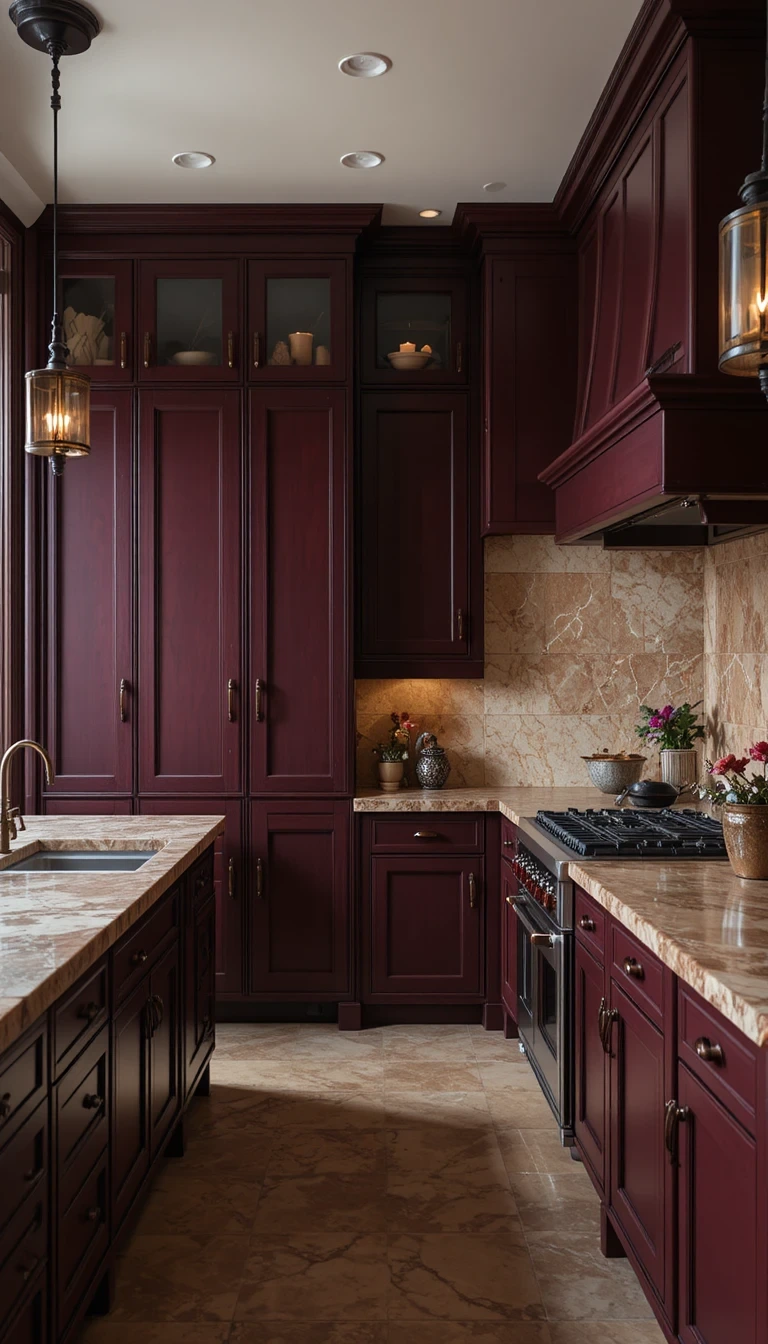
Deep Burgundy or Oxblood Cabinetry
This is the dark kitchen choice nobody talks about enough. Deep burgundy or oxblood red cabinetry creates a moody, wine-cellar richness that’s completely distinct from black, navy, or green alternatives.
It pairs exceptionally well with dark bronze or aged brass hardware and natural stone countertops. It’s bold, it’s unusual, and it’s almost impossible to pull off badly if your hardware and countertop choices are grounded.
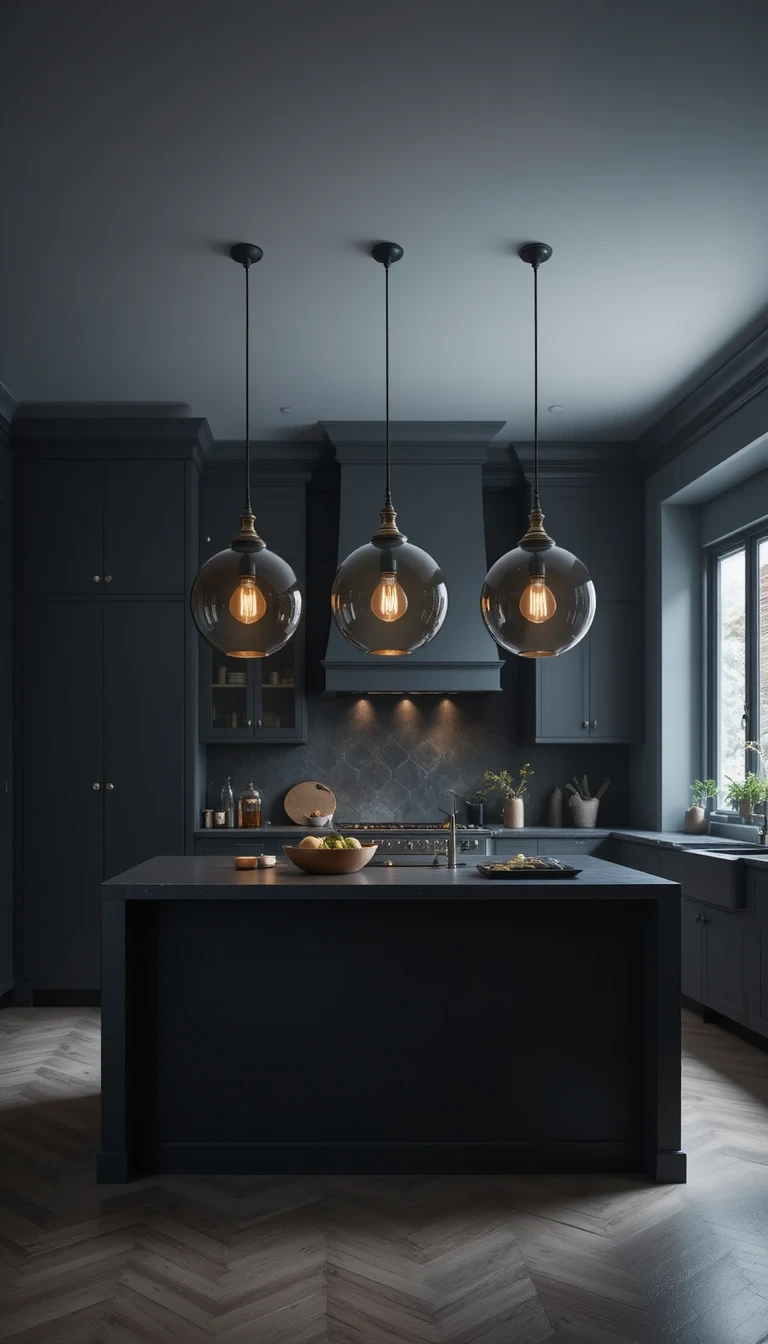
Dark Kitchen with Statement Pendant Lighting
In a dark kitchen, your light fixtures stop being background elements and become focal points. Oversized pendant lights in smoked glass, aged brass, or matte black hang like jewelry over an island and define the space from above.
Choose pendants that work with the light off as well as on in a dark kitchen; the fixture itself is always visible, always part of the composition. Make it worth looking at.
The Bottom Line
Dark kitchens reward intention. Every material choice, every hardware finish, every light fixture matters more in a dark kitchen than it does in a white one because there’s nowhere to hide and nothing to dilute the impact of a bad decision.
But when it comes together? A dark kitchen is one of the most viscerally satisfying spaces in a home. It feels like somewhere. Start with one element, a dark island, black countertops, charcoal lower cabinets, and see how it feels before you commit to the whole room.
Your future self will either thank you or have a very interesting painting project ahead. Either way, it’s worth trying.
