

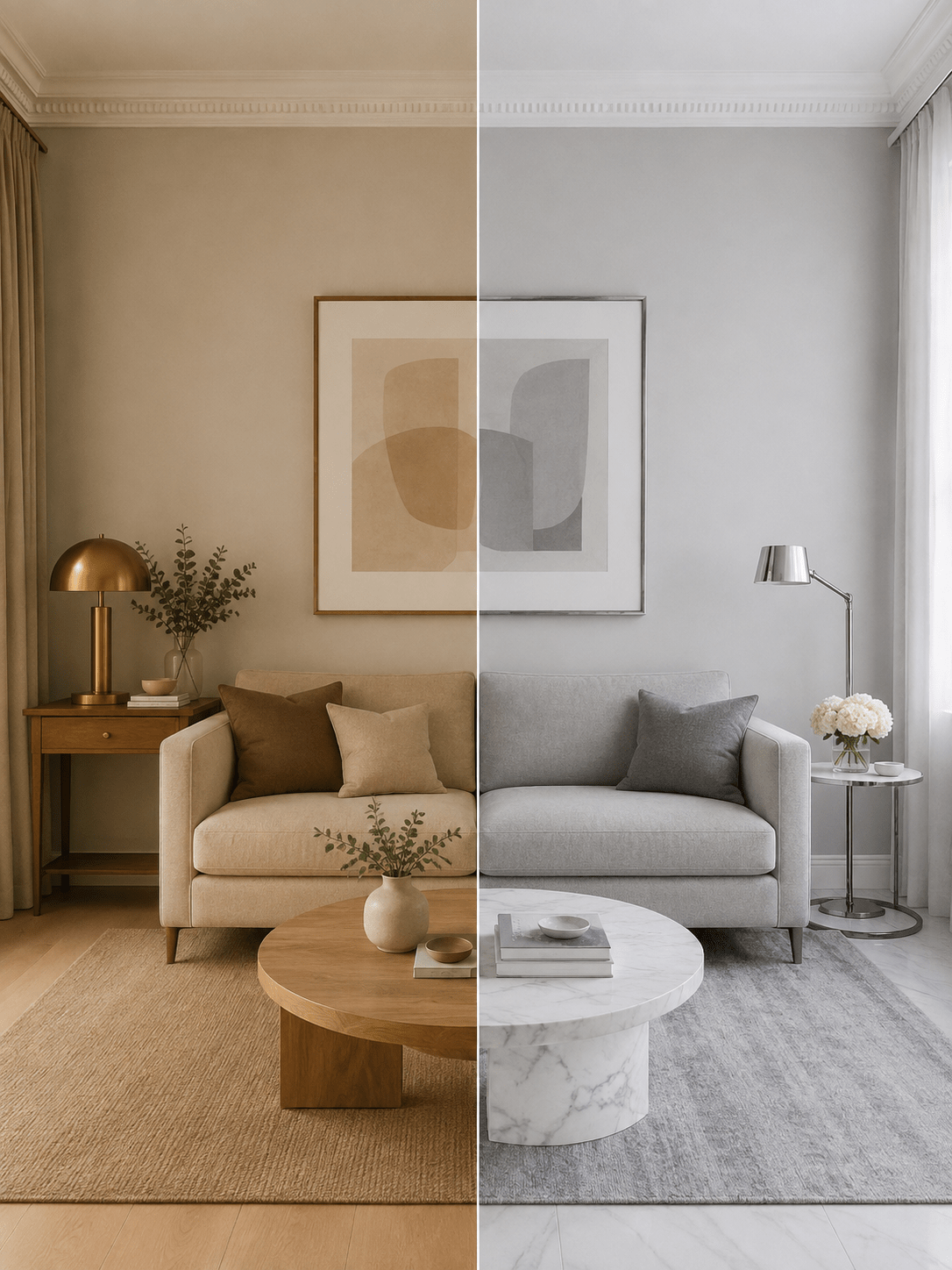
Two rooms can both be painted “grey” and feel like opposites. One is cozy and inviting. The other feels like a dentist’s waiting room. The difference almost always comes down to greige vs cool grey, and picking the wrong one is the single most common reason a grey room disappoints.
The good news is that this is an easy decision once you know what you are looking at. This guide explains what separates the two, gives you two quick tests to tell them apart, then walks you through choosing the right one for your specific room. No paint-brand memorization required.
Greige is a warm grey with beige in it. It reads cozy, soft, and current. Cool grey has blue in it. It reads crisp, modern, and can tip cold fast.
Most homes in 2026 lean greige, because the whole design mood has shifted warm. But cool grey still wins in specific rooms. Which one you need depends on your light and your existing finishes, and that is the part most guides skip.
What greige actually is
Greige is exactly what the name smashes together: grey plus beige. Its undertones sit in the yellow, brown, and sometimes soft-green family.
That warmth is why greige feels approachable and lived-in. It pairs naturally with wood, rattan, brass, and cream, and it flatters warm daylight. Push a greige far enough toward brown and it becomes taupe. Push it toward green and it becomes the greige most designers reach for right now.
What cool grey actually is
Cool grey carries blue, and sometimes violet or green, beneath the surface. That blue is what gives it precision and a clean, modern edge.
Used well, cool grey feels sharp and architectural. Used carelessly, it turns sterile and chilly, especially in low or north-facing light where the blue amplifies. Cool grey wants to be balanced by warmth elsewhere in the room, or it takes over.
Side by side
Here is the whole comparison in one place.
| Greige (warm grey) | Cool grey | |
|---|---|---|
| Undertone | Yellow, brown, soft green | Blue, violet, green |
| Mood | Cozy, soft, inviting | Crisp, modern, precise |
| Reads best in | Warm and south-facing light | Bright, even, or north light with warm accents |
| Pairs with | Wood, brass, cream, rattan | Chrome, black, white, cool marble |
| Main risk | Can look muddy in very cool light | Can look cold and clinical |
| Best for | Bedrooms, living rooms, cozy bathrooms | Modern kitchens, offices, bright open spaces |
Two tests to tell them apart
Colors lie in isolation. Grey especially. So test, do not guess.
The white paper test. Hold the grey, a paint chip, a tile, a fabric, against a sheet of pure white printer paper in daylight. Next to true white, the hidden undertone reveals itself. Blue or violet peeking through means cool. Yellow, brown, or a creamy cast means greige.
The in-room test. This one matters more, because a grey never lives on white paper. Hold your sample against the things that are actually staying in the room: the floor, the countertop, the wood of your furniture. A greige that looked lovely on paper can flash dirty next to a cool marble, and a cool grey can look like a mistake beside honey oak. The grey has to get along with what it sits next to.
The real deciding factor: your light and your finishes
Forget trends for a second. The right grey for your room is decided by two things you mostly cannot change.
Your light. Warm, south-facing rooms flatter greige and can make a cool grey look almost neutral. North-facing rooms flood everything with cool blue light, which drains greige toward muddy and pushes cool grey toward icy. If your room runs cold and dim, greige gives you warmth to fight back with. If it is bright and sun-filled, you can carry a cool grey without it turning clinical.
Your finishes. Look at the fixed things: flooring, tiles, worktops, metal fittings. Warm oak, brass, and cream-toned surfaces call for greige. Chrome, cool marble, black hardware, and stark white call for cool grey. As a renter especially, you usually match the grey to what is already there rather than the other way around.
Get these two right and the grey almost picks itself.
A quick choose-by-room guide
Choose greige if you want the room to feel calm and cozy: bedrooms, living rooms, and any bathroom you want to feel spa-like rather than clinical. Our grey bathroom ideas lean warm for exactly this reason.
Choose cool grey if you want crisp and modern, and the room has the bright light to support it: contemporary kitchens, home offices, and open-plan spaces with plenty of daylight and some warm accents mixed in.
Still unsure? Default to greige. In 2026’s warm-leaning design climate, a warm grey is the safer bet in more rooms, and it is far more forgiving of mistakes than a cool grey that goes cold on you.
The mistake that ruins either one
Here is the trap that sinks grey rooms regardless of which you pick: mixing undertones without meaning to.
A greige wall, a cool-grey sofa, and a blue-grey rug will fight each other forever, and you will feel that something is off without being able to say why. Commit to one temperature of grey and let everything else agree with it. One warm story or one cool story, not a quiet argument between the two. If you want a full palette built around your choice, our living room color schemes guide keeps undertones consistent.
Frequently Asked Questions
Is greige warm or cool?
Greige is warm. It combines grey with beige, so its undertones sit in the yellow, brown, and soft-green range rather than the blue range of a cool grey. That warmth is exactly what makes it feel cozier than a standard grey.
Is greige still in style in 2026?
Very much so. The broader shift toward warm neutrals has kept greige popular while cool, blue-based greys have fallen out of favor. Greige reads current precisely because it is warm, which is where interiors have moved.
How do I know if my grey is warm or cool?
Hold it against a sheet of pure white paper in daylight. A blue or violet cast means cool grey. A yellow, brown, or creamy cast means warm greige. Then test it again against your actual floor and fixtures, since a grey behaves differently next to real materials than it does on paper.
Does greige go with beige?
Yes, naturally, because greige already contains beige. It also pairs beautifully with wood, cream, brass, and other warm neutrals. Just keep the undertones in the same warm family so the combination reads intentional rather than muddy.
Which is better for a small room, greige or cool grey?
Greige is usually the safer choice in a small room, especially one with limited or cool light, because its warmth stops the space from feeling cold and cramped. A cool grey can work in a small room only if it gets bright light and warm accents to balance the blue.
Final Verdict
Greige and cool grey are not better or worse than each other. They are tools for different rooms. Greige brings warmth and forgiveness and suits the way most homes want to feel in 2026. Cool grey brings crisp modern precision, but it needs good light and a warm counterweight to keep from turning cold.
Test before you commit, match the grey to your light and your finishes rather than to a trend, and never let two temperatures of grey share a room. Do that and you will land on the right one nearly every time.
For the bigger picture on making any neutral work in a compact space, our small-space decorating 101 guide covers the rules that tie a whole room together.
