

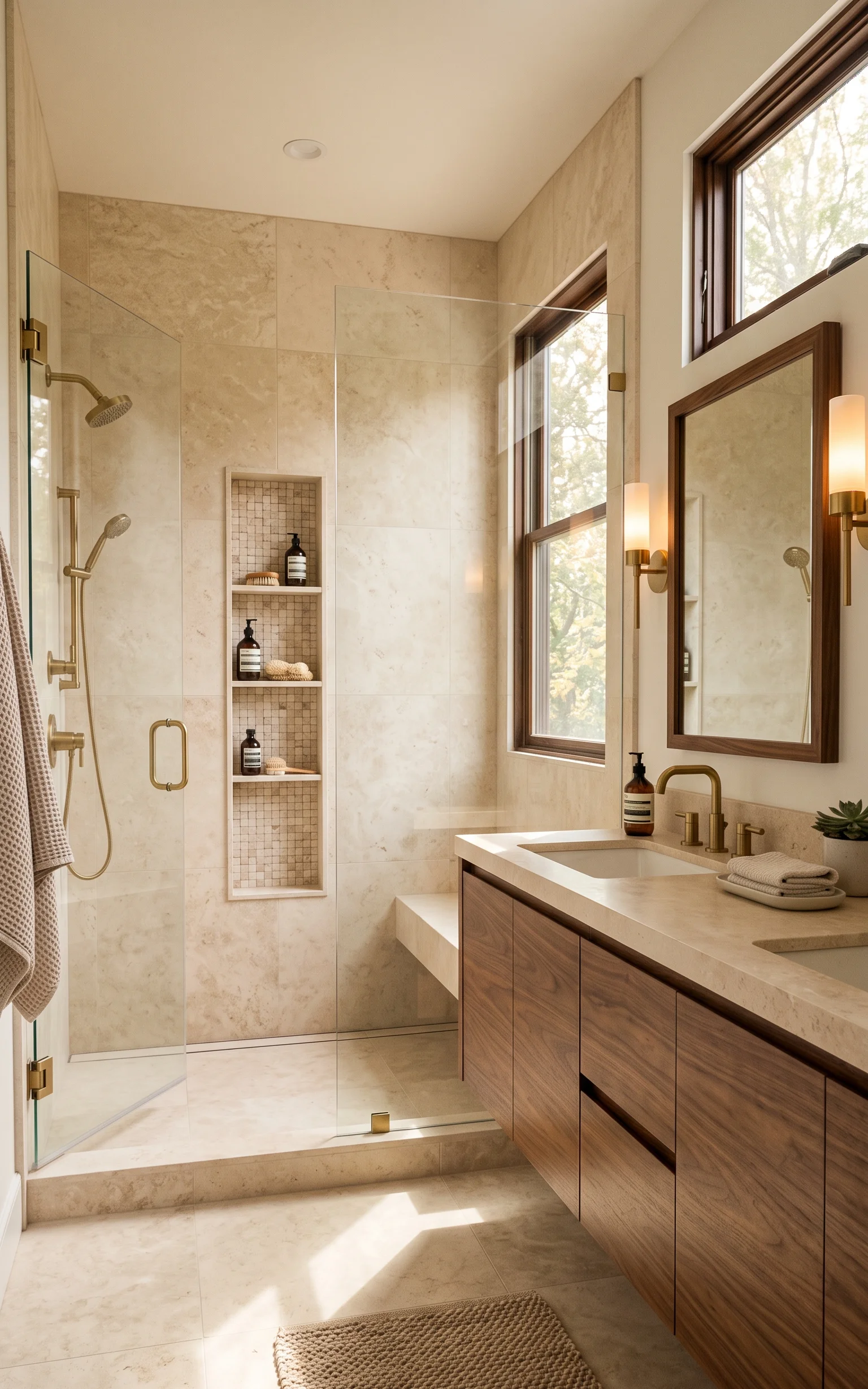
Cold gray bathrooms are losing the argument. For the better part of a decade, the default answer in bathroom design was some variation of white subway tile, pale gray grout, and chrome everything. Clean, yes. Easy to photograph, yes. But also the same in every house on every street, and increasingly hard to make feel like anywhere in particular.
Travertine solves a specific problem that white tile never could: it makes a bathroom feel like it was thought about. The natural variation in the stone, the warm honey and cream tones, the subtle pits in the surface — these things create a room that looks different at 7 AM with natural light and different again at 8 PM with warm lamps. That’s something you cannot manufacture with a uniform factory tile.
Here’s what actually works with travertine in 2026: finish by finish, colour by colour, application by application, plus the practical information most design guides skip entirely.
Finish and Texture Ideas
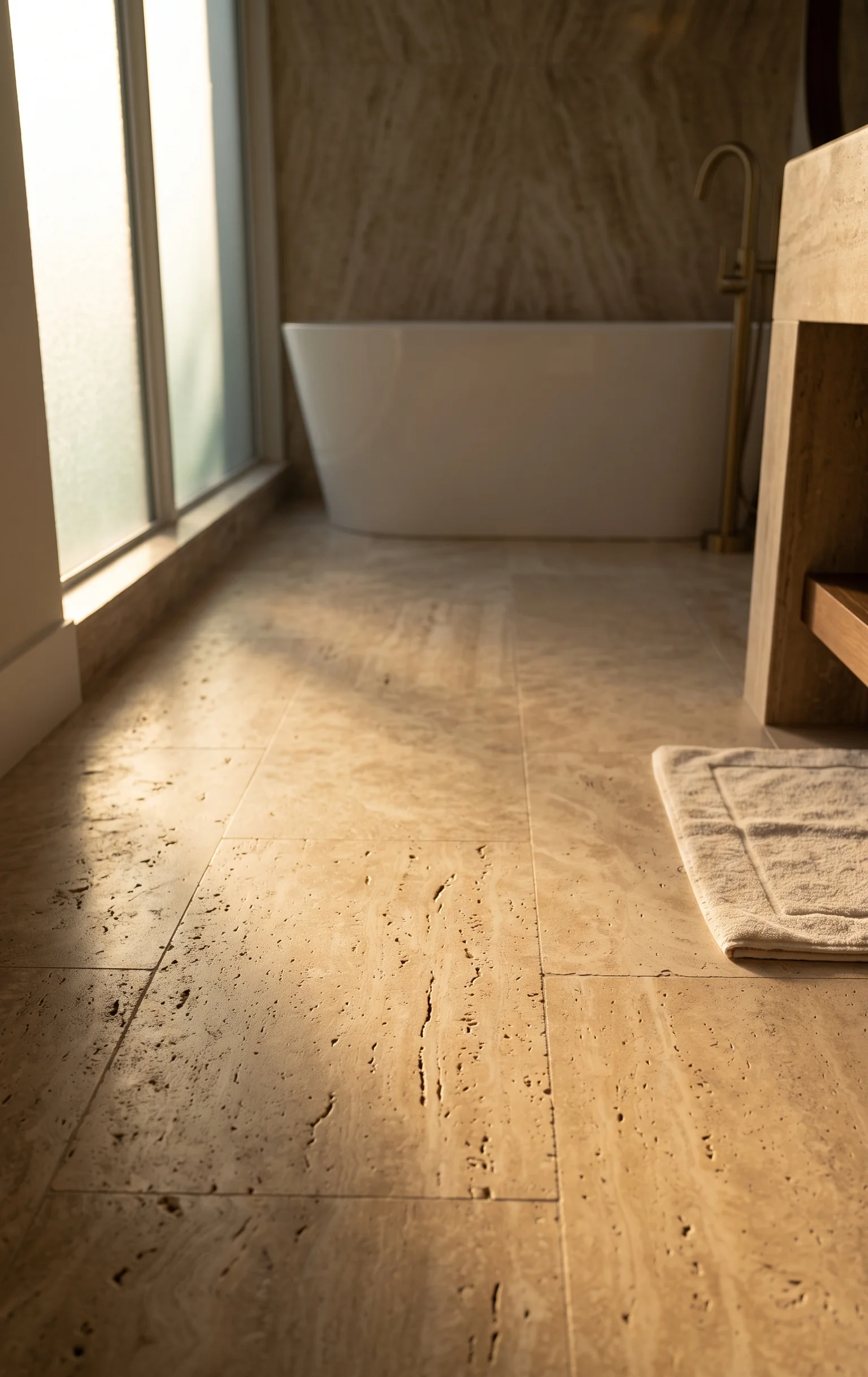
Honed Matte Travertine Floors
Of all the travertine finishes, honed is the one that ages most gracefully in a bathroom. The grinding process leaves the surface smooth and flat without any reflective polish, which means water spots soap drips, and daily wear stay invisible where a polished finish would show every single one.
Underfoot, honed travertine has a grip that polished stone simply cannot match in a wet room. It reads matte in photographs but feels velvety and warm in person, particularly when it covers enough floor area to catch natural light at an angle.
Large format honed tiles, 24×24 inches and above, work best in primary bathrooms where fewer grout lines keep the floor reading as a continuous surface. In smaller bathrooms, a 12×24 rectangular tile in the same finish keeps the scale appropriate without losing any of the warmth.
Fluted Travertine Wall Panels
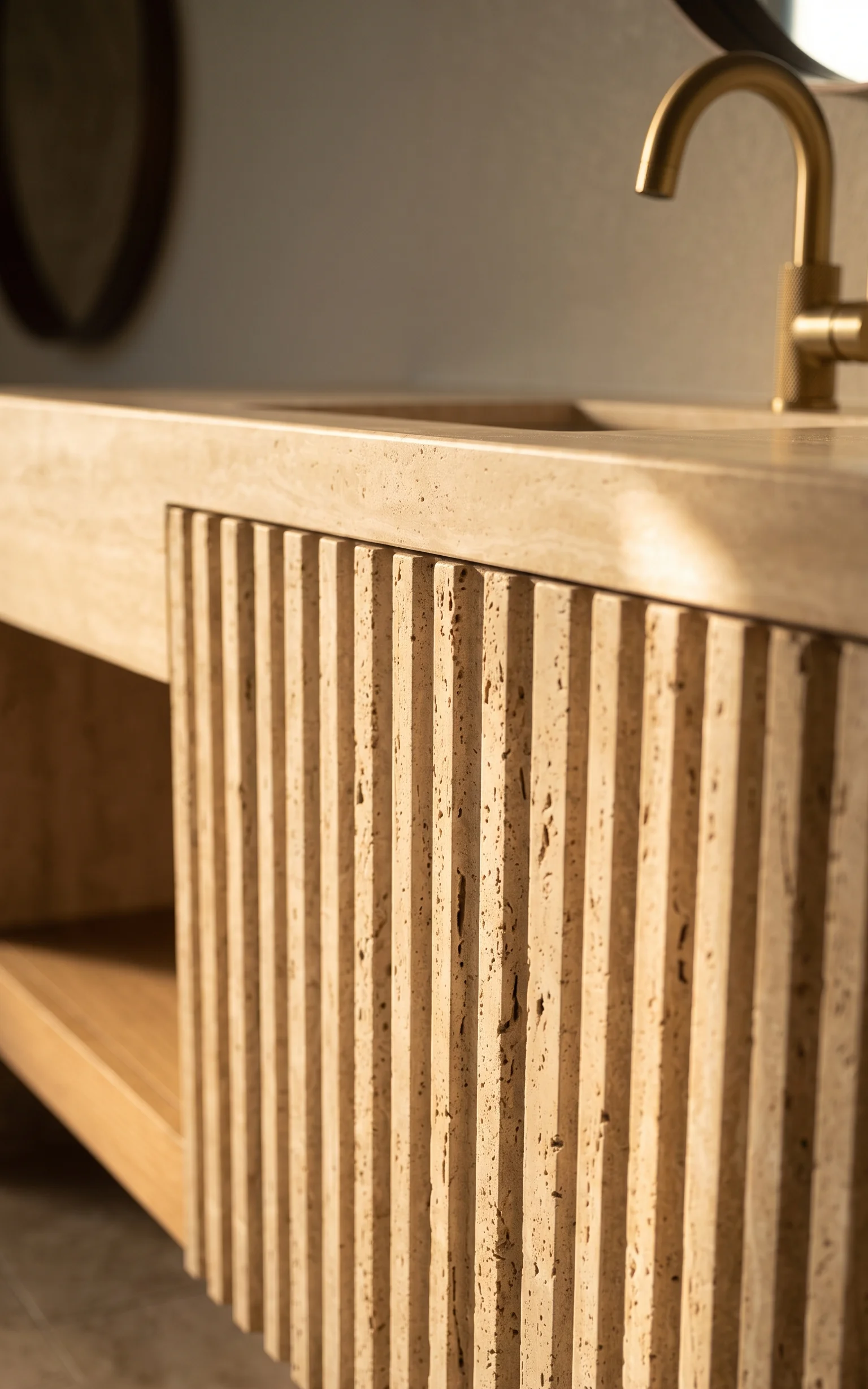
Vertical grooves carved into travertine slabs do something a flat wall cannot: they create shadow lines that shift throughout the day as the light changes. At 10 AM those grooves are barely visible. By late afternoon with lower light, they cast deep shadows that make the stone look almost sculptural.
The practical advantage beyond aesthetics is spatial. Linear ridges draw the eye upward, which adds perceived height to bathrooms with standard or low ceilings. A single fluted travertine panel behind a floating vanity, running floor-to-ceiling, can make a room feel noticeably taller without any structural change.
Pair fluted panels with smooth honed travertine on the floor so the room doesn’t compete with itself. The contrast between textured wall and flat floor is what makes each surface stand out more clearly.
Tumbled Mosaic Shower Floors
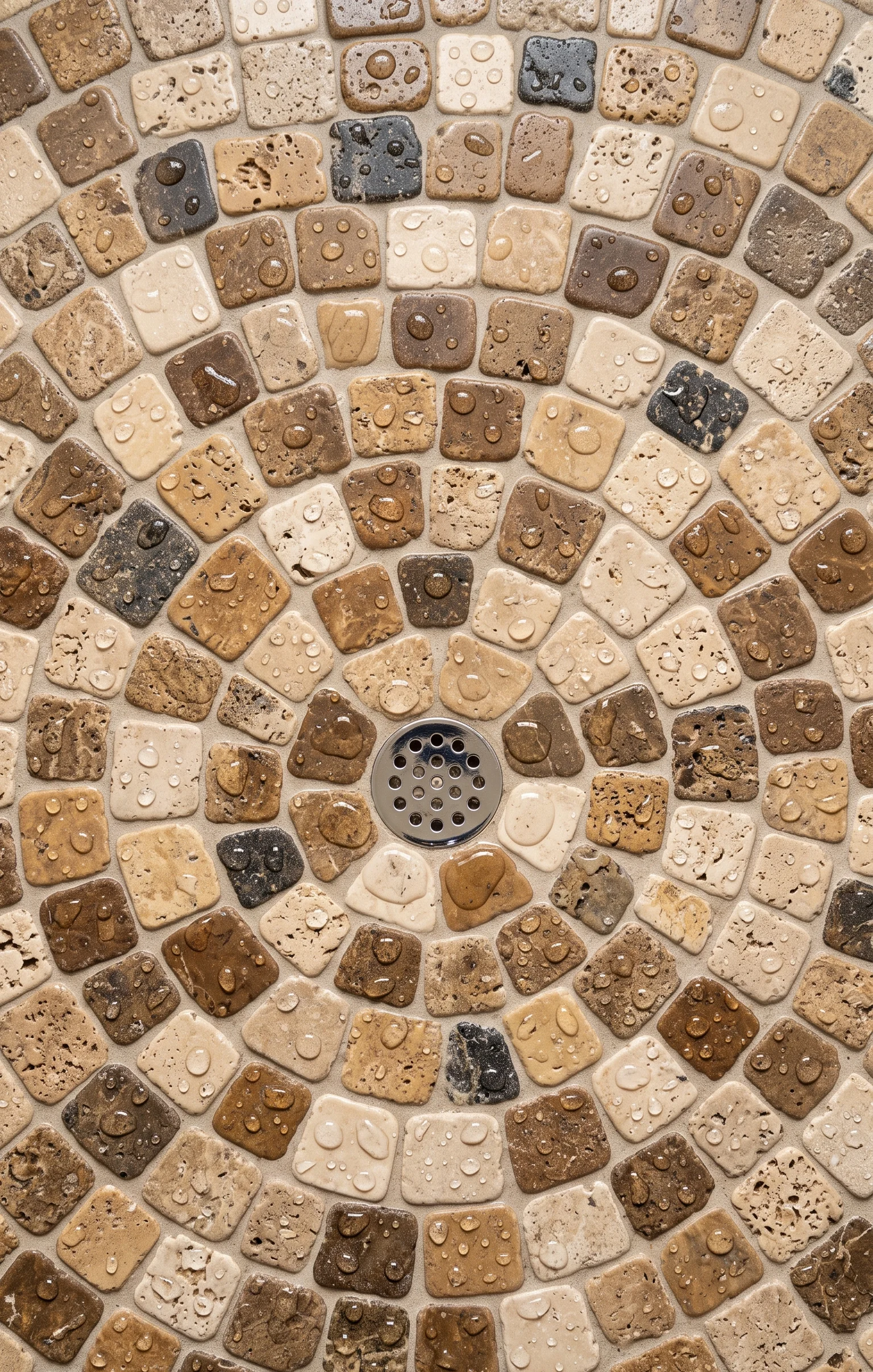
Standard flat tile in a shower floor becomes a safety concern the moment water hits it. Tumbled travertine mosaic, small tiles with rounded, slightly irregular edges, solves this by building non-slip texture directly into the material rather than relying on texture coatings or rubber mats.
The rounded edges create more grout lines per square foot than standard tile, which is exactly what creates the grip. Beyond safety, those extra grout lines give the floor a handcrafted, Mediterranean quality that feels far more personal than a uniformly smooth surface.
Sealing is non-negotiable here. Apply a penetrating sealer before grouting so the pigment doesn’t absorb into the stone’s natural pores, and use a grout color that closely matches the stone to keep the visual focus on the tumbled texture rather than the joints.
Brushed Cross-Cut Shower Walls
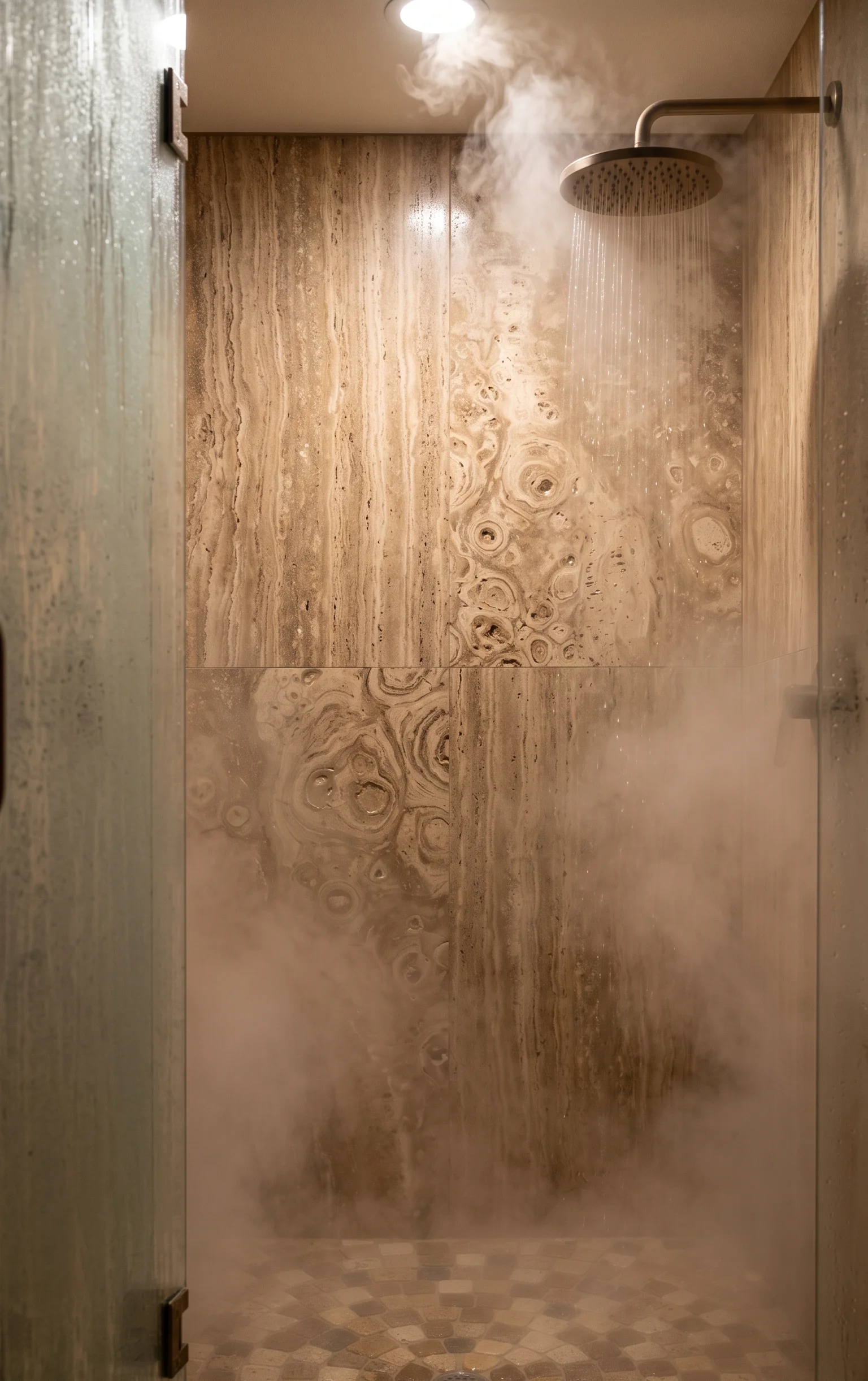
Cross-cutting travertine, slicing across the grain rather than along it, reveals circular, cloudy patterns instead of the long linear veining that most people associate with the stone. Add a wire-brushed finish to that cross-cut surface and you get something genuinely unusual: a soft, slightly rough texture that feels warm against skin and handles moisture well.
The brushing process wears away the softer parts of the stone, creating low ridges that catch light without producing any shine. Water spots that would be highly visible on polished stone disappear almost entirely on a brushed surface, which matters in a daily-use shower.
For installation, use larger format brushed cross-cut tiles to minimize grout lines and let the organic, circular patterns read as a continuous composition rather than a grid.
Fluted Resin-Filled Wall Panels
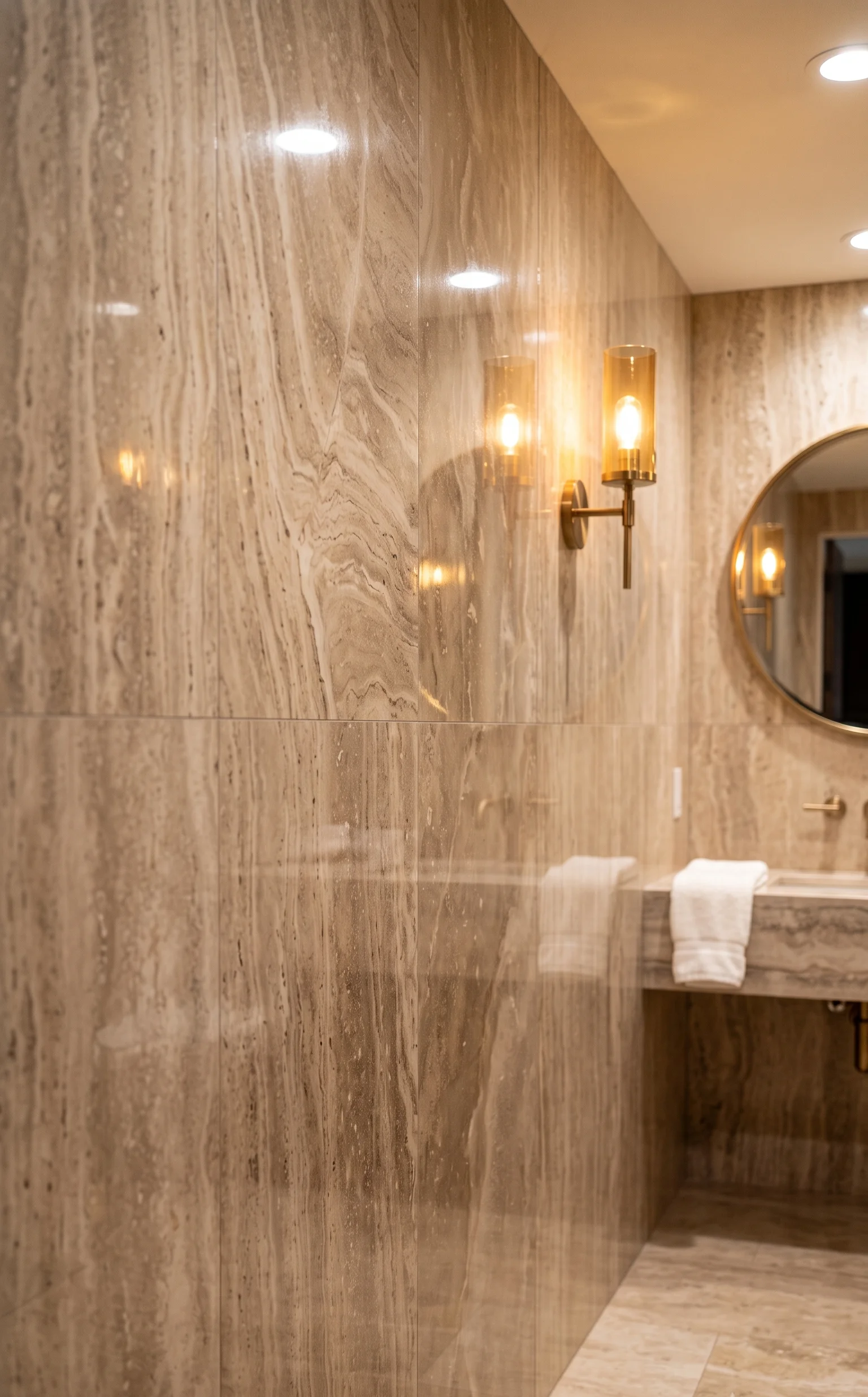
The naturally porous surface of travertine can be a maintenance challenge in very high-moisture zones. Filling those pores with a clear or color-matched resin before installation creates a smoother, denser surface that resists moisture and soap residue without losing the stone’s character.
High-gloss resin-filled travertine reflects light in a way that can make a small bathroom feel significantly larger, the same principle as a large mirror but built into the wall material itself. The warm tones of the stone still show clearly through the resin; the filling simply removes the texture variation that makes unsealed travertine harder to maintain in wet areas.
Raw Unfilled Stone Feature Wall
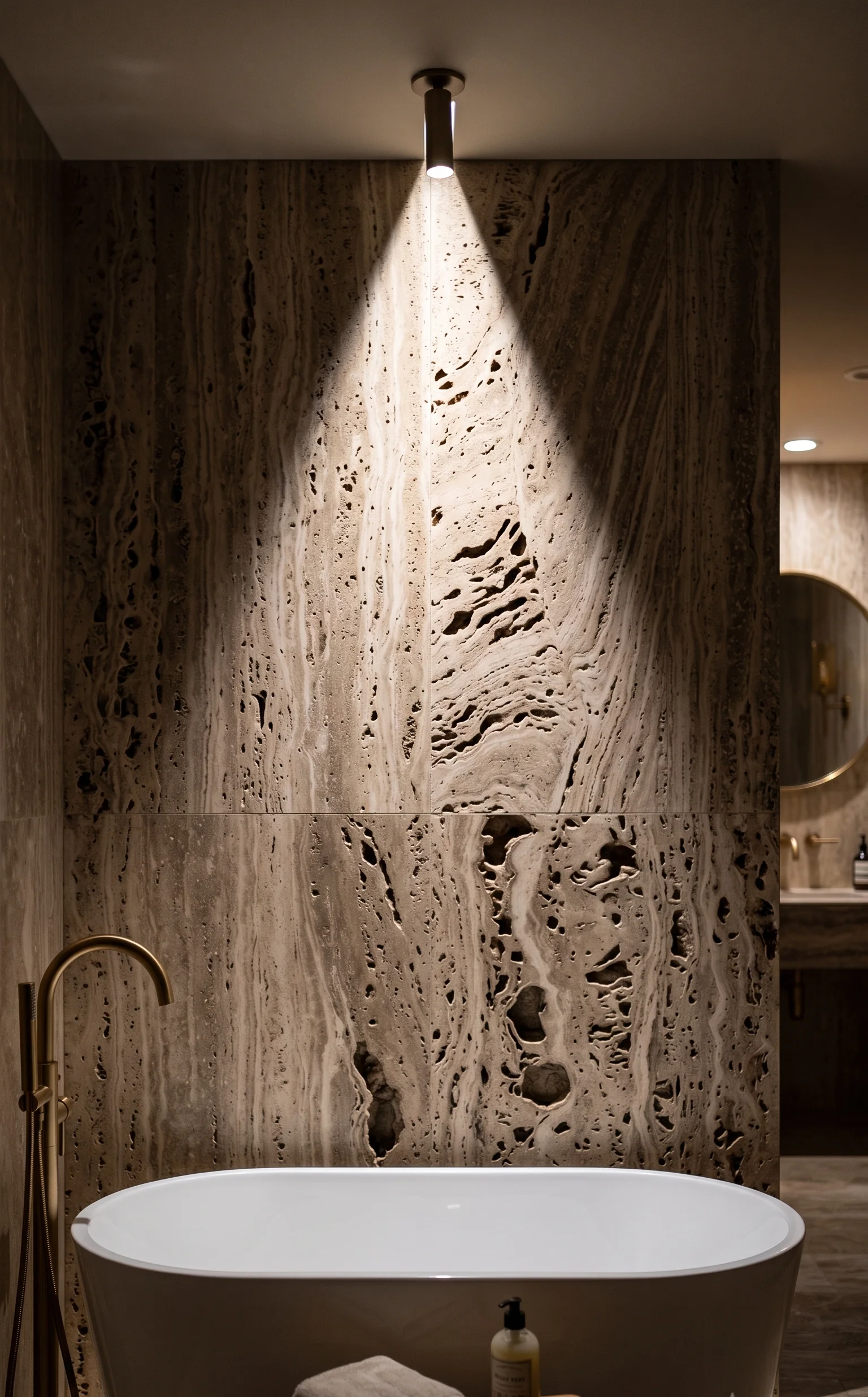
Behind a freestanding tub or floating vanity in a dry area of the bathroom, raw unfilled travertine, with its natural pits and voids left exposed, creates a tactile, ancient-feeling surface that no manufactured material can replicate.
The key word is dry. Raw unfilled stone belongs away from direct water contact. Soap and moisture will settle into the open pores of an unfilled stone in a shower zone and create a cleaning problem that no amount of sealing fully resolves. In a dry feature wall context, those same pits catch directional light and create depth that makes the stone look like it was quarried yesterday and installed still warm.
Color and Variety Guide
The four travertine varieties most commonly used in bathroom design each behave differently in terms of warmth, undertone, and room feel. Understanding which color suits which bathroom context saves a lot of expensive second-guessing.
Ivory Travertine: The Most Versatile Starting Point
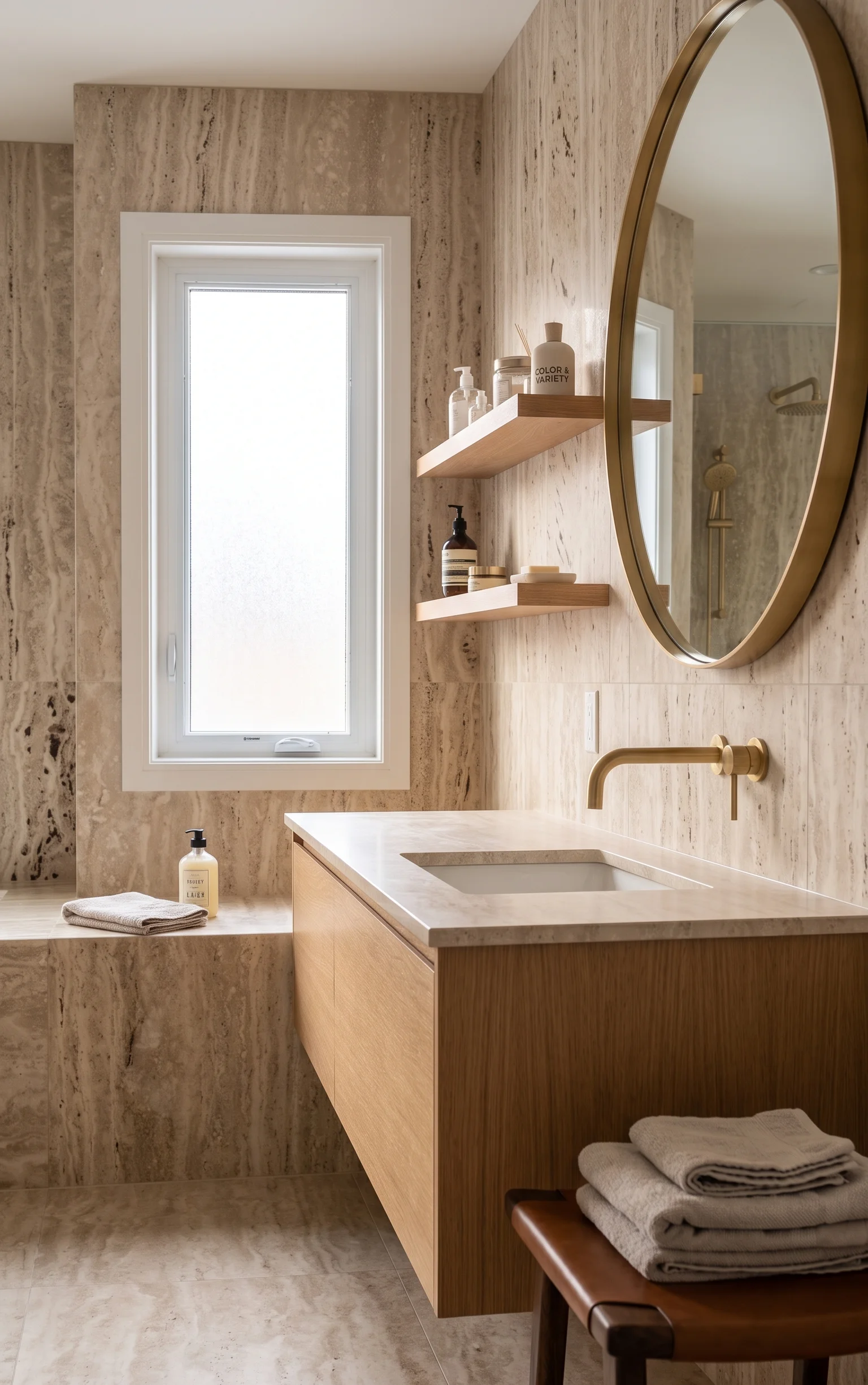
Ivory travertine has a cream-to-pale-gold range with minimal color variation between tiles. It reads as warm white from a distance and reveals its subtle beige-honey undertone up close. Of all the travertine colors, ivory pairs most flexibly with other materials: white walls, oak vanities, brass or matte black fixtures all work without conflict.
For a primary bathroom being designed from scratch, ivory travertine on the floor and in the shower is the option that leaves the most room to add other colors and finishes without visual competition. It also reads most “clean” in online photos, which matters for anyone designing a space with resale in mind.
Walnut and Noce Travertine: Depth Without Darkness
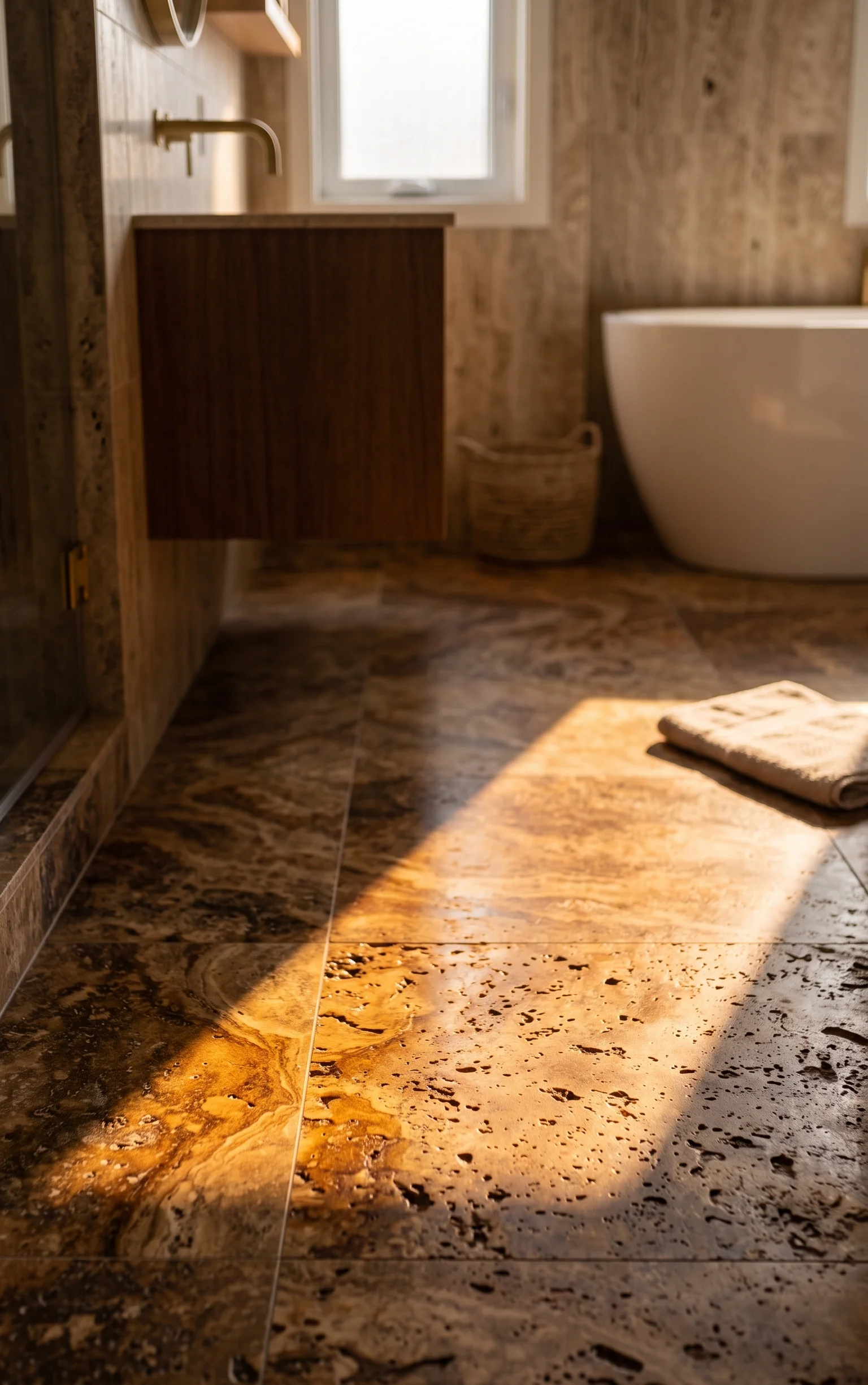
Noce travertine sits in the brown-walnut range, significantly warmer and darker than ivory, with visible rust and amber tones running through the stone. In a bathroom with good natural light, noce creates a rich, enveloping feeling that ivory travertine doesn’t quite achieve. In a north-facing bathroom without much sun, the same stone can tip toward heavy.
The rule of thumb: if the room gets at least a few hours of direct natural light daily, noce travertine reads as luxurious. Without that light, pair it with a lighter wall colour, more artificial lighting sources, or use it only on the floor rather than on all surfaces.
Silver Travertine: The Contemporary Direction
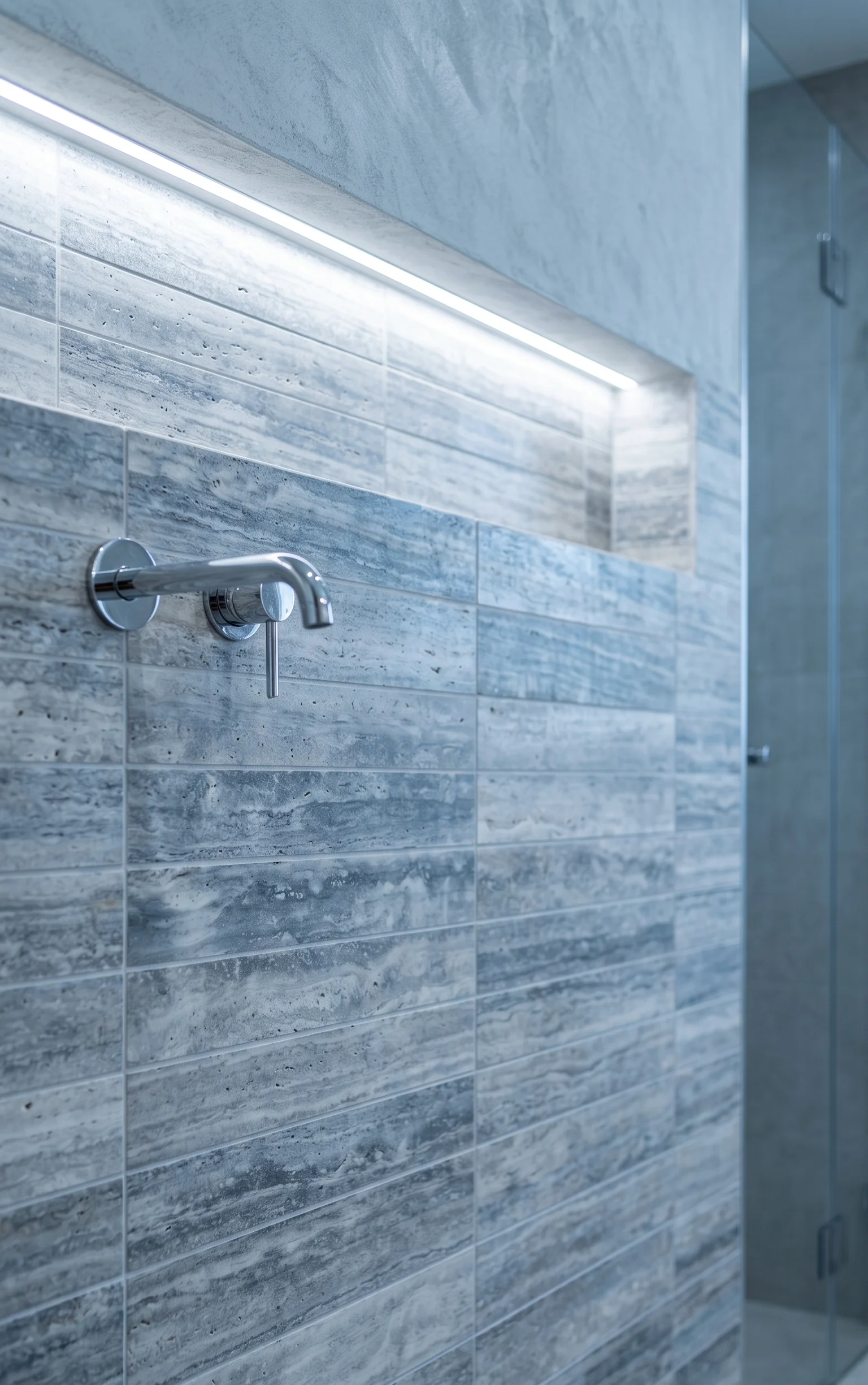
Silver travertine introduces cool gray and smoky blue tones that sit in a different register from the warm beiges most people associate with the stone. It’s the version that suits bathrooms heading toward a more contemporary, slightly cooler aesthetic without abandoning natural stone entirely.
Vein-cut silver travertine, cut along the grain rather than across it, produces long horizontal lines that mimic the look of wide-plank wood flooring when used as wall tiles in a stacked bond pattern. The combination of stone character and linear movement makes small bathrooms feel substantially wider than they are.
Scabos Travertine: The Statement Choice
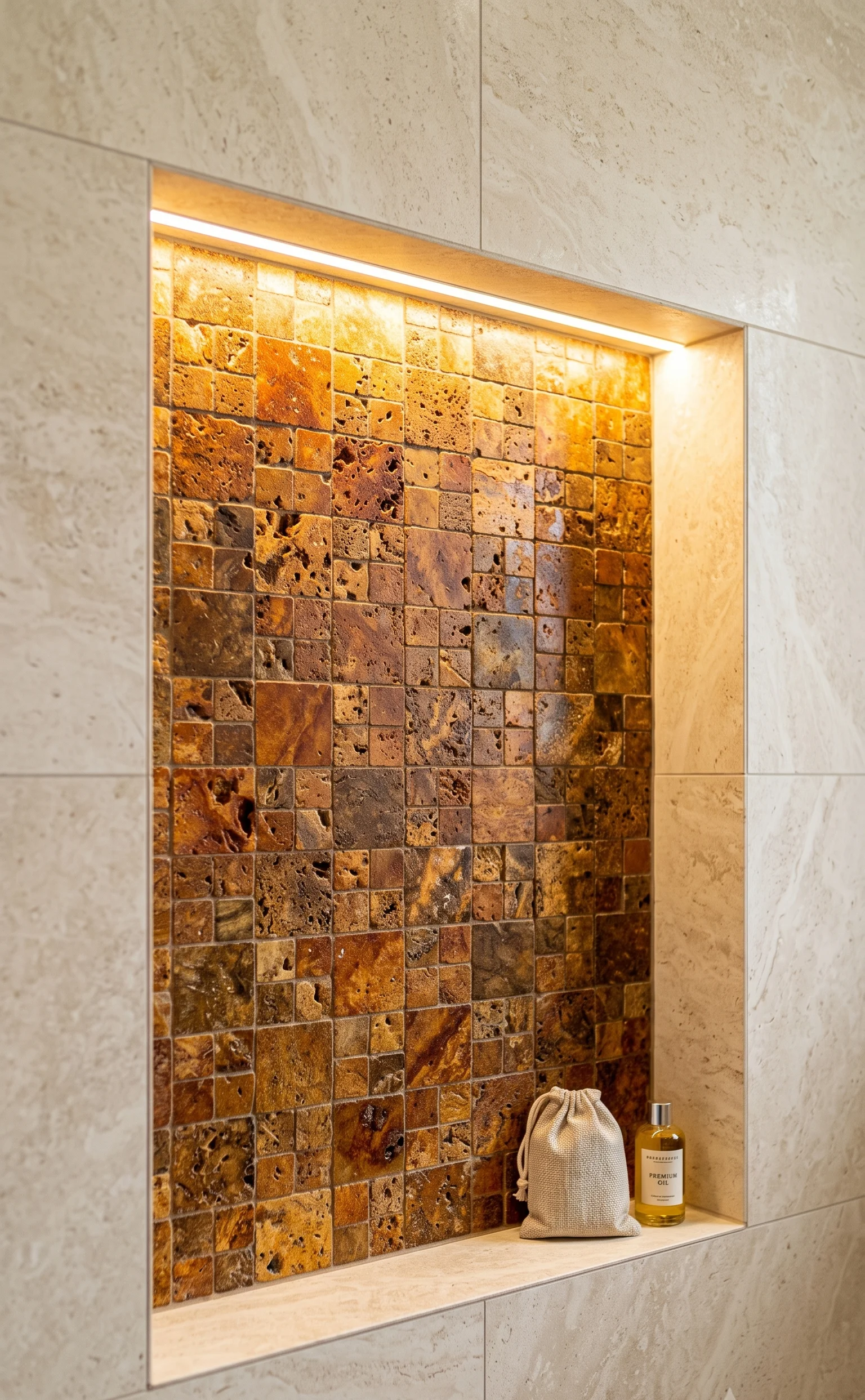
Scabos is the most visually dramatic travertine in common bathroom use. Warm rusts, deep walnut browns, and occasional olive tones create a surface with visible movement that can carry an entire bathroom design on its own.
Because of that variation, Scabos works best when everything else in the bathroom is relatively calm. Simple fixtures, minimal hardware, neutral walls, no competing patterns. The stone does the personality work; the rest of the room supports it rather than competing.
A Scabos mosaic in a shower niche is one of the more impactful uses of the material: a small area of high-variation stone against a larger field of quieter ivory or beige travertine creates a focal point without overwhelming the whole room.
Application Ideas
Floor-to-Ceiling Travertine Showers
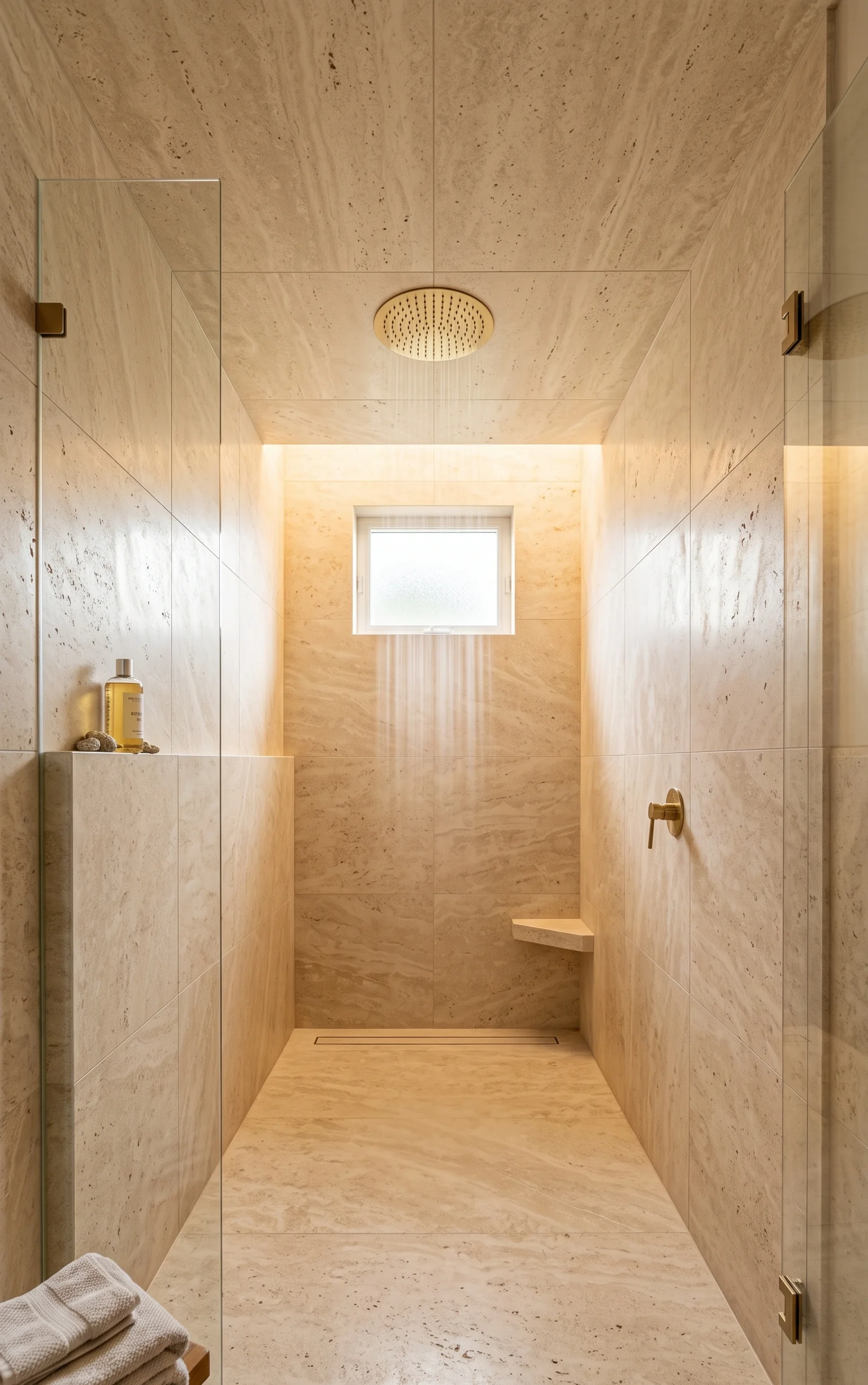
Running the same travertine tile from the shower floor up the walls and continuing to the ceiling eliminates the visual interruptions that make most bathrooms feel smaller than they are. No horizontal lines where floor tile ends and wall tile begins, no switch to a different material at counter height, just one continuous warm surface.
The practical requirement is consistency of finish. Honed or brushed travertine on the floor with polished travertine on the walls creates a visual disconnect. Choose one finish family and use it throughout, or at minimum keep the floor finish consistent with the lower portion of the walls.
Travertine Accent Wall Behind a Freestanding Tub
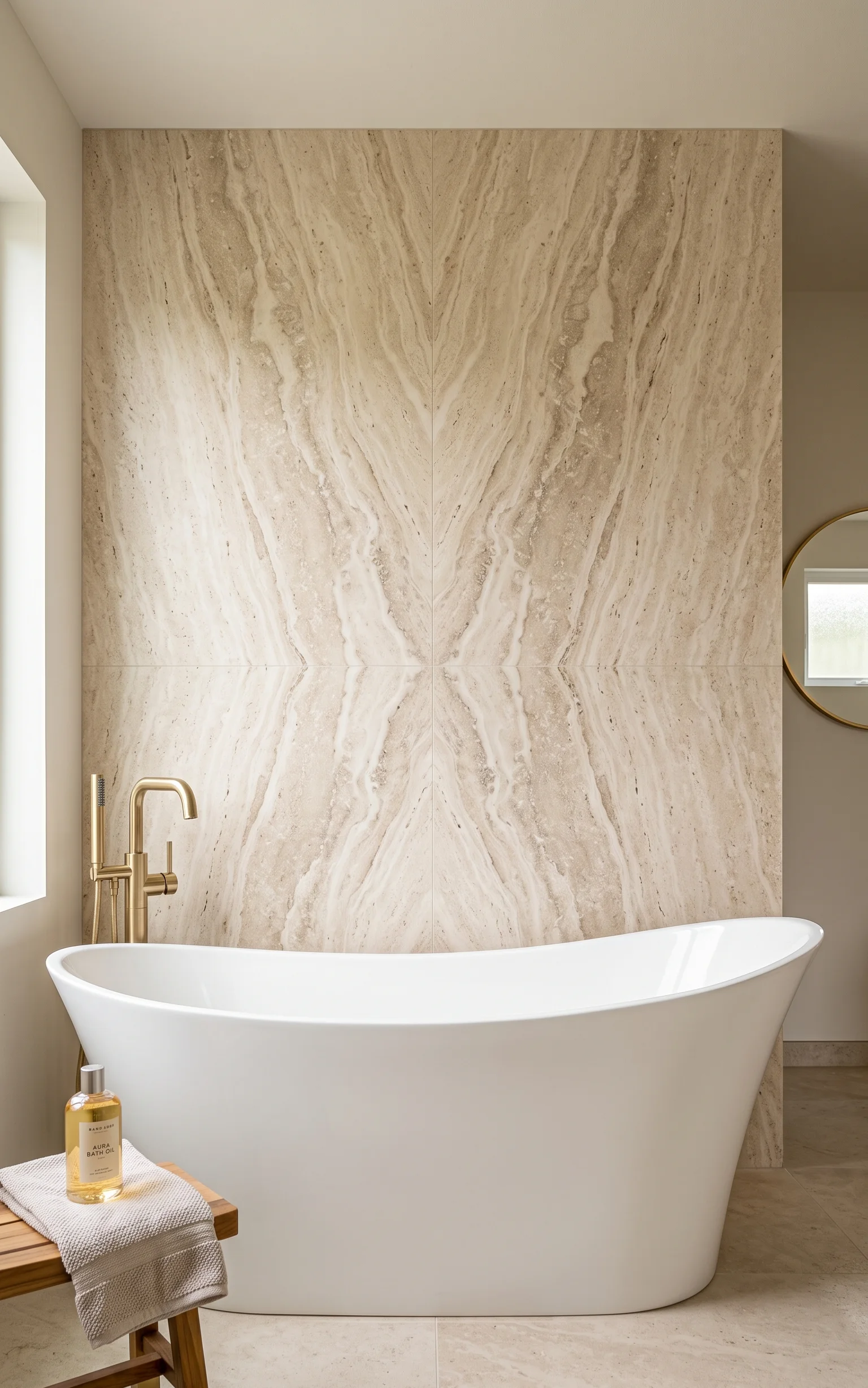
The wall behind a freestanding tub is one of the few bathroom surfaces where visual impact matters more than waterproofing requirements, since it doesn’t receive direct water contact. This frees up the finish options considerably raw unfilled, heavily textured, or dramatically book matched stone all become viable here.
A single slab of book matched travertine behind a tub, where two adjacent pieces of stone are mirrored so their veining forms a symmetrical pattern, is the luxury hotel look that most people recognize from high-end spa photographs. The slab doesn’t need to be natural stone. Book matched travertine-look porcelain panels achieve the same effect at a fraction of the cost.
Travertine Shower Niche as Focal Point
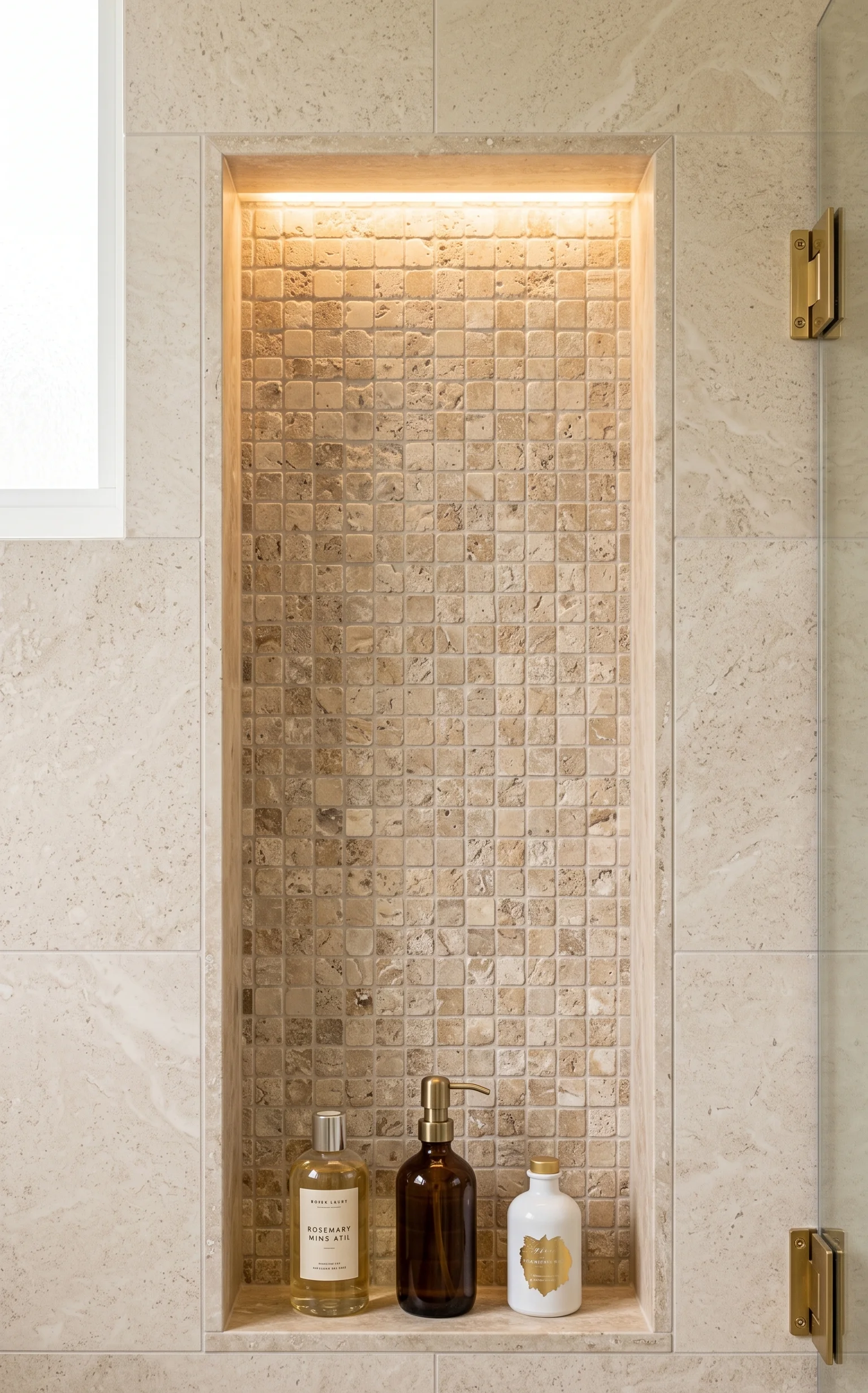
A recessed shower niche tiled in a contrasting or more visually interesting travertine variety, Scabos or a tumbled mosaic, against a simpler honed field tile draws the eye without requiring any structural change to the room.
The size matters practically. A niche less than 12 inches tall feels like an afterthought. A niche between 18 and 24 inches tall, running the full width of the shower wall or centered between two columns of field tile, reads as intentional design. Waterproof the niche separately from the surrounding wall before tiling, and slope the floor of the niche slightly forward so water drains out rather than pooling.
Travertine Vanity Countertop
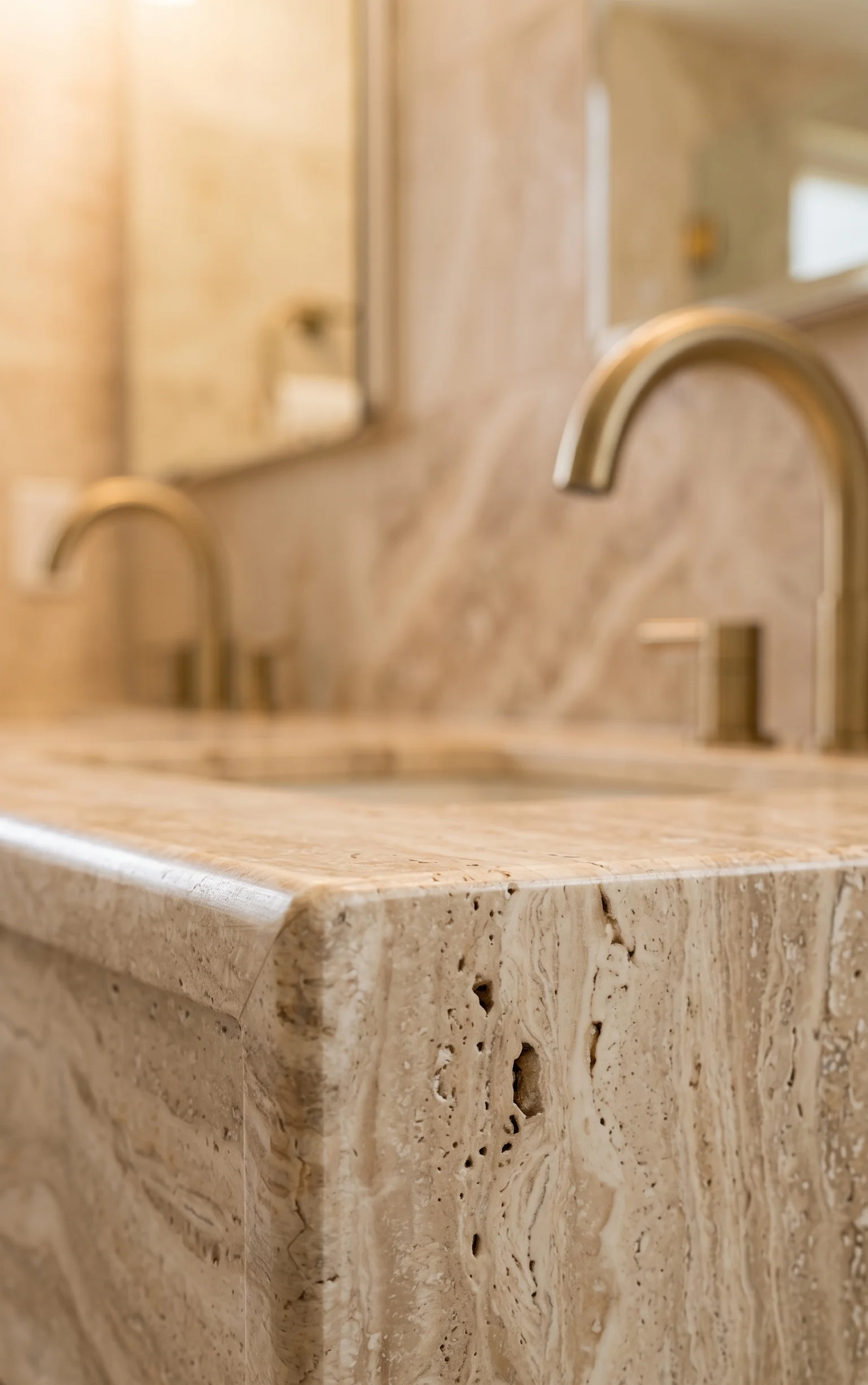
A travertine vanity top adds warmth that marble countertops can match aesthetically but not practically. Marble is more susceptible to etching from acidic substances, citrus, perfume, toothpaste, than travertine which has a slightly more forgiving surface when properly sealed.
The finish specification matters here more than anywhere else in the bathroom. A filled and honed travertine countertop is the practical choice: the filling creates a non-porous surface that resists staining and the honed finish keeps the surface matte rather than reflective. Apply a penetrating sealer every six to twelve months and avoid leaving acidic products in contact with the stone surface.
Hardware Pairing Guide
Which Fixture Finish Suits Which Travertine
No single hardware choice works with every travertine color, and getting this decision wrong is one of the most common ways a well-chosen stone gets undermined.
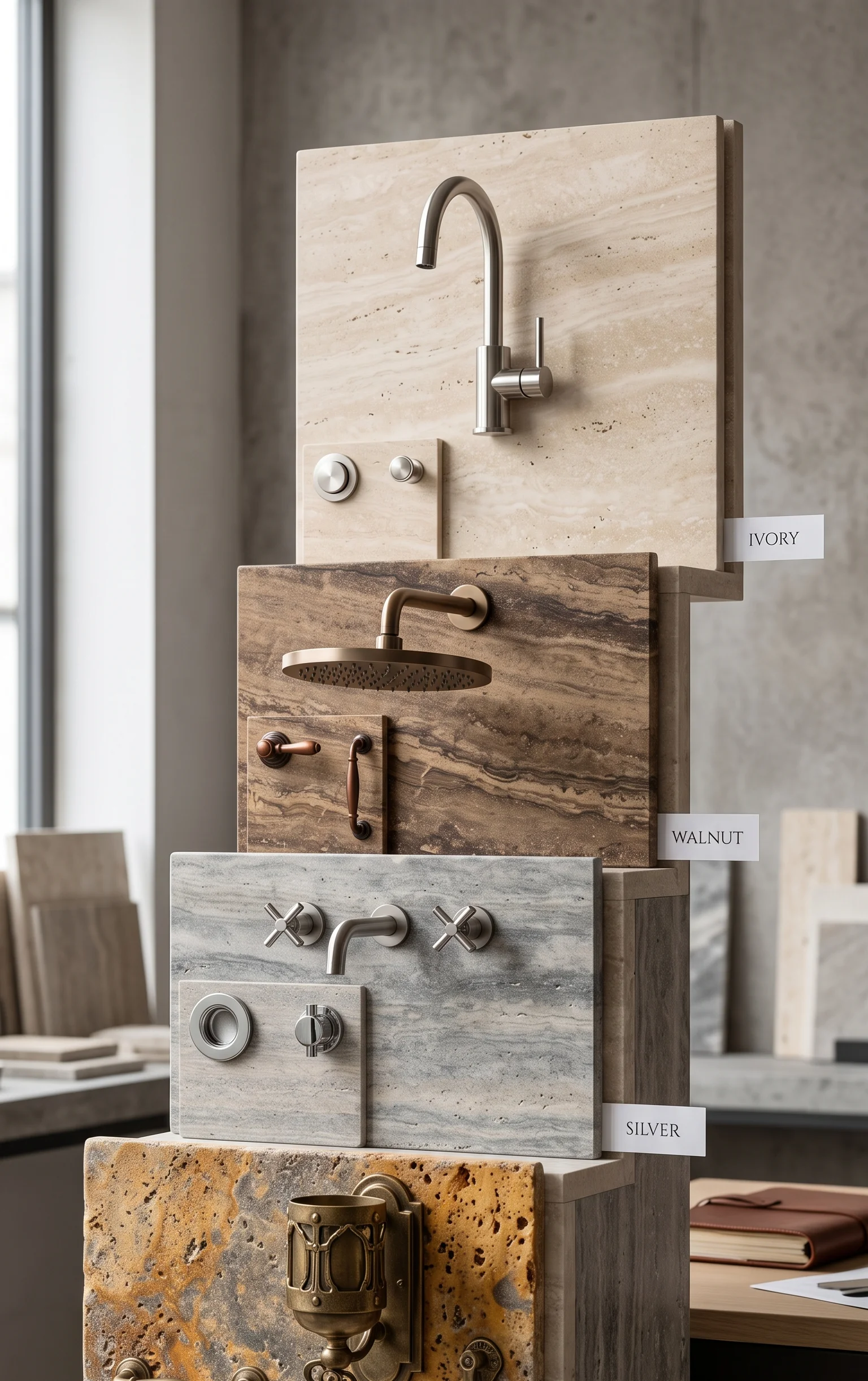
Ivory and beige travertine work with almost any warm metal finish. Brushed brass is the most common choice and suits both traditional and contemporary bathrooms. Unlacquered brass develops a natural patina that pairs particularly well with honed ivory in a room that leans rustic or Mediterranean. Matte black creates a modern contrast against the warmth of ivory travertine without clashing.
Walnut and noce travertine look best with aged bronze or oil-rubbed bronze, which share the stone’s warm brown undertone. Brushed brass works here too. Matte black can be heavy against noce’s already-rich color. Use it only if other elements in the room are significantly lighter.
Silver travertine suits matte black and brushed nickel. Both share the stone’s cool undertone. Brass introduces a warm-cool tension that either works beautifully or creates visual discomfort depending on the light in the specific room. Test a brass sample against your silver travertine before committing.
Scabos travertine is visually complex enough that it benefits from the simplest possible hardware. Brushed brass or matte black, minimal profile, nothing ornate. The stone already has personality; the fixtures should support rather than compete.
Natural Travertine vs. Travertine-Look Porcelain
When to Choose Porcelain Instead
Natural travertine is porous, requires sealing, and costs significantly more than porcelain alternatives. Large-format travertine-look porcelain tile, the kind produced using high-resolution imaging of actual stone slabs, is now indistinguishable from the real thing at normal viewing distance in most cases.
For floor-to-ceiling shower applications where both practical performance and budget matter, travertine-look porcelain is genuinely the more intelligent choice for most homeowners. It requires no sealing, is completely non-porous, handles daily moisture without concern, and costs anywhere from 30 to 60 percent less than comparable natural stone.
The cases where natural travertine genuinely earns its premium: a vanity accent wall in a dry zone where the pitting and tactile quality of the real stone can be appreciated up close, or a feature wall behind a freestanding tub where the surface won’t face daily water exposure. In those spots, the difference between real stone and a porcelain copy is visible and meaningful.
Practical Maintenance
Filled vs. Unfilled: The Decision That Affects Everything Else
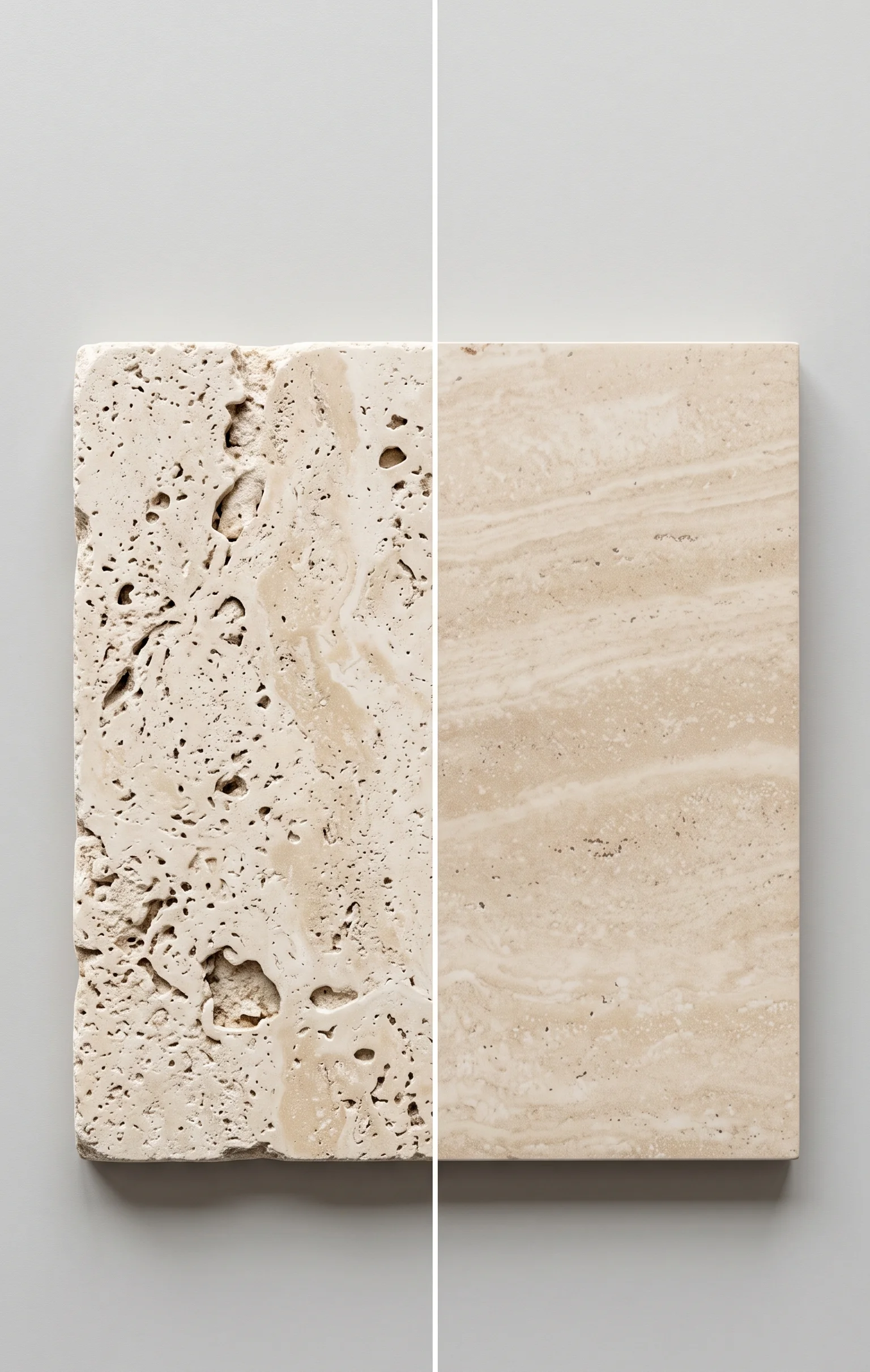
Every piece of travertine comes out of the ground with natural voids, the pits and holes that form as gases escape the stone during its creation. What happens to those voids before the tile is installed determines how the stone performs in a bathroom for the next twenty years.
Unfilled travertine leaves the voids open. The raw, tactile surface that results is beautiful in photographs and genuinely impressive up close. In a high-moisture bathroom environment, those same voids collect moisture, soap residue, and eventually mold if they’re in a wet zone. Unfilled travertine belongs on a dry feature wall or a countertop that gets wiped daily, not in a shower or on a constantly-wet floor.
Filled travertine has those voids packed with resin or cement, then the surface is ground flat. The result is smoother, easier to maintain, and significantly more practical for daily use in wet areas. The tradeoff is that the stone loses some of its raw, natural character. For most bathrooms where maintenance is a real consideration, filled travertine in a honed or brushed finish is the specification that actually holds up.
Sealing, Cleaning, and Ventilation
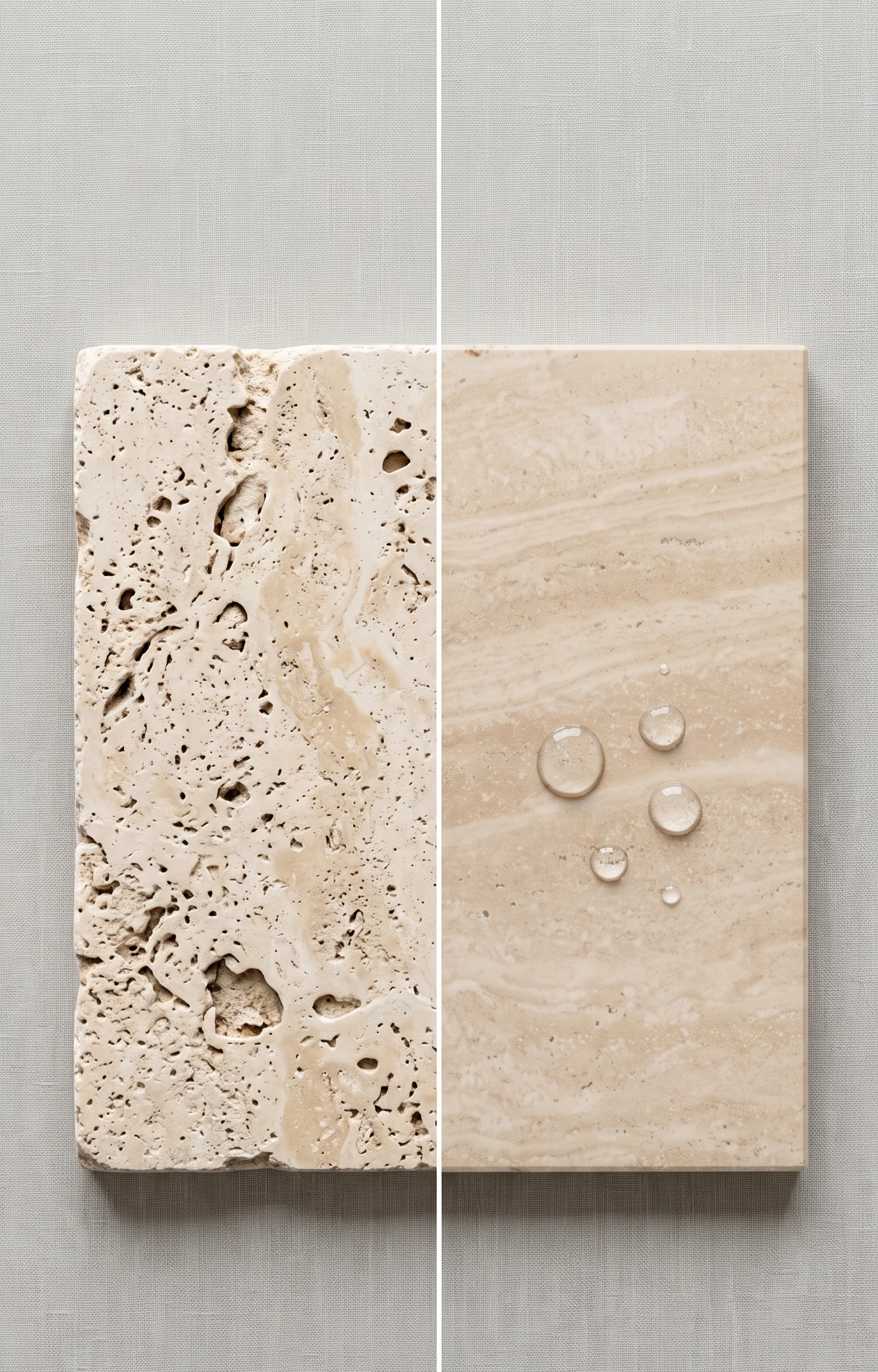
Sealing travertine is not a one-time installation step. It’s an ongoing maintenance commitment A penetrating sealer applied every six to twelve months creates a barrier that prevents moisture, soap, and cosmetics from absorbing into the stone. The exact frequency depends on how heavily the bathroom is used and how quickly water begins to absorb rather than bead on the surface.
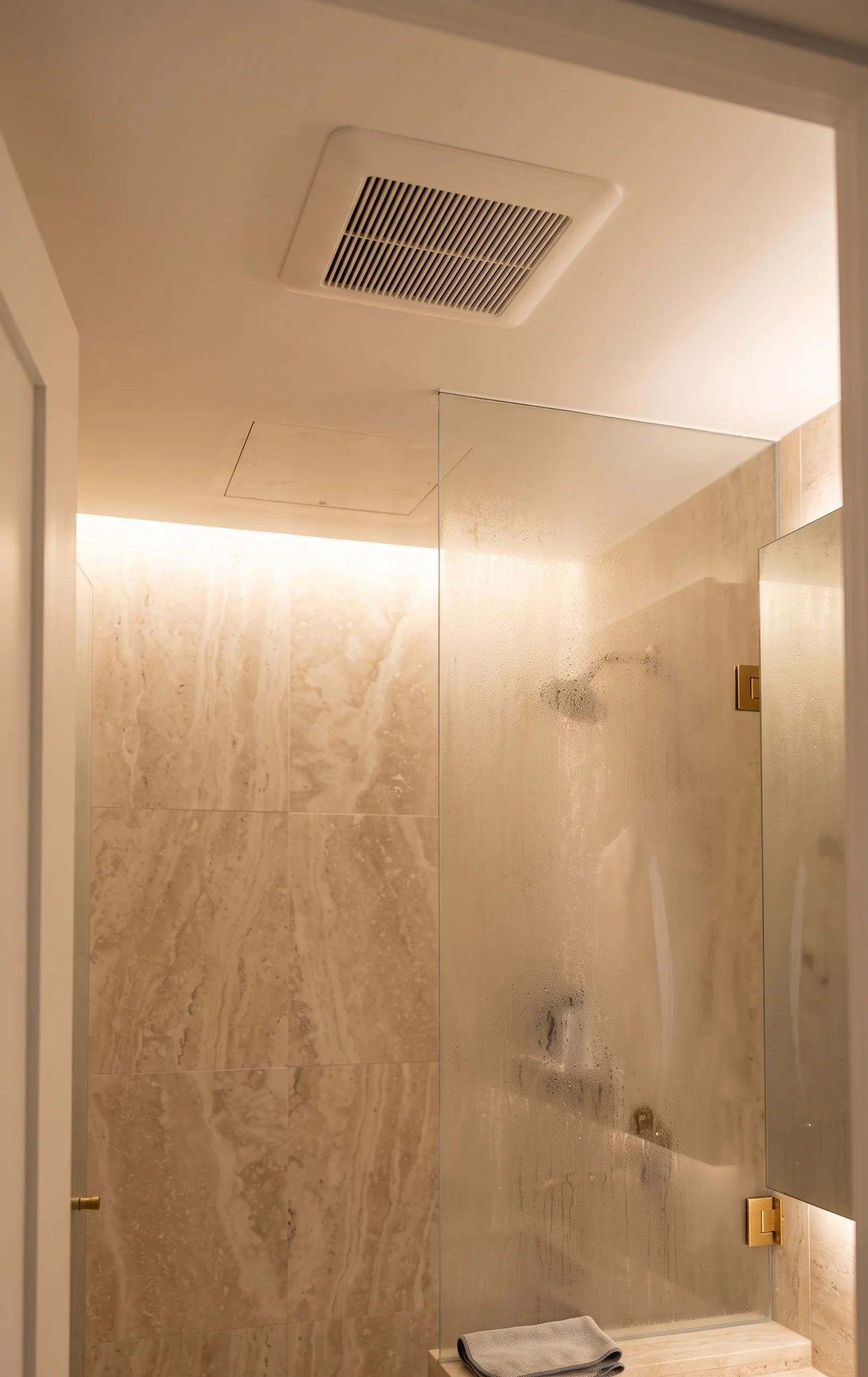
Two things undermine travertine faster than any sealing schedule can fix: acidic cleaners and poor ventilation. Standard bathroom cleaners frequently contain acids that etch the stone surface permanently. pH-neutral stone cleaners are the only safe option for daily maintenance. Poor ventilation, a bathroom exhaust fan that’s inadequate for the room size or one that’s simply never run, allows moisture to sit in the air and penetrate the stone surface between uses.
Running the exhaust fan for at least fifteen to twenty minutes after every shower, combined with annual sealing, covers the two main threats to travertine in daily bathroom use.
A Few Final Thoughts
Travertine rewards patience. The decision about finish, fill, colour, and application is worth taking seriously before any tile is ordered, because all of these choices interact with each other. A walnut travertine that looks stunning in a showroom with warm display lighting can feel heavier than intended in a north-facing bathroom at home.
Order samples. Live with them under your actual lighting for a few days. Look at them morning and evening. The stone that works in your specific room is the one worth committing to, not the one that photographed best in someone else’s bathroom.
Frequently Asked Questions
What is the best travertine finish for a bathroom floor?
Honed matte is the most practical choice for bathroom floors, since it provides better traction than polished travertine, hides water spots and daily wear, and requires less maintenance than a high-gloss finish. Brushed travertine is a good alternative that adds slightly more texture.
Does travertine need to be sealed in a bathroom?
Yes. Travertine is a porous natural stone and absorbs moisture, soap, and cosmetics without a sealer. A penetrating stone sealer should be applied before grouting and reapplied every six to twelve months depending on usage. pH-neutral cleaners should be used for daily maintenance to avoid etching the stone.
What’s the difference between filled and unfilled travertine?
Unfilled travertine has open natural pits and voids on the surface, creating a raw, tactile look. Filled travertine has those voids packed with resin or cement and the surface ground flat. Filled travertine is significantly more practical for wet bathroom zones because it resists moisture and is easier to clean.
Is travertine look porcelain as good as natural travertine?
For wet areas like shower floors and walls, travertine-look porcelain is often the more practical choice — it’s non-porous, requires no sealing, handles daily moisture without concern, and costs less. Natural travertine earns its premium in dry feature walls or accent areas where the real stone’s texture and tactile quality can be appreciated up close.
What hardware finish works best with travertine?
Brushed brass is the most versatile choice and suits ivory, beige, and walnut travertine well. Aged bronze pairs particularly well with darker noce and walnut varieties. Matte black works with lighter ivory travertine where contrast is desired. Silver travertine is best served by brushed nickel or matte black, which share its cooler undertone.
Can travertine be used in a small bathroom?
Yes. Lighter travertine colours like ivory and beige work well in small bathrooms, especially in larger tile formats that reduce grout lines and make the floor read as a continuous surface. A large mirror to reflect the stone’s warm tones, combined with warm-toned lighting, keeps the space feeling open rather than enclosed.
