

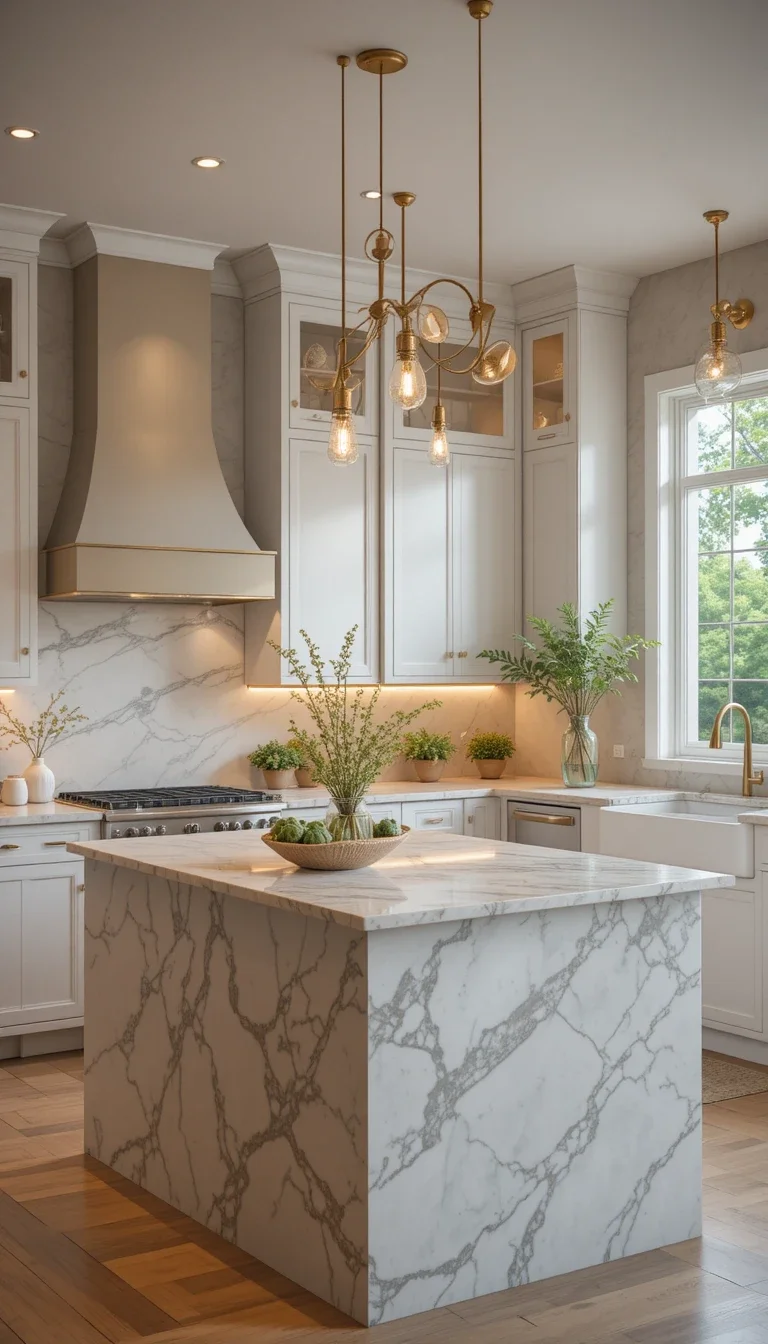
Your kitchen lighting says a lot before anyone even opens the fridge. It sets the mood the second someone walks in. It decides whether your countertops look washed out or warm. And in 2026, it’s doing more than just lighting up your sink. It’s becoming the personality of the room.
If you’re still working with one flat ceiling light and calling it a day, you’re missing out. This year’s kitchens are layered, sculptural, and a little smarter than before. Some homeowners are leaning into bold pendant clusters. Others are going quiet and moody with warm dimmable tones.
There’s no single “right” style. But there is a right approach. Below are 19 kitchen lighting ideas for 2026 that actually work, whether you’re renovating top to bottom or just swapping one fixture.
Layered Lighting Instead of One Big Fixture
Forget the days of a single overhead light doing all the work. The biggest shift in 2026 kitchen lighting isn’t a fixture style at all. It’s the idea of layering.
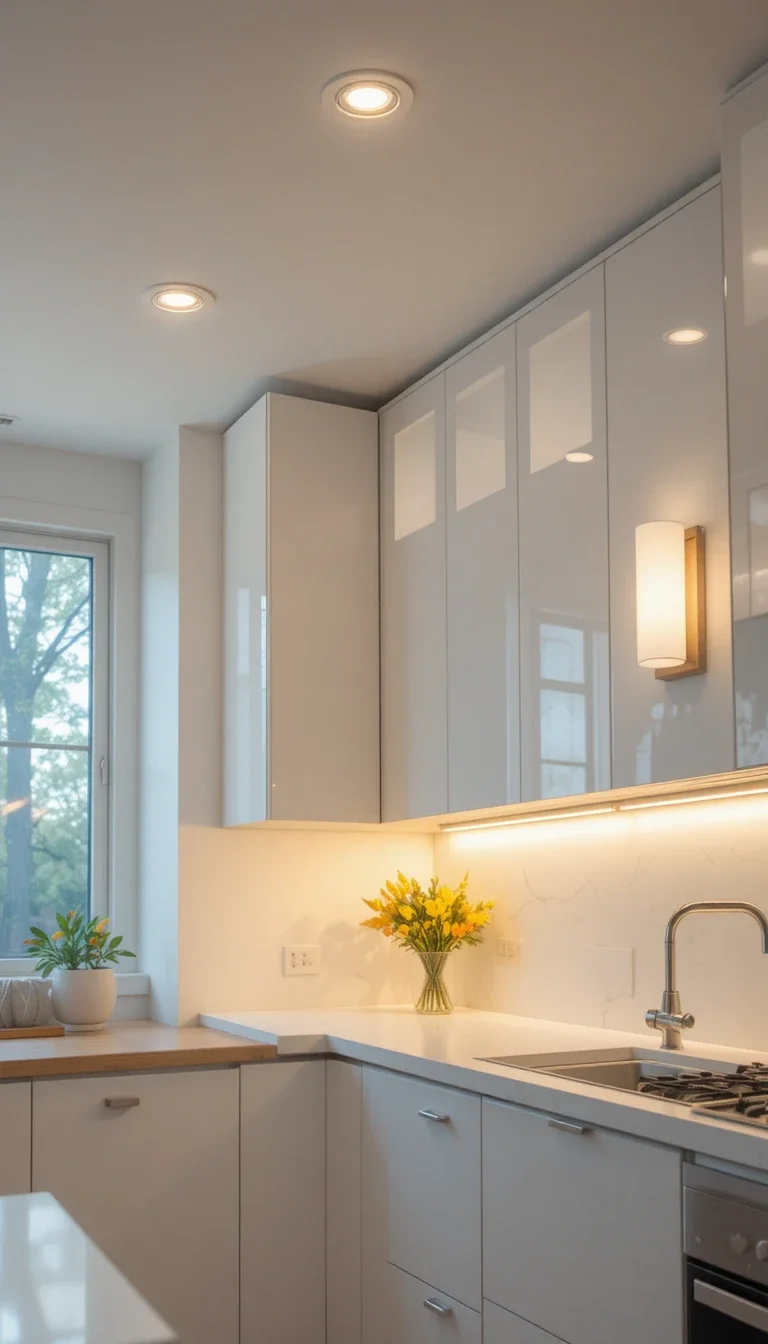
A well-lit kitchen now uses three types of light working together: ambient light to fill the room, task light for chopping and cooking, and accent light for mood. Recessed downlights handle the ambient layer. Under-cabinet LEDs cover the task layer. Wall sconces or toe-kick lighting add the final accent touch. Skip this step, and your kitchen will always feel a little flat, no matter how nice your fixtures are.
Sculptural Pendants That Double as Art
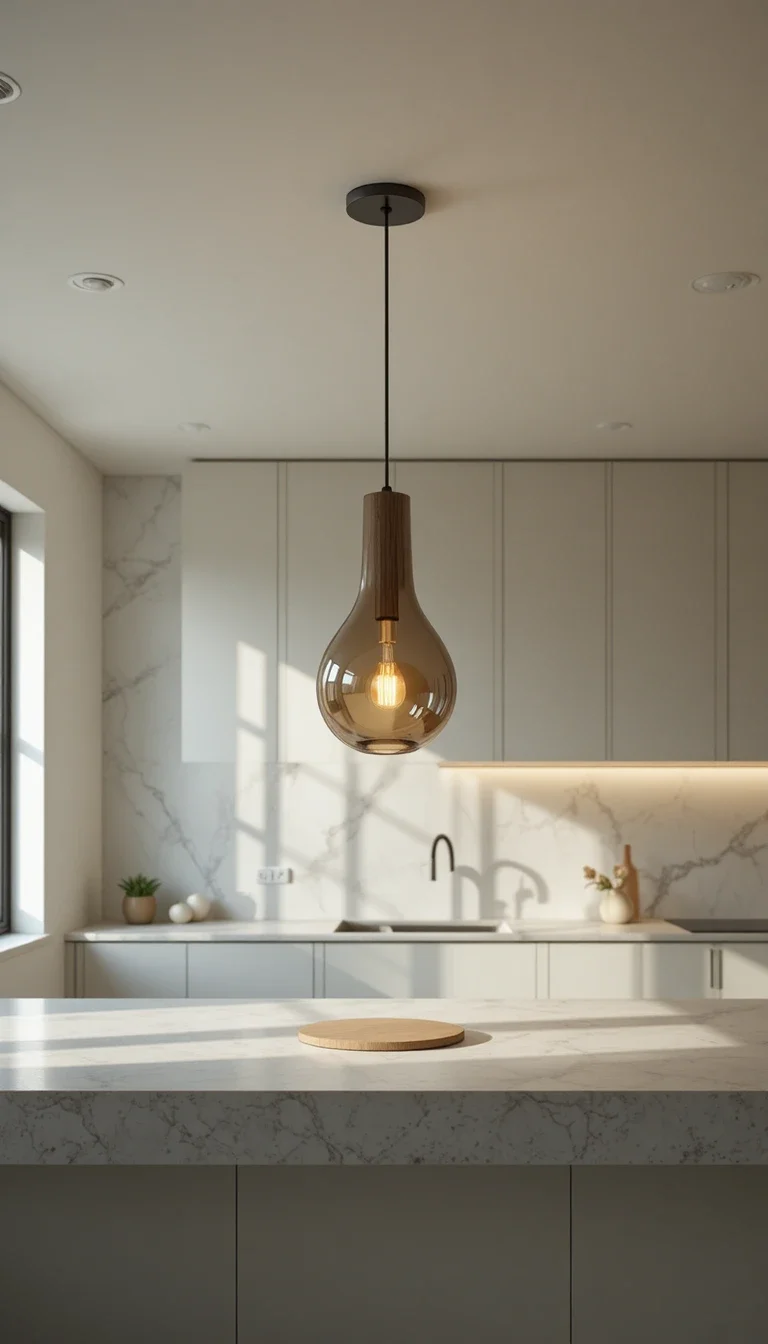
Pendant lights in 2026 aren’t just hanging there to provide light. They’re acting like sculpture.
Think organic, curved shapes in hand-blown glass, or asymmetrical forms that cast interesting shadows on the counter below. These pieces often mix materials, like oxidized steel paired with carved wood or smoked glass. They work best over islands with enough open ceiling space to let the shape breathe.
If your kitchen feels a little too matchy or safe, one sculptural pendant can completely shift the personality of the room without touching a single cabinet.
Smart Lighting That Adjusts Itself
Smart kitchen lighting has moved past the “turn it on with your phone” stage. In 2026, it’s about systems that adjust brightness, color temperature, and even beam direction depending on the time of day or the task at hand.
Cooking dinner at 7 PM gets a brighter, cooler tone. Late-night snack runs trigger a dim, warm glow instead of blasting the whole room. Many systems now respond to voice commands or simple hand gestures, so you’re not always reaching for an app.
This is one of the easiest upgrades to start small with. You don’t need to rewire your whole kitchen, just swap a few key bulbs for smart ones and build from there.
Color-Changing LED Accents
White and blue cabinets aren’t the only place color is showing up this year. Lighting itself is getting in on it.
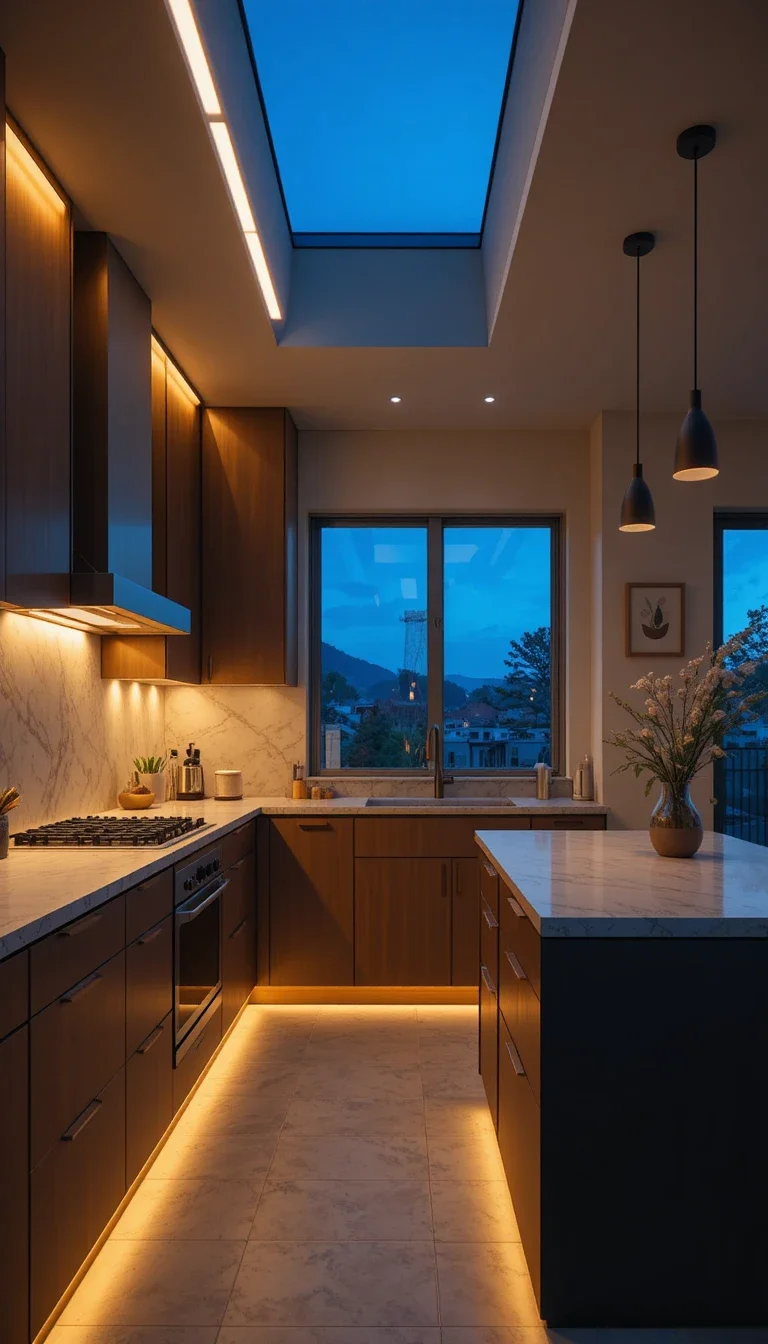
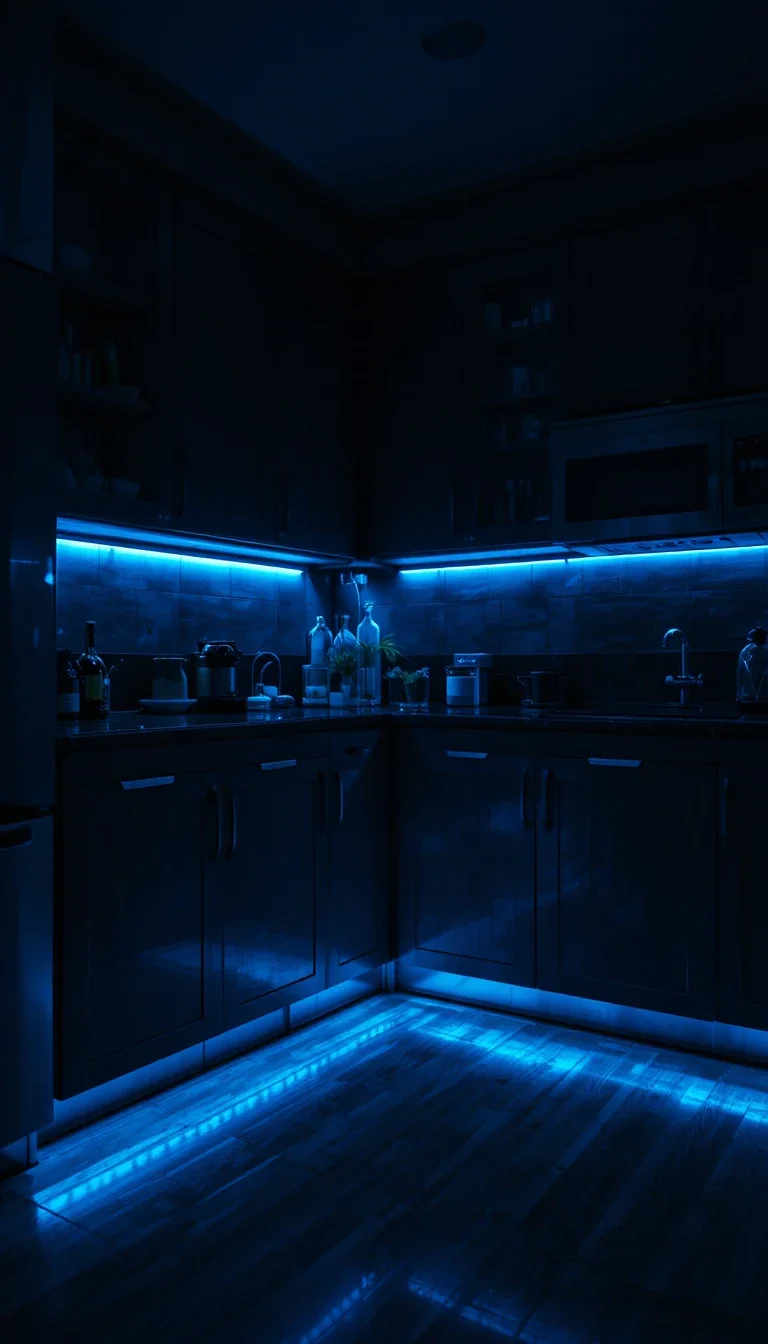
Toe-kick LEDs and under-cabinet strips now come in shades of green and blue, not just the usual warm white. Homeowners are using these as subtle accents along the floor or under open shelving, while keeping the main task lighting neutral and bright.
It’s a small detail, but it adds a surprising amount of personality, especially at night when the colored glow becomes the main light source in the room.
Aged Brass and Patina Bronze Fixtures
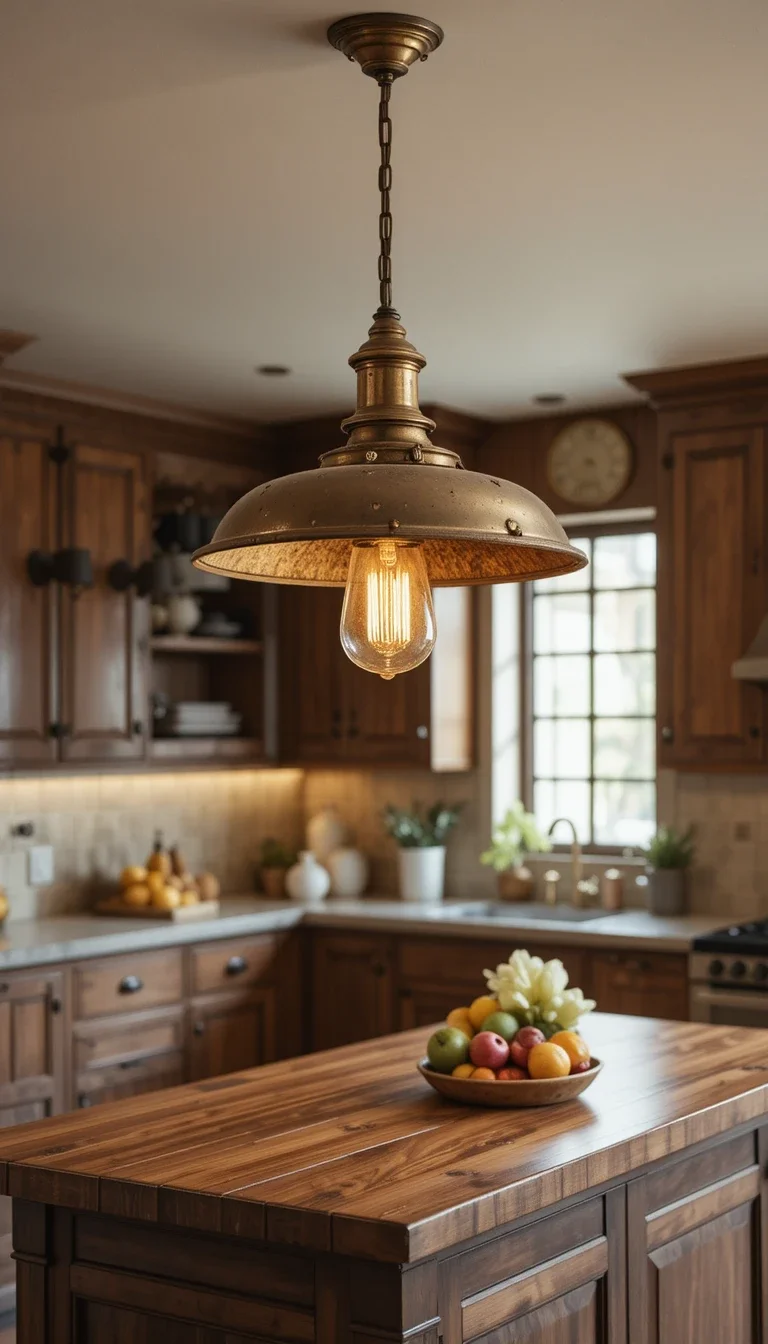
Shiny, polished metal is taking a back seat to fixtures with a little history to them. Aged brass and patina bronze are showing up everywhere in 2026, often shaped like vintage gas lamps or early factory lighting but built with modern LED components inside.
These finishes pair beautifully with stone counters, wood islands, and warm cabinet colors. They also age gracefully, meaning the slightly worn look only gets better over time instead of looking outdated.
If your kitchen leans traditional or transitional, this is one of the safest ways to add character without committing to anything too trendy.
Linear Chandeliers Over the Island
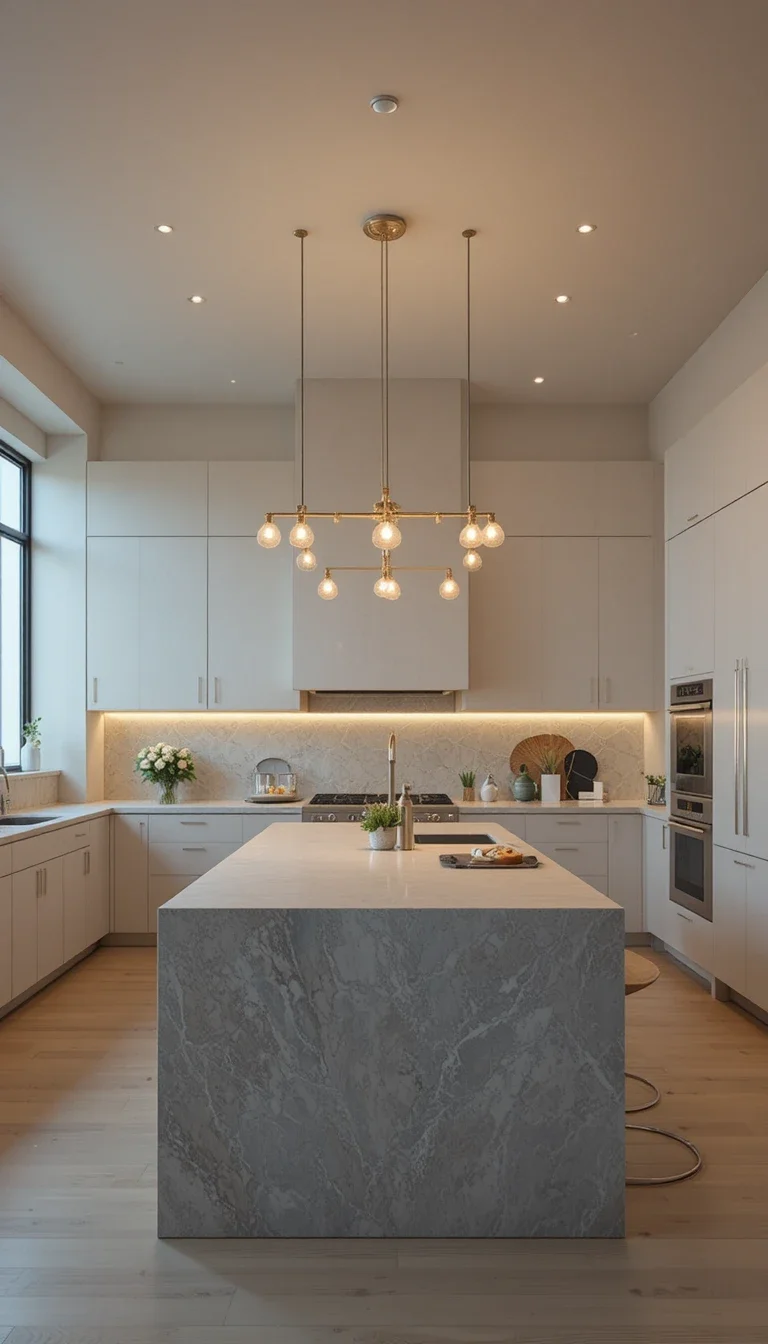
Round pendants have company now. Linear chandeliers, long horizontal fixtures with multiple light points, are becoming a favorite over kitchen islands in 2026.
They work especially well in longer, narrower islands where a single round pendant would look out of place. The horizontal shape echoes the line of the island itself, creating a clean, intentional look rather than feeling like an afterthought.
A good rule of thumb: keep the fixture roughly two-thirds the length of your island, centered above it, for the most balanced look.
Wall Sconces Over Open Shelving
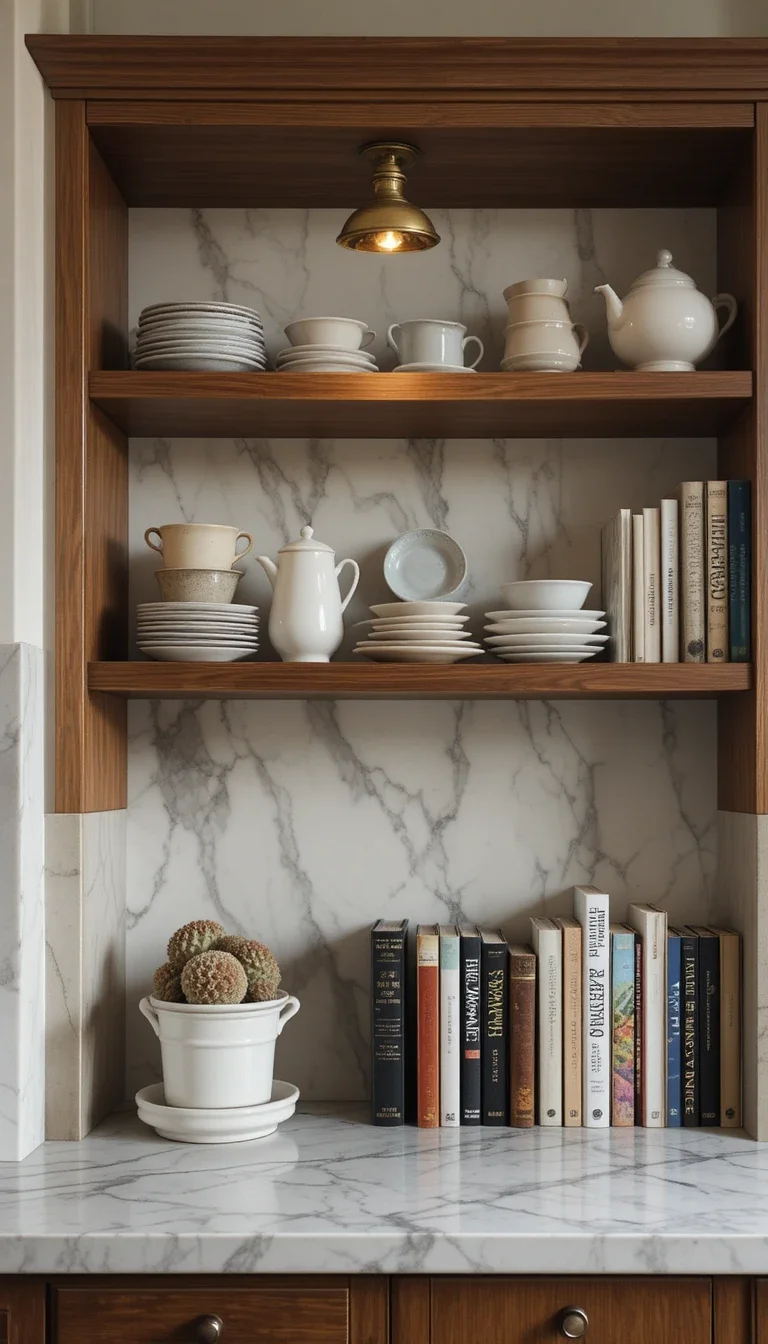
Open shelving needs its moment in the spotlight, and wall sconces are stepping in to give it one.
Placed just above or beside open shelves filled with ceramics, cookbooks, or plants, a sconce creates a soft, gallery-like glow that makes everyday objects feel curated. It’s also one of the easiest lighting upgrades to change seasonally. Swap a shade or bulb color, and the whole shelf feels new again.
This idea works particularly well in kitchens where ceiling height limits how much pendant lighting you can use.
Biophilic, Nature-Inspired Shapes
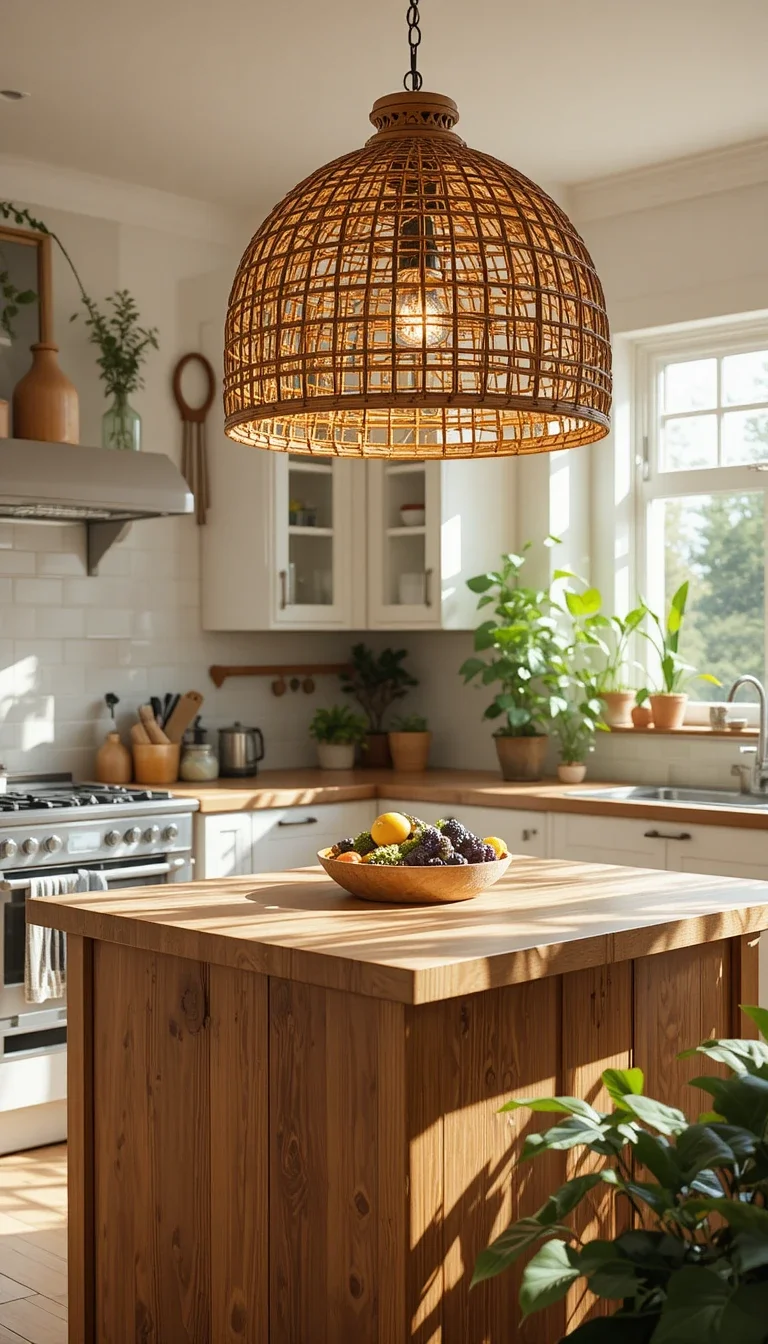
Lighting that mimics nature is having a real moment this year. Think pendants shaped like leaves, coral, or crescent moons, with curved, organic silhouettes instead of sharp geometric lines.
These fixtures often use natural materials too, like woven rattan shades, ceramic forms, or pale wood. Paired with warmer LED bulbs that mimic the dappled quality of sunlight, the effect feels calming rather than clinical.
It’s a strong choice for kitchens that already lean into natural textures, like wood cabinetry, stone counters, or a lot of greenery.
Milk Glass for a Softer Glow
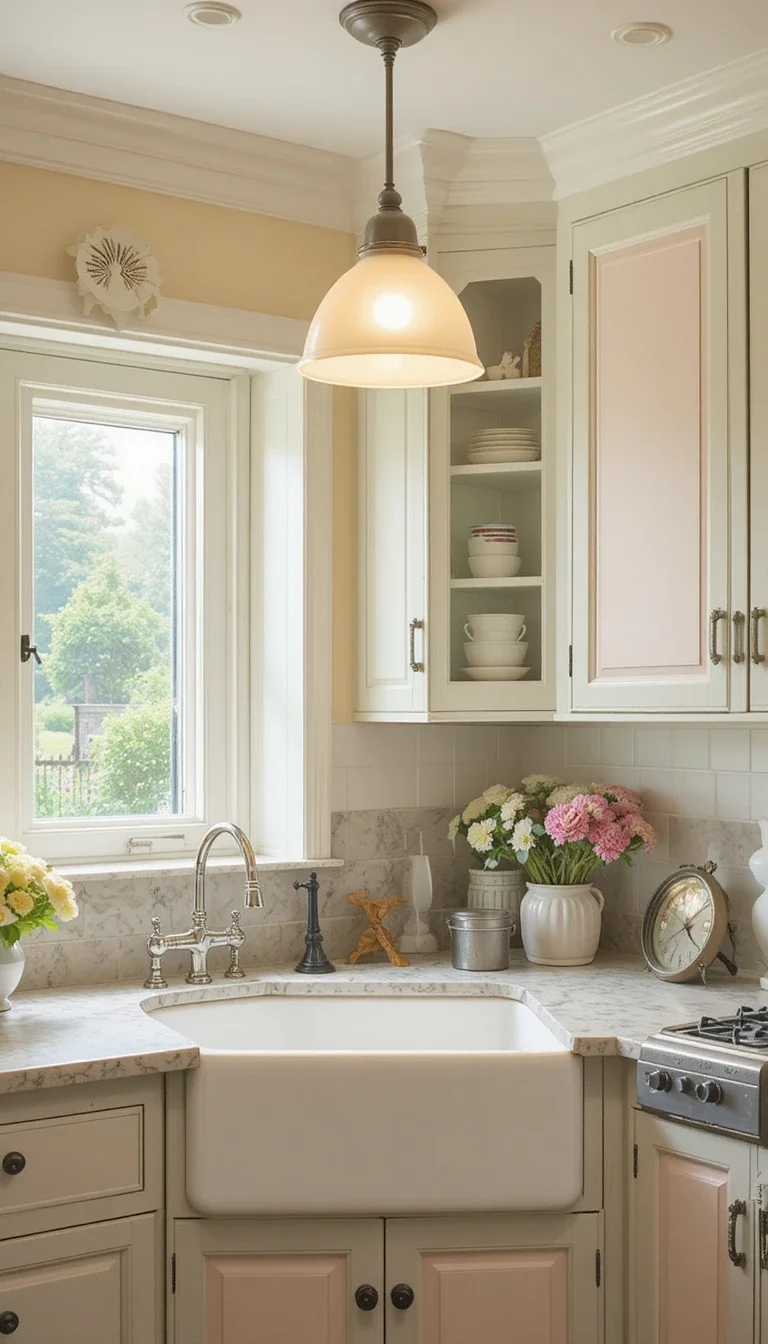
Milk glass fixtures are back, and they’re doing exactly what they did decades ago: diffusing light into something gentle and flattering.
The opaque white glass hides the bulb completely, so instead of a harsh point of light, you get a soft overall glow. This works beautifully over sinks or in cottage-style kitchens with painted cabinetry, where a sharper fixture would feel too modern or cold.
It’s also a practical choice. Milk glass tends to hide dust and fingerprints far better than clear glass does, which matters more than people expect in a busy kitchen.
Statement Lighting Over the Sink
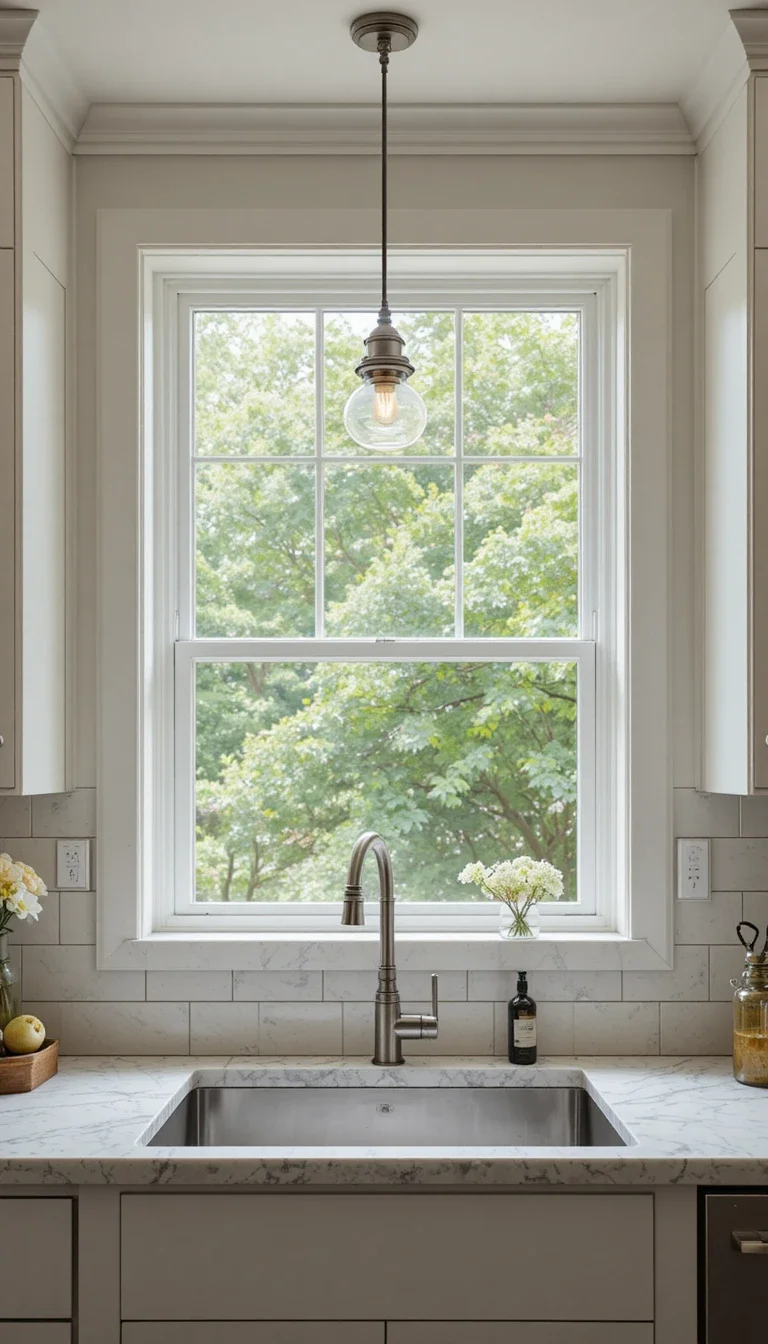
The sink area has been an afterthought for too long. In 2026, it’s getting its own dedicated fixture instead of relying on whatever light happens to spill over from the rest of the room.
A small pendant or mini chandelier positioned above the sink adds focused light exactly where shadows usually fall, like under upper cabinets or a deep farmhouse basin. If there’s a window above the sink, hanging the fixture between the window frame and ceiling keeps the look balanced.
It’s a small detail that makes daily tasks like washing dishes feel noticeably easier.
Multi-Tone, Mixed-Metal Fixtures
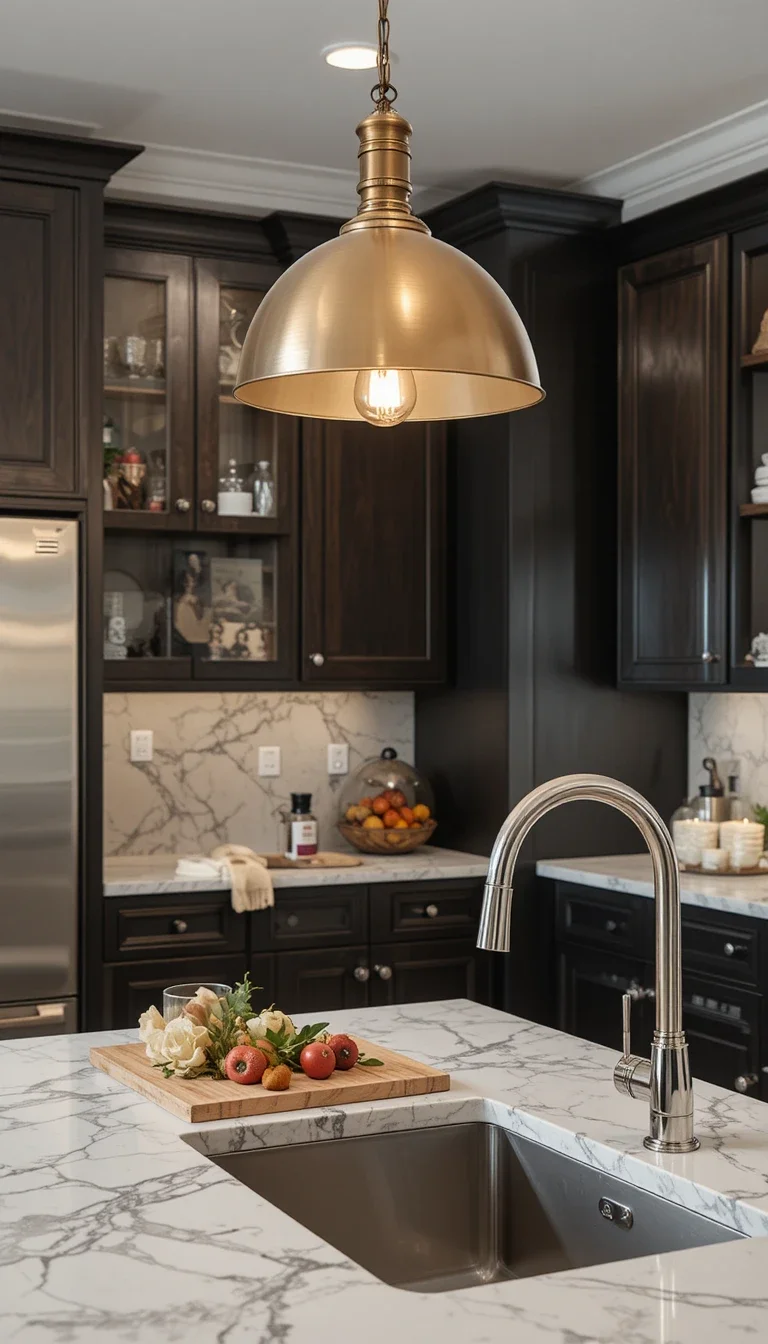
Matching every piece of hardware to your light fixtures is starting to feel a little too rehearsed. Mixed metals are taking over instead, with brass, black, and chrome showing up in the same space intentionally.
The trick is picking one dominant metal and using the others sparingly as accents. A brass pendant over the island, for instance, paired with black cabinet pulls and a chrome faucet, creates a layered look that feels collected rather than chaotic.
This approach suits kitchens that have grown over time rather than being finished all at once.
Fabric and Textile Shades
Glass and metal aren’t the only materials in the spotlight this year. Fabric shades are making an unexpected comeback in kitchen lighting, though not the dated floral versions from decades past.
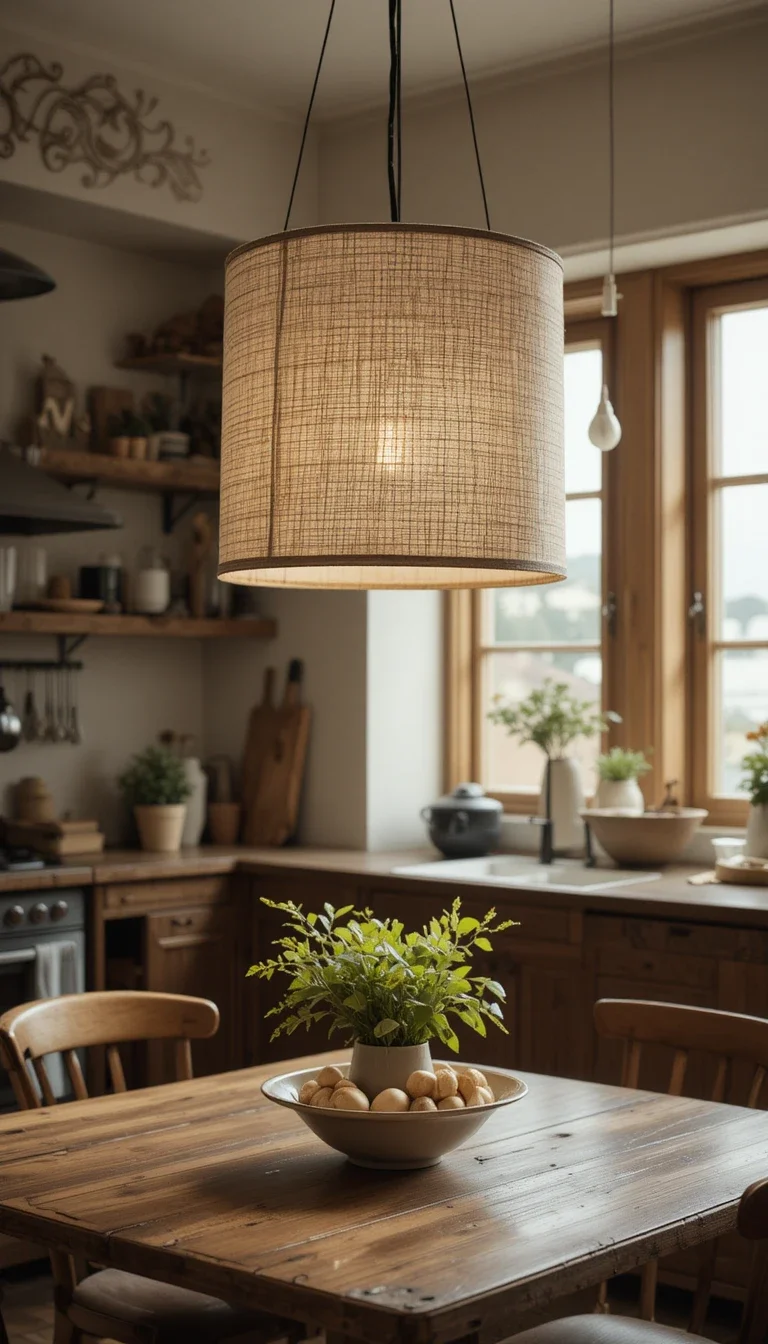
Modern fabric pendants use textured linen or woven cotton in neutral tones, softening the light and adding a subtle warmth that hard materials can’t match. They tend to suit kitchens that already feel a bit more layered and lived-in, like ones with woven rugs or upholstered stools.
It’s an easy way to make a kitchen feel less like a showroom and more like a room people actually live in.
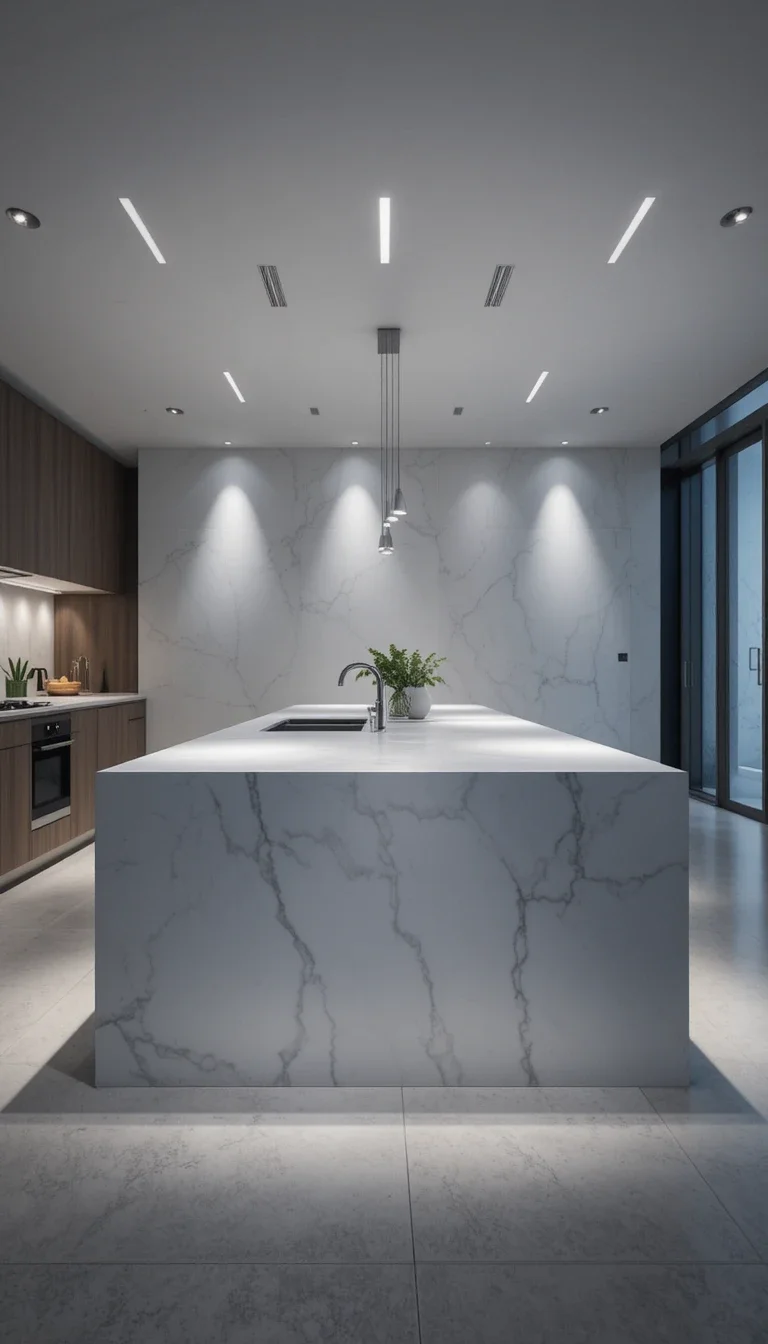
Narrow-Beam Downlights for Precision
Not every kitchen needs a statement piece. Some just need better function, and narrow-beam downlights are quietly becoming one of the most useful upgrades of 2026.
Positioned directly over the island or prep zones, these lights focus a tight, precise beam exactly where you’re working, without competing with decorative fixtures elsewhere in the room. They’re especially useful in open-concept kitchens, where too many decorative lights can start to feel cluttered.
The result is a kitchen that looks calm and uncluttered, while still being genuinely functional where it counts.
Cabinet Interior and Toe-Kick Lighting
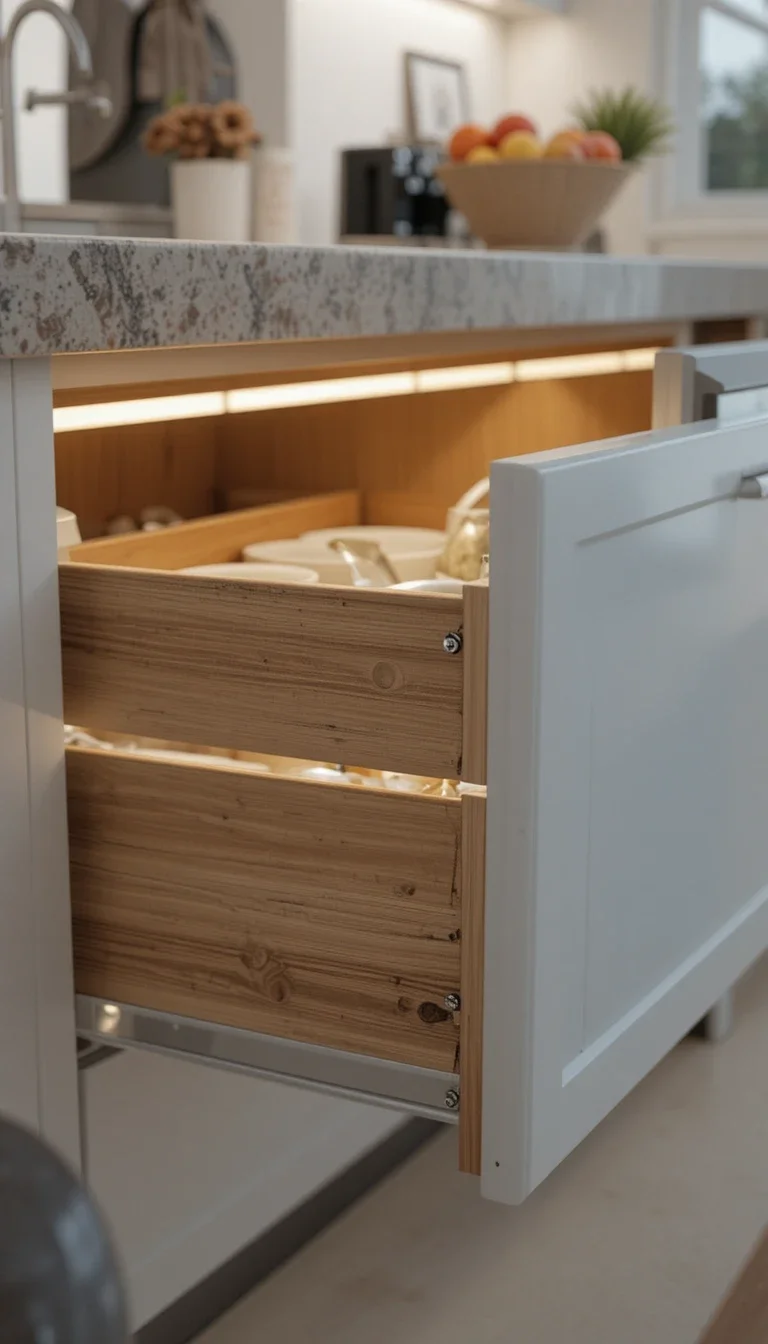
The lighting that gets the least attention is often the one that makes the biggest difference day to day. Cabinet interior lighting and toe-kick LEDs are becoming standard additions in 2026 kitchen designs.
Motion-activated lights inside drawers turn on the moment you open them. Soft strips inside glass-front cabinets highlight dishware without needing the main lights on. Toe-kick LEDs near the floor add a subtle glow at night, useful for late kitchen visits without flipping on every light in the house.
These details rarely show up in photos, but they’re the ones homeowners mention loving the most once they’re living with them.
Vintage and Heritage-Inspired Fixtures
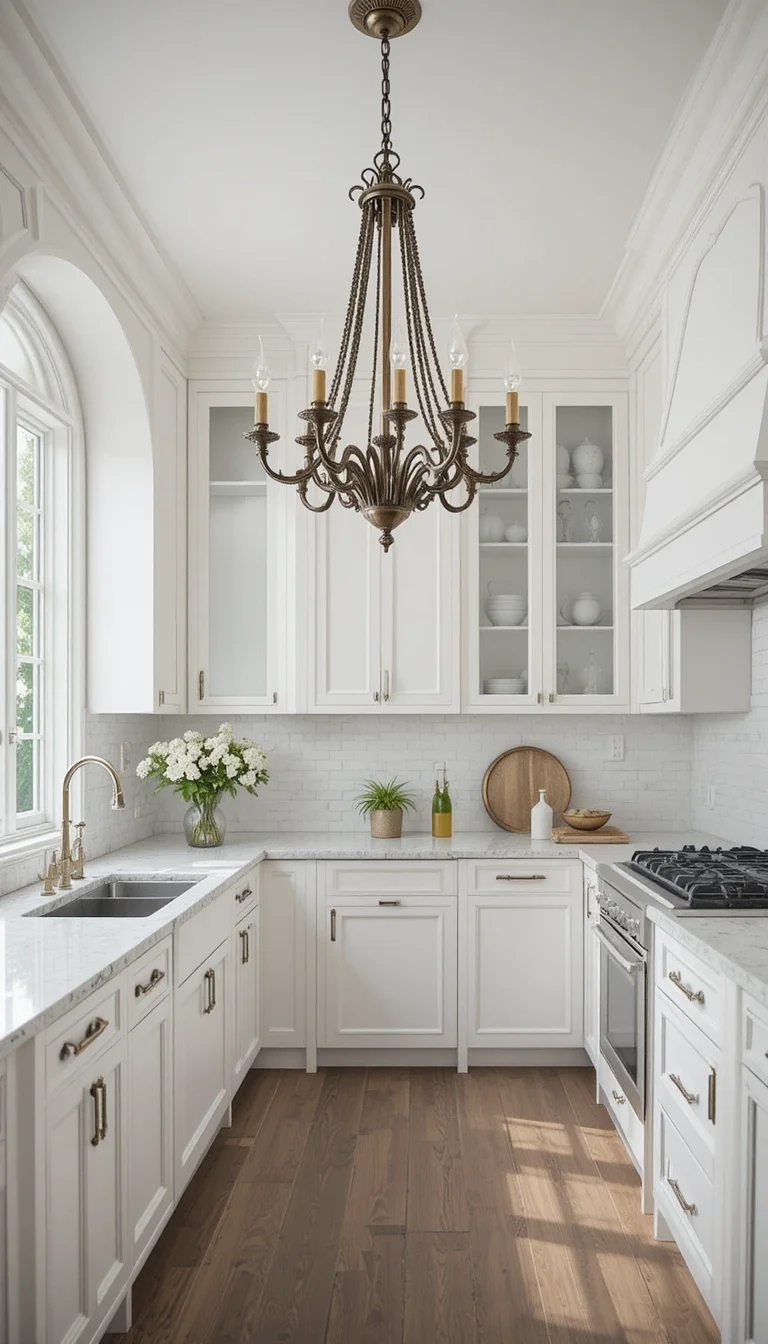
There’s a clear pull toward fixtures with a sense of history this year, but used carefully rather than as a full theme. A single chandelier from an estate sale, or a mid-century sconce, can add soul to an otherwise clean, modern kitchen.
The one thing designers keep repeating is balance. One or two vintage pieces mixed into a contemporary space reads as intentional. An entire kitchen dressed head to toe in one era can start to feel like a costume instead of a home.
If you already own an interesting older fixture, 2026 is a good year to bring it back out rather than replacing it with something new.
Dimmable Warm Tones for Evening Ambiance
Color temperature control is no longer a luxury feature. It’s becoming an expectation in 2026 kitchens.
The idea is simple: bright, cool light for cooking and prep work, then a shift to warm, dimmed tones once dinner is served or guests arrive. Many homeowners now set this on a schedule, so the kitchen automatically softens its lighting in the evening without anyone touching a switch.
This single change does more to make a kitchen feel inviting at night than almost any fixture upgrade could on its own.
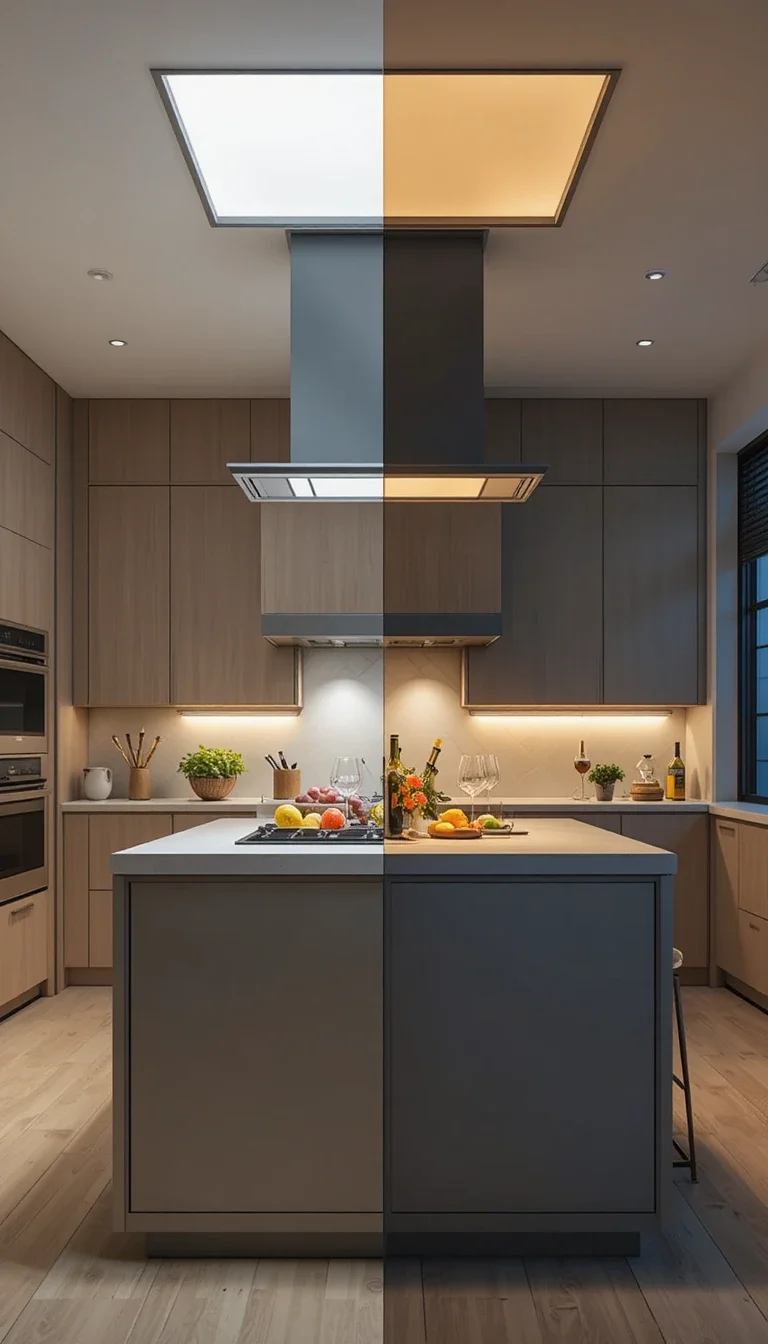
Oversized Pendant Clusters
A single pendant is no longer the only way to make a statement above an island. Clusters of multiple pendants, often at varying heights and sizes, are creating a more dynamic, sculptural look in 2026.
As you move around the kitchen, the cluster shifts perspective, with shapes overlapping differently from each angle. It’s a striking effect in kitchens with higher ceilings, where a single fixture might otherwise look small and lost.
This works best when the cluster has a clear color or material theme tying the pieces together, rather than feeling randomly assembled.
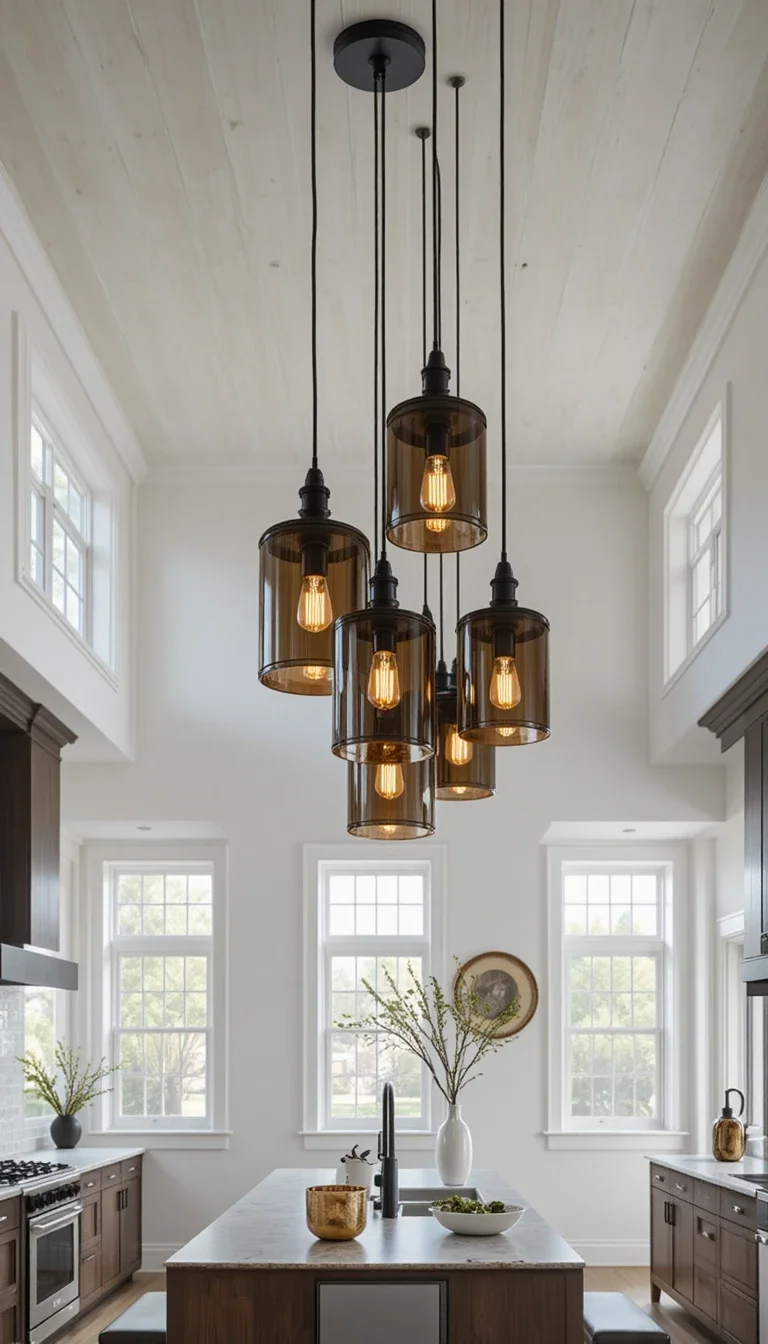
Lighting for Small and Galley Kitchens
Compact kitchens have their own set of rules, and 2026 is offering more solutions specifically built for them. Flush mounts that hug the ceiling, slim track lighting, and wall sconces are replacing bulky fixtures that would otherwise eat up valuable headroom.
The goal in a small kitchen is to add light without adding visual weight. Slim profiles, lighter finishes, and fixtures placed along walls rather than hanging low all help a tight space feel more open rather than more crowded.
If your kitchen is on the smaller side, this is the category worth focusing on before anything decorative.
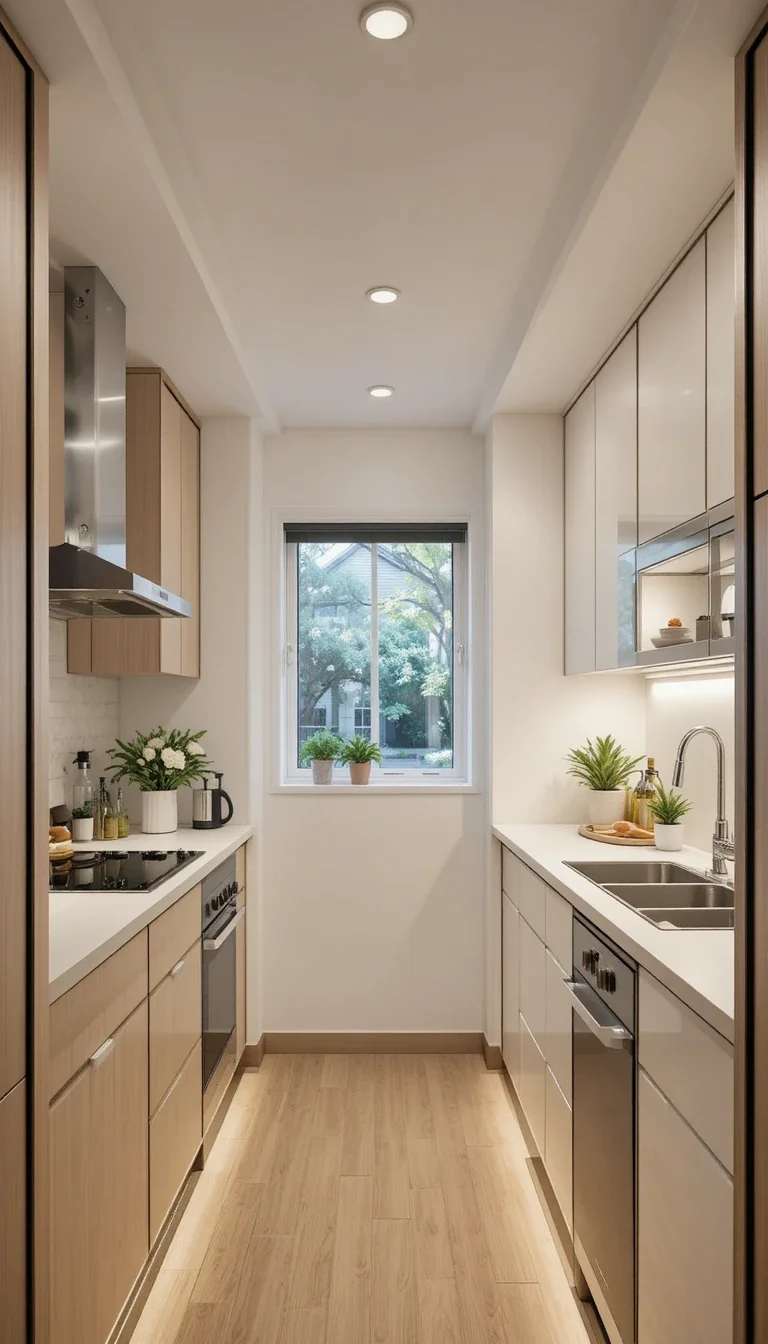
Asymmetrical and Geometric Statement Lighting
For kitchens that want to feel a little more like a gallery, asymmetrical fixtures are one of the boldest options in 2026. These pieces often cast irregular shadows across counters and walls, shifting throughout the day as natural light changes.
Geometric forms in matte black or mixed media (steel combined with glass or wood) tend to work best as a singular focal point rather than paired with other statement pieces. Keep the rest of the kitchen relatively simple so the fixture has room to stand out.
It’s not a fit for every kitchen, but in the right space, it’s unforgettable.
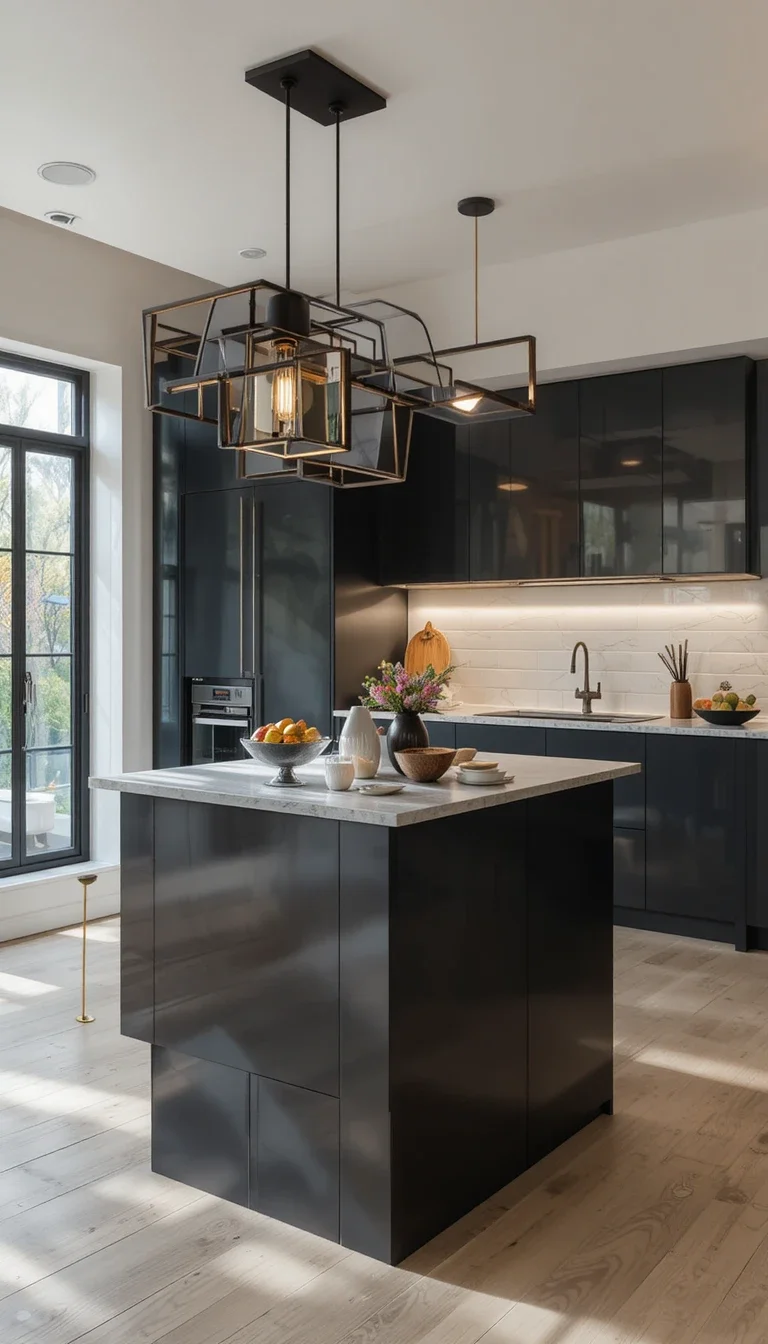
How to Choose the Right Kitchen Lighting for Your Space
With so many directions to take, it helps to narrow things down by what your kitchen actually needs first.
- Small or low-ceiling kitchen? Start with flush mounts, track lighting, or slim wall sconces.
- Want a focal point over the island? Try a sculptural pendant, linear chandelier, or oversized cluster.
- Renovating on a budget? Under-cabinet LEDs and toe-kick lighting offer the biggest everyday impact for the lowest cost.
- Already love your cabinets and counters? Let aged brass or mixed-metal fixtures complement what’s already there, instead of competing with it.
There’s no need to choose just one idea from this list either. The best kitchens in 2026 are layering two or three of these together: one functional base, one accent detail, and one fixture with a bit of personality.
Bringing It All Together
Most kitchens don’t need a full renovation to feel different. A new pendant over the sink, a strip of warm LED under the cabinets, or one sculptural fixture over the island can shift the whole room without touching a single wall.
Start with whatever’s bothering you most right now, maybe it’s the dark corner by the stove, or a single bulb trying to light an entire open-plan space. Fix that one thing first. The rest of these ideas can come later, one fixture at a time.
Frequently Asked Questions
What is the most popular kitchen lighting trend for 2026?
Layered lighting is the biggest overall trend, combining ambient, task, and accent lighting instead of relying on one central fixture. Sculptural pendants and smart, color-adjustable lighting are also gaining a lot of attention this year.
How many lumens do I need for kitchen lighting?
Most kitchens need around 3,000 to 4,000 lumens total for general lighting, plus extra focused light over prep areas. Task zones like countertops typically benefit from brighter, cooler light, while dining or seating areas work better with warmer, dimmer tones.
What color temperature is best for kitchen lighting?
A range of 2700K to 3000K (warm white) works well for general ambiance, while 3500K to 4000K (cool white) is better suited for task areas like countertops and stovetops where precision matters.
How high should pendant lights hang above a kitchen island?
Most designers recommend hanging pendants 30 to 36 inches above the counter surface. This provides enough light for tasks while keeping sightlines clear across the island.
Is recessed lighting outdated for kitchens in 2026?
No, but it’s evolving. Plain, evenly spaced recessed lighting alone is considered a bit flat compared to 2026 trends. It still works well as the ambient base layer, especially when paired with narrow-beam downlights or accent fixtures for added depth.
Can I add smart lighting without rewiring my whole kitchen?
Yes. Many smart lighting upgrades start with simply swapping existing bulbs for smart LED versions or adding plug-in smart strips, no rewiring required for a basic setup.
